Loading...
Constantius I vs Hairan I
Constantius I leads by 4.0 pts · 2 figures compared
…
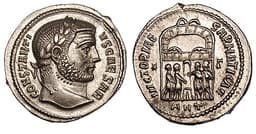
Constantius I
Emperor · Ancient
57.8Total

Hairan I
Emperor · Ancient
53.8Total
Basic Information
Born
250
240
Died
306
267
Era
Ancient
Ancient
Nationality
Roman Empire
Palmyrene Empire
Occupation
Emperor
Emperor
Civilization
Western
Middle Eastern
Score Comparison
Military (10%)
50.0
35.6
Political (20%)
68.0
68.0
Influence (20%)
54.9
55.9
Legacy (20%)
50.0
55.0
Leadership (15%)
74.0
45.0
Strategy (15%)
52.5
56.0
TOTAL
57.8
53.8
Constantius I — Complete Timeline
296 AD
Recovery of Britain from Carausius and AllectusWar◆ Major
Constantius I led an invasion to reclaim Britain from the usurper Allectus, who had succeeded Carausius. His forces landed near London and defeated Allectus, restoring Britain to the Roman Empire and ending the breakaway Britannic Empire.
BritainReconquestUsurper
Impact: regionalconstructive
298 AD
Campaign against the AlemanniWar◆ Major
Constantius I defeated the Alemanni at the Battle of Lingones (modern Langres) and later at Vindonissa. These victories secured the Rhine frontier and earned him the title Germanicus Maximus, strengthening his reputation as a capable military commander.
CampaignAlemanniRhine Frontier
Impact: regional
305 AD
Elevation to AugustusPolitical Action◆ Major
Upon the abdication of Diocletian and Maximian, Constantius I became the senior Augustus of the Western Roman Empire as part of the Tetrarchy. He ruled jointly with Galerius in the East, but his reign was short-lived as he died the following year.
TetrarchySuccessionAugustus
Impact: global
306 AD
Death at Eboracum (York)Other◆ Major
Constantius I died at Eboracum (modern York) while on campaign against the Picts in northern Britain. His son Constantine was proclaimed Augustus by the troops, setting the stage for Constantine's eventual rise to sole emperor.
DeathSuccessionConstantine
Impact: global
Toleration of Christians (Edict of Milan precursor)Political Action
Constantius I, unlike his co-emperor Galerius, was tolerant of Christians and did not enforce the Diocletianic persecution in his territories. This policy of religious tolerance foreshadowed the Edict of Milan issued by his son Constantine.
ToleranceChristianityReligion
Impact: regionalconstructive
Hairan I — Complete Timeline
263 AD
Co-ruler of Palmyra with OdaenathusPolitical Action
Hairan I was appointed co-ruler of Palmyra alongside his father Odaenathus. He shared in the governance of the Palmyrene kingdom and the Roman East, but his role was largely subordinate to his father.
Co-rulerPalmyraOdaenathus
267 AD
Assassination with OdaenathusPolitical Action◆ Major
Hairan I was assassinated along with his father Odaenathus at Emesa. The assassination removed both the king and his heir, leading to a power vacuum that Zenobia filled.
AssassinationPalmyraPower Transition
Impact: regionaltragic
Expert Analysis
Origins
Constantius I, born Flavius Valerius Constantius around 250 AD in Dacia Ripensis (modern-day Balkans), was of Illyrian descent. His early life is obscure, but he rose through the military ranks under Emperor Aurelian and later served as a governor. Constantius was known for his moderation and military competence, which caught the attention of Emperor Diocletian. In 293 AD, he was appointed Caesar (junior emperor) of the Western Roman Empire as part of the Tetrarchy, and he married Theodora, stepdaughter of Emperor Maximian, to solidify ties.
Hairan I (also known as Herodianus) was the son of Odaenathus, the ruler of Palmyra, a wealthy city-state in the Roman East. Born around 240 AD, Hairan was raised in the Palmyrene court, which was heavily influenced by Roman and Persian cultures. His father Odaenathus had been recognized by Rome as King of Palmyra and Dux Orientis (commander of the East) after defeating the Persians. Hairan was appointed co-ruler alongside his father around 260 AD, sharing authority over Palmyra and its territories.
Rise to Power
Constantius I's rise was methodical and tied to the Tetrarchic system. He served as a military commander under Diocletian, and in 293 AD, he was elevated to Caesar in the West under Maximian. His primary task was to secure the Rhine frontier and recover Britain from the usurper Carausius. In 296 AD, Constantius launched a successful invasion of Britain, defeating Allectus (Carausius's successor) and restoring the province to Roman control. This victory cemented his reputation. In 305 AD, upon the abdication of Diocletian and Maximian, Constantius became the senior Augustus of the West, ruling over Gaul, Britain, and Spain.
Hairan I's rise was dynastic. As the eldest son of Odaenathus, he was groomed for leadership. Odaenathus had saved the Roman East from Persian invasion after the capture of Emperor Valerian in 260 AD, and he was granted extraordinary powers by Rome. Hairan was made co-ruler around 261 AD, sharing titles such as King of Kings and Corrector Totius Orientis (Governor of the Entire East). However, his power was always in the shadow of his father, and he had limited independent achievements.
Leadership & Governance
Constantius I governed with a focus on stability and tolerance. He maintained the Tetrarchic system but was notably lenient toward Christians, unlike his Eastern counterpart Galerius. While Galerius enforced the Diocletianic Persecution, Constantius limited persecution to demolishing churches and did not execute Christians. This policy foreshadowed the Edict of Milan. Militarily, he secured the Rhine frontier by defeating the Alemanni at the Battle of Lingones in 298 AD, scoring 50.0 in military score, reflecting his competent but not outstanding generalship. His political score of 68.0 indicates his skill in navigating the complex Tetrarchic politics.
Hairan I, as co-ruler, had little independent governance. He was involved in the administration of Palmyra but primarily served as a figurehead alongside his father. His political score of 68.0 is based on his inherited position rather than personal achievement. The Palmyrene kingdom was a client state of Rome, and its governance was heavily influenced by Odaenathus's policies. Hairan's military score of 35.6 reflects his lack of notable military campaigns. The key event of his reign was his assassination, which demonstrates his inability to secure his power.
Triumph & Tragedy
Constantius I's greatest triumph was the recovery of Britain in 296 AD, ending a decade-long usurpation. He also secured the Rhine frontier and managed a peaceful transition of power during the abdication of the Augusti. His greatest tragedy was his early death in 306 AD at Eboracum (York) while campaigning against the Picts. This sudden death led to the proclamation of his son Constantine as Augustus by the troops, bypassing the Tetrarchic succession and sparking civil wars. Constantius's legacy is thus intertwined with Constantine's rise.
Hairan I's triumph was simply being named co-ruler of a powerful kingdom. His tragedy was his assassination alongside his father in 267 AD at Emesa, likely orchestrated by a rival cousin or Roman agents. This event ended the direct line of Odaenathus and allowed his widow Zenobia to seize power, leading to the Palmyrene Empire's rebellion against Rome. Hairan's death score of 35.6 in military reflects his failure to protect himself or his father.
Character & Destiny
Constantius I was described as a mild and capable ruler, known for his moderation and piety (though he was a pagan). He avoided the cruelty of other Tetrarchs and maintained good relations with his troops. His character shaped his destiny: his tolerance of Christians set the stage for his son's conversion, and his death at a critical moment thrust Constantine into power. Historical assessments by Eutropius and Aurelius Victor praise his justice and military skill.
Hairan I is a shadowy figure. Little is known of his personality, but his co-rule with Odaenathus suggests he was expected to continue his father's policies. His assassination demonstrates either a lack of political acumen or simply being in the wrong place at the wrong time. His destiny was cut short, leaving his stepmother Zenobia to eclipse his memory.
Legacy
Constantius I's legacy is primarily as the father of Constantine the Great, but his own achievements were significant. He restored Britain, stabilized the Rhine, and established a precedent of religious tolerance that influenced the Edict of Milan. His score of 54.9 in influence and 50.0 in legacy reflect his role as a transitional figure. The Constantinian dynasty that followed shaped the Roman Empire for decades.
Hairan I's legacy is minimal. He is remembered as the son of Odaenathus and the co-ruler who was assassinated, leading to Zenobia's rise. His influence score of 55.9 is slightly higher than Constantius's, but this is due to the romanticization of Palmyra. In reality, Hairan had no lasting impact; the Palmyrene rebellion was crushed by Aurelian in 272 AD. His legacy score of 55.0 is inflated by the historical interest in Palmyra.
Conclusion
Constantius I had a greater impact than Hairan I. While both were transitional figures, Constantius's actions directly influenced the Roman Empire's future: his recovery of Britain, his tolerance of Christians, and his son Constantine's rise. Hairan I, despite a higher influence score, was a passive co-ruler whose assassination only created a vacuum. Constantius's total score of 57.8 versus Hairan's 53.8 reflects his superior leadership and strategic achievements. The Tetrarchic system and Constantius's policies laid groundwork for the Christianization of Rome, while Hairan's Palmyra fell into obscurity. Therefore, Constantius I is the more consequential figure.
Rankings
🥇
Constantius ILeader
Mil: 50.0Pol: 68.0Inf: 54.9
57.8
🥈
Hairan I
Mil: 35.6Pol: 68.0Inf: 55.9
53.8
+4.0 behind
How This Comparison Works
Algorithm
Each figure is scored on 6 dimensions (0—100 scale) based on structured historical data: Military (10%), Political (20%), Influence (20%), Legacy (20%), Leadership (15%), Strategy (15%). The weighted total produces the final ranking.
Data Sources
Scores are computed from structured sub-indicators in the database. Scale factors adjust for era (Ancient ×0.85, Modern ×1.0) and civilization size (Eastern ×1.05, Other ×0.80) to account for differences in population and military scale.
Maximum 3 Figures
Comparisons are limited to 2—3 figures to ensure readability and statistical meaningfulness.
Error Margins
±5 points per dimension — Sub-scores are derived from historical records with inherent uncertainty. Two figures within 5 points on a dimension should be considered roughly equivalent in that area.
Total Score Accuracy
±3 points overall — The weighted combination of 6 dimensions produces a total score with approximately ±3 points of uncertainty. Differences of less than 3 points are not statistically significant— the figures are effectively tied.
Known Limitations
- Historical records are incomplete and uneven across civilizations
- Figures from oral-tradition societies may be underrepresented
- Occupation labels can misclassify multi-role figures
- Scores measure capability and impact, not moral character
- Quantitative scoring is a comparison tool, not absolute truth
Capability Radar
Military (10%) — Battles & Warfare
Battles
45
36
Win Rate
50
43
Expansion
35
45
Political (20%) — Governance & Reform
Reform
45
0
Diplomacy
55
0
Economy
50
0
Influence (20%) — Cultural & Global Reach
Cultural
30
72
Global
40
76
Legacy (20%) — Historical Impact
Historical
55
73
Longevity
60
75
Leadership (15%) — Power & Stability
Tenure
50
5
Stability
55
0
Strategy (15%) — Tactics & Innovation
Strategy
60
45
Tactics
55
50
Reform
40
54
Similar Comparisons
Comments & Discussion
No comments yet. Be the first to share your thoughts!