Loading...
Count von Taaffe vs Yasuhiro Nakasone
Yasuhiro Nakasone leads by 4.3 pts · 2 figures compared
…

Count von Taaffe
Politician · Modern
51.9Total
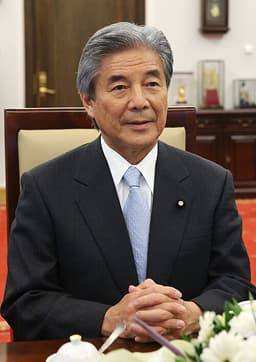
Yasuhiro Nakasone
Politician · Modern
56.2Total
Basic Information
Born
1833
1918
Died
1895
2019
Era
Modern
Modern
Nationality
Austria
Japan
Occupation
Politician
Politician
Civilization
Western
Eastern
Score Comparison
Military (10%)
50.0
11.4
Political (20%)
45.0
72.0
Influence (20%)
54.9
62.0
Legacy (20%)
45.0
52.0
Leadership (15%)
72.0
79.8
Strategy (15%)
43.5
38.2
TOTAL
51.9
56.2
Count von Taaffe — Complete Timeline
1879 AD
Appointment as Minister-President of CisleithaniaPolitical Action◆ Major
Taaffe was appointed Minister-President of the Austrian half of the empire by Emperor Franz Joseph. He began a 14-year tenure, the longest of any Austrian prime minister in the dual monarchy era.
AppointmentGovernmentLong Tenure
Impact: national
Formation of the Iron Ring CoalitionPolitical Action◆ Major
Taaffe formed the Iron Ring, a coalition of conservative German clericals, Czech conservatives, and Polish nobles. This alliance gave him a stable parliamentary majority and allowed him to govern without liberal opposition.
CoalitionPoliticsConservatism
Impact: nationalconstructive
1880 AD
Language Ordinances for BohemiaReform◆ Major
Taaffe issued ordinances making Czech equal to German in the external service of the Bohemian administration. This was a concession to Czech nationalists but angered German nationalists, contributing to ethnic tensions.
Language ReformBohemiaNationalism
Impact: regionalconstructive
1883 AD
Social Reforms (Taaffe Era)Reform◆ Major
Taaffe's government enacted social reforms including accident and health insurance for workers, limits on working hours, and the establishment of labor courts. These measures aimed to undercut socialist appeal.
Social ReformLaborWelfare
Impact: nationalconstructive
1893 AD
Resignation as Minister-PresidentPolitical Action◆ Major
Taaffe resigned after his coalition collapsed over the failure of his electoral reform bill. His attempt to introduce universal suffrage was opposed by both German liberals and Czech nationalists, ending his long tenure.
ResignationElectoral ReformCoalition Collapse
Impact: national
Yasuhiro Nakasone — Complete Timeline
1981 AD
Administrative Reform and Fiscal ReconstructionReform
Nakasone launched a major administrative reform aimed at reducing government spending and streamlining bureaucracy. He established the Second Provisional Commission for Administrative Reform, which recommended cuts to public works, subsidies, and the number of civil servants, contributing to fiscal consolidation.
Administrative ReformFiscal PolicyJapan
Impact: nationalconstructive
1983 AD
Strengthening of the US-Japan AlliancePolitical Action◆ Major
Nakasone deepened the US-Japan security alliance, notably by declaring Japan an 'unsinkable aircraft carrier' and increasing defense spending. He also agreed to share military technology with the US and supported the deployment of US forces in Japan, solidifying the bilateral partnership during the Cold War.
AllianceDefenseCold War
Impact: regionalconstructive
1986 AD
Hosting the 1986 Tokyo SummitPolitical Action
Nakasone hosted the 12th G7 summit in Tokyo in May 1986, where leaders discussed economic coordination, terrorism, and the Chernobyl disaster. The summit enhanced Japan's international profile and showcased Nakasone's leadership on the global stage.
DiplomacyG7International Summit
Impact: global
1987 AD
Privatization of Japanese National RailwaysReform◆ Major
As prime minister, Yasuhiro Nakasone oversaw the privatization of the debt-ridden Japanese National Railways (JNR), splitting it into regional passenger companies and a freight company. The reform, implemented in April 1987, aimed to improve efficiency and service quality, and is credited with revitalizing Japan's railway system.
PrivatizationInfrastructureEconomic Reform
Impact: nationalconstructive
Expert Analysis
Origins
Count Eduard von Taaffe was born on February 24, 1833, in Vienna, into an aristocratic Irish-Austrian family. His father was a prominent official, and Taaffe studied law at the University of Vienna. Entering the civil service, he gained administrative experience under Emperor Franz Joseph.
Yasuhiro Nakasone was born on May 27, 1918, in Takasaki, Japan, to a wealthy sake-brewing family. He studied law at Tokyo Imperial University and joined the Home Ministry in 1941. After World War II, he entered politics, winning a Diet seat in 1947.
Rise to Power
Taaffe rose through the imperial bureaucracy, serving as governor of several provinces. In 1867, he became Minister of the Interior and later Minister-President briefly in 1868-1870. His major breakthrough came in 1879 when Emperor Franz Joseph appointed him Minister-President of Cisleithania. Taaffe formed the "Iron Ring" coalition, uniting conservative German clericals, Czech conservatives, and Polish nobles, which gave him a stable parliamentary majority.
Nakasone rose through the ranks of the Liberal Democratic Party (LDP), holding various cabinet posts including Minister of Transport and Minister of Defense. He became Prime Minister in November 1982, succeeding Zenko Suzuki. His leadership style was assertive, and he quickly moved to privatize state enterprises and strengthen ties with the United States.
Leadership & Governance
Taaffe governed Austria with a pragmatic, conservative approach. His Iron Ring coalition allowed him to balance nationalist demands, particularly from Czechs, while maintaining German dominance. He enacted social reforms: accident and health insurance for workers (1883-1888), limits on working hours, and labor courts. However, his Language Ordinances of 1880, making Czech equal to German in Bohemian administration, alienated German nationalists. Taaffe's political score of 45.0 reflects his ability to maintain power but failure to resolve national conflicts.
Nakasone led Japan with a strong executive style, focusing on administrative reform and internationalism. He privatized Japanese National Railways in 1987, splitting it into regional companies. He also pushed for fiscal reconstruction, reducing government spending. His leadership score of 79.8 is among the highest, and his political score of 72.0 indicates effective governance. However, his strategy score of 38.2 suggests short-termism in economic reforms.
Triumph & Tragedy
Taaffe's greatest success was his 14-year tenure, the longest of any Austrian minister-president. His social reforms laid the foundation for the welfare state. His greatest failure was the collapse of his coalition over electoral reform: his attempt to introduce universal suffrage was opposed by his own allies, leading to his resignation in 1893. The Language Ordinances also intensified ethnic tensions.
Nakasone's triumph was strengthening the US-Japan alliance, declaring Japan an "unsinkable aircraft carrier" and increasing defense spending. He hosted the 1986 Tokyo Summit, raising Japan's global profile. His privatization of JNR reduced debt but led to job losses and service cuts. His failure was the lack of lasting structural reform: bureaucracy remained powerful, and fiscal deficits persisted.
Character & Destiny
Taaffe was a pragmatic conservative, known for his ability to forge coalitions. Emperor Franz Joseph trusted him for his loyalty. However, his indecisiveness on nationalities issues led to his downfall. Historians rate him as a capable administrator but lacking visionary strategy. His total score of 51.9 reflects moderate overall impact.
Nakasone was charismatic and assertive, earning the nickname "Weathercock" for his ability to shift positions. He was a strong leader but often criticized for being too confrontational. His personal rapport with Ronald Reagan strengthened ties. His total score of 56.2 is slightly higher than Taaffe's, driven by higher political and leadership scores.
Legacy
Taaffe is remembered as the longest-serving minister-president of Austria, but his Iron Ring coalition failed to solve the empire's nationality problems. His social reforms were a precursor to modern welfare, but his legacy is overshadowed by the empire's collapse. His influence score of 54.9 is moderate.
Nakasone's legacy is more enduring: he modernized Japan's economy through privatization and deepened the US-Japan alliance, which remains central to Asian security. He also contributed to Japan's international role. His legacy score of 52.0 is similar to Taaffe's, but his influence score of 62.0 is higher.
Conclusion
Yasuhiro Nakasone had greater impact than Count von Taaffe, as his policies reshaped Japan's economy and international position. While Taaffe maintained stability for 14 years, his failures in managing nationalism contributed to the empire's decline. Nakasone's total score of 56.2 versus Taaffe's 51.9 reflects his stronger leadership and political acumen. Nakasone's privatization and alliance-building have lasting effects, whereas Taaffe's reforms were overshadowed by the empire's dissolution. Thus, Nakasone's legacy is more significant in shaping modern Japan.
Rankings
🥇
Yasuhiro NakasoneLeader
Mil: 11.4Pol: 72.0Inf: 62.0
56.2
🥈
Count von Taaffe
Mil: 50.0Pol: 45.0Inf: 54.9
51.9
+4.3 behind
How This Comparison Works
Algorithm
Each figure is scored on 6 dimensions (0—100 scale) based on structured historical data: Military (10%), Political (20%), Influence (20%), Legacy (20%), Leadership (15%), Strategy (15%). The weighted total produces the final ranking.
Data Sources
Scores are computed from structured sub-indicators in the database. Scale factors adjust for era (Ancient ×0.85, Modern ×1.0) and civilization size (Eastern ×1.05, Other ×0.80) to account for differences in population and military scale.
Maximum 3 Figures
Comparisons are limited to 2—3 figures to ensure readability and statistical meaningfulness.
Error Margins
±5 points per dimension — Sub-scores are derived from historical records with inherent uncertainty. Two figures within 5 points on a dimension should be considered roughly equivalent in that area.
Total Score Accuracy
±3 points overall — The weighted combination of 6 dimensions produces a total score with approximately ±3 points of uncertainty. Differences of less than 3 points are not statistically significant— the figures are effectively tied.
Known Limitations
- Historical records are incomplete and uneven across civilizations
- Figures from oral-tradition societies may be underrepresented
- Occupation labels can misclassify multi-role figures
- Scores measure capability and impact, not moral character
- Quantitative scoring is a comparison tool, not absolute truth
Capability Radar
Military (10%) — Battles & Warfare
Battles
28
15
Win Rate
30
18
Expansion
34
21
Political (20%) — Governance & Reform
Reform
55
70
Diplomacy
60
80
Economy
50
60
Influence (20%) — Cultural & Global Reach
Cultural
30
40
Global
30
60
Legacy (20%) — Historical Impact
Historical
40
55
Longevity
30
45
Leadership (15%) — Power & Stability
Tenure
65
65
Stability
55
65
Strategy (15%) — Tactics & Innovation
Strategy
39
23
Tactics
41
24
Reform
46
26
Similar Comparisons
Comments & Discussion
No comments yet. Be the first to share your thoughts!