Loading...
Justin Trudeau vs Yasuhiro Nakasone
Yasuhiro Nakasone leads by 4.9 pts · 2 figures compared
…

Justin Trudeau
Politician · Modern
51.3Total
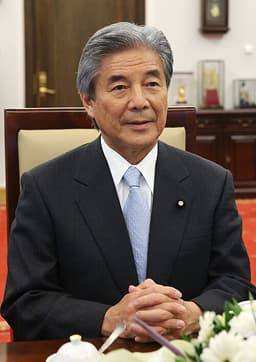
Yasuhiro Nakasone
Politician · Modern
56.2Total
Basic Information
Born
1971
1918
Died
—
2019
Era
Modern
Modern
Nationality
Canada
Japan
Occupation
Politician
Politician
Civilization
Western
Eastern
Score Comparison
Military (10%)
10.0
11.4
Political (20%)
68.0
72.0
Influence (20%)
55.0
62.0
Legacy (20%)
46.7
52.0
Leadership (15%)
72.0
79.8
Strategy (15%)
38.6
38.2
TOTAL
51.3
56.2
Justin Trudeau — Complete Timeline
2015 AD
Election as Prime Minister of CanadaPolitical Action
Trudeau led the Liberal Party to a majority government victory, defeating Stephen Harper's Conservatives. His campaign focused on 'real change' and included promises of electoral reform, legalizing cannabis, and running deficits to stimulate the economy.
Canadian ElectionLiberal PartyMajority Government
Impact: nationalprogressive
2018 AD
Legalization of Cannabis in CanadaReform◆ Major
Trudeau's government passed the Cannabis Act, making Canada the second country in the world to legalize recreational cannabis. The law aimed to regulate production, distribution, and possession, while reducing the illegal market and criminal penalties.
Cannabis LegalizationDrug PolicySocial Reform
Impact: nationalprogressive
2019 AD
SNC-Lavalin ScandalPolitical Action◆ Major
Trudeau faced allegations that his office pressured Attorney General Jody Wilson-Raybould to intervene in the criminal prosecution of engineering firm SNC-Lavalin. The scandal led to Wilson-Raybould's resignation and damaged Trudeau's reputation for ethical governance.
Ethics ScandalPolitical InterferenceJustice
Impact: nationaldestructive
Yasuhiro Nakasone — Complete Timeline
1981 AD
Administrative Reform and Fiscal ReconstructionReform
Nakasone launched a major administrative reform aimed at reducing government spending and streamlining bureaucracy. He established the Second Provisional Commission for Administrative Reform, which recommended cuts to public works, subsidies, and the number of civil servants, contributing to fiscal consolidation.
Administrative ReformFiscal PolicyJapan
Impact: nationalconstructive
1983 AD
Strengthening of the US-Japan AlliancePolitical Action◆ Major
Nakasone deepened the US-Japan security alliance, notably by declaring Japan an 'unsinkable aircraft carrier' and increasing defense spending. He also agreed to share military technology with the US and supported the deployment of US forces in Japan, solidifying the bilateral partnership during the Cold War.
AllianceDefenseCold War
Impact: regionalconstructive
1986 AD
Hosting the 1986 Tokyo SummitPolitical Action
Nakasone hosted the 12th G7 summit in Tokyo in May 1986, where leaders discussed economic coordination, terrorism, and the Chernobyl disaster. The summit enhanced Japan's international profile and showcased Nakasone's leadership on the global stage.
DiplomacyG7International Summit
Impact: global
1987 AD
Privatization of Japanese National RailwaysReform◆ Major
As prime minister, Yasuhiro Nakasone oversaw the privatization of the debt-ridden Japanese National Railways (JNR), splitting it into regional passenger companies and a freight company. The reform, implemented in April 1987, aimed to improve efficiency and service quality, and is credited with revitalizing Japan's railway system.
PrivatizationInfrastructureEconomic Reform
Impact: nationalconstructive
Expert Analysis
Origins
Justin Trudeau, born December 25, 1971, in Ottawa, is the eldest son of former Prime Minister Pierre Trudeau. He grew up in the political spotlight, attending McGill University (B.A. in literature) and the University of British Columbia (B.Ed.). Before politics, he worked as a teacher and public speaker. Yasuhiro Nakasone, born May 27, 1918, in Takasaki, Japan, was the son of a wealthy lumber merchant. He studied political science at Tokyo Imperial University and entered the Home Ministry in 1941. His early career included wartime service as a naval officer, and after WWII, he was elected to the Diet in 1947.
Rise to Power
Trudeau entered politics in 2008, winning a seat in the House of Commons. He rose quickly, becoming Liberal Party leader in 2013. In the 2015 federal election, he led the Liberals to a majority government, defeating Stephen Harper's Conservatives. His campaign focused on 'real change' and progressive policies. Nakasone first entered the Diet in 1947 at age 29. He held various ministerial posts, including Minister of International Trade and Industry (1972-1974). He became Prime Minister in November 1982, serving until November 1987. His rise was marked by his hawkish stance on defense and close ties with the U.S.
Leadership & Governance
Trudeau's leadership emphasized progressive social policies. His government legalized recreational cannabis in 2018 via the Cannabis Act, making Canada the second country (after Uruguay) to do so. He also implemented a carbon tax, expanded refugee resettlement, and advanced gender parity in his cabinet. However, his management of the SNC-Lavalin scandal in 2019, where his office pressured Attorney General Jody Wilson-Raybould to intervene in a corruption case, damaged his reputation. Nakasone focused on administrative reform and privatization. He privatized the debt-ridden Japanese National Railways in 1987, splitting it into regional companies. He also restructured government agencies and promoted fiscal austerity. His political score of 72.0 reflects his ability to push through reforms despite opposition.
Triumph & Tragedy
Trudeau's greatest success is the legalization of cannabis, which regulated a previously black market and reduced arrests for possession. He also signed the Canada-United States-Mexico Agreement (CUSMA) in 2020. His failures include the SNC-Lavalin scandal and ethical investigations by the ethics commissioner for accepting a vacation from the Aga Khan. His handling of the COVID-19 pandemic saw mixed results. Nakasone's triumph was strengthening the U.S.-Japan alliance, declaring Japan an 'unsinkable aircraft carrier' and increasing defense spending. He also hosted the 1986 Tokyo Summit. His privatization of JNR succeeded in reducing public debt. However, his tenure saw the rise of trade friction with the U.S., leading to the Plaza Accord in 1985, which contributed to Japan's asset price bubble. His influence score of 62.0 reflects his role in shaping post-war Japan.
Character & Destiny
Trudeau's charisma and progressive ideals drove his initial popularity, but his leadership score of 72.0 is tempered by a tendency toward poor judgment in ethical matters. His strategy score of 38.6 indicates challenges in navigating crises. Nakasone was a pragmatic reformer with a strong will, earning a leadership score of 79.8. His strategic foresight in aligning Japan with the U.S. and implementing structural reforms defined his legacy. However, his strategy score of 38.2 (slightly lower than Trudeau's) suggests that his reforms sometimes lacked long-term planning, contributing to economic imbalances.
Legacy
Trudeau's legacy is mixed: he advanced progressive policies (cannabis legalization, carbon pricing) but also left a record of ethical controversies. His influence score of 55.0 suggests moderate global impact. Nakasone's legacy is more enduring: his privatization of JNR became a model for public sector reform, and his defense policies strengthened Japan's role in global security. His total score of 56.2 surpasses Trudeau's 51.3, reflecting higher political effectiveness and leadership.
Conclusion
While Trudeau's progressive agenda marked a shift in Canadian politics, Nakasone's structural reforms and strategic alliance-building had a more profound and lasting impact. Nakasone's higher scores in political (72.0 vs 68.0), influence (62.0 vs 55.0), and leadership (79.8 vs 72.0) demonstrate a more effective governance record. Therefore, Yasuhiro Nakasone had greater impact as a leader, despite Trudeau's higher profile in contemporary media.
Rankings
🥇
Yasuhiro NakasoneLeader
Mil: 11.4Pol: 72.0Inf: 62.0
56.2
🥈
Justin Trudeau
Mil: 10.0Pol: 68.0Inf: 55.0
51.3
+4.9 behind
How This Comparison Works
Algorithm
Each figure is scored on 6 dimensions (0—100 scale) based on structured historical data: Military (10%), Political (20%), Influence (20%), Legacy (20%), Leadership (15%), Strategy (15%). The weighted total produces the final ranking.
Data Sources
Scores are computed from structured sub-indicators in the database. Scale factors adjust for era (Ancient ×0.85, Modern ×1.0) and civilization size (Eastern ×1.05, Other ×0.80) to account for differences in population and military scale.
Maximum 3 Figures
Comparisons are limited to 2—3 figures to ensure readability and statistical meaningfulness.
Error Margins
±5 points per dimension — Sub-scores are derived from historical records with inherent uncertainty. Two figures within 5 points on a dimension should be considered roughly equivalent in that area.
Total Score Accuracy
±3 points overall — The weighted combination of 6 dimensions produces a total score with approximately ±3 points of uncertainty. Differences of less than 3 points are not statistically significant— the figures are effectively tied.
Known Limitations
- Historical records are incomplete and uneven across civilizations
- Figures from oral-tradition societies may be underrepresented
- Occupation labels can misclassify multi-role figures
- Scores measure capability and impact, not moral character
- Quantitative scoring is a comparison tool, not absolute truth
Capability Radar
Military (10%) — Battles & Warfare
Battles
0
15
Win Rate
0
18
Expansion
0
21
Political (20%) — Governance & Reform
Reform
55
70
Diplomacy
60
80
Economy
50
60
Influence (20%) — Cultural & Global Reach
Cultural
50
40
Global
55
60
Legacy (20%) — Historical Impact
Historical
40
55
Longevity
30
45
Leadership (15%) — Power & Stability
Tenure
65
65
Stability
45
65
Strategy (15%) — Tactics & Innovation
Strategy
0
23
Tactics
0
24
Reform
5
26
Similar Comparisons
Comments & Discussion
No comments yet. Be the first to share your thoughts!