Loading...
David Dacko vs Yasuhiro Nakasone
Yasuhiro Nakasone leads by 8.8 pts · 2 figures compared
…

David Dacko
Politician · Modern
47.4Total
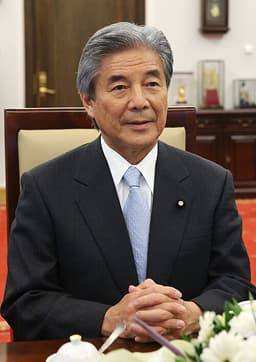
Yasuhiro Nakasone
Politician · Modern
56.2Total
Basic Information
Born
1930
1918
Died
—
2019
Era
Modern
Modern
Nationality
Central African Republic
Japan
Occupation
Politician
Politician
Civilization
Other
Eastern
Score Comparison
Military (10%)
50.0
11.4
Political (20%)
39.4
72.0
Influence (20%)
48.6
62.0
Legacy (20%)
39.2
52.0
Leadership (15%)
67.0
79.8
Strategy (15%)
44.9
38.2
TOTAL
47.4
56.2
David Dacko — Complete Timeline
1960 AD
Became First President of Central African RepublicPolitical Action
David Dacko became the first President of the Central African Republic upon independence from France on August 13, 1960. He had previously served as Prime Minister under French colonial administration. His presidency established the political framework of the new nation.
IndependenceCARFounding President
Impact: nationalconstructive
1966 AD
Overthrown by Jean-Bédel BokassaPolitical Action◆ Major
On January 1, 1966, Dacko was overthrown in a military coup led by his cousin, Colonel Jean-B
CoupBokassaCAR
Impact: nationaldestructive
1979 AD
Returned to Power as PresidentPolitical Action◆ Major
After Bokassa was overthrown in a French-backed operation (Operation Barracuda) on September 20, 1979, Dacko was reinstated as president. He returned from exile to lead a transitional government, but his second term was marked by instability and economic decline.
RestorationCARFrench Intervention
Impact: national
1981 AD
Overthrown by André KolingbaPolitical Action◆ Major
Dacko was again overthrown in a bloodless coup on September 1, 1981, by General Andr
CoupKolingbaCAR
Impact: nationaldestructive
Yasuhiro Nakasone — Complete Timeline
1981 AD
Administrative Reform and Fiscal ReconstructionReform
Nakasone launched a major administrative reform aimed at reducing government spending and streamlining bureaucracy. He established the Second Provisional Commission for Administrative Reform, which recommended cuts to public works, subsidies, and the number of civil servants, contributing to fiscal consolidation.
Administrative ReformFiscal PolicyJapan
Impact: nationalconstructive
1983 AD
Strengthening of the US-Japan AlliancePolitical Action◆ Major
Nakasone deepened the US-Japan security alliance, notably by declaring Japan an 'unsinkable aircraft carrier' and increasing defense spending. He also agreed to share military technology with the US and supported the deployment of US forces in Japan, solidifying the bilateral partnership during the Cold War.
AllianceDefenseCold War
Impact: regionalconstructive
1986 AD
Hosting the 1986 Tokyo SummitPolitical Action
Nakasone hosted the 12th G7 summit in Tokyo in May 1986, where leaders discussed economic coordination, terrorism, and the Chernobyl disaster. The summit enhanced Japan's international profile and showcased Nakasone's leadership on the global stage.
DiplomacyG7International Summit
Impact: global
1987 AD
Privatization of Japanese National RailwaysReform◆ Major
As prime minister, Yasuhiro Nakasone oversaw the privatization of the debt-ridden Japanese National Railways (JNR), splitting it into regional passenger companies and a freight company. The reform, implemented in April 1987, aimed to improve efficiency and service quality, and is credited with revitalizing Japan's railway system.
PrivatizationInfrastructureEconomic Reform
Impact: nationalconstructive
Expert Analysis
Origins
David Dacko was born on March 24, 1930, in Bouchia, French Equatorial Africa (now Central African Republic). He came from a modest background; his father was a farmer. Dacko studied at the École Normale in Mouyondzi, Congo, and later became a teacher. He entered politics through the independence movement, aligning with Barthélemy Boganda, the founder of the Central African Republic. After Boganda's death in 1959, Dacko succeeded him as head of government.
Yasuhiro Nakasone was born on May 27, 1918, in Takasaki, Gunma Prefecture, Japan, into a wealthy family of sake brewers. He studied law at Tokyo Imperial University and entered the Ministry of Home Affairs in 1941. After World War II, he was elected to the Diet in 1947 as a member of the Liberal Party. Nakasone's early career was shaped by his nationalist views and his mentor, Ichiro Hatoyama.
Rise to Power
Dacko became the first President of the Central African Republic upon independence from France on August 13, 1960. He had previously served as Prime Minister under Boganda. His rise was smooth due to his association with Boganda and French support. However, his rule was marked by economic decline and political instability, leading to his overthrow by his cousin, Colonel Jean-Bédel Bokassa, on January 1, 1966.
Nakasone rose through the ranks of the Liberal Democratic Party (LDP), holding various ministerial posts including Minister of Defense and Minister of International Trade and Industry. He became Prime Minister on November 27, 1982, after a long career as a faction leader. His key turning point was his ability to balance factional politics and present himself as a strong leader committed to administrative reform.
Leadership & Governance
Dacko's leadership style was cautious and reliant on French support. He pursued limited economic development but failed to address corruption and regional disparities. His governance was characterized by a weak central government and a lack of institutional reform. For example, he maintained the colonial administrative structure without adapting it to local needs. His political score of 39.4 reflects his inability to consolidate power.
Nakasone was a decisive leader who pursued major reforms. He privatized Japanese National Railways (JNR) in 1987, splitting it into regional passenger companies and a freight company, which improved efficiency. He also strengthened the US-Japan alliance, declaring Japan an 'unsinkable aircraft carrier' and increasing defense spending by 6.9% in 1983. His leadership score of 79.8 indicates his effective governance.
Triumph & Tragedy
Dacko's greatest success was leading the Central African Republic to independence. However, his failures were numerous: he was overthrown twice (1966 and 1981), and his second term from 1979 to 1981 was marked by economic stagnation and political repression. He scored 50.0 in military but lacked strategic vision (44.9).
Nakasone's triumphs include the privatization of JNR, which turned a massive debt into a profitable system, and his role in international diplomacy, such as hosting the 1986 Tokyo Summit. His tragedy was his inability to fully dismantle Japan's bureaucratic structure, and his nationalist rhetoric sometimes strained relations with Asian neighbors. His strategy score of 38.2 suggests limited long-term planning beyond his reforms.
Character & Destiny
Dacko was a cautious, French-dependent leader who lacked the ruthlessness to maintain power. His character was shaped by his background as a teacher, leading to a more conciliatory style. This made him vulnerable to coups. His destiny was to be a transitional figure, overshadowed by Bokassa and later Kolingba.
Nakasone was ambitious, confident, and willing to take on powerful interests. He had a strong nationalist streak but was pragmatic in foreign policy. His character allowed him to push through reforms, but his confrontational style created enemies within the LDP. He resigned in 1987 after a relatively long tenure of five years.
Legacy
Dacko's legacy is mixed: he is remembered as the first president but also as a weak leader who failed to establish stable institutions. The Central African Republic continued to suffer from political instability long after his rule. His influence score of 48.6 reflects his limited impact.
Nakasone's legacy is more substantial: he is credited with revitalizing Japan's economy through privatization and strengthening its global role. His reforms set the stage for Japan's economic resilience in the 1990s. His legacy score of 52.0 is higher than Dacko's 39.2.
Conclusion
Yasuhiro Nakasone had a greater impact than David Dacko, as evidenced by his higher total score of 56.2 versus Dacko's 47.4. Nakasone's reforms transformed Japan's economy and international posture, while Dacko's weak leadership contributed to decades of instability in the Central African Republic. Nakasone's leadership score of 79.8 far exceeds Dacko's 67.0, and his political skill (72.0) contrasts sharply with Dacko's 39.4. Although both faced challenges, Nakasone's achievements in governance and international relations were more significant and enduring.
Rankings
🥇
Yasuhiro NakasoneLeader
Mil: 11.4Pol: 72.0Inf: 62.0
56.2
🥈
David Dacko
Mil: 50.0Pol: 39.4Inf: 48.6
47.4
+8.8 behind
How This Comparison Works
Algorithm
Each figure is scored on 6 dimensions (0—100 scale) based on structured historical data: Military (10%), Political (20%), Influence (20%), Legacy (20%), Leadership (15%), Strategy (15%). The weighted total produces the final ranking.
Data Sources
Scores are computed from structured sub-indicators in the database. Scale factors adjust for era (Ancient ×0.85, Modern ×1.0) and civilization size (Eastern ×1.05, Other ×0.80) to account for differences in population and military scale.
Maximum 3 Figures
Comparisons are limited to 2—3 figures to ensure readability and statistical meaningfulness.
Error Margins
±5 points per dimension — Sub-scores are derived from historical records with inherent uncertainty. Two figures within 5 points on a dimension should be considered roughly equivalent in that area.
Total Score Accuracy
±3 points overall — The weighted combination of 6 dimensions produces a total score with approximately ±3 points of uncertainty. Differences of less than 3 points are not statistically significant— the figures are effectively tied.
Known Limitations
- Historical records are incomplete and uneven across civilizations
- Figures from oral-tradition societies may be underrepresented
- Occupation labels can misclassify multi-role figures
- Scores measure capability and impact, not moral character
- Quantitative scoring is a comparison tool, not absolute truth
Capability Radar
Military (10%) — Battles & Warfare
Battles
24
15
Win Rate
22
18
Expansion
30
21
Political (20%) — Governance & Reform
Reform
20
70
Diplomacy
25
80
Economy
15
60
Influence (20%) — Cultural & Global Reach
Cultural
10
40
Global
10
60
Legacy (20%) — Historical Impact
Historical
15
55
Longevity
10
45
Leadership (15%) — Power & Stability
Tenure
40
65
Stability
10
65
Strategy (15%) — Tactics & Innovation
Strategy
28
23
Tactics
35
24
Reform
35
26
Similar Comparisons
Comments & Discussion
No comments yet. Be the first to share your thoughts!