Loading...
This comparison has not been analyzed yet.
One-time AI generation (~1 minute). Scores and timeline are already available below.
Crispus vs Wei Yan
Wei Yan leads by 2.2 pts · 2 figures compared
…

Crispus
General · Ancient
43.0Total
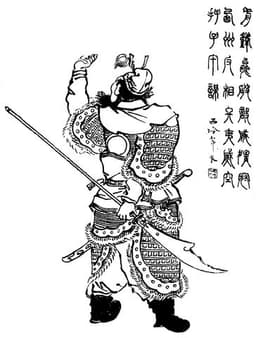
Wei Yan
General · Ancient
45.2Total
Basic Information
Born
300
175
Died
326
234
Era
Ancient
Ancient
Nationality
Roman Empire
China
Occupation
General
General
Civilization
Western
Eastern
Score Comparison
Military (10%)
46.7
52.5
Political (20%)
35.0
35.0
Influence (20%)
44.0
48.6
Legacy (20%)
34.2
42.5
Leadership (15%)
57.1
46.3
Strategy (15%)
50.0
50.0
TOTAL
43.0
45.2
Crispus — Complete Timeline
317 AD
Appointment as CaesarPolitical Action◆ Major
Constantine appointed Crispus as Caesar, making him the heir apparent to the Western provinces. Crispus was given command of the Gallic frontier and later played a key role in the war against Licinius. His appointment was part of Constantine's dynastic planning.
Imperial AppointmentCaesarConstantine Dynasty
Impact: regional
318 AD
Victory over the FranksWar◆ Major
Crispus led a Roman army to victory against the Frankish tribes along the Rhine frontier. The campaign secured the border and demonstrated his military competence. Constantine praised his son's success, and Crispus was hailed as a capable general.
Germanic WarsBattleConstantine Dynasty
Impact: regionalconstructive
324 AD
Naval Campaign against LiciniusWar◆ Major
Crispus commanded the Roman fleet in the Battle of the Hellespont against Licinius's navy. His victory destroyed Licinius's naval forces and allowed Constantine to cross into Asia Minor. This was a decisive moment in the civil war that ended the Tetrarchy.
Civil WarNaval BattleLicinius
Impact: regionalconstructive
326 AD
Execution by Order of ConstantinePolitical Action
Crispus was executed at Pola on the orders of his father Constantine, under unclear circumstances. The reasons remain debated, possibly involving accusations of adultery with his stepmother Fausta. His death was a major scandal in the Constantinian dynasty and led to the later execution of Fausta.
ExecutionDynastic ScandalConstantine
Impact: regionaltragic
Wei Yan — Complete Timeline
219 AD
Wei Yan's Appointment as Governor of HanzhongPolitical Action◆ Major
After Liu Bei conquered Hanzhong, he appointed Wei Yan as the governor of this strategic region, bypassing the more senior Zhang Fei. Wei Yan successfully defended Hanzhong against Wei attacks for years, proving his competence.
AppointmentDefenseHanzhong
Impact: regionalconstructive
228 AD
Wei Yan's Northern Expeditions under Zhuge LiangWar◆ Major
Wei Yan served as a frontline commander in Zhuge Liang's Northern Expeditions against Wei. He proposed the risky 'Ziwu Valley' plan to attack Chang'an directly, but Zhuge Liang rejected it. Wei Yan's forces achieved several tactical victories.
ExpeditionMilitary CampaignStrategy
Impact: regional
234 AD
Wei Yan's Rebellion and DeathPolitical Action◆ Major
After Zhuge Liang's death, Wei Yan clashed with the chief of staff Yang Yi over command. Wei Yan burned the retreat route and was accused of rebellion. He was defeated, captured, and executed by Ma Dai. The historical accuracy of his 'rebellion' is debated.
RebellionExecutionPower Struggle
Impact: nationaltragic
This comparison has not been analyzed yet.
One-time AI generation (~1 minute). Scores and timeline are already available below.
Rankings
🥇
Wei YanLeader
Mil: 52.5Pol: 35.0Inf: 48.6
45.2
🥈
Crispus
Mil: 46.7Pol: 35.0Inf: 44.0
43.0
+2.2 behind
How This Comparison Works
Algorithm
Each figure is scored on 6 dimensions (0—100 scale) based on structured historical data: Military (10%), Political (20%), Influence (20%), Legacy (20%), Leadership (15%), Strategy (15%). The weighted total produces the final ranking.
Data Sources
Scores are computed from structured sub-indicators in the database. Scale factors adjust for era (Ancient ×0.85, Modern ×1.0) and civilization size (Eastern ×1.05, Other ×0.80) to account for differences in population and military scale.
Maximum 3 Figures
Comparisons are limited to 2—3 figures to ensure readability and statistical meaningfulness.
Error Margins
±5 points per dimension — Sub-scores are derived from historical records with inherent uncertainty. Two figures within 5 points on a dimension should be considered roughly equivalent in that area.
Total Score Accuracy
±3 points overall — The weighted combination of 6 dimensions produces a total score with approximately ±3 points of uncertainty. Differences of less than 3 points are not statistically significant— the figures are effectively tied.
Known Limitations
- Historical records are incomplete and uneven across civilizations
- Figures from oral-tradition societies may be underrepresented
- Occupation labels can misclassify multi-role figures
- Scores measure capability and impact, not moral character
- Quantitative scoring is a comparison tool, not absolute truth
Capability Radar
Military (10%) — Battles & Warfare
Battles
15
45
Win Rate
20
40
Expansion
10
30
Political (20%) — Governance & Reform
Reform
5
10
Diplomacy
10
20
Economy
5
10
Influence (20%) — Cultural & Global Reach
Cultural
5
30
Global
5
10
Legacy (20%) — Historical Impact
Historical
10
35
Longevity
5
30
Leadership (15%) — Power & Stability
Tenure
10
30
Stability
5
15
Strategy (15%) — Tactics & Innovation
Strategy
15
50
Tactics
20
55
Reform
5
20
Similar Comparisons
Comments & Discussion
No comments yet. Be the first to share your thoughts!