Loading...
Wei Yan vs Xiahou Dun
Wei Yan leads by 0.6 pts · 2 figures compared
…
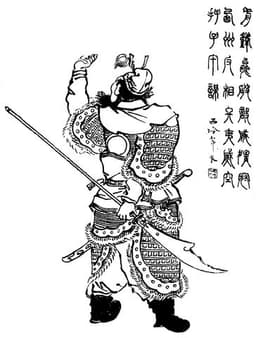
Wei Yan
General · Ancient
45.2Total

Xiahou Dun
General · Ancient
44.6Total
Basic Information
Born
175
155
Died
234
220
Era
Ancient
Ancient
Nationality
China
China
Occupation
General
General
Civilization
Eastern
Eastern
Score Comparison
Military (10%)
52.5
52.5
Political (20%)
35.0
32.1
Influence (20%)
48.6
51.0
Legacy (20%)
42.5
44.2
Leadership (15%)
46.3
36.9
Strategy (15%)
50.0
52.5
TOTAL
45.2
44.6
Wei Yan — Complete Timeline
219 AD
Wei Yan's Appointment as Governor of HanzhongPolitical Action◆ Major
After Liu Bei conquered Hanzhong, he appointed Wei Yan as the governor of this strategic region, bypassing the more senior Zhang Fei. Wei Yan successfully defended Hanzhong against Wei attacks for years, proving his competence.
AppointmentDefenseHanzhong
Impact: regionalconstructive
228 AD
Wei Yan's Northern Expeditions under Zhuge LiangWar◆ Major
Wei Yan served as a frontline commander in Zhuge Liang's Northern Expeditions against Wei. He proposed the risky 'Ziwu Valley' plan to attack Chang'an directly, but Zhuge Liang rejected it. Wei Yan's forces achieved several tactical victories.
ExpeditionMilitary CampaignStrategy
Impact: regional
234 AD
Wei Yan's Rebellion and DeathPolitical Action◆ Major
After Zhuge Liang's death, Wei Yan clashed with the chief of staff Yang Yi over command. Wei Yan burned the retreat route and was accused of rebellion. He was defeated, captured, and executed by Ma Dai. The historical accuracy of his 'rebellion' is debated.
RebellionExecutionPower Struggle
Impact: nationaltragic
Xiahou Dun — Complete Timeline
190 AD
Battle of XingyangWar◆ Major
Xiahou Dun served under Cao Cao during the campaign against Dong Zhuo. He was wounded by an arrow in the eye during a skirmish, an injury that defined his later appearance and reputation as the one-eyed general.
Three KingdomsInjuryCao Cao
Impact: nationaltragic
194 AD
Battle of PuyangWar
Xiahou Dun was captured by L
Three KingdomsCaptureLü Bu
Impact: national
200 AD
Battle of GuanduWar◆ Major
Xiahou Dun commanded a detachment of Cao Cao's army during the decisive campaign against Yuan Shao. He helped secure supply lines and participated in the final assault that broke Yuan Shao's forces.
Three KingdomsBattleYuan Shao
Impact: nationalconstructive
202 AD
Battle of BowangWar
Xiahou Dun led an expedition against Liu Bei but was defeated by a fire attack at Bowang. He retreated with heavy losses, a rare defeat in his career.
Three KingdomsDefeatLiu Bei
Impact: nationaldestructive
205 AD
Appointed General of the VanguardPolitical Action◆ Major
Cao Cao appointed Xiahou Dun as General of the Vanguard, one of the highest military posts in Wei. This reflected his trusted status and long service.
Three KingdomsPromotionCao Cao
Impact: nationalconstructive
220 AD
Death and Posthumous HonorsOther
Xiahou Dun died shortly after Cao Cao's death. He was posthumously granted the title of Marquis of Dangtu, honoring his decades of loyalty and service to Wei.
Three KingdomsDeathHonors
Impact: national
Expert Analysis
Origins
Wei Yan was born around 170 in Yiyang, Jing Province (modern Henan), entering Liu Bei's service as a private retainer. His early life is obscure, but he rose through merit rather than family connections. Xiahou Dun was born around 155 in Pei County (modern Anhui), a cousin of Cao Cao. As a member of the Xiahou clan, he had natural ties to the Cao family, joining Cao Cao's uprising against Dong Zhuo in 190. While Wei Yan lacked elite lineage, Xiahou Dun's noble background gave him early access to power.
Rise to Power
Wei Yan's breakthrough came in 219 when Liu Bei, after conquering Hanzhong, appointed him Governor of Hanzhong instead of the more senior Zhang Fei. This was a controversial decision, but Wei Yan's boastful declaration that he would hold the position against any enemy proved accurate for a decade. Xiahou Dun's rise was steady: he served Cao Cao from the beginning, losing an eye at the Battle of Xingyang (190) while covering Cao Cao's retreat. He was appointed General of the Vanguard, a top military post, and commanded at Guandu (200), securing supply lines. His loyalty was unquestioned, unlike Wei Yan's later rebellion.
Leadership & Governance
Wei Yan's leadership was aggressive and independent. He proposed the risky Ziwu Valley plan to attack Chang'an directly, which Zhuge Liang rejected as too dangerous. This shows Wei Yan's preference for bold, high-risk strategies. In contrast, Xiahou Dun was a steady, loyal commander who followed orders. He was known for his personal bravery, but his governance was limited; he served primarily as a battlefield general. Xiahou Dun's leadership score of 36.9 reflects his role as a executor rather than an innovator, while Wei Yan's 46.3 indicates more strategic initiative, though flawed by insubordination.
Triumph & Tragedy
Wei Yan's greatest triumph was his defense of Hanzhong (219-228), where he repelled Wei attacks using a forward defense system. However, his tragedy came after Zhuge Liang's death in 234: he clashed with Yang Yi over command, burned the retreat route, and was executed for rebellion. The historical record is ambiguous—some argue he was framed. Xiahou Dun's triumphs include his service at Guandu and his capture of Lü Bu's general Gao Shun in 198. His tragedy was the defeat at Bowang (202) by a fire attack from Liu Bei, a rare failure. He also suffered the indignity of being captured by Lü Bu at Puyang (194), though he was released. Xiahou Dun's military score of 52.5 matches Wei Yan's, but his political score of 32.1 is lower than Wei Yan's 35.0, reflecting less influence in court intrigue.
Character & Destiny
Wei Yan was arrogant, ambitious, and quick to conflict. His character led him to propose bold plans but also made him enemies among Zhuge Liang's staff. His decision to burn the retreat route was seen as treason, but modern historians note he may have been a victim of political maneuvering. Xiahou Dun was stoic and loyal, famously continuing to fight after losing an eye. He was generous with his wealth, often rewarding soldiers. His character earned Cao Cao's trust, ensuring a stable career. However, his lack of political ambition meant he never rose above general, while Wei Yan's ambition led to his downfall.
Legacy
Wei Yan is remembered as a tragic figure in the Three Kingdoms, his story debated in Chinese historiography. His defensive system in Hanzhong was later used by other Shu generals. In popular culture, he is often depicted as a rebel. Xiahou Dun's legacy is that of a loyal, one-eyed warrior, celebrated in folklore as a symbol of perseverance. He is remembered as one of Cao Cao's most trusted generals, but his impact on strategy is minimal. Xiahou Dun's legacy score of 44.2 slightly exceeds Wei Yan's 42.5, reflecting his prominent role in the Romance of the Three Kingdoms.
Conclusion
While both scored similarly on the composite scale (Wei Yan 45.2, Xiahou Dun 44.6), Wei Yan had a greater impact on military strategy through his defense of Hanzhong and his controversial proposals. Xiahou Dun was a reliable lieutenant but lacked independent strategic influence. Wei Yan's legacy as a tragic, ambitious commander offers more lessons about leadership and rebellion. Therefore, Wei Yan edges out Xiahou Dun in historical significance.
Rankings
🥇
Wei YanLeader
Mil: 52.5Pol: 35.0Inf: 48.6
45.2
🥈
Xiahou Dun
Mil: 52.5Pol: 32.1Inf: 51.0
44.6
+0.6 behind
How This Comparison Works
Algorithm
Each figure is scored on 6 dimensions (0—100 scale) based on structured historical data: Military (10%), Political (20%), Influence (20%), Legacy (20%), Leadership (15%), Strategy (15%). The weighted total produces the final ranking.
Data Sources
Scores are computed from structured sub-indicators in the database. Scale factors adjust for era (Ancient ×0.85, Modern ×1.0) and civilization size (Eastern ×1.05, Other ×0.80) to account for differences in population and military scale.
Maximum 3 Figures
Comparisons are limited to 2—3 figures to ensure readability and statistical meaningfulness.
Error Margins
±5 points per dimension — Sub-scores are derived from historical records with inherent uncertainty. Two figures within 5 points on a dimension should be considered roughly equivalent in that area.
Total Score Accuracy
±3 points overall — The weighted combination of 6 dimensions produces a total score with approximately ±3 points of uncertainty. Differences of less than 3 points are not statistically significant— the figures are effectively tied.
Known Limitations
- Historical records are incomplete and uneven across civilizations
- Figures from oral-tradition societies may be underrepresented
- Occupation labels can misclassify multi-role figures
- Scores measure capability and impact, not moral character
- Quantitative scoring is a comparison tool, not absolute truth
Capability Radar
Military (10%) — Battles & Warfare
Battles
45
45
Win Rate
40
50
Expansion
30
30
Political (20%) — Governance & Reform
Reform
10
15
Diplomacy
20
35
Economy
10
25
Influence (20%) — Cultural & Global Reach
Cultural
30
35
Global
10
20
Legacy (20%) — Historical Impact
Historical
35
40
Longevity
30
35
Leadership (15%) — Power & Stability
Tenure
30
40
Stability
15
30
Strategy (15%) — Tactics & Innovation
Strategy
50
50
Tactics
55
55
Reform
20
20
Similar Comparisons
Comments & Discussion
No comments yet. Be the first to share your thoughts!