Loading...
Curtis LeMay vs Wladyslaw Sikorski
Curtis LeMay leads by 7.8 pts · 2 figures compared
…

Curtis LeMay
General · Modern
61.9Total
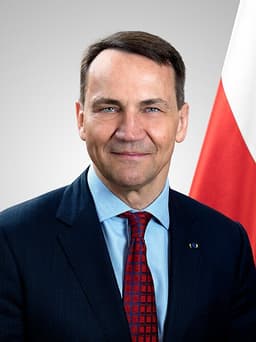
Wladyslaw Sikorski
General · Modern
54.1Total
Basic Information
Born
1906
1881
Died
1990
1943
Era
Modern
Modern
Nationality
United States
Poland
Occupation
General
General
Civilization
Western
Western
Score Comparison
Military (10%)
78.5
25.0
Political (20%)
45.1
53.8
Influence (20%)
65.0
60.0
Legacy (20%)
55.0
52.0
Leadership (15%)
62.0
70.0
Strategy (15%)
80.3
50.0
TOTAL
61.9
54.1
Curtis LeMay — Complete Timeline
1942 AD
Assumed Command of the 305th Bombardment GroupOther◆ Major
LeMay took command of the 305th Bombardment Group in England in 1942. He implemented rigorous training and formation tactics that reduced bomber losses to German fighters, establishing his reputation as an innovative and demanding commander in the Eighth Air Force.
World War IIStrategic Bombing
Impact: national
1945 AD
Led the Firebombing of TokyoOther◆ Major
On March 9-10, 1945, LeMay ordered 334 B-29 bombers to conduct a low-altitude incendiary raid on Tokyo. The attack destroyed 16 square miles of the city, killed an estimated 100,000 civilians, and burned out over one million residents, marking a shift to area bombing of Japanese cities.
World War IIStrategic BombingCivilian Casualties
Impact: globaldestructive
1948 AD
Appointed Commander of Strategic Air CommandOther◆ Major
LeMay was appointed commander of the Strategic Air Command (SAC) in October 1948. He transformed SAC from a poorly organized force into a highly efficient nuclear deterrent, instituting rigorous training, 24-hour alert status, and a professional culture that defined Cold War air power.
Cold WarNuclear Deterrence
Impact: global
1961 AD
Became Chief of Staff of the United States Air ForceOther◆ Major
LeMay served as Chief of Staff of the U.S. Air Force from June 1961 to February 1965. He advocated for expanded bombing campaigns in the Vietnam War, including the bombing of North Vietnam, and clashed with civilian leadership over strategy, particularly during the Cuban Missile Crisis.
Cold WarVietnam WarMilitary Leadership
Impact: national
1968 AD
Ran for Vice President with George WallacePolitical Action
LeMay was the vice presidential running mate for American Independent Party candidate George Wallace in the 1968 presidential election. His controversial suggestion that nuclear weapons could be used in Vietnam damaged the campaign, which ultimately won 13.5% of the popular vote.
PoliticsPresidential Election
Impact: nationaldestructive
Wladyslaw Sikorski — Complete Timeline
1939 AD
Appointment as Prime Minister of the Polish government-in-exilePolitical Action◆ Major
After the German invasion of Poland, Sikorski was appointed prime minister of the Polish government-in-exile on September 30, 1939, in Paris. He also served as Commander-in-Chief of the Polish Armed Forces. He led the exiled government throughout most of World War II.
Government-in-ExileWorld War IILeadership
Impact: nationalconstructive
1941 AD
Signing of the Sikorski-Maisky AgreementPolitical Action
Sikorski signed the Sikorski-Maisky Agreement with the Soviet Union on July 30, 1941, after the German invasion of the USSR. The agreement restored diplomatic relations, annulled the 1939 partition of Poland, and allowed for the formation of a Polish army in the Soviet Union under General Anders.
DiplomacySoviet UnionPolish Army
Impact: globalconstructive
1943 AD
Discovery of the Katyn MassacrePolitical Action◆ Major
In April 1943, German forces announced the discovery of mass graves of Polish officers in the Katyn Forest. Sikorski requested an International Red Cross investigation, which led to a break in diplomatic relations with the Soviet Union on April 25, 1943, as the USSR denied responsibility.
KatynMassacreSoviet Relations
Impact: globaltragic
Death in the Gibraltar plane crashOther
Sikorski died in a plane crash at Gibraltar on July 4, 1943, shortly after takeoff. The crash killed all 16 passengers and crew, including his daughter. The cause remains disputed, with theories ranging from accident to Soviet or British assassination. His death was a major blow to the Polish government-in-exile.
DeathPlane CrashConspiracy
Impact: nationaltragic
Expert Analysis
Origins
Curtis LeMay was born on November 15, 1906, in Columbus, Ohio, to a working-class family. His father was a handyman and his mother a homemaker. LeMay attended Ohio State University, earning a degree in civil engineering in 1928, and joined the U.S. Army Air Corps in 1929. His early career included roles as a navigator and pilot, with a focus on precision bombing techniques.
Wladyslaw Sikorski was born on May 20, 1881, in Tuszów Narodowy, Poland, then part of the Austro-Hungarian Empire. He came from a noble but impoverished family. Sikorski studied engineering at Lwów Polytechnic and became involved in Polish independence movements. He served in the Austro-Hungarian Army during World War I and later joined the Polish Legions. In 1920, he commanded Polish forces in the Battle of Warsaw against the Soviet Union, contributing to Poland's victory.
Rise to Power
LeMay's rise began during World War II. In 1942, he took command of the 305th Bombardment Group in England, where he implemented rigorous training and formation tactics that reduced bomber losses. His success led to command of the 3rd Bombardment Division in 1943, and later the 20th Air Force in the Pacific. In 1945, he orchestrated the firebombing of Tokyo, which destroyed 16 square miles and killed an estimated 100,000 civilians. After the war, he commanded the Berlin Airlift in 1948, and was appointed head of the Strategic Air Command (SAC) in October 1948, transforming it into a nuclear deterrent force.
Sikorski's rise came through political and military leadership. After Germany invaded Poland in 1939, he was appointed Prime Minister of the Polish government-in-exile on September 30, 1939, in Paris. He also served as Commander-in-Chief of Polish Armed Forces. In 1941, following the German invasion of the USSR, he signed the Sikorski-Maisky Agreement with the Soviet Union on July 30, 1941, restoring diplomatic relations and securing the release of Polish prisoners. This agreement was a turning point, allowing the formation of a Polish army in the USSR.
Leadership & Governance
LeMay's leadership was autocratic and focused on efficiency. He demanded strict discipline and high standards from his crews. As head of SAC, he centralized command and insisted on constant readiness, implementing rigorous training and nuclear strike protocols. His approach was quantitative: he measured everything from bombing accuracy to maintenance turnaround. LeMay scored 78.5 in military and 62.0 in leadership, reflecting his effectiveness in combat and command. However, his political score of 45.1 shows his blunt, confrontational style hindered his influence in non-military spheres.
Sikorski's leadership was diplomatic and coalition-building. As Prime Minister of the Polish government-in-exile, he navigated complex relations with the Allies, particularly the Soviet Union. He sought to maintain Polish sovereignty while cooperating with the USSR against Germany. His political score of 53.8 reflects his skill in diplomacy, but his military score of 25.0 indicates limited direct combat command. Sikorski's leadership score of 70.0 shows his ability to inspire loyalty and manage a government in exile.
Triumph & Tragedy
LeMay's greatest success was the transformation of SAC into a credible nuclear deterrent during the Cold War. Under his command, SAC became the backbone of U.S. strategic forces. His firebombing of Japan, while controversial, was effective in destroying Japanese war industry and morale. However, his greatest failure was his advocacy for expanded bombing in the Vietnam War, which proved ineffective and costly. His 1968 vice presidential run with George Wallace was a political disaster, damaging his reputation.
Sikorski's greatest success was the Sikorski-Maisky Agreement, which reestablished Polish-Soviet relations and allowed the formation of a Polish army that fought alongside the Allies. He also maintained the legitimacy of the Polish government-in-exile. His tragedy was the discovery of the Katyn Massacre in April 1943, which revealed the Soviet murder of Polish officers. Sikorski's request for an International Red Cross investigation led to a Soviet break in relations, weakening his position. His death in a plane crash at Gibraltar on July 4, 1943, remains mysterious, depriving Poland of a key leader.
Character & Destiny
LeMay was known for his blunt, no-nonsense demeanor. He was a master of logistics and tactics, but his single-minded focus on bombing led to ethical controversies. His character shaped his fate: his military genius elevated him to the highest ranks, but his political naivete led to his marginalization after retirement. Historians assess him as a brilliant military commander but a flawed public figure.
Sikorski was a pragmatic statesman, committed to Polish independence. He balanced military and political demands, but his reliance on Allied support made him vulnerable. His destiny was cut short by his death, which some speculate was an assassination. His character—cautious yet determined—allowed him to maintain Polish representation, but also prevented him from achieving a fully independent Poland.
Legacy
LeMay's legacy is tied to strategic bombing and nuclear deterrence. He shaped the U.S. Air Force's doctrine for decades. His methods influenced bombing campaigns in subsequent conflicts. However, his reputation is tarnished by the firebombing of civilians and his controversial political views. His total score of 61.9 reflects a mixed but significant impact.
Sikorski's legacy is as a symbol of Polish resistance during World War II. He preserved the Polish government-in-exile and secured Polish participation in the Allied war effort. His role in the Katyn affair highlighted Soviet atrocities. His total score of 54.1 is lower, but his influence on Polish national identity is profound.
Conclusion
Curtis LeMay had a greater impact on military history and global strategy than Wladyslaw Sikorski. LeMay's total score of 61.9 surpasses Sikorski's 54.1 by 7.8 points. LeMay's innovations in bombing and nuclear command shaped U.S. military policy for decades, while Sikorski's influence was limited to wartime Polish diplomacy. LeMay's strategic vision had a direct effect on the Cold War's trajectory, whereas Sikorski's efforts, though crucial for Poland, did not alter the broader geopolitical outcome. LeMay's legacy, for better or worse, is more transformative.
Rankings
🥇
Curtis LeMayLeader
Mil: 78.5Pol: 45.1Inf: 65.0
61.9
🥈
Wladyslaw Sikorski
Mil: 25.0Pol: 53.8Inf: 60.0
54.1
+7.8 behind
How This Comparison Works
Algorithm
Each figure is scored on 6 dimensions (0—100 scale) based on structured historical data: Military (10%), Political (20%), Influence (20%), Legacy (20%), Leadership (15%), Strategy (15%). The weighted total produces the final ranking.
Data Sources
Scores are computed from structured sub-indicators in the database. Scale factors adjust for era (Ancient ×0.85, Modern ×1.0) and civilization size (Eastern ×1.05, Other ×0.80) to account for differences in population and military scale.
Maximum 3 Figures
Comparisons are limited to 2—3 figures to ensure readability and statistical meaningfulness.
Error Margins
±5 points per dimension — Sub-scores are derived from historical records with inherent uncertainty. Two figures within 5 points on a dimension should be considered roughly equivalent in that area.
Total Score Accuracy
±3 points overall — The weighted combination of 6 dimensions produces a total score with approximately ±3 points of uncertainty. Differences of less than 3 points are not statistically significant— the figures are effectively tied.
Known Limitations
- Historical records are incomplete and uneven across civilizations
- Figures from oral-tradition societies may be underrepresented
- Occupation labels can misclassify multi-role figures
- Scores measure capability and impact, not moral character
- Quantitative scoring is a comparison tool, not absolute truth
Capability Radar
Military (10%) — Battles & Warfare
Battles
85
45
Win Rate
90
40
Expansion
80
20
Political (20%) — Governance & Reform
Reform
45
50
Diplomacy
30
65
Economy
20
30
Influence (20%) — Cultural & Global Reach
Cultural
55
40
Global
70
50
Legacy (20%) — Historical Impact
Historical
75
55
Longevity
60
45
Leadership (15%) — Power & Stability
Tenure
60
55
Stability
25
40
Strategy (15%) — Tactics & Innovation
Strategy
92
60
Tactics
95
50
Reform
88
55
Similar Comparisons
Comments & Discussion
No comments yet. Be the first to share your thoughts!