Loading...
Dag Hammarskjold vs Roberto Marcelino Ortiz
Dag Hammarskjold leads by 15.2 pts · 2 figures compared
…
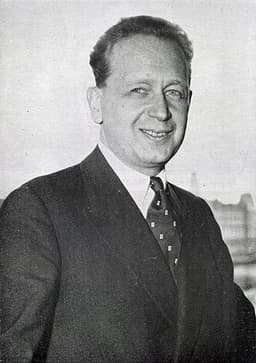
Dag Hammarskjold
Politician · Modern
60.3Total

Roberto Marcelino Ortiz
Politician · Modern
45.1Total
Basic Information
Born
1905
1886
Died
1961
1942
Era
Modern
Modern
Nationality
Sweden
Argentina
Occupation
Politician
Politician
Civilization
Western
Western
Score Comparison
Military (10%)
48.4
48.8
Political (20%)
60.0
43.7
Influence (20%)
58.3
47.1
Legacy (20%)
56.0
37.5
Leadership (15%)
79.8
55.3
Strategy (15%)
59.5
41.9
TOTAL
60.3
45.1
Dag Hammarskjold — Complete Timeline
1953 AD
Elected Secretary-General of the United NationsPolitical Action◆ Major
Dag Hammarskj
UN Secretary-GeneralLeadershipPost-War
Impact: globalconstructive
1956 AD
Established the UN Emergency ForcePolitical Action◆ Major
Hammarskjöld created the first UN peacekeeping force, the UN Emergency Force, to supervise the withdrawal of invading forces during the Suez Crisis. This established the precedent for UN peacekeeping operations.
PeacekeepingSuez CrisisUNEF
Impact: globalconstructive
1960 AD
Mediated the Congo CrisisPolitical Action◆ Major
Hammarskjöld deployed UN peacekeepers to the Congo to restore order after independence and prevent secession of Katanga. The mission faced challenges, including the death of Prime Minister Patrice Lumumba and accusations of bias.
CongoPeacekeepingDecolonization
Impact: regional
1961 AD
Killed in a plane crashOther◆ Major
Hammarskjöld died in a plane crash near Ndola, Northern Rhodesia (now Zambia), while en route to negotiate a ceasefire in the Congo. His death remains controversial, with theories of sabotage or assassination.
DeathPlane CrashCongo
Impact: globaltragic
Awarded the Nobel Peace Prize posthumouslyCultural◆ Major
Hammarskjöld was posthumously awarded the Nobel Peace Prize for his efforts to strengthen the UN and resolve international conflicts. He remains the only UN Secretary-General to receive the prize after death.
Nobel PrizePeaceUN
Impact: globalconstructive
Roberto Marcelino Ortiz — Complete Timeline
1938 AD
Elected President of ArgentinaPolitical Action◆ Major
Ortiz was elected president of Argentina as the candidate of the Concordancia coalition. His presidency began with promises of electoral reform and clean government, but he faced opposition from conservative factions within his own coalition.
PresidencyElectionArgentina
Impact: national
1940 AD
Initiated Electoral Reform EffortsReform◆ Major
Ortiz attempted to implement electoral reforms to reduce fraud and ensure fair elections. He intervened in the province of Buenos Aires to remove the conservative governor, but his efforts were blocked by the Senate and conservative opposition.
Electoral ReformPolitical ConflictArgentina
Impact: national
1942 AD
Resigned Due to DiabetesOther◆ Major
Ortiz resigned the presidency due to severe diabetes that had left him nearly blind. His resignation was accepted by Congress, and Vice President Ram
ResignationHealthArgentina
Impact: nationaldestructive
Expert Analysis
Origins
Dag Hammarskjöld was born on July 29, 1905, in Jönköping, Sweden, into a prominent political family. His father, Hjalmar Hammarskjöld, served as Prime Minister of Sweden during World War I. Dag studied humanities and economics at Uppsala University and later earned a law degree from Stockholm University. He joined the Swedish civil service, working in the Ministry of Finance and later as a diplomat. His academic background in economics and law shaped his analytical approach to international affairs.
Roberto Marcelino Ortiz was born on September 24, 1886, in Buenos Aires, Argentina, to a family of Basque origin. He studied law at the University of Buenos Aires and became a lawyer and politician. Ortiz served as a deputy, minister of public works, and minister of the interior before his presidency. His early career was marked by involvement in the conservative political establishment, but he developed a reputation for integrity and a desire to reform Argentina's flawed electoral system.
Rise to Power
Hammarskjöld's rise to UN Secretary-General in 1953 was unexpected. He was a relatively unknown Swedish diplomat when the Security Council selected him as a compromise candidate after the Soviet Union vetoed other nominees. His appointment was initially seen as a caretaker choice, but Hammarskjöld quickly asserted his authority. He expanded the role of the Secretary-General through active diplomacy, particularly during the Suez Crisis in 1956, when he proposed the creation of the first UN peacekeeping force, the UN Emergency Force (UNEF). This initiative earned him international respect and established the UN as a key player in conflict resolution.
Ortiz rose to power in Argentina through the Concordancia coalition, a political alliance between the Radical Civic Union and conservative factions. He was elected president in 1937, taking office in 1938. His campaign promised clean elections and an end to the widespread electoral fraud that had characterized Argentine politics under the so-called "Infamous Decade." Ortiz's victory was seen as a mandate for reform, but he faced strong opposition from entrenched interests within his own coalition.
Leadership & Governance
Hammarskjöld's leadership style was characterized by quiet diplomacy, legal precision, and moral conviction. He believed in the power of the UN Charter and used his position to mediate conflicts, often traveling to crisis zones. During the Congo Crisis (1960-1961), he deployed UN peacekeepers to restore order after the country's independence. He faced criticism from the Soviet Union, which demanded his resignation, but he refused, arguing that the Secretary-General must remain independent. His strategy scored 59.5, reflecting his careful but sometimes controversial approach.
Ortiz attempted to govern with a focus on electoral reform and transparency. He intervened in the province of Buenos Aires to remove a corrupt governor and pushed for a new electoral law that would reduce fraud. However, his efforts were hampered by his declining health—he suffered from severe diabetes—and opposition from conservative forces within his own government. His political score of 43.7 indicates limited effectiveness in implementing reforms. Unlike Hammarskjöld, who operated on a global stage, Ortiz's influence was confined to Argentina, and his governance was cut short by resignation in 1942.
Triumph & Tragedy
Hammarskjöld's greatest success was the creation of UN peacekeeping and his role in resolving the Suez Crisis, which enhanced the UN's prestige. He was posthumously awarded the Nobel Peace Prize in 1961, the only UN Secretary-General to receive this honor. His tragedy was his untimely death in a plane crash on September 18, 1961, while en route to negotiate a ceasefire in the Congo. The circumstances of the crash remain mysterious, with theories of assassination. His death deprived the UN of its most dynamic leader at a critical time.
Ortiz's triumph was his commitment to democratic principles and his attempt to clean up Argentine elections, which earned him respect from reformers. His tragedy was his physical inability to complete his term and the reversal of many of his reforms after his resignation. His successor, Ramón Castillo, returned to the corrupt practices Ortiz had fought. Ortiz's legacy score of 37.5 reflects his limited lasting impact.
Character & Destiny
Hammarskjöld was known for his intellectual depth, personal humility, and spiritual reflections. He wrote extensively in his journal, later published as "Markings." His character—stoic, principled, and dedicated—shaped his destiny as a global statesman. He believed in leading by example and often took personal risks, which ultimately cost him his life. Historians rate his leadership at 79.8, the highest among his scores.
Ortiz was a pragmatic reformer, but his character was marked by a sense of duty that clashed with his physical limitations. He continued to work despite deteriorating health, but his inability to delegate or overcome political opposition doomed his presidency. His decision to resign rather than cling to power demonstrated integrity, but it also ended his reform agenda. His leadership score of 55.3 reflects his mixed performance.
Legacy
Hammarskjöld's legacy is profound: he defined the role of the UN Secretary-General as an independent diplomatic force. His principles of peacekeeping, impartiality, and preventive diplomacy continue to guide the UN. The Dag Hammarskjöld Medal is awarded to peacekeepers who have lost their lives. His influence score of 58.3 and total score of 60.3 place him as a significant figure in international relations.
Ortiz's legacy is more limited. He is remembered in Argentina as a president who tried to restore democratic integrity but failed due to illness and political opposition. His electoral reform efforts were overshadowed by the subsequent military coups and authoritarian regimes. His total score of 45.1 reflects his minor impact on global history.
Conclusion
Dag Hammarskjöld had a greater impact on world history than Roberto Ortiz. His innovations in peacekeeping and his moral leadership shaped the United Nations for decades. While Ortiz's attempts at reform were commendable, they were largely unsuccessful and confined to Argentina. Hammarskjöld's total score of 60.3 versus Ortiz's 45.1 underscores this disparity. The UN Secretary-General's influence on international conflict resolution and his enduring legacy as a symbol of principled diplomacy far outweigh the limited achievements of the Argentine president.
Rankings
🥇
Dag HammarskjoldLeader
Mil: 48.4Pol: 60.0Inf: 58.3
60.3
🥈
Roberto Marcelino Ortiz
Mil: 48.8Pol: 43.7Inf: 47.1
45.1
+15.2 behind
How This Comparison Works
Algorithm
Each figure is scored on 6 dimensions (0—100 scale) based on structured historical data: Military (10%), Political (20%), Influence (20%), Legacy (20%), Leadership (15%), Strategy (15%). The weighted total produces the final ranking.
Data Sources
Scores are computed from structured sub-indicators in the database. Scale factors adjust for era (Ancient ×0.85, Modern ×1.0) and civilization size (Eastern ×1.05, Other ×0.80) to account for differences in population and military scale.
Maximum 3 Figures
Comparisons are limited to 2—3 figures to ensure readability and statistical meaningfulness.
Error Margins
±5 points per dimension — Sub-scores are derived from historical records with inherent uncertainty. Two figures within 5 points on a dimension should be considered roughly equivalent in that area.
Total Score Accuracy
±3 points overall — The weighted combination of 6 dimensions produces a total score with approximately ±3 points of uncertainty. Differences of less than 3 points are not statistically significant— the figures are effectively tied.
Known Limitations
- Historical records are incomplete and uneven across civilizations
- Figures from oral-tradition societies may be underrepresented
- Occupation labels can misclassify multi-role figures
- Scores measure capability and impact, not moral character
- Quantitative scoring is a comparison tool, not absolute truth
Capability Radar
Military (10%) — Battles & Warfare
Battles
30
32
Win Rate
32
31
Expansion
36
35
Political (20%) — Governance & Reform
Reform
70
40
Diplomacy
85
35
Economy
40
30
Influence (20%) — Cultural & Global Reach
Cultural
50
10
Global
70
10
Legacy (20%) — Historical Impact
Historical
65
15
Longevity
55
10
Leadership (15%) — Power & Stability
Tenure
55
30
Stability
75
20
Strategy (15%) — Tactics & Innovation
Strategy
39
35
Tactics
42
40
Reform
45
46
Similar Comparisons
Comments & Discussion
No comments yet. Be the first to share your thoughts!