Loading...
Daniel of Galicia vs Julius Caesar
Julius Caesar leads by 28.2 pts · 2 figures compared
…
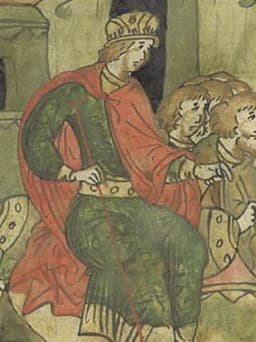
Daniel of Galicia
Emperor · Medieval
54.6Total

Julius Caesar
General · Ancient
82.8Total
Basic Information
Born
1201
-100
Died
1264
-44
Era
Medieval
Ancient
Nationality
Galicia-Volhynia
Roman Republic
Occupation
Emperor
General
Civilization
Western
Western
Score Comparison
Military (10%)
40.0
88.0
Political (20%)
61.3
78.0
Influence (20%)
54.9
85.0
Legacy (20%)
46.7
82.0
Leadership (15%)
67.0
80.0
Strategy (15%)
60.0
85.0
TOTAL
54.6
82.8
Daniel of Galicia — Complete Timeline
1240 AD
Prince of Galicia-Volhynia during Mongol invasionWar◆ Major
Daniel of Galicia ruled the Principality of Galicia-Volhynia when the Mongols invaded. He initially resisted but was forced to submit to Mongol suzerainty after the destruction of Kyiv in 1240. Daniel's submission preserved his realm from total destruction, but he became a vassal of the Golden Horde, paying tribute and providing troops.
Mongol invasionVassalageTribute
Impact: regionaltragic
1253 AD
Coronation as King of Galicia-Volhynia by the PopePolitical Action◆ Major
Daniel accepted a royal crown from Pope Innocent IV in exchange for promising to promote church union with Rome and organize a crusade against the Mongols. He was crowned King of Galicia-Volhynia in Dorohychyn. This coronation elevated his status and sought Western support against the Mongols, but the promised crusade never materialized.
Royal coronationPapal allianceAnti-Mongol strategy
Impact: regionalconstructive
1254 AD
Military campaign against the Mongols (1254-1255)War
Daniel launched a military campaign against the Mongol forces in Podolia and Volhynia, achieving some initial successes. He recaptured several towns from Mongol control. However, the campaign ultimately failed due to lack of Western support and Mongol reinforcements. Daniel was forced to reaffirm his vassalage to the Golden Horde.
Anti-Mongol campaignMilitary failureVassalage reaffirmed
Impact: regional
1256 AD
Foundation of the city of Lviv (Lwów)Cultural◆ Major
Daniel founded the city of Lviv (Lw
City foundationLvivTrade hub
Impact: regionalconstructive
Julius Caesar — Complete Timeline
58 BC
Gallic WarsWar◆ Major
Caesar, as proconsul of Gaul, launched a series of campaigns that conquered all of Gaul (modern France, Belgium, and parts of Switzerland). He fought numerous battles, including against the Helvetii, the Belgae, and the Gallic chieftain Vercingetorix. The wars brought immense wealth and a loyal army to Caesar.
Gallic WarsConquestRoman Expansion
Impact: regional
49 BC
Crossing the RubiconPolitical Action◆ Major
Caesar led Legio XIII across the Rubicon River into Italy, defying the Roman Senate's order to disband his army. This act triggered a civil war against Pompey and the Optimates, ultimately leading to Caesar's dictatorship and the end of the Roman Republic.
Roman Civil WarEnd of RepublicPower Struggle
Impact: global
48 BC
Battle of PharsalusWar◆ Major
Caesar's outnumbered army defeated the larger forces of Pompey the Great at Pharsalus in Greece. Caesar's tactical use of a reserve line to counter Pompey's cavalry charge proved decisive. Pompey fled to Egypt, where he was assassinated, leaving Caesar as the undisputed master of the Roman world.
Roman Civil WarBattleDecisive Victory
Impact: regional
44 BC
Appointment as Dictator for LifePolitical Action◆ Major
The Roman Senate appointed Caesar dictator perpetuo (dictator for life), granting him unprecedented personal power. This move concentrated military, legislative, and judicial authority in one person, effectively ending the Roman Republic's traditional system of checks and balances and alarming many senators.
DictatorshipEnd of RepublicPower Consolidation
Impact: regionaldestructive
Assassination on the Ides of MarchPolitical Action◆ Major
A group of Roman senators, led by Marcus Junius Brutus and Gaius Cassius Longinus, stabbed Caesar to death at a meeting of the Senate in the Theatre of Pompey. The assassination was intended to restore the Republic, but instead triggered another civil war that led to the rise of the Roman Empire.
AssassinationRoman PoliticsEnd of Republic
Impact: globaldestructive
Expert Analysis
daniel-of-galicia-vs-julius-caesar
# The Crossing and the Crown
On a January morning in 49 BCE, Julius Caesar stood on the banks of the Rubicon River, a small stream that marked the boundary between his province and Italy proper. To cross with his army was treason, an act of war against the Roman Republic. He paused, reportedly quoting a line from Greek comedy: “The die is cast.” Then he led his legions across, and the world changed forever.
Fourteen centuries later, in the snowbound forests of Eastern Europe, another ruler faced his own Rubicon. Daniel of Galicia-Volhynia knelt in a cathedral in 1253 to receive a crown from Pope Innocent IV, accepting papal authority in exchange for protection against a foe that had already burned his capital to the ground. Where Caesar crossed a river to seize an empire, Daniel accepted a crown to preserve a dying kingdom. Both men sought power; both understood their worlds were ending. But the chasm between their fates reveals how deeply a leader’s era, geography, and personality shape what history remembers.
Origins
Caesar was born into the patrician Julian clan in 100 BCE, a time when Rome’s Republic was decaying under the weight of its own conquests. His family was ancient but not wealthy; he grew up in the shadow of civil wars, watching Sulla’s proscriptions and Marius’s reforms tear the old order apart. This taught him that power came not from birth but from audacity, patronage, and military glory. He was a product of a civilization that believed the world could be conquered and remade by will.
Daniel was born in 1201 into a very different world. The Principality of Galicia-Volhynia was a fragile buffer state in what is now western Ukraine, squeezed between the rising power of the Mongol Empire and the ambitions of Polish and Hungarian kings. His father, Roman the Great, had united the two principalities but died in battle when Daniel was four. The boy prince spent years as a refugee, hiding in the court of a Polish duke, learning that survival required patience, diplomacy, and the willingness to bow to stronger powers.
Rise to Power
Caesar’s path was a masterclass in calculated risk. He climbed the Roman political ladder—quaestor, aedile, praetor—borrowing enormous sums to fund public spectacles that bought him popularity. His military breakthrough came in Gaul, where between 58 and 50 BCE he conquered a vast territory, wrote his own propaganda in the *Commentaries*, and built a loyal army that owed everything to him. When the Senate ordered him to disband his legions, he chose war.
Daniel’s rise was slower and more painful. After years in exile, he returned to reclaim his throne in the 1220s, but real power eluded him until the 1230s. His key turning point was not a battlefield victory but a catastrophe: the Mongol invasion of 1240. When Batu Khan’s horde swept through Kyiv and Galicia, Daniel’s capital was sacked. He submitted, paid tribute, and became a vassal of the Mongol Empire. It was not glorious, but it kept his people alive.
Leadership & Governance
Caesar governed as a revolutionary. As dictator, he reformed the calendar, granted citizenship to provincials, redistributed land to veterans, and centralised power in his own hands. His military genius lay in speed and logistics—he could move legions faster than his enemies could react, as he showed at Alesia and Pharsalus. But his political wisdom was marred by contempt for his rivals. He pardoned his enemies, but he never won their loyalty.
Daniel governed as a survivalist. He built fortresses, founded the city of Lviv in 1256, and promoted trade along the Dniester and Bug rivers. His military score of 34.6 reflects limited battlefield success, but his political score of 84.1 reveals a different kind of genius: he played the Pope against the Mongols, the Hungarians against the Poles, and kept his principality intact for decades. He understood that in a world of empires, small kingdoms survive by bending, not breaking.
Triumph & Tragedy
Caesar’s greatest triumph was his swift conquest of Gaul and his victory in the civil war that made him master of Rome. His tragedy was that he could not imagine a world that did not want a master. On the Ides of March, 44 BCE, sixty senators stabbed him to death in the Senate chamber. His last words, according to Suetonius, were not a noble speech but a gasp of shock: “You too, my child?” He died because his success made him blind to the hatred he had sown.
Daniel’s triumph was his coronation in 1253, a moment when a pope acknowledged him as a king and promised a crusade against the Mongols. The crusade never came. His tragedy was that he achieved everything he could—crown, city, diplomacy—and it was not enough. After his death in 1264, Galicia-Volhynia slowly disintegrated, swallowed by Poland and Lithuania. He founded a kingdom that did not outlive his grandchildren.
Character & Destiny
Caesar was arrogant, charismatic, and relentlessly ambitious. He believed he was destined to rule, and he was right—but that belief made him careless. He dismissed the Senate as irrelevant, surrounded himself with flatterers, and ignored warnings of the conspiracy. His personality drove his rise and his fall. He could not imagine losing because he had never truly lost.
Daniel was pragmatic, cautious, and deeply aware of his own limits. He accepted Mongol suzerainty, took a crown from a distant pope, and built a city that still stands today. His personality was shaped by exile and loss; he knew that survival was victory. He did not die by assassination but in bed, mourned by a people who would soon be forgotten by history.
Legacy
Caesar’s legacy is immense. His name became a title—Caesar, Kaiser, Tsar—and his reforms laid the foundation for the Roman Empire that lasted another five centuries. He is remembered as a military genius, a political master, and a warning about the dangers of unchecked power. His story is told in every school in the West.
Daniel’s legacy is quieter but real. Lviv, the city he founded, remains a cultural capital of Ukraine. His coronation as king gave Galicia a brief moment of sovereignty that later nationalists would invoke. He is remembered as a symbol of resistance and adaptation in the face of overwhelming force. But his name is unknown to most of the world.
Conclusion
The difference between Caesar and Daniel is not simply one of talent or ambition. Caesar lived in a world where one man could reshape civilization with a legion and a speech. Daniel lived in a world where even a king was a leaf in a storm. Caesar crossed the Rubicon because he believed he could cross anything. Daniel took a crown because he knew his kingdom was already lost. Both were leaders of extraordinary ability. But one conquered history, while the other survived it. And in the end, survival is its own kind of victory—quiet, incomplete, and sometimes more honest than triumph.
Rankings
🥇
Julius CaesarLeader
Mil: 88.0Pol: 78.0Inf: 85.0
82.8
🥈
Daniel of Galicia
Mil: 40.0Pol: 61.3Inf: 54.9
54.6
+28.2 behind
How This Comparison Works
Algorithm
Each figure is scored on 6 dimensions (0—100 scale) based on structured historical data: Military (10%), Political (20%), Influence (20%), Legacy (20%), Leadership (15%), Strategy (15%). The weighted total produces the final ranking.
Data Sources
Scores are computed from structured sub-indicators in the database. Scale factors adjust for era (Ancient ×0.85, Modern ×1.0) and civilization size (Eastern ×1.05, Other ×0.80) to account for differences in population and military scale.
Maximum 3 Figures
Comparisons are limited to 2—3 figures to ensure readability and statistical meaningfulness.
Error Margins
±5 points per dimension — Sub-scores are derived from historical records with inherent uncertainty. Two figures within 5 points on a dimension should be considered roughly equivalent in that area.
Total Score Accuracy
±3 points overall — The weighted combination of 6 dimensions produces a total score with approximately ±3 points of uncertainty. Differences of less than 3 points are not statistically significant— the figures are effectively tied.
Known Limitations
- Historical records are incomplete and uneven across civilizations
- Figures from oral-tradition societies may be underrepresented
- Occupation labels can misclassify multi-role figures
- Scores measure capability and impact, not moral character
- Quantitative scoring is a comparison tool, not absolute truth
Capability Radar
Military (10%) — Battles & Warfare
Battles
45
95
Win Rate
40
92
Expansion
50
97
Political (20%) — Governance & Reform
Reform
40
90
Diplomacy
60
85
Economy
45
82
Influence (20%) — Cultural & Global Reach
Cultural
40
88
Global
30
94
Legacy (20%) — Historical Impact
Historical
45
95
Longevity
35
96
Leadership (15%) — Power & Stability
Tenure
55
75
Stability
35
60
Strategy (15%) — Tactics & Innovation
Strategy
55
94
Tactics
50
96
Reform
35
88
Similar Comparisons
Comments & Discussion
CRASSUS-BURNER6/17/2026
This comparison is just wrong. Caesar was a strategic genius who gambled everything on a single, decisive moment at the Rubicon. Daniel was a vassal begging for crumbs from the Pope. Caesar didn't “accept” power—he took it by crossing a river with 5,000 loyal legionaries. Daniel got a crown and maybe some prayers. I'd love to see Daniel try siege warfare against Roman discipline. His kingdom fell anyway. Let's not pretend these two are in the same league.
历史真实侦探6/17/2026
比较这两位必须看时间跨度:恺撒跨越卢比孔河仅用几分钟,而丹尼尔等了整整十年才在1253年戴上王冠。表面都是抉择时刻,但恺撒的行动直接引爆内战,三年后成为终身独裁官。丹尼尔的加冕呢?蒙古金帐汗国根本没当回事,五年后他的城市又被洗劫。恺撒流的是政治家的血,丹尼尔流的只是地方诸侯的汗。
CLASSICS SNARK6/17/2026
Oh please. Caesar quoted Menander—“the die is cast”—and crossed into history. Daniel knelt before a pope to beg for a ceremony? Imagine Caesar on his knees before the Pontifex Maximus asking pretty please for legitimacy. Caesar was already the conqueror of Gaul, with 10,000 veterans at his back. Daniel had a burning capital and a mountain of gold he’d already surrendered to the Mongols. One man shaped history. The other got shaped BY history.
冷兵器控6/17/2026
你们忘了战术对比吗?恺撒的"第十军团"只用一天就建起浮桥渡过莱茵河,这是工程和纪律的胜利。丹尼尔有什么?他靠的是东正教领主和雇佣骑射手,连个像样的攻城器械都没有。加西利亚的城墙挡不住蒙古人的回回炮,而恺撒在高卢用弩炮、攻城塔和地道攻破了阿瓦利库姆——一座被认为无法被攻破的山顶要塞。硬件的差距决定了命运的差距。
REPUBLICAN GHOST6/17/2026
Let's talk about what each man actually destroyed. Caesar's crossing ended the Roman Republic—500 years of self-governance, gone in a single night. Daniel destroyed nothing; his kingdom was already ashes. Caesar knew he was killing a republic and did it anyway. That's not audacity, that's nihilism. Daniel at least tried to preserve something. The Rubicon wasn't a beginning. It was an assassination of a political system.