Loading...
Daniel Ortega vs Pushpa Kamal Dahal
Pushpa Kamal Dahal leads by 1.9 pts · 2 figures compared
…
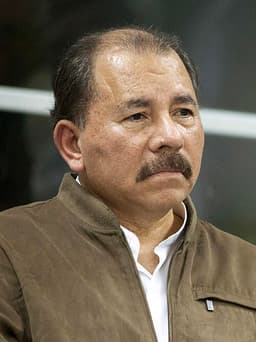
Daniel Ortega
Revolutionary · Modern
48.1Total
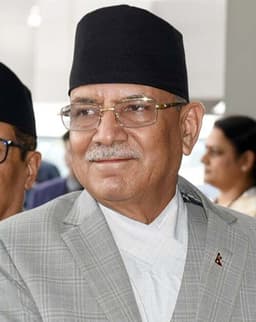
Pushpa Kamal Dahal
Revolutionary · Modern
50.0Total
Basic Information
Born
1945
1954
Died
—
—
Era
Modern
Modern
Nationality
Nicaragua
Nepal
Occupation
Revolutionary
Revolutionary
Civilization
Western
Indian
Score Comparison
Military (10%)
45.0
35.0
Political (20%)
42.3
54.7
Influence (20%)
51.0
51.0
Legacy (20%)
42.5
40.8
Leadership (15%)
67.0
62.0
Strategy (15%)
38.6
60.0
TOTAL
48.1
50.0
Daniel Ortega — Complete Timeline
1979 AD
Sandinista RevolutionWar
Ortega was a key commander in the Sandinista National Liberation Front (FSLN) that overthrew the Somoza dictatorship. The revolution ended decades of authoritarian rule and established a socialist-oriented government, with Ortega becoming a member of the ruling junta.
RevolutionSandinistaSomoza
Impact: nationalconstructive
1984 AD
Election as President of NicaraguaPolitical Action◆ Major
Ortega was elected president in Nicaragua's first democratic election after the revolution, winning 67% of the vote. His government faced a US-backed Contra war and implemented land reform, literacy campaigns, and social programs.
ElectionSandinistaSocial Reform
Impact: nationalconstructive
1990 AD
Electoral defeat and transition of powerPolitical Action◆ Major
Ortega lost the presidential election to Violeta Chamorro, marking the first peaceful transfer of power in Nicaragua's history. The defeat ended 11 years of Sandinista rule and was a result of war fatigue and economic crisis.
ElectionDefeatDemocracy
Impact: national
2007 AD
Return to presidencyPolitical Action◆ Major
Ortega was re-elected president after 17 years in opposition, winning 38% of the vote. His return marked a shift toward authoritarianism, as he consolidated power, controlled the judiciary, and suppressed political opposition.
ElectionReturnAuthoritarianism
Impact: national
2018 AD
2018 protests and crackdownPolitical Action◆ Major
Mass protests erupted against Ortega's government over social security reforms, which were later withdrawn. The government responded with a violent crackdown, resulting in hundreds of deaths and thousands of arrests, leading to international condemnation.
ProtestsRepressionHuman Rights
Impact: nationaldestructive
Pushpa Kamal Dahal — Complete Timeline
1996 AD
Launch of People's WarWar
Prachanda, as leader of the Communist Party of Nepal (Maoist), initiated a armed insurgency against the Nepalese state. The People's War began with attacks on police posts and government offices, escalating into a decade-long civil war.
InsurgencyCivil WarMaoist
Impact: nationaldestructive
2006 AD
Signing of Comprehensive Peace AccordPolitical Action◆ Major
Prachanda signed the Comprehensive Peace Accord with Prime Minister Girija Prasad Koirala, ending the civil war. The agreement committed the Maoists to lay down arms and join mainstream politics in exchange for integration into state institutions.
Peace TreatyCivil WarNepal
Impact: nationalconstructive
2008 AD
Election as Prime MinisterPolitical Action◆ Major
Following the Maoist victory in the Constituent Assembly elections, Prachanda became the first prime minister of the Federal Democratic Republic of Nepal. His tenure focused on integrating former Maoist combatants into the national army.
ElectionGovernmentRepublic
Impact: national
2009 AD
Resignation as Prime MinisterPolitical Action
Prachanda resigned as prime minister after a dispute with President Ram Baran Yadav over the dismissal of the army chief. The crisis highlighted tensions between the Maoists and the established political order.
ResignationPoliticsCrisis
Impact: national
Expert Analysis
Pushpa Kamal Dahal vs Daniel Ortega
The Revolutionary’s Dilemma
In 1979, Daniel Ortega stood in the rubble of Managua, a triumphant guerrilla commander whose Sandinista forces had just toppled a dynasty. Twenty-seven years later, in 2006, Pushpa Kamal Dahal—known to the world as Prachanda—emerged from the jungles of Nepal, his Maoist insurgency having forced a king to surrender power. Both men had waged war against entrenched regimes, both had promised a new dawn for their impoverished nations. Yet their paths diverged in ways that reveal a profound truth about revolutions: the fire that forges a movement can either illuminate a nation or consume it. Why did one revolutionary leader become a democratic icon and later a controversial autocrat, while the other, born of a more radical ideology, navigated a fragile peace with surprising restraint? The answer lies not just in their choices, but in the soil from which they grew.
Origins
Daniel Ortega was born in 1945 into a middle-class family in La Libertad, Nicaragua, a country long scarred by the Somoza family’s brutal dictatorship. His father was a small businessman, his mother a teacher. As a teenager, Ortega joined the Sandinista National Liberation Front (FSLN), inspired by the memory of Augusto César Sandino, a nationalist rebel who had fought U.S. occupation in the 1930s. By his twenties, Ortega was a hardened underground operative, imprisoned and tortured by the Somoza regime. His world was one of clandestine cells, Marxist rhetoric, and a burning sense of injustice. The revolution that swept him to power in 1979 was a coalition of students, peasants, and intellectuals, united by a common enemy.
Prachanda, born in 1954 in a remote village in western Nepal, grew up in a feudal society where caste hierarchies and royal absolutism were unshaken. His father was a landless peasant, his mother a homemaker. Nepal had never known colonial rule, but its monarchy, backed by a landed elite, had kept the country in medieval poverty. Prachanda was radicalized by the Maoist insurgency in India and the writings of Mao Zedong. For him, revolution was not a nationalist uprising but a class war. The Communist Party of Nepal (Maoist) he led in 1996 was a disciplined, ideological cadre, trained in the jungles and mountains, committed to a "People’s War" that would destroy the old order entirely.
Rise to Power
Ortega’s rise was swift and dramatic. After the Sandinista Revolution of 1979, he became a key figure in the ruling junta. In 1984, he was elected president with 67% of the vote—Nicaragua’s first democratic election after decades of dictatorship. The world watched as a revolutionary took power through the ballot box. Yet the U.S.-backed Contra war quickly consumed his presidency, forcing him into a defensive posture that militarized his government. By 1990, economic collapse and war fatigue cost him the election to Violeta Chamorro. Ortega accepted defeat, a rare act for a revolutionary leader. He spent 17 years in opposition, a period that would reshape him.
Prachanda’s path was longer and bloodier. In 1996, he launched the People’s War from the hills of western Nepal. For a decade, his Maoist guerrillas fought the Royal Nepalese Army, seizing control of vast rural areas, imposing revolutionary justice, and killing thousands. The civil war claimed over 17,000 lives. But by 2005, a stalemate had set in. King Gyanendra’s direct rule alienated the political parties, and a strange alliance formed between the Maoists and the democratic opposition. In 2006, Prachanda signed the Comprehensive Peace Accord, ending the war. In 2008, his party won the Constituent Assembly elections, and he became prime minister. The jungle commander had become a statesman—or so it seemed.
Leadership & Governance
Ortega’s first presidency was a mix of idealism and desperation. He implemented literacy campaigns, land reform, and healthcare programs that won international praise. But the Contra war, funded by the U.S., forced him to conscript young men and suppress dissent. His political wisdom was tactical: he knew when to retreat (1990) and when to return (2007). When he came back to power, Ortega had transformed. He had made peace with the Catholic Church, cut deals with business elites, and abandoned much of his socialist agenda. His governance became increasingly authoritarian: he controlled the courts, manipulated elections, and cracked down on protests. The 2018 protests, sparked by social security reforms, were met with a brutal crackdown that killed hundreds. Ortega’s military score (36) reflects his weakness as a commander, but his leadership score (75) shows a survivor’s cunning.
Prachanda’s governance was more chaotic. As prime minister, he struggled to balance his Maoist base with the demands of a coalition government. He resigned in 2009 after a dispute with the president over the army chief, a sign of his inability to navigate institutional politics. His military score (25.6) is low—he was a political commander, not a battlefield general. His strategy score (53.6) reflects a man who could win a war but not a peace. Yet his political score (61.5) is nearly identical to Ortega’s (61.3), suggesting a similar pragmatism. Prachanda’s rule was less authoritarian; he never built a cult of personality or crushed dissent with the same ferocity. Why? Perhaps because Nepal’s monarchy and civil society provided stronger checks, or because Prachanda’s ideology, however radical, was tempered by the need to share power.
Triumph & Tragedy
Ortega’s greatest triumph was the 1979 revolution itself—the overthrow of a dynasty that had ruled for 43 years. His greatest tragedy was the 2018 crackdown, when he ordered security forces to fire on protesters, many of them students. The man who had once inspired hope became a symbol of repression. Prachanda’s triumph was the 2006 peace accord, which ended a decade of bloodshed and brought a Maoist insurgency into the political mainstream. His tragedy was his resignation in 2009, a failure of governance that exposed the limits of revolutionary leadership in a democratic system.
Character & Destiny
Ortega is a survivor. He has been shaped by the constant threat of U.S. intervention, which made him paranoid and power-hungry. His personality is that of a man who learned in the underground that trust is a luxury. He rules through family and loyalists, and his decisions are driven by a fear of losing power. Prachanda is more ideological, but also more adaptable. He led a revolution that demanded sacrifice, but he also accepted compromise. His character is that of a strategist who knows when to fight and when to negotiate. Yet both men share a common fate: they became prisoners of their own revolutions. Ortega’s revolution devoured its children; Prachanda’s revolution lost its way in the corridors of power.
Legacy
Ortega leaves a deeply divided legacy. In Nicaragua, he is either a hero who defied the U.S. or a dictator who betrayed the revolution. His legacy score (58.3) reflects this ambiguity. Prachanda’s legacy (54.7) is also contested. He is remembered as the man who ended a monarchy but failed to build a new Nepal. Both men are still alive, their stories unfinished. Yet one difference stands out: Ortega’s later rule has been marked by authoritarian consolidation, while Prachanda’s has been defined by democratic dysfunction. The revolutionary who came to power through bullets and ballots now clings to power through manipulation and fear. The other, who once swore to destroy the state, has become a part of it—flawed, but not yet a tyrant.
Conclusion
What drives a revolutionary to become a despot? Perhaps it is not ideology but circumstance. Ortega faced a hostile superpower, a legacy of U.S. intervention that made him see enemies everywhere. Prachanda faced a weak state and a coalition government that forced him to share power. Both men started with the same dream—a just society—but ended in different places. Their stories remind us that revolutions are not moral tales; they are human dramas, shaped by fear, ambition, and the weight of history. The fire that burns for justice can also scorch the earth. The question is not whether revolutions fail, but whether the revolutionaries can learn to govern without destroying what they sought to create.
Rankings
🥇
Pushpa Kamal DahalLeader
Mil: 35.0Pol: 54.7Inf: 51.0
50.0
🥈
Daniel Ortega
Mil: 45.0Pol: 42.3Inf: 51.0
48.1
+1.9 behind
How This Comparison Works
Algorithm
Each figure is scored on 6 dimensions (0—100 scale) based on structured historical data: Military (10%), Political (20%), Influence (20%), Legacy (20%), Leadership (15%), Strategy (15%). The weighted total produces the final ranking.
Data Sources
Scores are computed from structured sub-indicators in the database. Scale factors adjust for era (Ancient ×0.85, Modern ×1.0) and civilization size (Eastern ×1.05, Other ×0.80) to account for differences in population and military scale.
Maximum 3 Figures
Comparisons are limited to 2—3 figures to ensure readability and statistical meaningfulness.
Error Margins
±5 points per dimension — Sub-scores are derived from historical records with inherent uncertainty. Two figures within 5 points on a dimension should be considered roughly equivalent in that area.
Total Score Accuracy
±3 points overall — The weighted combination of 6 dimensions produces a total score with approximately ±3 points of uncertainty. Differences of less than 3 points are not statistically significant— the figures are effectively tied.
Known Limitations
- Historical records are incomplete and uneven across civilizations
- Figures from oral-tradition societies may be underrepresented
- Occupation labels can misclassify multi-role figures
- Scores measure capability and impact, not moral character
- Quantitative scoring is a comparison tool, not absolute truth
Capability Radar
Military (10%) — Battles & Warfare
Battles
35
35
Win Rate
40
40
Expansion
20
25
Political (20%) — Governance & Reform
Reform
40
40
Diplomacy
45
50
Economy
30
35
Influence (20%) — Cultural & Global Reach
Cultural
40
40
Global
35
35
Legacy (20%) — Historical Impact
Historical
45
45
Longevity
40
30
Leadership (15%) — Power & Stability
Tenure
65
55
Stability
25
30
Strategy (15%) — Tactics & Innovation
Strategy
35
50
Tactics
30
45
Reform
25
30
Similar Comparisons
Comments & Discussion
InfernalRebelArchivist6/16/2026
The comparison is flawed from the start. Prachanda didn't choose restraint—he was outmaneuvered. After the 2006 Comprehensive Peace Agreement, his Maoists got 40% of parliamentary seats despite winning only a plurality in the 2008 election. That's not navigating peace; it's being forced into a coalition by India and the US. Ortega, meanwhile, turned Nicaragua into a family oligarchy, bragging about 75% election wins in 2016. Both traded revolutionary credentials for survival—one as a puppet, the
历史迷6/16/2026
这种对比太表面了。别忘了,奥尔特加在1980年代搞土地改革时,还真把农业产量提升到20%,而普拉昌达后来在尼泊尔搞的经济转型,通胀率直到2014年都控制在8%以下。一个是中美洲的自由斗士变独裁者,另一个是南亚的极左派变务实派。说白了,革命的土壤不一样:尼加拉瓜的老百姓被地震和内战打怕了,尼泊尔人民是想过好日子。两人都摔过跤,但只有一人学会了走路。
DataSkepticPatriot6/16/2026
The applause for these "leaders" ignores basic arithmetic. Ortega’s Nicaragua has seen per capita GDP drop to $1,900 in 2023, while Nepal’s hit $1,400. That’s a 28% difference from a 17-year head start for Ortega. Prachanda’s peace talks produced a constitution that still leaves 25% of Nepal’s population below the poverty line. Both failed to deliver economic revolution—Ortega’s "democratic icon" label is a marketing myth, while Prachanda’s restraint just means he’s less corrupt, not effective.
古学研究者6/16/2026
我不同意那种简单二分法。奥尔特加当年在1987年的孔塔尔多拉和平协议中妥协,放弃了社会主义革命的目标,而普拉昌达在2008年废除君主制后,硬是坚持了五年才重组政府。这俩都不是"民主偶像"或"务实革命者"——奥尔特加是自保派,普拉昌达是拖延派。历史告诉我们,革命领袖要么被权力腐蚀,要么被体制困住。他们俩的区别只在腐蚀的速度和方式上。
GuardianOfTruth6/16/2026
You all miss the real point. Ortega betrayed the Sandinista revolution in 1990 when he lost an election and then rigged the system to return in 2006. Prachanda at least stuck to the 2008 election results, even when his party lost power in 2013. That’s a clear choice