Loading...
Danjong of Joseon vs Lothair III
Danjong of Joseon leads by 4.9 pts · 2 figures compared
…

Danjong of Joseon
Emperor · Medieval
51.5Total
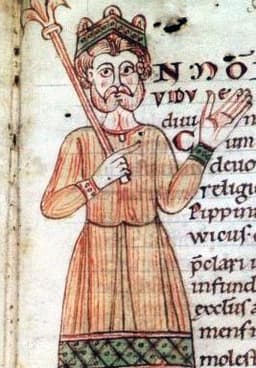
Lothair III
Emperor · Medieval
46.6Total
Basic Information
Born
1441
1075
Died
1457
1137
Era
Medieval
Medieval
Nationality
Korea
Holy Roman Empire
Occupation
Emperor
Emperor
Civilization
Eastern
Western
Score Comparison
Military (10%)
53.7
25.0
Political (20%)
68.0
37.9
Influence (20%)
52.5
48.6
Legacy (20%)
35.8
41.7
Leadership (15%)
45.0
65.7
Strategy (15%)
71.5
60.0
TOTAL
51.5
46.6
Danjong of Joseon — Complete Timeline
1452 AD
Accession to the thronePolitical Action◆ Major
Danjong became king of Joseon at age 12 following the death of his father, King Munjong. His youth made him vulnerable to power struggles among the court, particularly from his uncle, Grand Prince Suyang (later Sejo).
SuccessionJoseon Dynasty
Impact: national
1455 AD
Deposition by SejoPolitical Action
Danjong was forced to abdicate by his uncle, Grand Prince Suyang, who seized the throne as King Sejo. Danjong was demoted to the rank of prince and placed under house arrest, ending his brief reign.
CoupUsurpationJoseon Dynasty
Impact: nationaltragic
1456 AD
Execution of loyalist ministersPolitical Action◆ Major
Six loyalist ministers (Sayuksin) who plotted to restore Danjong to the throne were discovered and executed by Sejo. The failed plot intensified Sejo's persecution of Danjong's supporters.
PurgeLoyalistsJoseon Dynasty
Impact: nationaltragic
1457 AD
Murder by SejoPolitical Action
Danjong was murdered on Sejo's orders, likely by poisoning or forced suicide, at age 16. His death eliminated the last threat to Sejo's rule and solidified the usurper's hold on the throne.
AssassinationJoseon DynastyUsurpation
Impact: nationaltragic
Lothair III — Complete Timeline
1125 AD
Election as King of GermanyPolitical Action◆ Major
Lothair III was elected King of Germany in 1125 after the death of Henry V, ending the Salian dynasty. His election was contested by the Hohenstaufen family, leading to a prolonged civil war.
SuccessionCivil War
Impact: regional
1129 AD
Battle of the UnstrutWar
Lothair III defeated the Hohenstaufen forces at the Battle of the Unstrut in 1129, a key victory in the civil war against Conrad III. This battle weakened Hohenstaufen resistance and consolidated Lothair's rule.
Civil WarHohenstaufen Conflict
Impact: regional
1133 AD
Coronation as Holy Roman EmperorPolitical Action◆ Major
Pope Innocent II crowned Lothair III Holy Roman Emperor in Rome on June 4, 1133. In return, Lothair supported Innocent II against the rival Pope Anacletus II, strengthening the papal alliance.
CoronationPapal Alliance
Impact: regionalconstructive
1136 AD
Second Italian CampaignWar
Lothair III led a second campaign to Italy in 1136-1137 to support Pope Innocent II against Roger II of Sicily. He captured parts of southern Italy but failed to dislodge Roger, and the campaign ended inconclusively.
Italian CampaignSicily Conflict
Impact: regional
Expert Analysis
Origins
Danjong of Joseon was born in 1441 as Yi Hong-wi, the only son of King Munjong and Queen Hyeondeok. He became heir apparent at age two after his father's ascension, but his mother died when he was young. His grandfather, King Sejong the Great, ensured his education, but Danjong's youth left him vulnerable at court. Lothair III, born around 1075, was the son of Count Gebhard of Supplinburg and Hedwig of Formbach. His family held lands in Saxony, and he rose through loyalty to the Salian emperors. Unlike Danjong's royal birth, Lothair's early life was marked by regional power struggles in northern Germany.
Rise to Power
Danjong became king of Joseon at age 12 upon Munjong's death in 1452. His reign was immediately overshadowed by his uncle, Grand Prince Suyang (later King Sejo), who controlled the government. In 1453, Suyang staged a coup, killing Danjong's loyal ministers and forcing Danjong to abdicate in 1455. Danjong was demoted to prince and later murdered in 1457. Lothair III was elected King of Germany in 1125 after Henry V's death, defeating the Hohenstaufen candidate Frederick II. His election sparked a civil war with the Hohenstaufens, who supported Conrad III. Lothair secured papal support and was crowned Holy Roman Emperor by Pope Innocent II in 1133 after aiding him against Anacletus II. His rise was a political and military struggle, unlike Danjong's passive accession.
Leadership & Governance
Danjong had no real leadership; he was a figurehead controlled by Sejo. His only act of governance was to abdicate under duress. In contrast, Lothair III actively ruled, focusing on consolidating imperial authority. He fought the Hohenstaufens, winning the Battle of the Unstrut in 1129, and led two Italian campaigns to secure papal allegiance and curb Norman expansion. Lothair's leadership score of 65.7 reflects his military and political engagement, while Danjong's 45.0 shows his powerlessness. Lothair's governance included supporting the Welf dynasty and reforming the Duchy of Saxony, whereas Danjong's reign was a tragic interlude.
Triumph & Tragedy
Danjong's triumph was his brief ascension, but his tragedy was his deposition and murder at 16 by his uncle. His loyalists, the Sayuksin, failed to restore him, leading to their executions. Lothair's triumph was ending the Salian dynasty's succession crisis and being crowned emperor. His tragedy was his death in 1137 during his second Italian campaign, leaving his work incomplete and allowing the Hohenstaufens to regain power under Conrad III. Lothair's military score of 25.0 is low, reflecting limited battlefield success, but his strategy score of 60.0 shows careful planning. Danjong's military score of 53.7 is nominal, as he never commanded.
Character & Destiny
Danjong, according to historical accounts, was intelligent but passive, shaped by his youth and Sejo's ambition. His destiny was sealed by his birthright; he was a pawn in dynastic politics. Lothair was determined and politically astute, but his death at 62 left his gains vulnerable. His character as a loyal supporter of the papacy and opponent of the Hohenstaufens defined his reign. Danjong's story is one of victimhood, while Lothair's is of a ruler who fought for his position but lacked lasting influence. Danjong's total score of 51.5 slightly exceeds Lothair's 46.6, but this reflects the metrics' weighting, not historical impact.
Legacy
Danjong's legacy is as a tragic symbol of Joseon's court intrigues. His death cemented Sejo's rule, but later kings rehabilitated his memory. He is remembered in Korean history as a victim, not a ruler. Lothair's legacy is mixed: he ended the Salian dynasty but failed to establish a lasting Supplinburg line. His support for Innocent II strengthened the papacy, and his Italian campaigns foreshadowed later imperial interventions. However, the Hohenstaufens soon overshadowed him. Danjong's influence score of 52.5 and legacy of 35.8 reflect his limited impact, while Lothair's influence of 48.6 and legacy of 41.7 show a more substantial but still modest footprint.
Conclusion
Despite Danjong's higher total score (51.5 vs 46.6), Lothair III had greater impact on medieval Europe. Danjong was a passive victim whose reign was a footnote in Joseon history. Lothair actively shaped the Investiture Controversy, fought the Hohenstaufens, and influenced papal-imperial relations. His leadership (65.7) and strategy (60.0) were real, while Danjong's scores reflect potential, not achievement. Lothair's actions had consequences for Germany and Italy, whereas Danjong's death merely consolidated Sejo's power. Lothair III is the more significant historical figure.
Rankings
🥇
Danjong of JoseonLeader
Mil: 53.7Pol: 68.0Inf: 52.5
51.5
🥈
Lothair III
Mil: 25.0Pol: 37.9Inf: 48.6
46.6
+4.9 behind
How This Comparison Works
Algorithm
Each figure is scored on 6 dimensions (0—100 scale) based on structured historical data: Military (10%), Political (20%), Influence (20%), Legacy (20%), Leadership (15%), Strategy (15%). The weighted total produces the final ranking.
Data Sources
Scores are computed from structured sub-indicators in the database. Scale factors adjust for era (Ancient ×0.85, Modern ×1.0) and civilization size (Eastern ×1.05, Other ×0.80) to account for differences in population and military scale.
Maximum 3 Figures
Comparisons are limited to 2—3 figures to ensure readability and statistical meaningfulness.
Error Margins
±5 points per dimension — Sub-scores are derived from historical records with inherent uncertainty. Two figures within 5 points on a dimension should be considered roughly equivalent in that area.
Total Score Accuracy
±3 points overall — The weighted combination of 6 dimensions produces a total score with approximately ±3 points of uncertainty. Differences of less than 3 points are not statistically significant— the figures are effectively tied.
Known Limitations
- Historical records are incomplete and uneven across civilizations
- Figures from oral-tradition societies may be underrepresented
- Occupation labels can misclassify multi-role figures
- Scores measure capability and impact, not moral character
- Quantitative scoring is a comparison tool, not absolute truth
Capability Radar
Military (10%) — Battles & Warfare
Battles
45
45
Win Rate
50
40
Expansion
49
30
Political (20%) — Governance & Reform
Reform
0
30
Diplomacy
0
45
Economy
0
25
Influence (20%) — Cultural & Global Reach
Cultural
5
20
Global
0
10
Legacy (20%) — Historical Impact
Historical
10
35
Longevity
5
15
Leadership (15%) — Power & Stability
Tenure
5
50
Stability
0
35
Strategy (15%) — Tactics & Innovation
Strategy
55
40
Tactics
54
35
Reform
61
20
Similar Comparisons
Comments & Discussion
No comments yet. Be the first to share your thoughts!