Loading...
Harsha vs Lothair III
Harsha leads by 14.4 pts · 2 figures compared
…
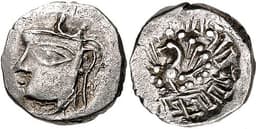
Harsha
Emperor · Medieval
61.0Total
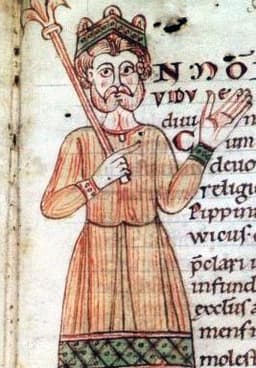
Lothair III
Emperor · Medieval
46.6Total
Basic Information
Born
590
1075
Died
647
1137
Era
Medieval
Medieval
Nationality
India
Holy Roman Empire
Occupation
Emperor
Emperor
Civilization
Indian
Western
Score Comparison
Military (10%)
61.7
25.0
Political (20%)
45.0
37.9
Influence (20%)
68.0
48.6
Legacy (20%)
58.0
41.7
Leadership (15%)
66.0
65.7
Strategy (15%)
66.3
60.0
TOTAL
61.0
46.6
Harsha — Complete Timeline
606 AD
Accession to the Throne of ThanesarPolitical Action
Harsha succeeded his father Prabhakaravardhana as ruler of Thanesar (in present-day Haryana). He was 16 years old and soon faced the challenge of avenging his brother-in-law's death and expanding his kingdom.
ThanesarSuccessionHarsha
Impact: regional
612 AD
Conquest of KannaujWar◆ Major
Harsha captured the city of Kannauj after defeating the Maukhari ruler Grahavarman's enemies. He made Kannauj his capital and established the Vardhana dynasty's control over the Gangetic plain, becoming the dominant power in northern India.
KannaujVardhana DynastyNorthern India
Impact: regional
620 AD
Campaigns in Eastern IndiaWar◆ Major
Harsha led military campaigns into Bengal and Odisha, defeating the Shashanka king of Gauda. He extended his empire eastward to the Bay of Bengal, though his control over these regions was not permanent.
BengalOdishaShashanka
Impact: regional
630 AD
Conflict with the Chalukya King Pulakeshin IIWar◆ Major
Harsha attempted to expand southward but was defeated by the Chalukya king Pulakeshin II on the banks of the Narmada River. This battle halted Harsha's southern expansion and established the Narmada as the boundary between the two empires.
ChalukyaPulakeshin IINarmada
Impact: regional
640 AD
Patronage of Buddhism and the Nalanda UniversityCultural◆ Major
Harsha was a patron of Buddhism and supported the Nalanda University, a major center of Buddhist learning. He convened a grand Buddhist council at Kannauj attended by monks from across Asia, and built monasteries and stupas.
BuddhismNalandaCouncil of Kannauj
Impact: regionalconstructive
643 AD
Visit of the Chinese Pilgrim XuanzangCultural
The Chinese Buddhist monk Xuanzang visited Harsha's court and spent time in the empire. Xuanzang's detailed accounts describe Harsha's administration, military, and religious tolerance, providing a key historical source for the period.
XuanzangChinese PilgrimBuddhism
Impact: regionalconstructive
Lothair III — Complete Timeline
1125 AD
Election as King of GermanyPolitical Action◆ Major
Lothair III was elected King of Germany in 1125 after the death of Henry V, ending the Salian dynasty. His election was contested by the Hohenstaufen family, leading to a prolonged civil war.
SuccessionCivil War
Impact: regional
1129 AD
Battle of the UnstrutWar
Lothair III defeated the Hohenstaufen forces at the Battle of the Unstrut in 1129, a key victory in the civil war against Conrad III. This battle weakened Hohenstaufen resistance and consolidated Lothair's rule.
Civil WarHohenstaufen Conflict
Impact: regional
1133 AD
Coronation as Holy Roman EmperorPolitical Action◆ Major
Pope Innocent II crowned Lothair III Holy Roman Emperor in Rome on June 4, 1133. In return, Lothair supported Innocent II against the rival Pope Anacletus II, strengthening the papal alliance.
CoronationPapal Alliance
Impact: regionalconstructive
1136 AD
Second Italian CampaignWar
Lothair III led a second campaign to Italy in 1136-1137 to support Pope Innocent II against Roger II of Sicily. He captured parts of southern Italy but failed to dislodge Roger, and the campaign ended inconclusively.
Italian CampaignSicily Conflict
Impact: regional
Expert Analysis
Origins
Harsha (c. 590–647 CE) was born into the Pushyabhuti dynasty, ruling Thanesar in northern India. His father, Prabhakaravardhana, was a local king, and Harsha ascended the throne at age 16 after his father's death. He was educated in statecraft and warfare, and his early life was marked by the need to avenge his brother-in-law's murder and defend his kingdom.
Lothair III (1075–1137 CE), born into the House of Supplinburg, was the son of a Saxon count. His early life was shaped by the Investiture Controversy and the power struggles within the Holy Roman Empire. He rose through the ranks as a loyal supporter of the Salian emperor Henry V, eventually becoming Duke of Saxony.
Rise to Power
Harsha's rise began with his accession to the throne of Thanesar in 606 CE. He soon faced the challenge of avenging his brother-in-law Grahavarman, the Maukhari ruler of Kannauj, who was killed by the Gauda king Shashanka. Harsha defeated Shashanka and captured Kannauj, making it his capital. He then launched campaigns to expand his empire, conquering much of northern India, including Bengal and Odisha. His military successes were halted only by the Chalukya king Pulakeshin II in the south.
Lothair III was elected King of Germany in 1125 after the death of Henry V, ending the Salian dynasty. His election was contested by the Hohenstaufen family, leading to a civil war. Lothair defeated the Hohenstaufen forces at the Battle of the Unstrut in 1129, securing his throne. He was crowned Holy Roman Emperor by Pope Innocent II in 1133, in exchange for supporting the pope against the antipope Anacletus II.
Leadership & Governance
Harsha's governance was marked by centralized administration and patronage of Buddhism. He convened a grand Buddhist council at Kannauj and supported Nalanda University. He was known for his benevolent rule, building hospitals and rest houses. His empire was organized into provinces, with officials appointed to collect taxes and maintain order. However, his political score of 45.0 reflects challenges in maintaining control over conquered territories.
Lothair III's leadership was focused on consolidating imperial authority and supporting the papacy. He fought to suppress the Hohenstaufen rebellion and strengthen the monarchy. His governance was influenced by feudal relationships, relying on the support of powerful dukes. He granted privileges to the Church and attempted to assert imperial rights in Italy. His political score of 37.9 indicates limited success in centralizing power.
Triumph & Tragedy
Harsha's greatest triumph was his conquest of northern India, creating a vast empire that stretched from Punjab to Bengal. He also promoted cultural and religious flourishing, hosting the famous Buddhist council and supporting literature (the playwright Banabhatta was his court poet). However, his failure to expand southward against Pulakeshin II was a major setback, and his empire fragmented quickly after his death due to lack of a strong successor.
Lothair III's triumph was his successful election as king and emperor, overcoming the Hohenstaufen opposition. His victory at the Battle of the Unstrut and his Italian campaigns, where he captured parts of southern Italy, were significant. However, his empire was plagued by constant conflict, and his death in 1137 led to renewed civil war between the Guelphs and Ghibellines. His legacy was overshadowed by the rise of the Hohenstaufen.
Character & Destiny
Harsha was a capable military leader (military score 61.7) and a devout Buddhist, but his lack of a strong successor and the decentralized nature of his empire led to its collapse. His character was that of a reformer and patron, but his empire was built on personal loyalty rather than institutional strength.
Lothair III, with a leadership score of 65.7, was a determined ruler who fought to preserve imperial authority. However, his reliance on the papacy and feudal lords limited his power. His destiny was to be a transitional figure between the Salian and Hohenstaufen dynasties, unable to establish a lasting legacy.
Legacy
Harsha's legacy is primarily cultural and religious. He is remembered as a patron of Buddhism and literature, and his reign is considered a golden age of Indian culture. The Harsha inscription and the accounts of Chinese pilgrim Xuanzang provide valuable historical records. His empire, however, did not outlast him.
Lothair III's legacy is more political. He strengthened the papacy by supporting Innocent II, and his conflicts with the Hohenstaufen set the stage for future struggles. His reign marked the end of the Salian dynasty and the beginning of the Hohenstaufen era. He is often overshadowed by more famous emperors like Frederick Barbarossa.
Conclusion
Harsha had a greater impact than Lothair III, as reflected in his higher total score of 61.0 compared to Lothair's 46.6. Harsha's military achievements (61.7 vs 25.0) and influence (68.0 vs 48.6) were significantly higher. While Lothair III struggled with internal conflicts and limited territorial expansion, Harsha built a vast empire and fostered cultural advancements that left a lasting mark on Indian history. Therefore, Harsha's overall contribution to civilization outweighs that of Lothair III.
Rankings
🥇
HarshaLeader
Mil: 61.7Pol: 45.0Inf: 68.0
61.0
🥈
Lothair III
Mil: 25.0Pol: 37.9Inf: 48.6
46.6
+14.4 behind
How This Comparison Works
Algorithm
Each figure is scored on 6 dimensions (0—100 scale) based on structured historical data: Military (10%), Political (20%), Influence (20%), Legacy (20%), Leadership (15%), Strategy (15%). The weighted total produces the final ranking.
Data Sources
Scores are computed from structured sub-indicators in the database. Scale factors adjust for era (Ancient ×0.85, Modern ×1.0) and civilization size (Eastern ×1.05, Other ×0.80) to account for differences in population and military scale.
Maximum 3 Figures
Comparisons are limited to 2—3 figures to ensure readability and statistical meaningfulness.
Error Margins
±5 points per dimension — Sub-scores are derived from historical records with inherent uncertainty. Two figures within 5 points on a dimension should be considered roughly equivalent in that area.
Total Score Accuracy
±3 points overall — The weighted combination of 6 dimensions produces a total score with approximately ±3 points of uncertainty. Differences of less than 3 points are not statistically significant— the figures are effectively tied.
Known Limitations
- Historical records are incomplete and uneven across civilizations
- Figures from oral-tradition societies may be underrepresented
- Occupation labels can misclassify multi-role figures
- Scores measure capability and impact, not moral character
- Quantitative scoring is a comparison tool, not absolute truth
Capability Radar
Military (10%) — Battles & Warfare
Battles
65
45
Win Rate
70
40
Expansion
70
30
Political (20%) — Governance & Reform
Reform
60
30
Diplomacy
70
45
Economy
65
25
Influence (20%) — Cultural & Global Reach
Cultural
65
20
Global
50
10
Legacy (20%) — Historical Impact
Historical
60
35
Longevity
55
15
Leadership (15%) — Power & Stability
Tenure
75
50
Stability
60
35
Strategy (15%) — Tactics & Innovation
Strategy
65
40
Tactics
60
35
Reform
50
20
Similar Comparisons
Comments & Discussion
No comments yet. Be the first to share your thoughts!