Loading...
Danjong of Joseon vs Napoleon Bonaparte
Napoleon Bonaparte leads by 19.4 pts · 2 figures compared
…
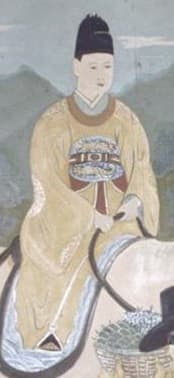
Danjong of Joseon
Emperor · Medieval
51.5Total

Napoleon Bonaparte
General · Modern
70.9Total
Basic Information
Born
1441
1769
Died
1457
1821
Era
Medieval
Modern
Nationality
Korea
France
Occupation
Emperor
General
Civilization
Eastern
Western
Score Comparison
Military (10%)
53.7
94.0
Political (20%)
68.0
72.0
Influence (20%)
52.5
40.0
Legacy (20%)
35.8
80.0
Leadership (15%)
45.0
78.0
Strategy (15%)
71.5
90.0
TOTAL
51.5
70.9
Danjong of Joseon — Complete Timeline
1452 AD
Accession to the thronePolitical Action◆ Major
Danjong became king of Joseon at age 12 following the death of his father, King Munjong. His youth made him vulnerable to power struggles among the court, particularly from his uncle, Grand Prince Suyang (later Sejo).
SuccessionJoseon Dynasty
Impact: national
1455 AD
Deposition by SejoPolitical Action
Danjong was forced to abdicate by his uncle, Grand Prince Suyang, who seized the throne as King Sejo. Danjong was demoted to the rank of prince and placed under house arrest, ending his brief reign.
CoupUsurpationJoseon Dynasty
Impact: nationaltragic
1456 AD
Execution of loyalist ministersPolitical Action◆ Major
Six loyalist ministers (Sayuksin) who plotted to restore Danjong to the throne were discovered and executed by Sejo. The failed plot intensified Sejo's persecution of Danjong's supporters.
PurgeLoyalistsJoseon Dynasty
Impact: nationaltragic
1457 AD
Murder by SejoPolitical Action
Danjong was murdered on Sejo's orders, likely by poisoning or forced suicide, at age 16. His death eliminated the last threat to Sejo's rule and solidified the usurper's hold on the throne.
AssassinationJoseon DynastyUsurpation
Impact: nationaltragic
Napoleon Bonaparte — Complete Timeline
1799 AD
Coup of 18 BrumaireOther◆ Major
Napoleon Bonaparte, with support from his brother Lucien and key political figures, overthrew the Directory in a bloodless coup. He established the Consulate with himself as First Consul, effectively becoming the ruler of France. This event ended the French Revolution's most unstable period.
French RevolutionCoupRise to Power
Impact: regional
1804 AD
Promulgation of the Napoleonic CodeOther◆ Major
Napoleon enacted the Civil Code of the French, known as the Napoleonic Code, a comprehensive set of laws that replaced the fragmented feudal legal systems. The code established legal equality, protected property rights, and secularized law. It became the basis for legal systems in many European and world countries.
Legal ReformNapoleonic CodeCivil Law
Impact: globalconstructive
1805 AD
Battle of AusterlitzWar◆ Major
Napoleon's Grande Arm
Napoleonic WarsBattleDecisive Victory
Impact: global
1812 AD
Invasion of RussiaWar◆ Major
Napoleon led the Grande Arm
Napoleonic WarsInvasionDisaster
Impact: globaldestructive
1815 AD
Battle of WaterlooWar◆ Major
Napoleon's French army was defeated by the combined forces of the Duke of Wellington's Anglo-Allied army and Gebhard Leberecht von Bl
Napoleonic WarsBattleFinal Defeat
Impact: globaldestructive
Expert Analysis
danjong-of-joseon-vs-napoleon-bonaparte
# The Emperor and the Boy King
In the spring of 1815, Napoleon Bonaparte returned from exile on Elba to reclaim his empire, a man whose ambition had redrawn the map of Europe. Three and a half centuries earlier, on the Korean peninsula, a twelve-year-old boy named Danjong ascended the throne of Joseon, only to be crushed by the very family meant to protect him. One conquered continents, the other could not even hold his own palace. What separates a titan from a footnote? The answer lies not in fate, but in the raw, unforgiving interplay of character and circumstance.
Origins
Napoleon was born in 1769 on Corsica, an island recently annexed by France, into a minor noble family struggling for status. His education at French military academies was a crucible of humiliation and ambition—a poor outsider among aristocrats. The French Revolution shattered the old order, creating a vacuum where talent, not birth, could seize power. Napoleon’s world was one of upheaval, where a young artillery officer could rise by sheer will and strategic brilliance.
Danjong, born in 1441, entered a world of rigid Confucian hierarchy. He was the eldest son of King Munjong of Joseon, a dynasty that had ruled Korea for barely half a century. His childhood was a scripted ritual of classical texts and court protocol. His father died when Danjong was eleven, leaving him king in name only. Korea’s stability depended on bloodlines and seniority—a system that rewarded patience, not audacity. Danjong’s tragedy was not his weakness, but that he was born into an era that demanded a warrior, and he was given only a child’s heart.
Rise to Power
Napoleon’s ascent was a masterpiece of opportunism. In 1793, at age 24, he commanded the artillery that recaptured Toulon from British forces, a feat that made him a brigadier general. By 1796, he led the Italian campaign, where his speed and daring humiliated Austria. Each victory fed the next: Egypt, the coup of 18 Brumaire in 1799, then First Consul, and finally Emperor in 1804. His path was a ladder built from the corpses of enemies and the adulation of a nation desperate for order.
Danjong’s rise was not a rise at all—it was an inheritance. In 1452, he became king at age twelve, a puppet from the start. His uncle, Grand Prince Suyang, was a seasoned general who had served under his father and grandfather. Suyang did not climb; he waited. In 1455, he forced Danjong to abdicate, demoting him to prince. The boy’s only “campaign” was a desperate plea for loyalty from ministers who had already chosen survival. Where Napoleon seized history, Danjong was swept aside by it.
Leadership & Governance
Napoleon ruled with a fusion of military genius and political reform. The Napoleonic Code, enacted in 1804, standardized law across France—abolishing feudal privileges, protecting property, and establishing meritocracy. He built roads, schools, and a central bank. On the battlefield, his strategy was a symphony of speed: the 1805 victory at Austerlitz remains a textbook example of dividing a larger enemy and crushing its center. Yet his governance was also a dictatorship—censorship, secret police, and a cult of personality that demanded total loyalty.
Danjong’s governance was a shadow. His reign lasted only three years, and he never truly ruled. The “Sayuksin,” or six loyalist ministers, attempted to restore him in 1456, but their plot was discovered. Sejo executed them with savage public torture—a message to any who dared challenge the new order. Danjong’s only act of leadership was his silence under exile, a dignity that would cost him his life. His kingdom was run by his uncle, a man who understood that in Joseon, power flowed not from laws but from the sword and the clan.
Triumph & Tragedy
Napoleon’s greatest triumph was Austerlitz, where he crushed the combined armies of Russia and Austria. His tragedy was the 1812 invasion of Russia—a catastrophic miscalculation that lost over 400,000 men to winter, hunger, and guerrilla attacks. Exiled to Elba in 1814, he returned for the Hundred Days, only to fall at Waterloo in 1815. His final defeat was not by a single enemy, but by the combined weight of Europe united against him.
Danjong’s triumph was never his own. His tragedy was his life: deposed at 14, exiled to a remote mountain village, and at 16, murdered on Sejo’s orders—likely by poison or forced suicide. His only victory was in death: the Sayuksin were later celebrated as martyrs for loyalty, and Danjong became a symbol of innocence crushed by ambition. But in his own time, he was a ghost erased from history, his name forbidden to be spoken.
Character & Destiny
Napoleon was a force of nature—arrogant, tireless, and brilliant. His belief in his own destiny drove him to conquer, but also to overreach. “Impossible is not in my dictionary,” he once said, and that hubris was his undoing. He could not stop because he could not imagine his own limits. His destiny was shaped by a Europe that both feared and needed him.
Danjong was a boy, not a man—gentle, passive, and trapped. Confucian Korea valued filial piety and submission, and Danjong embodied those virtues perfectly, which made him a perfect victim. His uncle Sejo was ruthless, ambitious, and patient—a mirror image of Napoleon, but operating within a system where legitimacy came from blood, not conquest. Danjong’s destiny was sealed not by his actions, but by his inaction.
Legacy
Napoleon left a continent transformed: the spread of nationalism, the abolition of feudalism across Europe, and a legal code that still shapes civil law from France to Japan. He is remembered as both a tyrant and a liberator, a symbol of ambition and its costs. His scores—Military 94, Political 75, Influence 82—reflect a man who changed history, for better and worse.
Danjong left a ghost. His legacy is a footnote in Korean history, remembered only in the story of the Sayuksin and the sorrow of a boy king. His scores—Political 54.8, Leadership 38.8, Legacy 48.2—are the numbers of a life that never had a chance to bloom. Yet his tragedy speaks to something universal: the cruelty of power, the fragility of innocence, and the quiet dignity of those who are crushed by history’s wheels.
Conclusion
Standing at the edge of their stories, we see that Napoleon and Danjong are not opposites—they are the two faces of the same coin. One burned so brightly that he lit up an entire century; the other was extinguished before he could even flicker. Their differences were not of talent or destiny, but of the worlds that shaped them. Napoleon lived in an age of revolution, where a man could remake himself. Danjong lived in an age of tradition, where a boy could only be unmade. In the end, history remembers the conquerors, but it also mourns the forgotten—and in that mourning, we find the truest measure of our own humanity.
Rankings
🥇
Napoleon BonaparteLeader
Mil: 94.0Pol: 72.0Inf: 40.0
70.9
🥈
Danjong of Joseon
Mil: 53.7Pol: 68.0Inf: 52.5
51.5
+19.4 behind
How This Comparison Works
Algorithm
Each figure is scored on 6 dimensions (0—100 scale) based on structured historical data: Military (10%), Political (20%), Influence (20%), Legacy (20%), Leadership (15%), Strategy (15%). The weighted total produces the final ranking.
Data Sources
Scores are computed from structured sub-indicators in the database. Scale factors adjust for era (Ancient ×0.85, Modern ×1.0) and civilization size (Eastern ×1.05, Other ×0.80) to account for differences in population and military scale.
Maximum 3 Figures
Comparisons are limited to 2—3 figures to ensure readability and statistical meaningfulness.
Error Margins
±5 points per dimension — Sub-scores are derived from historical records with inherent uncertainty. Two figures within 5 points on a dimension should be considered roughly equivalent in that area.
Total Score Accuracy
±3 points overall — The weighted combination of 6 dimensions produces a total score with approximately ±3 points of uncertainty. Differences of less than 3 points are not statistically significant— the figures are effectively tied.
Known Limitations
- Historical records are incomplete and uneven across civilizations
- Figures from oral-tradition societies may be underrepresented
- Occupation labels can misclassify multi-role figures
- Scores measure capability and impact, not moral character
- Quantitative scoring is a comparison tool, not absolute truth
Capability Radar
Military (10%) — Battles & Warfare
Battles
45
95
Win Rate
50
90
Expansion
49
95
Political (20%) — Governance & Reform
Reform
0
95
Diplomacy
0
80
Economy
0
85
Influence (20%) — Cultural & Global Reach
Cultural
5
85
Global
0
90
Legacy (20%) — Historical Impact
Historical
10
95
Longevity
5
90
Leadership (15%) — Power & Stability
Tenure
5
85
Stability
0
70
Strategy (15%) — Tactics & Innovation
Strategy
55
95
Tactics
54
98
Reform
61
92
Similar Comparisons
Comments & Discussion
NapoleonWrecker6/17/2026
Napoleon’s own artillery manual would have laughed at this comparison. Danjong was a puppet king who lost a quiet domestic coup before he could even grow facial hair. Napoleon reshaped Europe’s legal systems, military tactics, and borders within a decade. You can’t pit a doomed boy against a man who used fog of war to win six campaigns in one year. To even mention them together is like comparing a candle to the sun—interesting flicker, but one burned out in a palace, the other in global chaos.
铁血史裁6/17/2026
拿什么比?拿破仑是从科西嘉穷小子一路杀上欧洲之巅的战术天才,丹宗不过是个十二岁就被叔父推下王座的小皇帝。朝鲜士族那套儒教礼法连自家王室的命都保不住,放到拿破仑的军靴下怕是跪得比谁都快。说句不好听的,丹宗的命运顶多是明代《经国大典》里的三行脚注,而拿破仑的每场战役至今仍是西点军校的必修课。这对比,简直是拿蛐蛐比雄狮。
Liar’sQuill6/17/2026
Hold on—both were victims of their environments. Napoleon’s Corsican chip on his shoulder drove him to overreach, invading Russia with 600,000 men, most of whom died from frostbite and starvation. Danjong lost because his family betrayed him, plain and simple. Neither had real control: one was a genius paranoid about his uncles and coalition armies; the other was a child surrounded by scheming noblemen. Let’s not pretend Napoleon’s success was pure merit—he muddled through luck and brutality, ju
东夷考据派6/17/2026
为什么总拿西方英雄压东方?丹宗之死背后是朝鲜朝堂的“癸酉靖难”,那是叔父首阳大君一次完美的时间差政变——利用少主坐不安、老臣不团结的窗口期。拿破仑吃了多少次侥幸?1805年乌尔姆战役的包围堪称教科书,但1812年俄国远征全是败笔。帝王命运从来是系统问题:丹宗在儒家礼法中孤掌难鸣,拿破仑却踩在法国大革命碎掉旧世界的裂缝上。拿个人意志说事,太浅了。