Loading...
Dantidurga vs Wu Zetian
Wu Zetian leads by 11.3 pts · 2 figures compared
…
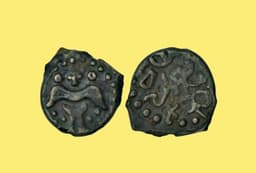
Dantidurga
Emperor · Medieval
58.7Total

Wu Zetian
Emperor · Medieval
70.0Total
Basic Information
Born
735
624
Died
756
705
Era
Medieval
Medieval
Nationality
India
China
Occupation
Emperor
Emperor
Civilization
Indian
Eastern
Score Comparison
Military (10%)
67.5
60.0
Political (20%)
68.0
62.7
Influence (20%)
56.4
65.0
Legacy (20%)
50.0
80.0
Leadership (15%)
65.7
78.0
Strategy (15%)
52.5
66.3
TOTAL
58.7
70.0
Dantidurga — Complete Timeline
753 AD
Founding of the Rashtrakuta DynastyPolitical Action
Dantidurga overthrew his overlord, the Chalukya king Kirtivarman II, in a coup. He established the Rashtrakuta dynasty as the dominant power in the Deccan, with Manyakheta as his capital. This marked the beginning of a new imperial era.
Impact: regionalconstructive
754 AD
Performance of the Hiranyagarbha RitualCultural
Dantidurga performed the Hiranyagarbha (golden womb) ritual, a Vedic ceremony that symbolically rebirthed him as a Kshatriya. This legitimized his rule by claiming a higher caste status, as the Rashtrakutas were originally of humble origin.
Impact: nationalconstructive
755 AD
Conquest of MalwaWar◆ Major
Dantidurga led a military campaign into Malwa, defeating the Gurjara-Pratihara ruler Nagabhata I. He annexed the region, expanding Rashtrakuta territory northward. This victory established Rashtrakuta influence in central India.
Impact: regionaldestructive
Wu Zetian — Complete Timeline
655 AD
Became Empress ConsortPolitical Action◆ Major
Wu Zetian was elevated from concubine to empress consort of Emperor Gaozong of Tang in 655. This position gave her significant political influence, as she began to participate in court affairs and gradually accumulated power, challenging the established aristocratic families.
Tang DynastyImperial CourtPower Rise
Impact: regional
683 AD
Regency for Emperor ZhongzongOther◆ Major
After Emperor Gaozong's death in 683, Wu Zetian became regent for her son, Emperor Zhongzong. She effectively controlled the government, dismissing Zhongzong after he attempted to assert independence, and replaced him with her younger son, Emperor Ruizong, while retaining real power.
Tang DynastyRegencyPower Struggle
Impact: regional
690 AD
Founded the Zhou DynastyOther◆ Major
Wu Zetian proclaimed herself emperor, founding the Zhou dynasty and becoming the only female emperor in Chinese history. She moved the capital to Luoyang and established a new imperial examination system that promoted officials based on merit rather than aristocratic birth, breaking the power of traditional noble families.
Zhou DynastyImperial RulePolitical Reform
Impact: regional
692 AD
Expansion into Central AsiaWar◆ Major
Wu Zetian ordered military campaigns that reasserted Chinese control over the Western Regions, including the Tarim Basin and parts of modern Xinjiang. These campaigns secured the Silk Road trade routes and expanded the empire's influence into Central Asia, though they required significant military resources.
Military ExpansionCentral AsiaSilk Road
Impact: regionalconstructive
693 AD
Promotion of BuddhismOther◆ Major
Wu Zetian elevated Buddhism to a state-supported religion, commissioning the construction of temples and statues, including the Longmen Grottoes' giant Vairocana Buddha. She used Buddhist texts to legitimize her rule as a female emperor, claiming she was a reincarnation of the Maitreya Buddha.
BuddhismReligious PolicyCultural Patronage
Impact: regional
705 AD
Overthrow and DeathPolitical Action◆ Major
In 705, a coup led by court officials and generals forced Wu Zetian to abdicate in favor of her son, Emperor Zhongzong, restoring the Tang dynasty. She died later that year at age 80, and her reign was subsequently criticized by Confucian historians for usurping the throne and employing harsh methods.
Tang DynastyCoupAbdication
Impact: regionaldestructive
Expert Analysis
Wu Zetian vs Dantidurga
# The Throne and the Womb: Wu Zetian and Dantidurga
In the year 690, a woman in her late sixties ascended a dragon throne in Luoyang, China, declaring herself Emperor of a new Zhou dynasty. Half a world away and sixty-three years later, a young chieftain in the Deccan plateau of India performed the Hiranyagarbha ritual—a golden womb ceremony that symbolically rebirthed him as a Kshatriya warrior—before overthrowing his own overlord. Both Wu Zetian and Dantidurga shattered the political orders they inherited. Yet one became the only female emperor in Chinese history, a name whispered and debated for thirteen centuries; the other founded a dynasty that would dominate the Deccan for two hundred years, yet remains largely unknown beyond scholarly circles. What drove these two medieval rulers down such divergent paths?
Origins
Wu Zetian was born in 624 to a prosperous but politically marginal family. Her father, Wu Shihuo, had been a timber merchant who rose through military service—respectable, but not among the old aristocratic clans that dominated Tang politics. From her earliest years, Wu understood that power flowed through connections, not birthright. When she entered the imperial palace at age fourteen as a low-ranking concubine of Emperor Taizong, she entered a world where survival depended on wit, patience, and the careful cultivation of influence.
Dantidurga, by contrast, emerged from the warrior traditions of the Deccan around 735, a time when the Chalukya dynasty of Badami held sway over much of southern India. His clan, the Rashtrakutas, had served as feudatories to the Chalukyas for generations. The young prince inherited a world of fixed hierarchies, where loyalty to one's overlord was sacred and rebellion was both a sin and a gamble. Where Wu learned to navigate the silk-draped corridors of a vast imperial bureaucracy, Dantidurga learned the rhythms of cavalry raids and the politics of hill forts.
Rise to Power
Wu Zetian's ascent was a masterpiece of calculated patience. After Emperor Taizong's death in 649, she faced the traditional fate of imperial concubines: confinement to a Buddhist convent. But she had already cultivated a relationship with Taizong's son, the new Emperor Gaozong. By 655, she had maneuvered herself back into the palace, eliminated her rivals—including the empress and a favored concubine, both reportedly murdered—and secured her position as Gaozong's empress. When Gaozong suffered a debilitating stroke in 660, Wu began ruling through him. By his death in 683, she had effectively governed China for two decades.
Dantidurga's rise was swifter and more direct. In 753, he turned on his Chalukya overlord, King Kirtivarman II, in a coup that historians still debate: was it a calculated betrayal or a desperate bid for survival? The following year, he performed the Hiranyagarbha ritual—a Vedic ceremony in which a golden womb was constructed, and Dantidurga was symbolically "reborn" through it as a Kshatriya, a member of the warrior caste. This was not mere theater; in the caste-conscious world of medieval India, it legitimized his rule in the eyes of priests and rivals alike. By 755, he had marched into Malwa, defeated the powerful Gurjara-Pratihara ruler Nagabhata I, and annexed the region.
Leadership & Governance
Wu Zetian ruled as a reformer and centralizer. She expanded the imperial examination system, opening government positions to talented commoners rather than aristocrats—a move that earned her the undying enmity of the old nobility but created a loyal bureaucracy. She patronized Buddhism, commissioning statues and translations, partly as genuine faith but also as ideological counterweight to Confucian scholars who could never accept a female ruler. Her military record was mixed: she expanded Tang influence into Central Asia but suffered setbacks in Korea and against the Tibetans.
Dantidurga's leadership was that of a conqueror-king. He built his power on the sword, not the examination hall. His conquest of Malwa in 755 demonstrated strategic vision—he struck at a rival dynasty's heartland while they were distracted by conflicts elsewhere. But his rule was personal and tribal, lacking the institutional machinery that Wu Zetian commanded. The Rashtrakuta dynasty he founded would later produce great builders and patrons of art, but Dantidurga himself died in 756, after barely three years as independent ruler.
Triumph & Tragedy
Wu Zetian's greatest triumph was also her greatest tragedy: she became emperor. In 690, after years of ruling through puppet sons, she formally declared herself Emperor of the Zhou dynasty, the only woman in Chinese history to hold that title. For fifteen years, she governed with iron will, promoting capable ministers, suppressing rebellions, and maintaining stability. But her methods were brutal—secret police, executions of rivals, the murder of her own children when they threatened her power. When she finally fell in 705, forced to abdicate at age eighty, her dynasty was abolished and her legacy deliberately distorted by the Confucian historians who wrote the official records.
Dantidurga's triumph was the foundation itself. He died young, likely in his early forties, but he had accomplished what seemed impossible: overthrowing the mighty Chalukyas and establishing a new dynasty that would rule the Deccan for two centuries. His tragedy was not personal failure but historical obscurity. Unlike Wu, who dominates Chinese historiography even in condemnation, Dantidurga left few inscriptions and fewer records. His successors—especially the great Amoghavarsha—would eclipse him in fame.
Character & Destiny
Wu Zetian was ruthless, intelligent, and possessed of an almost supernatural patience. She understood that in a patriarchal system, she could not win by playing by men's rules—she had to rewrite them entirely. Her character was forged in the crucible of the imperial harem, where one misstep meant death. Dantidurga, by contrast, was a gambler who staked everything on a single bold move. His character was that of a warrior-chieftain: direct, ambitious, but lacking the institutional vision to build beyond his own lifetime.
Their fates diverged because their worlds were fundamentally different. Wu operated within a mature imperial bureaucracy that could be bent but not broken; her struggle was for control of an existing machine. Dantidurga operated in a world of shifting alliances and personal loyalties; his struggle was to build a machine from scratch. One manipulated systems; the other smashed them.
Legacy
Wu Zetian's legacy is a paradox. The historians who condemned her as a usurper and murderer also recorded her achievements: a stable administration, expanded opportunities for talent, and a brief but genuine golden age. Today, she is remembered as both a cautionary tale and a feminist icon, a figure who continues to provoke debate about gender and power in Chinese history.
Dantidurga's legacy is the Rashtrakuta dynasty itself. His descendants would build the magnificent Kailasa temple at Ellora, patronize Jain and Hindu scholarship, and create one of medieval India's most cosmopolitan empires. But the founder himself remains a shadowy figure, known primarily through the achievements of his successors.
Conclusion
Standing at opposite ends of the medieval world, Wu Zetian and Dantidurga faced the same fundamental question: how does an outsider seize power in a system designed to exclude them? Wu answered by becoming the system itself, bending an empire to her will through decades of patient manipulation. Dantidurga answered by shattering the system, founding a dynasty through a single, audacious stroke. One left behind a legend; the other left behind an empire. In the end, perhaps the truest measure of a ruler is not how they gained power, but what they built with it—and whether it survived them. By that measure, both succeeded, and both failed, in ways that continue to echo across the centuries.
Rankings
🥇
Wu ZetianLeader
Mil: 60.0Pol: 62.7Inf: 65.0
70.0
🥈
Dantidurga
Mil: 67.5Pol: 68.0Inf: 56.4
58.7
+11.3 behind
How This Comparison Works
Algorithm
Each figure is scored on 6 dimensions (0—100 scale) based on structured historical data: Military (10%), Political (20%), Influence (20%), Legacy (20%), Leadership (15%), Strategy (15%). The weighted total produces the final ranking.
Data Sources
Scores are computed from structured sub-indicators in the database. Scale factors adjust for era (Ancient ×0.85, Modern ×1.0) and civilization size (Eastern ×1.05, Other ×0.80) to account for differences in population and military scale.
Maximum 3 Figures
Comparisons are limited to 2—3 figures to ensure readability and statistical meaningfulness.
Error Margins
±5 points per dimension — Sub-scores are derived from historical records with inherent uncertainty. Two figures within 5 points on a dimension should be considered roughly equivalent in that area.
Total Score Accuracy
±3 points overall — The weighted combination of 6 dimensions produces a total score with approximately ±3 points of uncertainty. Differences of less than 3 points are not statistically significant— the figures are effectively tied.
Known Limitations
- Historical records are incomplete and uneven across civilizations
- Figures from oral-tradition societies may be underrepresented
- Occupation labels can misclassify multi-role figures
- Scores measure capability and impact, not moral character
- Quantitative scoring is a comparison tool, not absolute truth
Capability Radar
Military (10%) — Battles & Warfare
Battles
60
65
Win Rate
65
70
Expansion
65
75
Political (20%) — Governance & Reform
Reform
45
85
Diplomacy
55
80
Economy
50
85
Influence (20%) — Cultural & Global Reach
Cultural
40
85
Global
30
70
Legacy (20%) — Historical Impact
Historical
55
90
Longevity
50
85
Leadership (15%) — Power & Stability
Tenure
40
90
Stability
45
75
Strategy (15%) — Tactics & Innovation
Strategy
60
75
Tactics
55
60
Reform
40
80
Similar Comparisons
Comments & Discussion
RASPUTIN'S DAUGHTER6/16/2026
Sure, Wu Zetian played the patriarchal game, but Dantidurga’s symbolic rebirth was far more audacious. He literally had a golden womb built and was physically reborn as a Kshatriya—rewriting his own DNA through ritual. While Wu manipulated existing narratives, Dantidurga invented a whole new lineage. That’s not reform; that’s reality hacking. Most historians gloss over the sheer theatrical genius of the Hiranyagarbha. Wu schemed; Dantidurga conjured. Period.
丝绸史官6/16/2026
别给武则天的女帝光环骗了。她不过是唐朝门阀政治的终极操盘手:利用科举制打压关陇贵族,培植寒门特务,最后连儿子都成了筹码。而丹蒂杜尔加才是真革命者——他在德干高原搞的"金胎"仪式,等于从种姓制度内部炸了一颗核弹。一个靠后宫权谋,一个靠重塑种姓,高下立判。
SAVAGE STATISTICIAN6/16/2026
Data doesn't lie: Wu Zetian presided over a period where China's population grew by roughly 5 million people, while Dantidurga's Rashtrakuta dynasty consistently collected more land revenue per square kilometer than its predecessors. Both broke ceilings, but whose model scaled? The Zhou dynasty collapsed eighteen years after Wu's death. The Rashtrakutas ruled for two centuries. Longevity isn’t everything, but it’s a hell of a metric for political architecture.
青铜祭司6/16/2026
说武则天是"唯一女帝"就像说泰坦尼克是最大的游轮——都忽略了沉没事实。她登基时逼着百官上《劝进表》,伪造祥瑞,连洛阳的牡丹都被编排成"奉旨开花"。反观丹蒂杜尔加,他干掉遮娄其王朝靠的是实打实的军事联盟,而非宫变下毒。一个靠演技,一个靠枪杆子,后者才是历史的真正底色。
CAESAR'S GHOSTWRITER6/16/2026
Let’s cut the feminist fairy tale. Wu Zetian didn't break the glass ceiling; she replaced it with a mirrored one. She executed or exiled her own sons, purged the scholar-bureaucracy, and appointed favorites based on sycophancy. Dantidurga, meanwhile, built a decentralized power structure—his Rashtrakuta successors were independent kings, not nervous courtiers. Wu’s reign was a brilliant autocracy; Dantidurga’s was a dynastic blueprint. One was a performance; the other, a legacy.
梵天屠龙6/16/2026
你们全搞错了重点。丹蒂杜尔加发动的是种姓革命——一个低种姓刹帝利通过金胎仪式"