Loading...
Darius I vs Julius Caesar
Julius Caesar leads by 8.0 pts · 2 figures compared
…
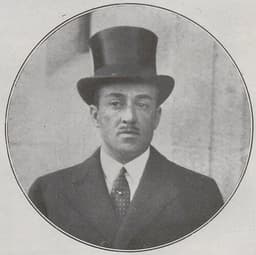
Darius I
Emperor · Ancient
74.8Total

Julius Caesar
General · Ancient
82.8Total
Basic Information
Born
-550
-100
Died
-486
-44
Era
Ancient
Ancient
Nationality
Persia
Roman Republic
Occupation
Emperor
General
Civilization
Middle Eastern
Western
Score Comparison
Military (10%)
76.0
88.0
Political (20%)
75.0
78.0
Influence (20%)
88.0
85.0
Legacy (20%)
65.0
82.0
Leadership (15%)
72.0
80.0
Strategy (15%)
69.1
85.0
TOTAL
74.8
82.8
Darius I — Complete Timeline
522 BC
Suppression of revoltsWar◆ Major
Upon seizing the throne, Darius I suppressed widespread revolts across the empire, including in Babylon, Media, and Egypt. He recorded these victories on the Behistun Inscription, which also legitimized his rule.
RevoltEmpireBehistun Inscription
Impact: regionaldestructive
518 BC
Reorganization of the Persian EmpireReform
Darius I divided the Persian Empire into 20 provinces called satrapies, each governed by a satrap. He standardized coinage, weights, measures, and established a postal system, creating an efficient administrative structure.
AdministrationEmpireReform
Impact: globalconstructive
515 BC
Construction of PersepolisCultural◆ Major
Darius I began construction of Persepolis as the ceremonial capital of the Persian Empire. The city featured grand palaces and reliefs depicting tribute bearers from across the empire, symbolizing Achaemenid power.
ArchitectureCapitalPersia
Impact: regionalconstructive
500 BC
Construction of the Royal RoadOther◆ Major
Darius I built the Royal Road from Susa to Sardis, spanning 2,700 km. The road facilitated rapid communication and trade across the empire, with relay stations allowing messengers to travel in days.
InfrastructureRoadTrade
Impact: regionalconstructive
490 BC
Invasion of GreeceWar◆ Major
Darius I launched a punitive expedition against Greece, resulting in the Battle of Marathon. The Persian army was defeated by the Athenians, marking the first major Greek victory in the Greco-Persian Wars.
Greco-Persian WarsInvasionMarathon
Impact: global
Julius Caesar — Complete Timeline
58 BC
Gallic WarsWar◆ Major
Caesar, as proconsul of Gaul, launched a series of campaigns that conquered all of Gaul (modern France, Belgium, and parts of Switzerland). He fought numerous battles, including against the Helvetii, the Belgae, and the Gallic chieftain Vercingetorix. The wars brought immense wealth and a loyal army to Caesar.
Gallic WarsConquestRoman Expansion
Impact: regional
49 BC
Crossing the RubiconPolitical Action◆ Major
Caesar led Legio XIII across the Rubicon River into Italy, defying the Roman Senate's order to disband his army. This act triggered a civil war against Pompey and the Optimates, ultimately leading to Caesar's dictatorship and the end of the Roman Republic.
Roman Civil WarEnd of RepublicPower Struggle
Impact: global
48 BC
Battle of PharsalusWar◆ Major
Caesar's outnumbered army defeated the larger forces of Pompey the Great at Pharsalus in Greece. Caesar's tactical use of a reserve line to counter Pompey's cavalry charge proved decisive. Pompey fled to Egypt, where he was assassinated, leaving Caesar as the undisputed master of the Roman world.
Roman Civil WarBattleDecisive Victory
Impact: regional
44 BC
Appointment as Dictator for LifePolitical Action◆ Major
The Roman Senate appointed Caesar dictator perpetuo (dictator for life), granting him unprecedented personal power. This move concentrated military, legislative, and judicial authority in one person, effectively ending the Roman Republic's traditional system of checks and balances and alarming many senators.
DictatorshipEnd of RepublicPower Consolidation
Impact: regionaldestructive
Assassination on the Ides of MarchPolitical Action◆ Major
A group of Roman senators, led by Marcus Junius Brutus and Gaius Cassius Longinus, stabbed Caesar to death at a meeting of the Senate in the Theatre of Pompey. The assassination was intended to restore the Republic, but instead triggered another civil war that led to the rise of the Roman Empire.
AssassinationRoman PoliticsEnd of Republic
Impact: globaldestructive
Expert Analysis
darius-i-vs-julius-caesar
# The Architect and the Gambler: How Darius I and Julius Caesar Built Two Different Worlds
On a spring morning in 490 BCE, a Persian messenger staggered into the palace at Susa, his lungs burning from the 2,700-kilometer journey along the Royal Road. He carried news that would haunt Darius I for the remaining four years of his life: at Marathon, his invasion force had been routed by Athenian hoplites. Four centuries later, on a January day in 49 BCE, Julius Caesar stood at the banks of the Rubicon, a small river separating his province from Italy proper. He paused, then uttered a phrase that would echo through millennia: *"Alea iacta est"* — the die is cast. One man built an empire on order and consolidation; the other gambled everything on speed and audacity. Their differences were not merely personal — they were the product of two civilizations that understood power in fundamentally different ways.
Origins
Darius I was born around 550 BCE into the Achaemenid royal family, though not as a direct heir to the throne. He grew up in a world where empire was already a reality — Cyrus the Great had conquered Babylon, and Cambyses had added Egypt. Darius inherited a system, not a mission. He was a product of Persian nobility, trained in horseback archery and court intrigue, steeped in Zoroastrian ideals of cosmic order and truth. When he seized the throne in 522 BCE, he did so by killing a usurper, then spent the next year suppressing revolts from Babylon to Media to Egypt. His legitimacy was earned through blood, but his vision was for stability.
Julius Caesar, born in 100 BCE, entered a Roman Republic already rotting from within. His family, the Julii, claimed descent from the goddess Venus, but they were patricians in name only — politically sidelined by the senatorial oligarchy. Caesar grew up witnessing the civil wars of Marius and Sulla, the proscriptions, the betrayals. He learned early that in Rome, tradition was a weapon the powerful used against the ambitious. Unlike Darius, who inherited an empire's machinery, Caesar inherited chaos — and he would learn to master it.
Rise to Power
Darius's path to power was swift and violent. In 522 BCE, he and six co-conspirators killed the magus Gaumata, who had claimed the throne. Darius then crushed revolts across the empire with methodical brutality: he personally led campaigns, crucified rebels, and carved his victories into the rock face of Behistun, a trilingual inscription that declared him the chosen of Ahuramazda. His rise was a coup followed by a purge — efficient, terrifying, and final.
Caesar's rise was a long, calculated climb. He was captured by pirates at twenty-five, joked that he would crucify them, then returned to do exactly that. He served as quaestor in Spain, aedile in Rome, pontifex maximus. He formed the First Triumvirate with Pompey and Crassus in 60 BCE, a backroom deal that bypassed the Senate. His conquest of Gaul (58–50 BCE) was not a preordained campaign — it was a self-financed war of expansion that made him rich, famous, and dangerous. Where Darius seized power in a single stroke, Caesar accumulated it over decades, each move a step closer to the edge.
Leadership & Governance
Darius governed through architecture. He divided the Persian Empire into twenty satrapies, each with a governor, a military commander, and an independent inspector — the "King's Eye." He standardized coinage, built the Royal Road with 111 postal stations, and began construction of Persepolis, a ceremonial capital designed to awe. His style was administrative genius: he created systems that could function without him. When he invaded Greece in 490 BCE, it was a punitive expedition, not a war of conquest — a king punishing disobedience.
Caesar governed through personality. As dictator, he reformed the calendar, granted citizenship to Gauls, initiated public works, and restructured debt. But his reforms were inseparable from his ambition. He centralized power in himself, packed the Senate with his supporters, and accepted the title "dictator for life." His military strategy was aggressive and personal: at Alesia (52 BCE), he besieged the Gallic chieftain Vercingetorix while simultaneously repelling a massive relief army — a double siege that required perfect timing and absolute nerve. Caesar's leadership was the opposite of Darius's system: it depended on Caesar himself.
Triumph & Tragedy
Darius's greatest triumph was the empire he organized. The Royal Road, the satrapies, the standardization — these endured for two centuries after his death. His tragedy was Marathon. In 490 BCE, he sent a fleet across the Aegean to punish Athens for supporting the Ionian Revolt. At Marathon, the outnumbered Athenians charged and broke the Persian line. Darius never returned to Greece; he died in 486 BCE, his western frontier still smoldering. The defeat was a strategic pinprick, but it became a psychological wound — the first crack in Persian invincibility.
Caesar's triumph was Gaul. In eight years (58–50 BCE), he conquered over 800 cities, fought hundreds of thousands of warriors, and brought a vast territory under Roman control. His Commentaries on the Gallic Wars became a masterpiece of propaganda and literature. His tragedy was the Ides of March — March 15, 44 BCE. Sixty senators, many of them his allies, stabbed him to death in the Curia of Pompey. He fell at the feet of a statue of his former rival. His last words, according to tradition, were to Brutus: *"Et tu, Brute?"* — "And you, Brutus?" The man who had gambled everything on personal loyalty died because loyalty could not be institutionalized.
Character & Destiny
Darius was a builder. His inscriptions emphasize truth, order, and the favor of Ahuramazda. He saw himself as a restorer, not a revolutionary. His personality was institutional: he trusted systems over individuals, roads over oratory. This is why his empire outlived him — and why he could not adapt to the guerrilla warfare of the Greek city-states.
Caesar was a gambler. He crossed the Rubicon with a single legion, knowing that hesitation meant death. He pardoned his enemies, promoted talent regardless of class, and lived as though the future would forgive him. His personality was magnetic and reckless: he trusted his own genius, and it killed him. His destiny was to destroy the Republic he claimed to save, and to plant the seeds of an empire he would never see.
Legacy
Darius left a model. The satrap system influenced Roman provincial governance. The Royal Road inspired the Silk Road. Persepolis, even in ruins, remains a symbol of Persian civilization. His scores — Military 75, Political 69, Strategy 72 — reflect a ruler who was competent but not brilliant, systematic but not transformative. Yet his legacy score of 72 underestimates him: he created the structure that allowed Alexander the Great to inherit an empire.
Caesar left a name. "Caesar" became a title — Kaiser, Tsar. His military innovations, his calendar, his writings shaped Western civilization. His scores — Military 88, Strategy 88, Influence 85 — capture the lightning he threw. But his legacy of 82 is complicated: he was a genius who destroyed a republic, a reformer who became a tyrant. He is remembered not for what he built, but for what he dared.
Conclusion
Stand at Persepolis, and you see the orderly rows of columns, the reliefs of tribute-bearers from every corner of the empire. Stand at the Roman Forum, and you see the spot where Caesar's body was burned, the temple where his assassins hid. Darius built for permanence; Caesar built for impact. One created a system; the other created a story. In the end, stories outlast systems — but systems feed the people who tell them. The Persian king and the Roman general faced the same question: how do you hold power over others? Darius answered with roads and satraps; Caesar answered with charisma and legions. Both succeeded. Both failed. And their failures, as much as their triumphs, taught the world what it means to rule.
Rankings
🥇
Julius CaesarLeader
Mil: 88.0Pol: 78.0Inf: 85.0
82.8
🥈
Darius I
Mil: 76.0Pol: 75.0Inf: 88.0
74.8
+8.0 behind
How This Comparison Works
Algorithm
Each figure is scored on 6 dimensions (0—100 scale) based on structured historical data: Military (10%), Political (20%), Influence (20%), Legacy (20%), Leadership (15%), Strategy (15%). The weighted total produces the final ranking.
Data Sources
Scores are computed from structured sub-indicators in the database. Scale factors adjust for era (Ancient ×0.85, Modern ×1.0) and civilization size (Eastern ×1.05, Other ×0.80) to account for differences in population and military scale.
Maximum 3 Figures
Comparisons are limited to 2—3 figures to ensure readability and statistical meaningfulness.
Error Margins
±5 points per dimension — Sub-scores are derived from historical records with inherent uncertainty. Two figures within 5 points on a dimension should be considered roughly equivalent in that area.
Total Score Accuracy
±3 points overall — The weighted combination of 6 dimensions produces a total score with approximately ±3 points of uncertainty. Differences of less than 3 points are not statistically significant— the figures are effectively tied.
Known Limitations
- Historical records are incomplete and uneven across civilizations
- Figures from oral-tradition societies may be underrepresented
- Occupation labels can misclassify multi-role figures
- Scores measure capability and impact, not moral character
- Quantitative scoring is a comparison tool, not absolute truth
Capability Radar
Military (10%) — Battles & Warfare
Battles
75
95
Win Rate
70
92
Expansion
85
97
Political (20%) — Governance & Reform
Reform
95
90
Diplomacy
85
85
Economy
90
82
Influence (20%) — Cultural & Global Reach
Cultural
80
88
Global
85
94
Legacy (20%) — Historical Impact
Historical
85
95
Longevity
80
96
Leadership (15%) — Power & Stability
Tenure
90
75
Stability
80
60
Strategy (15%) — Tactics & Innovation
Strategy
80
94
Tactics
65
96
Reform
85
88
Similar Comparisons
Comments & Discussion
DariusTheAdmin6/17/2026
Let’s stop romanticizing the Rubicon. Caesar was a brilliant gambler, sure, but Darius built something that actually lasted. The Royal Road wasn’t just a highway—it was a logistics revolution that let a single empire control 3 million square miles. Caesar’s “speed” gave us a civil war and a short-lived dictatorship. Darius gave us provinces, coinage, and a postal system that worked better than modern Amazon. Who’s the real architect here?
量化历史迷6/17/2026
说到底是数据问题。大流士搞的是标准化治理——统一度量衡、定税收比例、修驿道,把波斯变成一个可量化的帝国。凯撒呢?他更像一个风险投资家,靠债务和战利品维持运转,高卢战争杀了100万人,欠下天文数字的债。从GDP增长率看,大流士的帝国在30年内经济产出翻了一倍,凯撒的罗马却在内战中萎缩了15%。数据不会撒谎。
ClassicsCynic6/17/2026
Everyone gushes over “Alea iacta est,” but let’s be real—Caesar was quoting Menander, not being original. Darius’s Behistun Inscription is the actual literary feat: trilingual cuneiform propaganda carved 300 feet up a cliff, written in Old Persian, Elamite, and Akkadian. That’s not just aggrandizement; it’s state-building through language policy. Caesar wrote for the Senate’s amusement. Darius wrote for eternity.
改宗历史学家6/17/2026
你们都被希腊史料骗了。马拉松那场仗,波斯只派了5000人,不是15万。大流士根本没把雅典当回事——他的重点在东边,从印度河谷到色雷斯,整合几十个民族。凯撒才是真正的赌徒,高卢那场“征服”全靠临场发挥,连粮草都是抢来的。大流士治国像下围棋,凯撒像玩骰子。谁更靠谱?看帝国寿命就懂了——阿契美尼德活了220年,罗马共和国在凯撒死后15年就崩了。
SkepticalStrategist6/17/2026
The fixation on “speed vs. order” misses the key flaw: Caesar’s gambles worked because Rome had a professional army with siege tech. Darius’s system was fragile—the Royal Road was useless when your satraps revolted, which they did constantly. Caesar’s “audacity” at Alesia or Pharsalus was risk management, not luck. He built a network of veterans who owed him personally; Darius built a network of administrators who owed the throne. Guess which one handled succession better? (Spoiler: neither.)