Loading...
David Lange vs Hosokawa Gracia
David Lange leads by 22.5 pts · 2 figures compared
…

David Lange
Politician · Modern
58.2Total
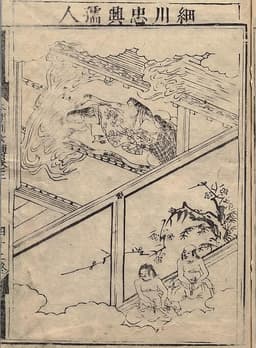
Hosokawa Gracia
Politician · Modern
35.7Total
Basic Information
Born
1942
1563
Died
—
1600
Era
Modern
Modern
Nationality
New Zealand
Japan
Occupation
Politician
Politician
Civilization
Western
Eastern
Score Comparison
Military (10%)
49.6
11.6
Political (20%)
72.0
29.3
Influence (20%)
58.3
50.2
Legacy (20%)
52.0
40.8
Leadership (15%)
72.0
31.2
Strategy (15%)
40.6
27.1
TOTAL
58.2
35.7
David Lange — Complete Timeline
1984 AD
Became Prime Minister of New ZealandPolitical Action◆ Major
David Lange became Prime Minister after the Labour Party won the 1984 general election. His government inherited an economic crisis and implemented radical free-market reforms known as Rogernomics, while also pursuing a strong anti-nuclear foreign policy.
ElectionGovernment FormationEconomic Reform
Impact: national
Declared New Zealand Nuclear-FreePolitical Action
Lange's government declared New Zealand a nuclear-free zone, banning nuclear-powered or nuclear-armed ships from entering its waters. This policy led to a major rift with the United States and the suspension of ANZUS treaty obligations.
Anti-NuclearForeign PolicyANZUS
Impact: regionalconstructive
1985 AD
Rainbow Warrior Bombing ResponsePolitical Action◆ Major
After French intelligence agents bombed the Greenpeace ship Rainbow Warrior in Auckland harbour, Lange's government condemned the act and pursued diplomatic and legal action against France. The incident strained New Zealand-France relations and led to international arbitration.
Diplomatic IncidentFranceGreenpeace
Impact: global
1989 AD
Resigned as Prime MinisterPolitical Action◆ Major
David Lange resigned as Prime Minister due to declining health and internal party conflicts over economic policy. His resignation marked the end of a transformative but divisive period in New Zealand politics.
ResignationPolitical Career
Impact: national
Hosokawa Gracia — Complete Timeline
1578 AD
Marriage to Hosokawa TadaokiPolitical Action
Gracia married Hosokawa Tadaoki, a powerful daimyo under Oda Nobunaga and Toyotomi Hideyoshi. The marriage was arranged to strengthen political alliances between the Hosokawa and Akechi clans.
MarriagePolitical AllianceHosokawa
Impact: regional
1587 AD
Conversion to ChristianityCultural◆ Major
Hosokawa Gracia converted to Christianity under the influence of Jesuit missionaries. She was baptized with the name Gracia. Her conversion was kept secret from her husband, Hosokawa Tadaoki, who was a Buddhist.
ChristianityConversionReligion
Impact: national
1590 AD
Patronage of Christian MissionsCultural
Gracia used her influence to support Christian missionaries in Japan, providing them with protection and resources. She corresponded with Jesuit leaders and helped spread Christianity among the samurai class.
ChristianityPatronageMissions
Impact: regionalconstructive
1600 AD
Death at Osaka CastleOther◆ Major
During the Sekigahara campaign, Gracia was held hostage at Osaka Castle by Ishida Mitsunari's forces. To avoid being used as a bargaining chip, she ordered a retainer to kill her. Her death prevented her capture and preserved her honor.
DeathHostageHonor
Impact: nationaltragic
Expert Analysis
Origins
David Lange was born on August 4, 1942, in Otahuhu, New Zealand, to a working-class family. His father was a doctor, and his mother a nurse. He studied law at the University of Auckland and became a lawyer, specializing in medical law. His early career included representing trade unions and working as a legal aid lawyer. Lange entered politics in 1977, winning the Mangere by-election for the Labour Party. His background in law and his eloquence made him a rising star in the party.
Hosokawa Gracia was born in 1563 as Akechi Tama, daughter of Akechi Mitsuhide, a samurai lord. Her father famously betrayed Oda Nobunaga at Honno-ji in 1582. After her father's death, she was married to Hosokawa Tadaoki, a daimyo under Nobunaga and Toyotomi Hideyoshi. Gracia converted to Christianity around 1587, taking the name Gracia, influenced by Jesuit missionaries. Her conversion was kept secret due to the persecution of Christians in Japan.
Rise to Power
David Lange rose to prominence as a charismatic orator and opposition spokesperson. In 1983, he became Leader of the Labour Party. The 1984 snap election was triggered by a constitutional crisis over the National government's handling of the economy. Lange led Labour to a landslide victory, becoming Prime Minister on July 26, 1984, at age 41. His rise was marked by his anti-nuclear stance and his ability to connect with voters.
Hosokawa Gracia's rise was not political in the traditional sense. She gained influence through her marriage and her conversion. Her husband, Hosokawa Tadaoki, was a powerful daimyo, and she used her position to protect and support Christian missionaries. Her most significant moment came during the Sekigahara campaign in 1600. When Ishida Mitsunari's forces attempted to take her hostage, she chose death over capture, ordering her servant to kill her. This act of defiance elevated her status as a symbol of Christian martyrdom.
Leadership & Governance
David Lange's leadership was defined by his anti-nuclear policy. In 1985, his government declared New Zealand a nuclear-free zone, banning nuclear-powered and nuclear-armed ships. This strained relations with the United States and led to the suspension of New Zealand's ANZUS obligations. Lange also implemented radical economic reforms, known as 'Rogernomics', after Finance Minister Roger Douglas. These included deregulation, privatization, and floating the currency. However, these policies caused social hardship and internal party conflict. Lange scored 72.0 in political leadership and 72.0 in overall leadership, reflecting his decisive but controversial governance.
Hosokawa Gracia had no formal governance role. Her leadership was personal and spiritual. She used her influence to protect Christians in her domain, corresponding with Jesuit leaders. Her refusal to renounce her faith under pressure demonstrated moral courage. However, her political score is 29.3 and leadership score 31.2, indicating limited direct impact on governance.
Triumph & Tragedy
David Lange's greatest triumph was the nuclear-free policy, which became a defining feature of New Zealand's identity. His government also managed the Rainbow Warrior bombing crisis in 1985, when French agents sank the Greenpeace ship in Auckland. Lange's condemnation of France and pursuit of justice enhanced his international reputation. His tragedy was the economic reforms that created unemployment and inequality, and his resignation in 1989 due to health issues and party infighting. He died in 2005 at age 63.
Hosokawa Gracia's triumph was her martyrdom, which inspired Christians in Japan and abroad. Her death prevented her being used as a hostage against her husband. Her tragedy was the persecution of Christians in Japan, which intensified after her death. Many converts were executed, and Christianity was suppressed until the 19th century. Her legacy score is 40.8, reflecting her symbolic importance but limited historical impact.
Character & Destiny
David Lange was known for his wit, eloquence, and stubbornness. He often used humor to deflect criticism. His character drove him to take a principled stand on nuclear weapons, even at the cost of alliance relationships. However, his indecisiveness on economic policy led to internal conflicts. His destiny was shaped by his health: obesity and diabetes contributed to his early resignation and death.
Hosokawa Gracia was devout and courageous. Her conversion to Christianity was a risk in a hostile environment. Her decision to die rather than be captured reflected her strong faith and sense of honor. Her destiny was shaped by her father's betrayal and the political turmoil of the Sengoku period. She is remembered as a symbol of Christian resistance.
Legacy
David Lange's legacy is the nuclear-free policy, which remains in place and influences New Zealand's foreign policy. He also inspired anti-nuclear movements globally. His economic reforms, however, are controversial. He scored 58.3 in influence and 52.0 in legacy, reflecting his lasting impact on New Zealand's identity.
Hosokawa Gracia's legacy is primarily religious and cultural. She is venerated as a martyr by some Christians, and her story is told in literature and film. However, her political impact was minimal, and her legacy score is 40.8. She is remembered more as a symbol than a shaper of events.
Conclusion
David Lange had a greater impact than Hosokawa Gracia. His total score of 58.2 vs. her 35.7 reflects his tangible influence on national policy and international relations. Lange's nuclear-free policy changed New Zealand's trajectory and remains a defining feature. Gracia's story is compelling but did not alter the course of Japanese history. Lange's leadership in a modern democracy allowed him to effect real change, while Gracia's influence was confined to her personal sphere. Therefore, David Lange is the more historically significant figure.
Rankings
🥇
David LangeLeader
Mil: 49.6Pol: 72.0Inf: 58.3
58.2
🥈
Hosokawa Gracia
Mil: 11.6Pol: 29.3Inf: 50.2
35.7
+22.5 behind
How This Comparison Works
Algorithm
Each figure is scored on 6 dimensions (0—100 scale) based on structured historical data: Military (10%), Political (20%), Influence (20%), Legacy (20%), Leadership (15%), Strategy (15%). The weighted total produces the final ranking.
Data Sources
Scores are computed from structured sub-indicators in the database. Scale factors adjust for era (Ancient ×0.85, Modern ×1.0) and civilization size (Eastern ×1.05, Other ×0.80) to account for differences in population and military scale.
Maximum 3 Figures
Comparisons are limited to 2—3 figures to ensure readability and statistical meaningfulness.
Error Margins
±5 points per dimension — Sub-scores are derived from historical records with inherent uncertainty. Two figures within 5 points on a dimension should be considered roughly equivalent in that area.
Total Score Accuracy
±3 points overall — The weighted combination of 6 dimensions produces a total score with approximately ±3 points of uncertainty. Differences of less than 3 points are not statistically significant— the figures are effectively tied.
Known Limitations
- Historical records are incomplete and uneven across civilizations
- Figures from oral-tradition societies may be underrepresented
- Occupation labels can misclassify multi-role figures
- Scores measure capability and impact, not moral character
- Quantitative scoring is a comparison tool, not absolute truth
Capability Radar
Military (10%) — Battles & Warfare
Battles
30
14
Win Rate
33
19
Expansion
33
20
Political (20%) — Governance & Reform
Reform
65
5
Diplomacy
70
15
Economy
55
5
Influence (20%) — Cultural & Global Reach
Cultural
55
20
Global
55
10
Legacy (20%) — Historical Impact
Historical
60
25
Longevity
50
20
Leadership (15%) — Power & Stability
Tenure
60
10
Stability
60
5
Strategy (15%) — Tactics & Innovation
Strategy
36
24
Tactics
39
28
Reform
42
30
Similar Comparisons
Comments & Discussion
No comments yet. Be the first to share your thoughts!