Loading...
Hosokawa Gracia vs John F. Kennedy
John F. Kennedy leads by 27.0 pts · 2 figures compared
…
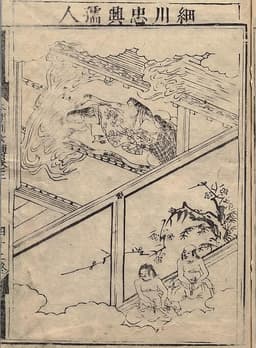
Hosokawa Gracia
Politician · Modern
35.7Total
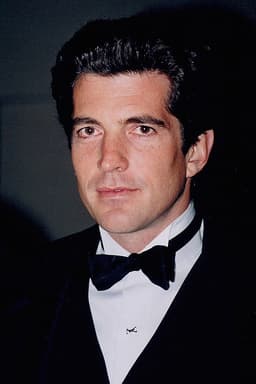
John F. Kennedy
Politician · Modern
62.7Total
Basic Information
Born
1563
1917
Died
1600
1963
Era
Modern
Modern
Nationality
Japan
United States
Occupation
Politician
Politician
Civilization
Eastern
Western
Score Comparison
Military (10%)
11.6
34.9
Political (20%)
29.3
60.0
Influence (20%)
50.2
82.0
Legacy (20%)
40.8
54.0
Leadership (15%)
31.2
72.0
Strategy (15%)
27.1
54.3
TOTAL
35.7
62.7
Hosokawa Gracia — Complete Timeline
1578 AD
Marriage to Hosokawa TadaokiPolitical Action
Gracia married Hosokawa Tadaoki, a powerful daimyo under Oda Nobunaga and Toyotomi Hideyoshi. The marriage was arranged to strengthen political alliances between the Hosokawa and Akechi clans.
MarriagePolitical AllianceHosokawa
Impact: regional
1587 AD
Conversion to ChristianityCultural◆ Major
Hosokawa Gracia converted to Christianity under the influence of Jesuit missionaries. She was baptized with the name Gracia. Her conversion was kept secret from her husband, Hosokawa Tadaoki, who was a Buddhist.
ChristianityConversionReligion
Impact: national
1590 AD
Patronage of Christian MissionsCultural
Gracia used her influence to support Christian missionaries in Japan, providing them with protection and resources. She corresponded with Jesuit leaders and helped spread Christianity among the samurai class.
ChristianityPatronageMissions
Impact: regionalconstructive
1600 AD
Death at Osaka CastleOther◆ Major
During the Sekigahara campaign, Gracia was held hostage at Osaka Castle by Ishida Mitsunari's forces. To avoid being used as a bargaining chip, she ordered a retainer to kill her. Her death prevented her capture and preserved her honor.
DeathHostageHonor
Impact: nationaltragic
John F. Kennedy — Complete Timeline
1961 AD
Bay of Pigs InvasionWar◆ Major
Kennedy authorized the CIA-backed invasion of Cuba by exiles at the Bay of Pigs, which failed disastrously. The event embarrassed the U.S., strengthened Castro's position, and pushed Cuba closer to the Soviet Union.
CubaCold WarFailed Invasion
Impact: globaldestructive
Establishment of the Peace CorpsPolitical Action◆ Major
Kennedy signed an executive order establishing the Peace Corps, sending American volunteers abroad to assist with development. The program promoted U.S. soft power and cultural exchange, becoming a lasting legacy of his administration.
Peace CorpsForeign AidVolunteerism
Impact: globalconstructive
1962 AD
Cuban Missile CrisisPolitical Action
Kennedy confronted the Soviet Union over the installation of nuclear missiles in Cuba. He imposed a naval blockade and negotiated a peaceful resolution, securing the removal of missiles in exchange for a pledge not to invade Cuba and removal of U.S. missiles from Turkey.
Cold WarNuclear CrisisDiplomacy
Impact: global
Moon Speech at Rice UniversityCultural◆ Major
Kennedy delivered a speech at Rice University, committing the U.S. to landing a man on the moon before the end of the decade. This galvanized the Apollo program and the Space Race against the Soviet Union.
Space RaceApollo ProgramMoon Landing
Impact: globalprogressive
1963 AD
Assassination of John F. KennedyPolitical Action
Kennedy was assassinated by Lee Harvey Oswald while riding in a motorcade in Dallas, Texas. His death shocked the world and led to the passage of the Civil Rights Act and other legislation under his successor, Lyndon B. Johnson.
AssassinationDallasConspiracy Theories
Impact: globaltragic
Expert Analysis
Origins
Hosokawa Gracia (1563-1600) was born Akechi Tama, daughter of Akechi Mitsuhide, a prominent samurai lord. Her early life was marked by tragedy when her father betrayed and killed Oda Nobunaga in 1582, leading to his own defeat. She married Hosokawa Tadaoki at age 15, a strategic alliance. Gracia was educated in traditional Japanese arts but also exposed to Christianity through Jesuit missionaries, converting secretly around 1587. John F. Kennedy (1917-1963) was born into a wealthy, politically ambitious Boston family. His father Joseph Kennedy Sr. served as U.S. ambassador to the UK. Kennedy attended Harvard, graduating in 1940. His older brother Joseph Jr. was expected to be the political star but died in WWII, thrusting John into that role. Kennedy's wartime service commanding PT-109 in the Pacific made him a hero.
Rise to Power
Gracia's rise was indirect, through marriage. Her husband Tadaoki became a key daimyo under Toyotomi Hideyoshi. After Hideyoshi's death, Tadaoki aligned with Tokugawa Ieyasu against Ishida Mitsunari. In 1600, during the Sekigahara campaign, Gracia was held hostage in Osaka Castle by Mitsunari's forces. Her refusal to be used as a bargaining chip led to her ordering a retainer to kill her, dying at age 37. Kennedy's rise was meteoric. He won a Massachusetts House seat in 1946, then Senate in 1952. In 1960, he defeated Richard Nixon in a close presidential election, becoming the first Catholic U.S. president. His charisma and televised debates helped him win. Kennedy's political score of 60.0 reflects his ability to navigate power structures, while Gracia's 29.3 shows her limited formal authority.
Leadership & Governance
Gracia exercised leadership through influence rather than office. As a Christian convert, she protected missionaries and promoted the faith in a hostile environment. Her governance was indirect, advising her husband and using her status to aid Christians. In contrast, Kennedy wielded executive power. He founded the Peace Corps in 1961, sending volunteers abroad. He escalated U.S. involvement in Vietnam. His leadership during the Cuban Missile Crisis in 1962 involved careful negotiation, avoiding nuclear war. Kennedy's leadership score of 72.0 far exceeds Gracia's 31.2. Gracia's influence score of 50.2 is moderate, reflecting her symbolic importance, but her strategic score of 27.1 indicates limited tactical impact.
Triumph & Tragedy
Gracia's greatest triumph was her unwavering faith and martyrdom. By choosing death over hostage, she denied Mitsunari a political pawn and upheld her honor. Her patronage supported Christian missions in Japan. Her tragedy was her violent end and the subsequent persecution of Christians under the Tokugawa shogunate. Kennedy's triumphs include the peaceful resolution of the Cuban Missile Crisis and the establishment of the Peace Corps. He also set the goal of landing a man on the moon, achieved in 1969. His tragedies include the failed Bay of Pigs Invasion in 1961 and his assassination in 1963. Kennedy's influence score of 82.0 and legacy score of 54.0 reflect his lasting impact, while Gracia's legacy score of 40.8 is lower but notable in religious history.
Character & Destiny
Gracia was deeply religious and resolute. Her conversion to Christianity risked her status and life. Her decision to die rather than be used as a hostage shows extreme conviction. Her destiny was shaped by the violent politics of Japan's unification. Kennedy was charismatic, ambitious, and cool under pressure. He suffered from Addison's disease and chronic pain but projected vitality. His destiny was cut short by assassination, but his leadership during the Cuban Missile Crisis cemented his reputation. Historians often rate Kennedy highly for crisis management, though his domestic achievements were limited. Gracia's character, though less documented, is celebrated in Japanese Christian history.
Legacy
Gracia is remembered as a symbol of Christian martyrdom in Japan. Her story is taught in schools and depicted in literature. The Hosokawa family remained influential, but her faith did not endure due to persecution. Kennedy's legacy is vast—the Peace Corps continues, the space program achieved the moon landing, and the Civil Rights Act was passed after his death. His assassination made him a martyr for American ideals. Kennedy's total score of 62.7 is significantly higher than Gracia's 35.7, reflecting broader impact. Gracia's influence is limited to religious history, while Kennedy shaped global politics.
Conclusion
John F. Kennedy had greater historical impact. His political and military actions affected millions, averting nuclear war and inspiring public service. Hosokawa Gracia's impact was personal and symbolic, confined to her era and faith. While her courage is notable, Kennedy's total score of 62.7 versus Gracia's 35.7 demonstrates his superior influence, leadership, and legacy. Kennedy's decisions changed the course of the Cold War, whereas Gracia's death was a footnote in Japan's unification. The data supports Kennedy as the more consequential figure.
Rankings
🥇
John F. KennedyLeader
Mil: 34.9Pol: 60.0Inf: 82.0
62.7
🥈
Hosokawa Gracia
Mil: 11.6Pol: 29.3Inf: 50.2
35.7
+27.0 behind
How This Comparison Works
Algorithm
Each figure is scored on 6 dimensions (0—100 scale) based on structured historical data: Military (10%), Political (20%), Influence (20%), Legacy (20%), Leadership (15%), Strategy (15%). The weighted total produces the final ranking.
Data Sources
Scores are computed from structured sub-indicators in the database. Scale factors adjust for era (Ancient ×0.85, Modern ×1.0) and civilization size (Eastern ×1.05, Other ×0.80) to account for differences in population and military scale.
Maximum 3 Figures
Comparisons are limited to 2—3 figures to ensure readability and statistical meaningfulness.
Error Margins
±5 points per dimension — Sub-scores are derived from historical records with inherent uncertainty. Two figures within 5 points on a dimension should be considered roughly equivalent in that area.
Total Score Accuracy
±3 points overall — The weighted combination of 6 dimensions produces a total score with approximately ±3 points of uncertainty. Differences of less than 3 points are not statistically significant— the figures are effectively tied.
Known Limitations
- Historical records are incomplete and uneven across civilizations
- Figures from oral-tradition societies may be underrepresented
- Occupation labels can misclassify multi-role figures
- Scores measure capability and impact, not moral character
- Quantitative scoring is a comparison tool, not absolute truth
Capability Radar
Military (10%) — Battles & Warfare
Battles
14
10
Win Rate
19
10
Expansion
20
10
Political (20%) — Governance & Reform
Reform
5
65
Diplomacy
15
75
Economy
5
55
Influence (20%) — Cultural & Global Reach
Cultural
20
70
Global
10
70
Legacy (20%) — Historical Impact
Historical
25
65
Longevity
20
60
Leadership (15%) — Power & Stability
Tenure
10
50
Stability
5
60
Strategy (15%) — Tactics & Innovation
Strategy
24
20
Tactics
28
15
Reform
30
25
Similar Comparisons
Comments & Discussion
No comments yet. Be the first to share your thoughts!