Loading...
This comparison has not been analyzed yet.
One-time AI generation (~1 minute). Scores and timeline are already available below.
David Marshall vs Nestor Kirchner
Nestor Kirchner leads by 14.7 pts · 2 figures compared
…
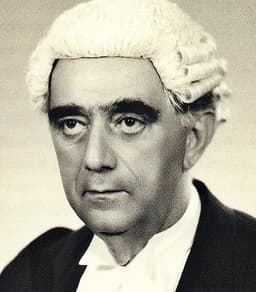
David Marshall
Politician · Modern
39.7Total
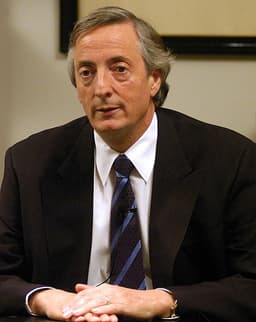
Nestor Kirchner
Politician · Modern
54.4Total
Basic Information
Born
1908
1950
Died
1995
—
Era
Modern
Modern
Nationality
Singapore
Argentina
Occupation
Politician
Politician
Civilization
Eastern
Western
Score Comparison
Military (10%)
14.4
50.0
Political (20%)
39.4
59.3
Influence (20%)
50.2
57.2
Legacy (20%)
41.7
47.5
Leadership (15%)
45.0
66.0
Strategy (15%)
26.7
44.0
TOTAL
39.7
54.4
David Marshall — Complete Timeline
1955 AD
Appointed First Chief Minister of SingaporePolitical Action◆ Major
David Marshall became the first Chief Minister of Singapore following the 1955 general election. He led a minority government and negotiated with the British for self-governance, but resigned in 1956 after failing to secure full internal self-rule.
Singapore self-governmentConstitutional negotiations
Impact: national
1956 AD
Led the Merdeka Talks in LondonPolitical Action◆ Major
Marshall led a delegation to London to negotiate full internal self-government for Singapore. The talks collapsed when the British refused to grant control over internal security and defense, leading to Marshall's resignation as Chief Minister.
Merdeka talksSelf-government failure
Impact: national
Resigned as Chief MinisterPolitical Action◆ Major
After the failure of the London talks, Marshall resigned as Chief Minister on June 7, 1956. He was succeeded by Lim Yew Hock. Marshall's resignation marked a turning point in Singapore's path to self-government.
ResignationPolitical transition
Impact: national
1957 AD
Founded the Workers' Party of SingaporePolitical Action◆ Major
After leaving office, Marshall founded the Workers' Party, a political party that became a key opposition force in Singapore. He served as its first secretary-general, advocating for social democracy and workers' rights.
Political party foundingOpposition
Impact: nationalconstructive
1978 AD
Appointed Singapore's First Ambassador to FrancePolitical Action
Marshall served as Singapore's first ambassador to France from 1978 to 1980. He also held concurrent accreditation to Spain and Portugal, representing Singapore's diplomatic interests in Europe.
DiplomacyAmbassador
Impact: national
Nestor Kirchner — Complete Timeline
2003 AD
Oversaw strong economic recovery and growthReform◆ Major
Under Kirchner, Argentina experienced rapid economic growth, with GDP expanding by 8-9% annually from 2003 to 2007. This was driven by high commodity prices, a competitive exchange rate, and increased domestic demand, reducing poverty and unemployment.
Economic GrowthRecoveryPoverty Reduction
Impact: nationalconstructive
Elected President of ArgentinaPolitical Action◆ Major
On April 27, 2003, N
ElectionPeronismNew Leadership
Impact: national
Pushed for human rights trials and annulled pardonsPolitical Action◆ Major
In 2003, Kirchner pushed Congress to annul the 1990 pardons granted to military leaders by Menem. He also supported the reopening of human rights trials for Dirty War crimes. This led to the prosecution of hundreds of former officials.
Human RightsTransitional JusticeDirty War
Impact: nationalconstructive
2005 AD
Restructured Argentina's defaulted debtPolitical Action◆ Major
In 2005, Kirchner's government successfully restructured 76% of Argentina's defaulted sovereign debt, offering bondholders a steep haircut of about 65%. This allowed Argentina to return to international capital markets and reduced the debt burden.
Debt RestructuringEconomic PolicySovereign Default
Impact: globalconstructive
2007 AD
Did not seek re-election, paving way for his wifePolitical Action◆ Major
In 2007, Néstor Kirchner chose not to run for re-election, instead supporting his wife, Cristina Fernández de Kirchner, as the Peronist candidate. She won the presidency. This decision established a political dynasty in Argentina.
Political DynastySuccessionPeronism
Impact: national
This comparison has not been analyzed yet.
One-time AI generation (~1 minute). Scores and timeline are already available below.
Rankings
🥇
Nestor KirchnerLeader
Mil: 50.0Pol: 59.3Inf: 57.2
54.4
🥈
David Marshall
Mil: 14.4Pol: 39.4Inf: 50.2
39.7
+14.7 behind
How This Comparison Works
Algorithm
Each figure is scored on 6 dimensions (0—100 scale) based on structured historical data: Military (10%), Political (20%), Influence (20%), Legacy (20%), Leadership (15%), Strategy (15%). The weighted total produces the final ranking.
Data Sources
Scores are computed from structured sub-indicators in the database. Scale factors adjust for era (Ancient ×0.85, Modern ×1.0) and civilization size (Eastern ×1.05, Other ×0.80) to account for differences in population and military scale.
Maximum 3 Figures
Comparisons are limited to 2—3 figures to ensure readability and statistical meaningfulness.
Error Margins
±5 points per dimension — Sub-scores are derived from historical records with inherent uncertainty. Two figures within 5 points on a dimension should be considered roughly equivalent in that area.
Total Score Accuracy
±3 points overall — The weighted combination of 6 dimensions produces a total score with approximately ±3 points of uncertainty. Differences of less than 3 points are not statistically significant— the figures are effectively tied.
Known Limitations
- Historical records are incomplete and uneven across civilizations
- Figures from oral-tradition societies may be underrepresented
- Occupation labels can misclassify multi-role figures
- Scores measure capability and impact, not moral character
- Quantitative scoring is a comparison tool, not absolute truth
Capability Radar
Military (10%) — Battles & Warfare
Battles
16
27
Win Rate
15
32
Expansion
20
32
Political (20%) — Governance & Reform
Reform
30
75
Diplomacy
40
65
Economy
20
70
Influence (20%) — Cultural & Global Reach
Cultural
20
40
Global
20
45
Legacy (20%) — Historical Impact
Historical
30
55
Longevity
20
30
Leadership (15%) — Power & Stability
Tenure
15
60
Stability
20
55
Strategy (15%) — Tactics & Innovation
Strategy
23
41
Tactics
28
43
Reform
30
43
Similar Comparisons
Comments & Discussion
No comments yet. Be the first to share your thoughts!