Loading...
This comparison has not been analyzed yet.
One-time AI generation (~1 minute). Scores and timeline are already available below.
Decentius vs King Wu of Zhou
King Wu of Zhou leads by 22.1 pts · 2 figures compared
…
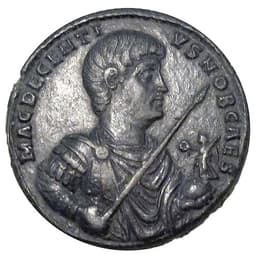
Decentius
Emperor · Ancient
44.9Total
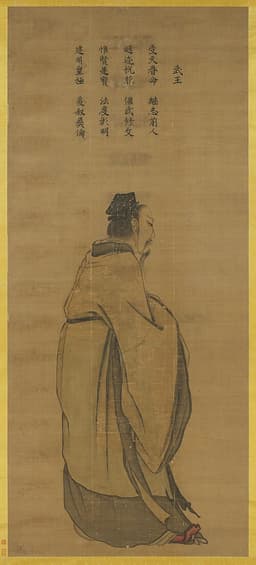
King Wu of Zhou
Emperor · Ancient
67.0Total
Basic Information
Born
290
-1076
Died
353
-1043
Era
Ancient
Ancient
Nationality
Roman Empire
China
Occupation
Emperor
Emperor
Civilization
Western
Eastern
Score Comparison
Military (10%)
45.0
82.0
Political (20%)
39.4
55.0
Influence (20%)
56.4
65.0
Legacy (20%)
39.2
80.0
Leadership (15%)
45.0
51.9
Strategy (15%)
38.3
65.4
TOTAL
44.9
67.0
Decentius — Complete Timeline
350 AD
Appointed Caesar by MagnentiusPolitical Action◆ Major
After Magnentius usurped the Western Roman throne, he appointed his brother Decentius as Caesar. Decentius was given command of Gaul and tasked with defending the Rhine frontier against Germanic tribes.
Imperial AppointmentUsurpationMagnentius
Impact: regional
352 AD
Failed to defend Gaul against AlemanniWar◆ Major
Decentius's forces failed to prevent Alemanni incursions into Gaul, leading to significant devastation. This military failure weakened Magnentius's position and undermined confidence in the usurper regime.
Military DefeatGermanic InvasionGaul
Impact: regionaldestructive
353 AD
Committed suicide after Magnentius's defeatOther◆ Major
After Magnentius was defeated by Constantius II at the Battle of Mons Seleucus, Decentius hanged himself. His suicide ended the usurper dynasty and restored the Western Roman Empire to Constantius II's control.
SuicideUsurpationConstantius II
Impact: regionaltragic
King Wu of Zhou — Complete Timeline
1046 BC
Battle of MuyeWar
King Wu of Zhou led a coalition of tribes and states to defeat the Shang army at Muye, near the Shang capital. The Shang king Zhou committed suicide, ending the Shang dynasty and establishing the Zhou dynasty as the ruling power in China.
Zhou DynastyBattleDynastic Change
Impact: regional
Founding of the Zhou DynastyPolitical Action◆ Major
King Wu established the Zhou dynasty, with its capital at Haojing (near modern Xi'an). He implemented the feudal system, granting land to relatives and allies, which became the basis for Zhou governance for centuries.
Zhou DynastyFoundingFeudal System
Impact: regionalconstructive
Distribution of FiefsPolitical Action◆ Major
King Wu divided the conquered Shang territories into fiefs granted to his brothers, allies, and descendants of earlier sage-kings. This system of enfeoffment created a network of semi-autonomous states loyal to the Zhou king.
Zhou DynastyFeudal SystemGovernance
Impact: regionalconstructive
This comparison has not been analyzed yet.
One-time AI generation (~1 minute). Scores and timeline are already available below.
Rankings
🥇
King Wu of ZhouLeader
Mil: 82.0Pol: 55.0Inf: 65.0
67.0
🥈
Decentius
Mil: 45.0Pol: 39.4Inf: 56.4
44.9
+22.1 behind
How This Comparison Works
Algorithm
Each figure is scored on 6 dimensions (0—100 scale) based on structured historical data: Military (10%), Political (20%), Influence (20%), Legacy (20%), Leadership (15%), Strategy (15%). The weighted total produces the final ranking.
Data Sources
Scores are computed from structured sub-indicators in the database. Scale factors adjust for era (Ancient ×0.85, Modern ×1.0) and civilization size (Eastern ×1.05, Other ×0.80) to account for differences in population and military scale.
Maximum 3 Figures
Comparisons are limited to 2—3 figures to ensure readability and statistical meaningfulness.
Error Margins
±5 points per dimension — Sub-scores are derived from historical records with inherent uncertainty. Two figures within 5 points on a dimension should be considered roughly equivalent in that area.
Total Score Accuracy
±3 points overall — The weighted combination of 6 dimensions produces a total score with approximately ±3 points of uncertainty. Differences of less than 3 points are not statistically significant— the figures are effectively tied.
Known Limitations
- Historical records are incomplete and uneven across civilizations
- Figures from oral-tradition societies may be underrepresented
- Occupation labels can misclassify multi-role figures
- Scores measure capability and impact, not moral character
- Quantitative scoring is a comparison tool, not absolute truth
Capability Radar
Military (10%) — Battles & Warfare
Battles
10
60
Win Rate
5
85
Expansion
0
70
Political (20%) — Governance & Reform
Reform
0
80
Diplomacy
5
75
Economy
0
60
Influence (20%) — Cultural & Global Reach
Cultural
0
85
Global
0
70
Legacy (20%) — Historical Impact
Historical
5
90
Longevity
0
95
Leadership (15%) — Power & Stability
Tenure
5
15
Stability
0
50
Strategy (15%) — Tactics & Innovation
Strategy
5
75
Tactics
10
70
Reform
0
65
Similar Comparisons
Comments & Discussion
No comments yet. Be the first to share your thoughts!