Loading...
Kharavela of Kalinga vs Tigranes the Great
Tigranes the Great leads by 5.7 pts · 2 figures compared
…

Kharavela of Kalinga
Emperor · Ancient
56.1Total
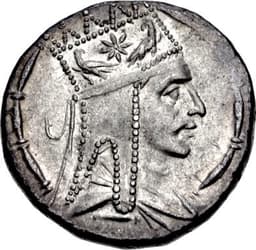
Tigranes the Great
Emperor · Ancient
61.8Total
Basic Information
Born
-193
-140
Died
-155
-55
Era
Ancient
Ancient
Nationality
India
Armenia
Occupation
Emperor
Emperor
Civilization
Indian
Middle Eastern
Score Comparison
Military (10%)
74.0
76.0
Political (20%)
45.0
60.0
Influence (20%)
57.2
59.0
Legacy (20%)
46.7
49.2
Leadership (15%)
66.0
77.2
Strategy (15%)
61.2
65.4
TOTAL
56.1
61.8
Kharavela of Kalinga — Complete Timeline
170 BC
Conquest of MagadhaWar◆ Major
Kharavela led a military campaign against Magadha, defeating the king and forcing him to pay tribute. He brought back treasures and statues of Jain Tirthankaras that had been taken by the Nandas, restoring them to Kalinga.
ConquestMagadhaJain Restoration
Impact: regional
165 BC
Expedition to the Pandya KingdomWar◆ Major
Kharavela led a military expedition to the Pandya kingdom in southern India. He defeated the Pandya king and extracted tribute, extending Kalinga's influence into the Tamil region for the first time.
ExpeditionPandyaSouth India
Impact: regional
160 BC
Construction of the Udayagiri CavesCultural◆ Major
Kharavela patronized the excavation of the Udayagiri and Khandagiri caves near Bhubaneswar. These caves served as Jain monastic retreats and feature inscriptions detailing his reign, including the famous Hathigumpha inscription.
CavesJain ArchitectureInscriptions
Impact: regionalconstructive
155 BC
Hathigumpha InscriptionCultural◆ Major
Kharavela commissioned the Hathigumpha inscription in the Udayagiri caves. This 17-line inscription in Prakrit details his life, military campaigns, and public works, providing the primary historical source for his reign.
InscriptionHistorical RecordPrakrit
Impact: regional
Tigranes the Great — Complete Timeline
83 BC
Conquest of Syria and CiliciaWar
Tigranes conquered the remnants of the Seleucid Empire in Syria and Cilicia, extending his rule to the Mediterranean coast. He assumed the title 'King of Kings' and ruled an empire stretching from the Caspian Sea to the Mediterranean.
Seleucid ConquestEmpire BuildingKing of Kings
Impact: regionalconstructive
77 BC
Foundation of TigranocertaCultural◆ Major
Tigranes the Great founded the city of Tigranocerta as his new capital, located in northern Mesopotamia. The city was built with a mixed population of deportees from conquered Greek cities and became a center of Hellenistic culture and trade.
City FoundationHellenismCapital
Impact: regionalconstructive
69 BC
Battle of TigranocertaWar
Tigranes was decisively defeated by a Roman army under Lucullus at the Battle of Tigranocerta. The Roman victory led to the capture of the capital and the collapse of Tigranes' empire, reducing Armenia to a client kingdom of Rome.
Roman-Armenian WarLucullusDefeat
Impact: regionaldestructive
66 BC
Submission to PompeyPolitical Action◆ Major
Tigranes submitted to the Roman general Pompey, who confirmed him as king of Armenia proper but stripped him of all conquered territories. Tigranes paid a large indemnity and became a Roman ally, retaining his throne but losing his empire.
Roman DiplomacyClient KingdomPompey
Impact: regional
Expert Analysis
Origins
Kharavela was born around 200 BCE into the Cheti dynasty of Kalinga (modern Odisha, India). Little is known of his early life, but he was likely educated in statecraft and military arts. He became a Jain, which influenced his patronage of cave monasteries. Tigranes the Great was born around 140 BCE into the Artaxiad dynasty of Armenia. He was given as a hostage to the Parthians as a child, an experience that shaped his later diplomatic skills. Upon release, he claimed the throne and began expanding.
Rise to Power
Kharavela ascended the throne of Kalinga around 170 BCE. His rise is documented in the Hathigumpha inscription, which records his early campaigns in his first year of reign. He quickly subdued local rulers and then turned to Magadha, defeating the king and extracting tribute, including treasures and Jain idols. This established him as a major power in eastern India. Tigranes rose to power after being released by the Parthians. He married Cleopatra, daughter of Mithridates VI of Pontus, forming a powerful alliance. By 83 BCE, he had conquered the remnants of the Seleucid Empire, adding Syria and Cilicia to his domain. He assumed the title 'King of Kings' and built an empire stretching from the Caspian Sea to the Mediterranean.
Leadership & Governance
Kharavela ruled with a blend of military aggression and patronage of Jainism. He sponsored the excavation of the Udayagiri and Khandagiri caves, providing retreats for Jain monks. His governance focused on consolidating control over conquered regions through tribute rather than direct rule. His military scored 74.0, reflecting effective campaigns. Tigranes governed a multi-ethnic empire, founding the city of Tigranocerta as a Hellenistic capital. He encouraged a mix of populations to foster loyalty. His political score of 60.0 suggests adept management, though his reliance on conquered territories without strong integration eventually weakened his rule.
Triumph & Tragedy
Kharavela's greatest success was his conquest of Magadha and the Pandya kingdom, extending Kalinga's influence. His patronage left enduring Jain monuments. However, his empire did not survive long after his death, and his legacy is limited to inscriptions and caves. Tigranes' triumph was creating the largest Armenian empire in history. His tragedy came with the Battle of Tigranocerta in 69 BCE, where he was decisively defeated by the Roman general Lucullus. He later submitted to Pompey, retaining only Armenia proper. Both rulers saw their empires shrink after their peaks.
Character & Destiny
Kharavela appears as a determined conqueror with a religious bent. His decision to record his deeds in the Hathigumpha inscription suggests a desire for lasting fame. His character likely contributed to his success but also to the ephemeral nature of his conquests. Tigranes was ambitious and pragmatic, but his overexpansion led to conflict with Rome. His submission to Pompey showed a realistic streak, allowing him to keep his throne. Historical assessments note his diplomatic skill but also his inability to maintain conquered territories.
Legacy
Kharavela's legacy is primarily archaeological and religious. The Udayagiri caves are a UNESCO World Heritage site, and his inscriptions provide valuable historical data. His influence score is 57.2, reflecting limited long-term impact. Tigranes is remembered as a national hero in Armenia, with his empire a symbol of past glory. The city of Tigranocerta, though lost, remains iconic. His legacy score of 49.2 is modest but enduring. Both rulers left marks on their regions, but Tigranes' impact on Armenian identity is more profound.
Conclusion
Tigranes the Great had greater overall impact. His empire reshaped the Near East and challenged Rome, while Kharavela's conquests were more localized. Tigranes scores 61.8 total versus Kharavela's 56.1, with advantages in military (76.0 to 74.0), political (60.0 to 45.0), and leadership (77.2 to 66.0). Kharavela's influence and legacy are lower, and his empire did not endure. Tigranes, despite defeat, established Armenia as a lasting entity. Thus, Tigranes stands as the more significant historical figure.
Rankings
🥇
Tigranes the GreatLeader
Mil: 76.0Pol: 60.0Inf: 59.0
61.8
🥈
Kharavela of Kalinga
Mil: 74.0Pol: 45.0Inf: 57.2
56.1
+5.7 behind
How This Comparison Works
Algorithm
Each figure is scored on 6 dimensions (0—100 scale) based on structured historical data: Military (10%), Political (20%), Influence (20%), Legacy (20%), Leadership (15%), Strategy (15%). The weighted total produces the final ranking.
Data Sources
Scores are computed from structured sub-indicators in the database. Scale factors adjust for era (Ancient ×0.85, Modern ×1.0) and civilization size (Eastern ×1.05, Other ×0.80) to account for differences in population and military scale.
Maximum 3 Figures
Comparisons are limited to 2—3 figures to ensure readability and statistical meaningfulness.
Error Margins
±5 points per dimension — Sub-scores are derived from historical records with inherent uncertainty. Two figures within 5 points on a dimension should be considered roughly equivalent in that area.
Total Score Accuracy
±3 points overall — The weighted combination of 6 dimensions produces a total score with approximately ±3 points of uncertainty. Differences of less than 3 points are not statistically significant— the figures are effectively tied.
Known Limitations
- Historical records are incomplete and uneven across civilizations
- Figures from oral-tradition societies may be underrepresented
- Occupation labels can misclassify multi-role figures
- Scores measure capability and impact, not moral character
- Quantitative scoring is a comparison tool, not absolute truth
Capability Radar
Military (10%) — Battles & Warfare
Battles
75
75
Win Rate
80
70
Expansion
80
85
Political (20%) — Governance & Reform
Reform
65
65
Diplomacy
60
70
Economy
70
60
Influence (20%) — Cultural & Global Reach
Cultural
55
55
Global
30
60
Legacy (20%) — Historical Impact
Historical
50
65
Longevity
40
50
Leadership (15%) — Power & Stability
Tenure
70
80
Stability
65
55
Strategy (15%) — Tactics & Innovation
Strategy
75
78
Tactics
70
72
Reform
60
60
Similar Comparisons
Comments & Discussion
No comments yet. Be the first to share your thoughts!