Loading...
Demetrius I Poliorcetes vs Mentuhotep II
Mentuhotep II leads by 1.5 pts · 2 figures compared
…
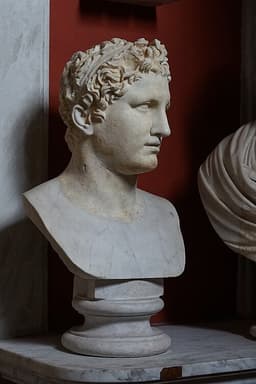
Demetrius I Poliorcetes
Emperor · Ancient
56.9Total

Mentuhotep II
Emperor · Ancient
58.4Total
Basic Information
Born
-337
-2061
Died
-283
-2010
Era
Ancient
Ancient
Nationality
Macedon
Egypt
Occupation
Emperor
Emperor
Civilization
Western
Middle Eastern
Score Comparison
Military (10%)
67.3
76.0
Political (20%)
48.0
55.0
Influence (20%)
58.0
56.7
Legacy (20%)
50.0
40.0
Leadership (15%)
65.7
78.0
Strategy (15%)
61.2
66.3
TOTAL
56.9
58.4
Demetrius I Poliorcetes — Complete Timeline
306 BC
Battle of Salamis in Cyprus (306 BC)War◆ Major
Demetrius commanded the Macedonian fleet to a decisive victory over Ptolemy I's navy off Salamis, Cyprus. He destroyed or captured much of the Ptolemaic fleet, allowing him to conquer Cyprus and establish a base for his father Antigonus I Monophthalmus.
Naval BattleCyprusAntigonid
Impact: regional
305 BC
Siege of Rhodes (305-304 BC)War◆ Major
Demetrius Poliorcetes besieged the city of Rhodes with massive siege engines, including the Helepolis, a 130-foot siege tower. After a year-long siege, he failed to capture the city and was forced to withdraw, but his innovative siege techniques earned him the epithet 'Poliorcetes' (Besieger of Cities).
SiegeMilitary EngineeringRhodes
Impact: regional
294 BC
Proclaimed King of Macedon (294 BC)Political Action◆ Major
After a period of chaos in Macedon, Demetrius seized the throne and was proclaimed king. He ruled Macedon for seven years, attempting to restore Antigonid power and launch campaigns to reclaim his father's empire in Asia.
KingshipMacedonAntigonid
Impact: regional
285 BC
Capture and Death in Seleucid Captivity (285 BC)Other◆ Major
After being defeated by Lysimachus and Pyrrhus, Demetrius fled to Asia Minor but was captured by Seleucus I. He was held in honorable captivity in Apamea, where he died three years later from illness and excessive drinking, ending his turbulent career.
CaptivityDeathSeleucid
Impact: regionaltragic
Mentuhotep II — Complete Timeline
2040 BC
Reunification of EgyptWar
Mentuhotep II, a Theban ruler, conquered the rival Heracleopolitan kingdom, reunifying Upper and Lower Egypt. This victory ended the First Intermediate Period and established the Middle Kingdom, with Mentuhotep II as its first pharaoh.
UnificationMiddle KingdomThebes
Impact: regionalconstructive
2030 BC
Construction of the Mortuary Temple at Deir el-BahriCultural◆ Major
Mentuhotep II built a terraced mortuary temple at Deir el-Bahri, blending rock-cut and free-standing architecture. The temple, with its colonnades and pyramid, became a model for later New Kingdom structures and symbolized his reunification.
TempleArchitectureDeir el-Bahri
Impact: regionalconstructive
Expert Analysis
Origins
Demetrius I Poliorcetes (337-283 BC) was born into the Macedonian royal family, son of Antigonus I Monophthalmus, a general of Alexander the Great. He grew up in the tumultuous wars of the Diadochi, learning warfare from his father. Mentuhotep II (c. 2061-2010 BC) was a Theban prince, likely son of Intef III. He inherited a fragmented Egypt during the First Intermediate Period, with the Heracleopolitan kingdom controlling the north.
Rise to Power
Demetrius first distinguished himself at the Battle of Salamis in Cyprus (306 BC), where he commanded the Antigonid fleet to a decisive victory over Ptolemy I, destroying or capturing 200 ships and securing Cyprus for his father. This victory earned him the title "Poliorcetes" (Besieger). He then attempted the Siege of Rhodes (305-304 BC), deploying the Helepolis, a 130-foot siege tower, but failed to capture the city after a year. In 294 BC, after Antigonus's death at Ipsus, Demetrius seized the Macedonian throne, ruling for seven years. Mentuhotep II rose by consolidating Theban power and launching a campaign northward. He conquered the Heracleopolitan kingdom around 2040 BC, ending the First Intermediate Period and reunifying Egypt. This turning point established the Middle Kingdom.
Leadership & Governance
Demetrius was a charismatic but erratic leader, focused on military conquest. He neglected administration, relying on tribute and plunder. His governance of Macedon was marked by heavy taxation and favoritism toward his veterans, alienating the nobility. He scored 65.7 in leadership but only 48.0 in political skill. Mentuhotep II governed through a centralized bureaucracy, appointing loyal officials and promoting trade. He initiated building projects, including the Mortuary Temple at Deir el-Bahri, which blended rock-cut and free-standing architecture. His leadership score of 78.0 reflects his effective state-building.
Triumph & Tragedy
Demetrius's greatest triumph was the Battle of Salamis (306 BC), where he destroyed Ptolemy's fleet and secured Cyprus. His greatest failure was the Siege of Rhodes, where despite massive siege engines, he failed to take the city, costing his reputation. Later, he was defeated by Lysimachus and Pyrrhus, fled to Asia Minor, and was captured by Seleucus I, dying in honorable captivity in 285 BC. Mentuhotep II's triumph was the reunification of Egypt, establishing the Middle Kingdom. His tragedy was the lack of a clear successor; his dynasty ended after his death, leading to a brief decline. He scored 76.0 in military but only 40.0 in legacy, partly due to limited long-term dynastic impact.
Character & Destiny
Demetrius was bold and innovative, known for his siege craft, but also arrogant and impulsive. His character led him to overreach, as seen in the failed Rhodes siege and his eventual capture. He scored 61.2 in strategy, indicating tactical brilliance but strategic flaws. Mentuhotep II was patient and methodical, prioritizing consolidation over expansion. His careful planning enabled reunification, but his lack of aggressive ambition limited his territorial gains. His strategy score of 66.3 reflects this balanced approach.
Legacy
Demetrius is remembered as the "Besieger of Cities" for his siege innovations, but his kingdom collapsed soon after his death. His influence on later siege warfare is notable, but he left no enduring political structure. He scored 50.0 in legacy. Mentuhotep II is credited with founding the Middle Kingdom, a period of stability and cultural renaissance. His mortuary temple influenced later architecture, including Hatshepsut's. However, his legacy score of 40.0 is lower due to the relative obscurity of his reign compared to other pharaohs.
Conclusion
While Demetrius I Poliorcetes was a brilliant military commander, his political failures and lack of lasting impact give him a total score of 56.9. Mentuhotep II, with a total of 58.4, achieved the more significant historical feat: reunifying Egypt and ushering in the Middle Kingdom. His leadership (78.0 vs 65.7) and strategy (66.3 vs 61.2) scores reflect his superior statecraft. Therefore, Mentuhotep II had greater overall impact.
Rankings
🥇
Mentuhotep IILeader
Mil: 76.0Pol: 55.0Inf: 56.7
58.4
🥈
Demetrius I Poliorcetes
Mil: 67.3Pol: 48.0Inf: 58.0
56.9
+1.5 behind
How This Comparison Works
Algorithm
Each figure is scored on 6 dimensions (0—100 scale) based on structured historical data: Military (10%), Political (20%), Influence (20%), Legacy (20%), Leadership (15%), Strategy (15%). The weighted total produces the final ranking.
Data Sources
Scores are computed from structured sub-indicators in the database. Scale factors adjust for era (Ancient ×0.85, Modern ×1.0) and civilization size (Eastern ×1.05, Other ×0.80) to account for differences in population and military scale.
Maximum 3 Figures
Comparisons are limited to 2—3 figures to ensure readability and statistical meaningfulness.
Error Margins
±5 points per dimension — Sub-scores are derived from historical records with inherent uncertainty. Two figures within 5 points on a dimension should be considered roughly equivalent in that area.
Total Score Accuracy
±3 points overall — The weighted combination of 6 dimensions produces a total score with approximately ±3 points of uncertainty. Differences of less than 3 points are not statistically significant— the figures are effectively tied.
Known Limitations
- Historical records are incomplete and uneven across civilizations
- Figures from oral-tradition societies may be underrepresented
- Occupation labels can misclassify multi-role figures
- Scores measure capability and impact, not moral character
- Quantitative scoring is a comparison tool, not absolute truth
Capability Radar
Military (10%) — Battles & Warfare
Battles
75
75
Win Rate
60
85
Expansion
70
70
Political (20%) — Governance & Reform
Reform
40
75
Diplomacy
50
70
Economy
45
70
Influence (20%) — Cultural & Global Reach
Cultural
55
75
Global
55
70
Legacy (20%) — Historical Impact
Historical
60
80
Longevity
50
85
Leadership (15%) — Power & Stability
Tenure
55
80
Stability
30
80
Strategy (15%) — Tactics & Innovation
Strategy
70
80
Tactics
85
70
Reform
50
65
Similar Comparisons
Comments & Discussion
No comments yet. Be the first to share your thoughts!