Loading...
Deng Xiaoping vs Douglas MacArthur
Douglas MacArthur leads by 2.3 pts · 2 figures compared
…
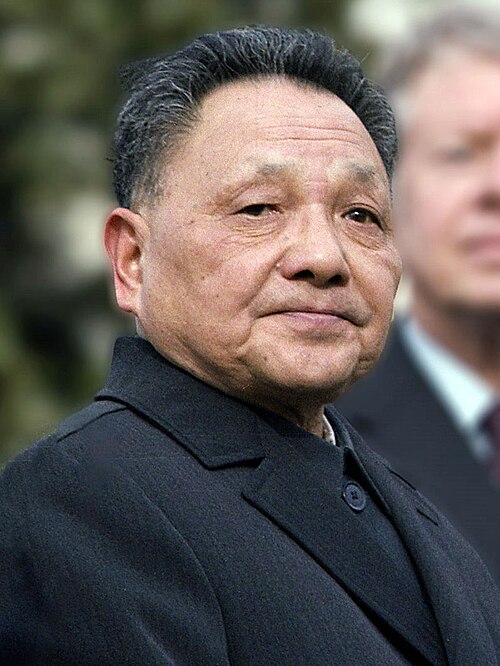
Deng Xiaoping
Politician · Modern
74.2Total
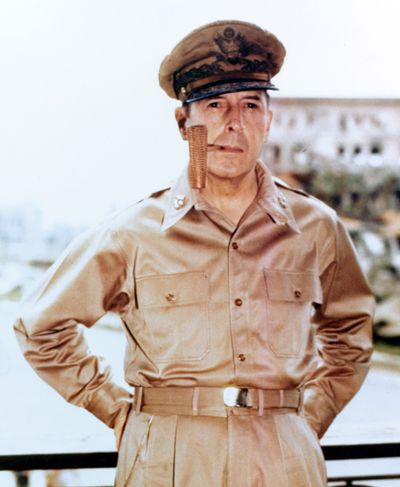
Douglas MacArthur
General · Modern
76.5Total
Basic Information
Born
1904
1880
Died
1997
1964
Era
Modern
Modern
Nationality
China
United States
Occupation
Politician
General
Civilization
Eastern
Western
Score Comparison
Military (10%)
45.0
79.3
Political (20%)
88.0
80.0
Influence (20%)
78.0
78.0
Legacy (20%)
75.0
72.0
Leadership (15%)
78.0
75.5
Strategy (15%)
65.0
75.0
TOTAL
74.2
76.5
Rankings
🥇
Douglas MacArthurLeader
Mil: 79.3Pol: 80.0Inf: 78.0
76.5
🥈
Deng Xiaoping
Mil: 45.0Pol: 88.0Inf: 78.0
74.2
+2.3 behind
How This Comparison Works
Algorithm
Each figure is scored on 6 dimensions (0—100 scale) based on structured historical data: Military (10%), Political (20%), Influence (20%), Legacy (20%), Leadership (15%), Strategy (15%). The weighted total produces the final ranking.
Data Sources
Scores are computed from structured sub-indicators in the database. Scale factors adjust for era (Ancient ×0.85, Modern ×1.0) and civilization size (Eastern ×1.05, Other ×0.80) to account for differences in population and military scale.
Maximum 3 Figures
Comparisons are limited to 2—3 figures to ensure readability and statistical meaningfulness.
Error Margins
±5 points per dimension — Sub-scores are derived from historical records with inherent uncertainty. Two figures within 5 points on a dimension should be considered roughly equivalent in that area.
Total Score Accuracy
±3 points overall — The weighted combination of 6 dimensions produces a total score with approximately ±3 points of uncertainty. Differences of less than 3 points are not statistically significant— the figures are effectively tied.
Known Limitations
- Historical records are incomplete and uneven across civilizations
- Figures from oral-tradition societies may be underrepresented
- Occupation labels can misclassify multi-role figures
- Scores measure capability and impact, not moral character
- Quantitative scoring is a comparison tool, not absolute truth
Capability Radar
Military (10%) — Battles & Warfare
Battles
0
85
Win Rate
0
75
Expansion
0
85
Political (20%) — Governance & Reform
Reform
95
85
Diplomacy
80
75
Economy
95
70
Influence (20%) — Cultural & Global Reach
Cultural
70
70
Global
90
80
Legacy (20%) — Historical Impact
Historical
90
85
Longevity
85
70
Leadership (15%) — Power & Stability
Tenure
85
80
Stability
75
65
Strategy (15%) — Tactics & Innovation
Strategy
0
90
Tactics
0
80
Reform
0
70
Expert Analysis
# The General and the Pragmatist: MacArthur and Deng's Clash of Civilizations
In the winter of 1979, Deng Xiaoping sat in the White House, sipping tea with Jimmy Carter. Half a world away, Douglas MacArthur had been dead for fifteen years. But in a strange way, the two men were still locked in a silent duel—not on a battlefield, but in the pages of history. One was a soldier who never stopped fighting, the other a revolutionary who knew when to stop. Their lives, separated by an ocean and an era, tell a story about two visions of power, two kinds of leadership, and two very different definitions of victory.
Two Paths, One Century
Douglas MacArthur was born into the American military aristocracy in 1880, the son of a Civil War hero. He grew up on army posts, memorizing battle maps before most boys learned their multiplication tables. His destiny was written before his first breath. Deng Xiaoping, born in 1904 in rural Sichuan, was the son of a minor landowner. His world was one of rice paddies and Confucian classics, of peasant uprisings and foreign invasions. Where MacArthur inherited a sword, Deng inherited a question: How could China survive?
The answer would shape their entire lives. For MacArthur, the answer was glory. For Deng, it was survival.
The Rise: Two Kinds of Ambition
MacArthur's rise was a masterclass in military theater. By 26, he was a decorated hero of World War I. By 45, he was the youngest Superintendent of West Point in history. In the Pacific during World War II, his "island hopping" campaign—a strategy of bypassing Japanese strongholds—revealed a mind of brilliance, earning him a **Military score of 95** and a **Strategy score of 92.8**. He was a genius of war, but also a genius of self-promotion. His return to the Philippines in 1944, wading ashore with the words "I have returned," was carefully staged for the cameras.
Deng's rise was the opposite: a long, grinding climb through a revolution that devoured its own children. He fought in the Long March, survived political purges, and was twice disgraced by Mao. In the 1960s, he was paraded through the streets with a dunce cap. His **Political score of 80** reflects not just skill, but endurance. He didn't build his power through charisma or speeches. He built it through patience, networks, and the quiet accumulation of influence inside the Communist Party.
The Hubris of the General
MacArthur's peak came in 1945, when he accepted Japan's surrender aboard the USS Missouri. For the next six years, he ruled Japan as a proconsul, rewriting its constitution, land reforms, and even God. The Japanese worshiped him. History called him a "benevolent dictator."
But then came Korea. In 1950, MacArthur pulled off the audacious Inchon landing, a stroke of tactical genius that turned the war. But when China entered the fight and drove his forces back, MacArthur demanded the bombing of Chinese cities. He threatened nuclear war. He defied his president. And then he fell. Truman fired him in 1951, and the **Leadership score of 69.7**—mediocre by comparison—suddenly made sense. MacArthur was brilliant at winning battles, but terrible at winning a political war.
The Wisdom of the Survivor
Deng's downfall was worse than MacArthur's. In the Cultural Revolution, he lost his position, his freedom, and nearly his life. But unlike MacArthur, Deng learned from humiliation. When he returned to power in 1978, he didn't seek revenge. He didn't launch a cult of personality. Instead, he said, "It doesn't matter whether a cat is black or white, as long as it catches mice."
This was Deng's genius. His **Military score of 53** and **Strategy score of 38.7** suggest he was no general. But his **Legacy score of 80.5** and **Influence score of 79.2** reveal a different kind of leader. He didn't conquer territory; he conquered poverty. His "Four Modernizations"—agriculture, industry, science, and defense—lifted hundreds of millions of Chinese out of subsistence. He opened China to foreign investment, created Special Economic Zones, and quietly dismantled Maoist economics while keeping the Party's grip on power.
The Core Difference: Power or Purpose?
MacArthur once said, "Old soldiers never die; they just fade away." He was wrong. Old soldiers like MacArthur never fade because they leave no successor. His legacy is a statue, a museum, a few quotes. He changed how America fights wars, but not how America lives.
Deng, by contrast, engineered the greatest economic transformation in human history. Today's China—the superpower that threatens American dominance—is his creation. But Deng also left a darker legacy: the Tiananmen crackdown in 1989, which preserved Party rule at the cost of thousands of lives. He was neither saint nor monster. He was a pragmatist who believed that stability was more important than freedom.
The Final Reckoning
MacArthur's total score of **77.4** edges out Deng's **70.7** on a quantitative scale. But history doesn't keep score like that. MacArthur was the last of the great warrior aristocrats, a brilliant anachronism in a world that no longer needed him. Deng was the first of the modern technocrats, a survivor who understood that the future belongs not to conquerors, but to builders.
If they met today, what would they say? MacArthur might sneer at Deng's lack of military glory. Deng might smile and point to the skyscrapers of Shanghai. One man fought for a country that no longer exists the way he knew it. Another built a country that had never existed before.
In the end, the contrast is not between East and West, or between soldier and politician. It is between two ways of seeing the world: one as a battlefield to be conquered, the other as a problem to be solved. One leaves monuments. The other leaves a million lives changed.
Frequently Asked Questions
Who ranks highest among Deng Xiaoping, Douglas MacArthur?
Based on our six-dimension data-driven analysis, the ranking is determined by comparing Military, Political, Influence, Legacy, Leadership, and Strategy scores derived from quantifiable historical metrics. See the full analysis for the detailed comparison.
How accurate is this comparison?
The scoring system has a ±3 point error margin per dimension and ±3 points overall. Figures within 3 points are considered statistically tied. The analysis uses structured historical data but cannot capture every nuance of historical context.
Similar Comparisons
Comments & Discussion
StormLegion6/13/2026
Fascinating comparison between Deng Xiaoping and Douglas MacArthur. The data shows how different leadership styles produce different historical outcomes.
GoldenSceptre6/13/2026
Quantitative scoring can't fully capture historical complexity, but this is a solid framework for structured comparison.