Loading...
Desmond Tutu vs Kizza Besigye
Desmond Tutu leads by 12.9 pts · 2 figures compared
…
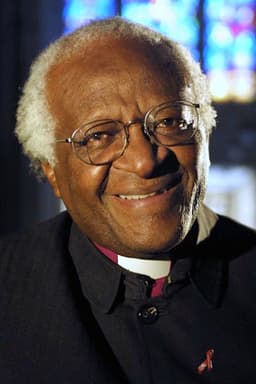
Desmond Tutu
Politician · Modern
57.4Total
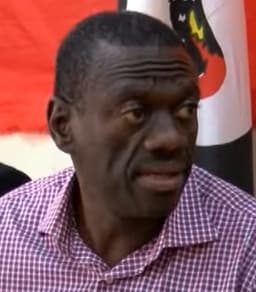
Kizza Besigye
Politician · Modern
44.5Total
Basic Information
Born
1931
1956
Died
—
—
Era
Modern
Modern
Nationality
South Africa
Uganda
Occupation
Politician
Politician
Civilization
Other
Other
Score Comparison
Military (10%)
28.3
50.0
Political (20%)
53.8
29.3
Influence (20%)
75.0
47.9
Legacy (20%)
55.0
39.2
Leadership (15%)
68.0
58.8
Strategy (15%)
37.6
44.9
TOTAL
57.4
44.5
Desmond Tutu — Complete Timeline
1984 AD
Awarded the Nobel Peace PrizeCultural◆ Major
Desmond Tutu received the Nobel Peace Prize for his nonviolent opposition to apartheid in South Africa. The award recognized his leadership in the anti-apartheid movement and his role as a moral voice for reconciliation.
Nobel PrizeAnti-ApartheidPeace
Impact: globalconstructive
1986 AD
Appointed Archbishop of Cape TownPolitical Action◆ Major
Tutu became the first black Anglican Archbishop of Cape Town, the highest position in the Anglican Church of Southern Africa. This elevated his platform to advocate against apartheid and for human rights.
Church LeadershipAnti-Apartheid
Impact: nationalconstructive
1989 AD
Led the Defiance Campaign against Pass LawsPolitical Action◆ Major
Tutu led a march in Cape Town protesting the pass laws, which restricted black South Africans' movement. The protest was met with police violence, but it galvanized international opposition to apartheid.
ProtestPass LawsAnti-Apartheid
Impact: nationalconstructive
1995 AD
Chaired the Truth and Reconciliation CommissionPolitical Action
Tutu chaired the Truth and Reconciliation Commission, established by the post-apartheid government to investigate human rights abuses during apartheid. The commission promoted restorative justice and national healing.
Truth CommissionPost-ApartheidReconciliation
Impact: nationalconstructive
Kizza Besigye — Complete Timeline
2001 AD
Presidential Election 2001Political Action◆ Major
Besigye ran as the main challenger to Yoweri Museveni in Uganda's presidential election. He received 28% of the vote against Museveni's 69%. This was his first presidential bid, establishing him as the leading opposition figure.
UgandaElectionOpposition
Impact: national
2006 AD
Presidential Election 2006Political Action◆ Major
Besigye ran as the FDC candidate in Uganda's first multi-party election in 25 years. He received 37% of the vote against Museveni's 59%. His campaign was hampered by his arrest on treason and rape charges, which were later dropped.
UgandaElectionMulti-party
Impact: national
2011 AD
Presidential Election 2011Political Action◆ Major
Besigye contested the Ugandan presidential election as the FDC candidate. He received 26% of the vote against Museveni's 68%. Following the election, he led protests against rising prices and poor governance, which were met with police crackdowns.
UgandaElectionProtests
Impact: national
2016 AD
Presidential Election 2016Political Action◆ Major
Besigye ran as the Forum for Democratic Change candidate in Uganda's presidential election against Yoweri Museveni. Official results gave Museveni 60% and Besigye 35%. Besigye rejected the results, alleging widespread fraud, and was placed under house arrest.
UgandaElectionOpposition
Impact: national
Expert Analysis
Origins
Desmond Tutu was born on October 7, 1931, in Klerksdorp, South Africa, to a teacher father and a domestic worker mother. He trained as a teacher but switched to theology, becoming one of the first black Anglican priests in South Africa. His early exposure to apartheid's injustices shaped his commitment to nonviolent resistance.
Kizza Besigye was born on April 22, 1956, in Rukungiri, Uganda. He studied medicine at Makerere University and became a physician. He joined the National Resistance Army (NRA) led by Yoweri Museveni, fighting in the bush war that brought Museveni to power in 1986. His early career was intertwined with the military and revolutionary politics.
Rise to Power
Tutu rose through church ranks, becoming Bishop of Lesotho in 1976 and General Secretary of the South African Council of Churches in 1978. His international profile soared with the 1984 Nobel Peace Prize, awarded for his nonviolent campaign against apartheid. He became Archbishop of Cape Town in 1986, the first black to hold that post. His moral authority made him a global symbol of the anti-apartheid movement.
Besigye rose as a key figure in Museveni's government, serving as Minister of State for Internal Affairs and later as a presidential advisor. However, he became disillusioned with Museveni's authoritarian turn. In 1999, he fled into exile, returning in 2001 to challenge Museveni in that year's presidential election. He received 28% of the vote, establishing himself as the main opposition leader. He ran again in 2006, 2011, and 2016, each time facing repression and disputed results.
Leadership & Governance
Tutu's leadership was based on moral persuasion and nonviolent protest. He chaired the Truth and Reconciliation Commission (TRC) from 1995 to 1998, which sought to heal South Africa by uncovering atrocities of apartheid. His governance style was inclusive and focused on reconciliation, not retribution. He scored 68.0 in leadership, reflecting his ability to inspire and unite.
Besigye's leadership is confrontational and militant. As a former guerrilla, he organized protests and defied government bans. His Forum for Democratic Change (FDC) party advocated for democratic reforms, but his governance approach was more about resistance than administration. His leadership score is 58.8, indicating strong but less broad appeal than Tutu's.
Triumph & Tragedy
Tutu's greatest triumph was his role in ending apartheid and the TRC, which helped South Africa transition peacefully. He scored 75.0 in influence, the highest among the two. His tragedy is that post-apartheid South Africa still struggles with inequality and corruption, partly overshadowing his reconciliation efforts.
Besigye's triumphs include consistently challenging Museveni's regime, keeping democratic hopes alive. He scored 47.9 in influence. His tragedy is that he never won the presidency, and his repeated arrests and house arrests have limited his impact. His political score of 29.3 reflects his inability to translate opposition into power.
Character & Destiny
Tutu was optimistic, humorous, and morally uncompromising. His faith-driven nonviolence shaped his destiny as a global icon. He scored 53.8 in political power, lower than his influence, because he never held formal political office.
Besigye is determined, courageous, but sometimes rigid. His military background (military score 50.0) and insistence on electoral integrity led to a cycle of protests and arrests. His strategy score of 44.9 suggests he lacked tactical flexibility to broaden his appeal beyond the opposition base.
Legacy
Tutu's legacy is the TRC model of transitional justice, used in other countries. He is remembered as a moral compass, with a total score of 57.4. His legacy score of 55.0 reflects enduring global recognition.
Besigye's legacy is as a symbol of resistance in Uganda. His total score is 44.5. His legacy score of 39.2 indicates limited institutional impact, as Museveni remains in power. He inspired a generation but did not achieve systemic change.
Conclusion
Desmond Tutu had greater impact. His moral leadership and TRC work influenced global human rights practices, while Besigye's efforts, though courageous, did not dislodge an entrenched regime. Tutu's total score of 57.4 versus Besigye's 44.5 reflects his broader and more lasting influence.
Rankings
🥇
Desmond TutuLeader
Mil: 28.3Pol: 53.8Inf: 75.0
57.4
🥈
Kizza Besigye
Mil: 50.0Pol: 29.3Inf: 47.9
44.5
+12.9 behind
How This Comparison Works
Algorithm
Each figure is scored on 6 dimensions (0—100 scale) based on structured historical data: Military (10%), Political (20%), Influence (20%), Legacy (20%), Leadership (15%), Strategy (15%). The weighted total produces the final ranking.
Data Sources
Scores are computed from structured sub-indicators in the database. Scale factors adjust for era (Ancient ×0.85, Modern ×1.0) and civilization size (Eastern ×1.05, Other ×0.80) to account for differences in population and military scale.
Maximum 3 Figures
Comparisons are limited to 2—3 figures to ensure readability and statistical meaningfulness.
Error Margins
±5 points per dimension — Sub-scores are derived from historical records with inherent uncertainty. Two figures within 5 points on a dimension should be considered roughly equivalent in that area.
Total Score Accuracy
±3 points overall — The weighted combination of 6 dimensions produces a total score with approximately ±3 points of uncertainty. Differences of less than 3 points are not statistically significant— the figures are effectively tied.
Known Limitations
- Historical records are incomplete and uneven across civilizations
- Figures from oral-tradition societies may be underrepresented
- Occupation labels can misclassify multi-role figures
- Scores measure capability and impact, not moral character
- Quantitative scoring is a comparison tool, not absolute truth
Capability Radar
Military (10%) — Battles & Warfare
Battles
21
24
Win Rate
22
22
Expansion
28
30
Political (20%) — Governance & Reform
Reform
70
20
Diplomacy
85
25
Economy
20
10
Influence (20%) — Cultural & Global Reach
Cultural
80
15
Global
80
10
Legacy (20%) — Historical Impact
Historical
75
20
Longevity
70
15
Leadership (15%) — Power & Stability
Tenure
30
0
Stability
75
5
Strategy (15%) — Tactics & Innovation
Strategy
32
32
Tactics
36
33
Reform
38
34
Similar Comparisons
Comments & Discussion
No comments yet. Be the first to share your thoughts!