Loading...
Deva Raya I vs Julius Caesar
Julius Caesar leads by 29.6 pts · 2 figures compared
…
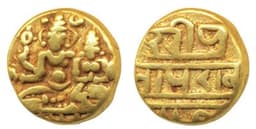
Deva Raya I
Emperor · Medieval
53.2Total

Julius Caesar
General · Ancient
82.8Total
Basic Information
Born
1406
-100
Died
1422
-44
Era
Medieval
Ancient
Nationality
India
Roman Republic
Occupation
Emperor
General
Civilization
Indian
Western
Score Comparison
Military (10%)
52.5
88.0
Political (20%)
53.8
78.0
Influence (20%)
56.4
85.0
Legacy (20%)
48.3
82.0
Leadership (15%)
53.2
80.0
Strategy (15%)
57.5
85.0
TOTAL
53.2
82.8
Deva Raya I — Complete Timeline
1410 AD
Construction of the Tungabhadra DamReform◆ Major
Deva Raya I ordered the construction of a large dam across the Tungabhadra River near Vijayanagara. The dam created a reservoir and fed irrigation canals, significantly increasing agricultural productivity in the surrounding region and supporting the empire's population.
InfrastructureIrrigationAgriculture
Impact: regionalconstructive
1415 AD
Reform of the Revenue SystemReform◆ Major
Deva Raya I implemented a new land revenue assessment system, standardizing tax collection based on land quality and crop yields. This reform increased state income and reduced corruption among local officials.
AdministrationTaxationEconomy
Impact: nationalconstructive
1417 AD
Invasion of the Bahmani SultanateWar
Deva Raya I launched a military campaign against the Bahmani Sultanate, seeking to expand Vijayanagara territory. The campaign resulted in initial successes but ultimately ended in a negotiated peace, with no major territorial changes.
WarBahmaniExpansion
Impact: regional
Julius Caesar — Complete Timeline
58 BC
Gallic WarsWar◆ Major
Caesar, as proconsul of Gaul, launched a series of campaigns that conquered all of Gaul (modern France, Belgium, and parts of Switzerland). He fought numerous battles, including against the Helvetii, the Belgae, and the Gallic chieftain Vercingetorix. The wars brought immense wealth and a loyal army to Caesar.
Gallic WarsConquestRoman Expansion
Impact: regional
49 BC
Crossing the RubiconPolitical Action◆ Major
Caesar led Legio XIII across the Rubicon River into Italy, defying the Roman Senate's order to disband his army. This act triggered a civil war against Pompey and the Optimates, ultimately leading to Caesar's dictatorship and the end of the Roman Republic.
Roman Civil WarEnd of RepublicPower Struggle
Impact: global
48 BC
Battle of PharsalusWar◆ Major
Caesar's outnumbered army defeated the larger forces of Pompey the Great at Pharsalus in Greece. Caesar's tactical use of a reserve line to counter Pompey's cavalry charge proved decisive. Pompey fled to Egypt, where he was assassinated, leaving Caesar as the undisputed master of the Roman world.
Roman Civil WarBattleDecisive Victory
Impact: regional
44 BC
Appointment as Dictator for LifePolitical Action◆ Major
The Roman Senate appointed Caesar dictator perpetuo (dictator for life), granting him unprecedented personal power. This move concentrated military, legislative, and judicial authority in one person, effectively ending the Roman Republic's traditional system of checks and balances and alarming many senators.
DictatorshipEnd of RepublicPower Consolidation
Impact: regionaldestructive
Assassination on the Ides of MarchPolitical Action◆ Major
A group of Roman senators, led by Marcus Junius Brutus and Gaius Cassius Longinus, stabbed Caesar to death at a meeting of the Senate in the Theatre of Pompey. The assassination was intended to restore the Republic, but instead triggered another civil war that led to the rise of the Roman Empire.
AssassinationRoman PoliticsEnd of Republic
Impact: globaldestructive
Expert Analysis
deva-raya-i-vs-julius-caesar
# The Dam Builder and the Destroyer of Worlds
On a March morning in 44 BCE, sixty Roman senators crowded around Gaius Julius Caesar in the Theatre of Pompey. As he fell beneath their daggers, the most powerful man in the Mediterranean world gasped at the sight of his friend Brutus among the assassins. Half a world away and fourteen centuries later, Deva Raya I stood atop a newly completed dam on the Tungabhadra River, watching water flow into canals that would transform his kingdom. One man sought to conquer the known world; the other sought to make his corner of it bloom. What drove these two rulers—both brilliant, both ambitious—toward such radically different destinies?
Origins
Caesar was born into the chaos of a dying republic. His patrician family, the Julii, claimed descent from the goddess Venus, but by the time of his birth in 100 BCE, their political influence had faded. Young Caesar grew up in a Rome convulsed by civil wars, where the old senatorial order was cracking under the weight of empire. He witnessed his uncle Marius’s populist reforms and the brutal proscriptions of Sulla—lessons in power that would never leave him.
Deva Raya I, born in 1406, inherited stability. The Vijayanagara Empire, founded by his ancestors to resist Islamic invasions from the north, had already established itself as the dominant power in southern India. His father, Harihara II, left him a realm rich in trade, with a sophisticated bureaucracy and a network of temples that served as both religious centers and economic engines. Where Caesar learned politics in the streets of a city tearing itself apart, Deva Raya learned administration in the halls of a functioning state.
Rise to Power
Caesar’s path was a masterpiece of calculated risk. He climbed the Roman political ladder—known as the *cursus honorum*—through a combination of military glory, strategic marriages, and crushing debt. His governorship of Gaul from 58 to 50 BCE was a war of conquest that made him legendary: he claimed to have fought 800 battles, captured 800 cities, and subdued 300 tribes. The Gallic Wars were not just campaigns; they were a machine for generating wealth, loyalty, and a veteran army personally devoted to their general.
Deva Raya I came to power through inheritance in 1406, but he did not rest on his lineage. The Vijayanagara throne required constant vigilance against the Bahmani Sultanate to the north, a rival that had grown powerful through Persianate military technology and Islamic cavalry tactics. Deva Raya’s early reign focused on consolidating internal control, reforming the revenue system in 1415 to standardize taxes based on land quality—a move that increased state income without crushing peasants.
The key difference: Caesar had to create his own army and his own faction; Deva Raya inherited both. Caesar rose by tearing down an old order; Deva Raya rose by strengthening an existing one.
Leadership & Governance
Caesar governed through sheer force of personality and military supremacy. As dictator, he reformed the calendar, granted citizenship to provincials, launched massive building projects, and centralized power in his own hands. His military genius was breathtaking—the siege of Alesia, the lightning campaign at Pharsalus, the audacious crossing of the Rubicon. But his political wisdom was flawed. He pardoned enemies who would later kill him, alienated the senatorial class by accepting a lifetime dictatorship, and failed to build institutions that could outlast him.
Deva Raya governed through infrastructure and administration. His greatest achievement, the Tungabhadra Dam constructed in 1410, was a marvel of medieval engineering that irrigated thousands of acres, turning the arid Deccan plateau into a breadbasket. The dam did not just increase agricultural output; it created a loyal peasantry, funded the treasury, and demonstrated the emperor’s role as a provider. When Deva Raya invaded the Bahmani Sultanate in 1417, he fought not to annihilate his enemy but to secure borders and tribute. His military score of 38.2 reflects limited strategic ambition, not incompetence—he understood that conquest without consolidation was waste.
Triumph & Tragedy
Caesar’s triumph was absolute and his tragedy complete. He conquered Gaul, defeated his rivals in civil war, and stood as master of the Roman world. His assassination on the Ides of March, 44 BCE, was the ultimate betrayal—his murderers thought they were saving the Republic, but they only ensured its destruction. Caesar’s tragedy was that his success destroyed the system that produced him, and his death unleashed another round of civil wars that ended with Augustus as emperor.
Deva Raya’s triumph was quieter but more durable. The Tungabhadra Dam made Vijayanagara one of the richest empires in Asia, funding the magnificent architecture of the capital city. His tragedy was that he died young, in 1422, before fully consolidating his reforms. His successors would face the same Bahmani threat, and the empire would eventually fall in 1565—but Deva Raya’s irrigation systems continued to water the fields for centuries.
Character & Destiny
Caesar was driven by an insatiable hunger for glory. He wrote his own commentaries, controlled his own image, and famously said, “I came, I saw, I conquered.” His ambition was personal, almost pathological—he needed to be the best, the first, the most remembered. This drove him to greatness and to death.
Deva Raya was driven by a builder’s instinct. He saw power not in personal glory but in systems that worked. His dam, his tax reforms, his careful wars—all aimed at creating a stable, prosperous kingdom that could survive him. His ambition was institutional, not personal.
Legacy
Caesar’s legacy is the Roman Empire. His name became synonymous with absolute power—*Kaiser* in German, *Tsar* in Russian. He changed the course of Western civilization, for better and worse. His influence score of 85.0 is earned: we still debate whether he was a visionary or a tyrant.
Deva Raya’s legacy is the Vijayanagara Empire at its peak. His dam still stands in ruins, a testament to engineering that outlasted the dynasty. His legacy score of 62.5 reflects a quieter truth: he built something that worked, not something that conquered.
Conclusion
Caesar and Deva Raya represent two faces of leadership. One sought to reshape the world through war and will; the other sought to sustain it through water and taxes. Caesar’s story is a tragedy of genius undone by its own success. Deva Raya’s story is a comedy in the classical sense—a tale of order achieved, if only briefly. Both men understood power, but they understood it differently. Caesar believed power was something you took. Deva Raya believed power was something you built. History remembers the taker more vividly, but it lives in the builder’s works.
Rankings
🥇
Julius CaesarLeader
Mil: 88.0Pol: 78.0Inf: 85.0
82.8
🥈
Deva Raya I
Mil: 52.5Pol: 53.8Inf: 56.4
53.2
+29.6 behind
How This Comparison Works
Algorithm
Each figure is scored on 6 dimensions (0—100 scale) based on structured historical data: Military (10%), Political (20%), Influence (20%), Legacy (20%), Leadership (15%), Strategy (15%). The weighted total produces the final ranking.
Data Sources
Scores are computed from structured sub-indicators in the database. Scale factors adjust for era (Ancient ×0.85, Modern ×1.0) and civilization size (Eastern ×1.05, Other ×0.80) to account for differences in population and military scale.
Maximum 3 Figures
Comparisons are limited to 2—3 figures to ensure readability and statistical meaningfulness.
Error Margins
±5 points per dimension — Sub-scores are derived from historical records with inherent uncertainty. Two figures within 5 points on a dimension should be considered roughly equivalent in that area.
Total Score Accuracy
±3 points overall — The weighted combination of 6 dimensions produces a total score with approximately ±3 points of uncertainty. Differences of less than 3 points are not statistically significant— the figures are effectively tied.
Known Limitations
- Historical records are incomplete and uneven across civilizations
- Figures from oral-tradition societies may be underrepresented
- Occupation labels can misclassify multi-role figures
- Scores measure capability and impact, not moral character
- Quantitative scoring is a comparison tool, not absolute truth
Capability Radar
Military (10%) — Battles & Warfare
Battles
55
95
Win Rate
60
92
Expansion
50
97
Political (20%) — Governance & Reform
Reform
65
90
Diplomacy
55
85
Economy
70
82
Influence (20%) — Cultural & Global Reach
Cultural
45
88
Global
35
94
Legacy (20%) — Historical Impact
Historical
50
95
Longevity
40
96
Leadership (15%) — Power & Stability
Tenure
60
75
Stability
60
60
Strategy (15%) — Tactics & Innovation
Strategy
55
94
Tactics
50
96
Reform
40
88
Similar Comparisons
Comments & Discussion
Sulla's Heir6/17/2026
Comparing Caesar to Deva Raya is like comparing a volcano to a river. Caesar was a political animal, bred in Rome's blood-soaked civil wars. He didn't build empires for their own sake—he built them to feed his insatiable ambition. The Rubicon wasn't crossed for Gaul; it was crossed for personal power. Deva Raya, by contrast, was a steward. He saw his kingdom as a garden to nurture, not a world to conquer. One died clutching his toga; the other watched water flow. Different ends, different means.
运河织梦人6/17/2026
一个要征服世界,一个要让家园开花。但别搞错了——德瓦·拉雅一世的堤坝比凯撒任何一场战役都更持久。凯撒的征服带来了二十年内战和高卢的毁灭;德瓦·拉雅的水利工程却养活了几代人的农田。历史总能分清谁在建设,谁在毁灭。凯撒留下的遗产是流血的权力真空;德瓦·拉雅留下的,是流淌的水。你说谁更伟大?我看是那个不穿紫袍的人。