Loading...
Deva Raya II vs Julius Caesar
Julius Caesar leads by 12.1 pts · 2 figures compared
…
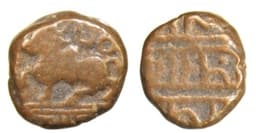
Deva Raya II
Emperor · Medieval
70.7Total

Julius Caesar
General · Ancient
82.8Total
Basic Information
Born
1422
-100
Died
1446
-44
Era
Medieval
Ancient
Nationality
India
Roman Republic
Occupation
Emperor
General
Civilization
Indian
Western
Score Comparison
Military (10%)
82.0
88.0
Political (20%)
72.0
78.0
Influence (20%)
82.0
85.0
Legacy (20%)
52.0
82.0
Leadership (15%)
78.0
80.0
Strategy (15%)
65.4
85.0
TOTAL
70.7
82.8
Deva Raya II — Complete Timeline
1425 AD
Campaigns against the Bahmani SultanateWar◆ Major
Deva Raya II led multiple military expeditions against the Bahmani Sultanate, capturing key fortresses such as Mudgal and Raichur. These victories expanded Vijayanagara's northern frontier and secured control over the Raichur Doab region.
WarExpansionBahmani
Impact: regional
1430 AD
Patronage of Literature and ArtsCultural◆ Major
Deva Raya II became a noted patron of Telugu and Sanskrit literature. Poets such as Srinatha and Chamarasa flourished at his court, producing works like 'Haravilasa' and 'Prabodhachandrodaya'. This period is considered a golden age of Telugu literature.
PatronageLiteratureCulture
Impact: nationalconstructive
1433 AD
Embassy to the Ming DynastyPolitical Action
Deva Raya II sent an embassy to the court of the Ming Emperor Xuande in China. The mission established diplomatic and trade relations, leading to the exchange of gifts and the import of Chinese goods such as porcelain and silk.
DiplomacyTradeChina
Impact: globalconstructive
1435 AD
Construction of the Hazara Rama TempleCultural
Deva Raya II commissioned the Hazara Rama Temple in Vijayanagara, dedicated to Lord Rama. The temple features intricate bas-reliefs depicting scenes from the Ramayana and served as a private shrine for the royal family.
ArchitectureTempleHinduism
constructive
Julius Caesar — Complete Timeline
58 BC
Gallic WarsWar◆ Major
Caesar, as proconsul of Gaul, launched a series of campaigns that conquered all of Gaul (modern France, Belgium, and parts of Switzerland). He fought numerous battles, including against the Helvetii, the Belgae, and the Gallic chieftain Vercingetorix. The wars brought immense wealth and a loyal army to Caesar.
Gallic WarsConquestRoman Expansion
Impact: regional
49 BC
Crossing the RubiconPolitical Action◆ Major
Caesar led Legio XIII across the Rubicon River into Italy, defying the Roman Senate's order to disband his army. This act triggered a civil war against Pompey and the Optimates, ultimately leading to Caesar's dictatorship and the end of the Roman Republic.
Roman Civil WarEnd of RepublicPower Struggle
Impact: global
48 BC
Battle of PharsalusWar◆ Major
Caesar's outnumbered army defeated the larger forces of Pompey the Great at Pharsalus in Greece. Caesar's tactical use of a reserve line to counter Pompey's cavalry charge proved decisive. Pompey fled to Egypt, where he was assassinated, leaving Caesar as the undisputed master of the Roman world.
Roman Civil WarBattleDecisive Victory
Impact: regional
44 BC
Appointment as Dictator for LifePolitical Action◆ Major
The Roman Senate appointed Caesar dictator perpetuo (dictator for life), granting him unprecedented personal power. This move concentrated military, legislative, and judicial authority in one person, effectively ending the Roman Republic's traditional system of checks and balances and alarming many senators.
DictatorshipEnd of RepublicPower Consolidation
Impact: regionaldestructive
Assassination on the Ides of MarchPolitical Action◆ Major
A group of Roman senators, led by Marcus Junius Brutus and Gaius Cassius Longinus, stabbed Caesar to death at a meeting of the Senate in the Theatre of Pompey. The assassination was intended to restore the Republic, but instead triggered another civil war that led to the rise of the Roman Empire.
AssassinationRoman PoliticsEnd of Republic
Impact: globaldestructive
Expert Analysis
deva-raya-ii-vs-julius-caesar
The Ides of March and the Silence of the Vijayanagara Court
In March of 44 BCE, a Roman dictator fell beneath twenty-three dagger strokes in the Senate chamber, his blood pooling at the base of Pompey’s statue. Three thousand miles away and fifteen centuries later, in the stone corridors of Vijayanagara, another emperor—Deva Raya II—died naturally in his bed, surrounded by poets and priests. Both men commanded armies, expanded empires, and left indelible marks on their civilizations. Yet one is a household name across the Western world, while the other remains obscure beyond the subcontinent. Why did these two lives, both extraordinary, lead to such different endings—one a shattering tragedy, the other a quiet sunset?
Origins
Julius Caesar was born into a patrician family in 100 BCE, a time when the Roman Republic was already fraying at the seams. His uncle Marius had been a populist reformer; his father died when Caesar was sixteen. The young Roman grew up amid civil wars, proscriptions, and the constant threat of political extinction. He learned early that survival required audacity. When the dictator Sulla demanded he divorce his wife, Caesar refused and fled—a pattern of defiance that would define him.
Deva Raya II, born in 1422, inherited a different world. The Vijayanagara Empire, founded only a century earlier, was the dominant power in southern India. His father, Deva Raya I, had already built a fortified capital and secured the Tungabhadra River. The young prince was raised in a court where Sanskrit and Telugu poetry were as valued as military drills. Where Caesar learned to gamble with his life, Deva Raya II learned to balance the claims of gods, scholars, and warriors.
Rise to Power
Caesar’s path was a marathon of calculated risks. He served as a military tribune in Asia, was captured by pirates and famously held them in contempt, then returned to Rome to climb the political ladder: quaestor, aedile, pontifex maximus. His real breakthrough came in 58 BCE when he secured the governorship of Gaul. Over eight years, he conquered what is now France and Belgium, writing his own commentaries to shape public opinion. He crossed the Rubicon in 49 BCE, igniting a civil war that ended with him as dictator.
Deva Raya II ascended the throne in 1425 at the age of three—or perhaps slightly older, as records are unclear. He did not conquer his empire; he inherited it. His rise was not a revolution but a continuation. The challenge was not to seize power but to hold it against the Bahmani Sultanate to the north. In 1425, he launched his first campaigns, capturing the fortresses of Mudgal and others. His authority was established by bloodlines and divine sanction, not by crossing a river with a legion.
Leadership & Governance
Caesar governed as a revolutionary. He reformed the calendar, granted citizenship to provincials, initiated public works, and centralized authority in his own hands. His military genius lay in speed and logistics—he once said, *“I came, I saw, I conquered,”* after a lightning campaign in Asia Minor. But his political wisdom was flawed: he pardoned his enemies, then underestimated their willingness to kill him. He ruled by personal charisma, not institutional reform.
Deva Raya II governed as a consolidator. He patronized Telugu and Sanskrit literature—poets like Srinatha and Chamarasa flourished at his court. In 1435, he commissioned the Hazara Rama Temple, a masterpiece of Vijayanagara architecture. He sent an embassy to the Ming Emperor Xuande in 1433, opening diplomatic and trade routes to China. His military strategy was defensive-offensive: he raided Bahmani territory but never sought total annihilation. He understood that an empire’s strength lay not in one man’s ambition but in the loyalty of its lords and the devotion of its gods.
Triumph & Tragedy
Caesar’s greatest triumph was the conquest of Gaul—a feat that doubled Rome’s territory and made him the richest man in the Republic. His greatest tragedy was his assassination on the Ides of March, 44 BCE, just as he was planning a campaign against Parthia. He died at fifty-five, having achieved everything and nothing: he destroyed the Republic but never lived to see the Empire he created.
Deva Raya II’s greatest triumph was the cultural flowering of Vijayanagara. Under his reign, the empire became a beacon of Hindu civilization against the Deccan sultanates. His greatest tragedy was that his dynasty, the Sangama, would collapse within two generations after his death in 1446. He died at roughly twenty-four years old—or perhaps older, as his birth year is uncertain. His achievements were real but fragile; the Bahmani threat remained, and his successors lacked his diplomatic touch.
Character & Destiny
Caesar was driven by an insatiable need for glory. He wrote his own history, controlled his own image, and believed that fate favored the bold. His personality was magnetic, ruthless, and ultimately self-destructive. He could forgive his enemies but could not imagine that they would not forgive him. His destiny was to be both the destroyer and the midwife of an empire.
Deva Raya II was driven by a different impulse: order. He built temples, patronized poets, and sent embassies not to conquer the world but to secure his corner of it. His personality was that of a builder, not a breaker. He understood that power in southern India required the blessing of priests and the loyalty of chieftains, not just the fear of legions. His destiny was to be remembered as a good king, not a world-shattering one.
Legacy
Caesar’s legacy is the Roman Empire itself. His name became a title—Kaiser, Tsar—used by rulers for two millennia. His writings are still read in military academies. His assassination is a cornerstone of Western political thought: the danger of one-man rule, the tragedy of idealism betrayed.
Deva Raya II’s legacy is more subtle. The Hazara Rama Temple still stands, its carvings telling stories of Ramayana and royal processions. The Telugu and Kannada literature he patronized shaped regional identity for centuries. His embassy to China is a footnote in world history but a testament to Indian diplomacy. He is remembered in South India as a golden-age ruler, but his name is unknown in the West.
Conclusion
Standing in the ruins of Vijayanagara, one can feel the weight of a civilization that flourished and fell without changing the world’s axis. Standing in the Roman Forum, one feels the weight of a man who changed everything and died for it. Caesar and Deva Raya II were both products of their times—one a revolutionary in a collapsing republic, the other a consolidator in a rising empire. Their differences are not just personal but civilizational. Caesar’s story is about ambition and its price; Deva Raya II’s is about stability and its limits. One ended in blood, the other in silence. Both remind us that history remembers the shatterers more than the builders—but that both are necessary for the world to turn.
Rankings
🥇
Julius CaesarLeader
Mil: 88.0Pol: 78.0Inf: 85.0
82.8
🥈
Deva Raya II
Mil: 82.0Pol: 72.0Inf: 82.0
70.7
+12.1 behind
How This Comparison Works
Algorithm
Each figure is scored on 6 dimensions (0—100 scale) based on structured historical data: Military (10%), Political (20%), Influence (20%), Legacy (20%), Leadership (15%), Strategy (15%). The weighted total produces the final ranking.
Data Sources
Scores are computed from structured sub-indicators in the database. Scale factors adjust for era (Ancient ×0.85, Modern ×1.0) and civilization size (Eastern ×1.05, Other ×0.80) to account for differences in population and military scale.
Maximum 3 Figures
Comparisons are limited to 2—3 figures to ensure readability and statistical meaningfulness.
Error Margins
±5 points per dimension — Sub-scores are derived from historical records with inherent uncertainty. Two figures within 5 points on a dimension should be considered roughly equivalent in that area.
Total Score Accuracy
±3 points overall — The weighted combination of 6 dimensions produces a total score with approximately ±3 points of uncertainty. Differences of less than 3 points are not statistically significant— the figures are effectively tied.
Known Limitations
- Historical records are incomplete and uneven across civilizations
- Figures from oral-tradition societies may be underrepresented
- Occupation labels can misclassify multi-role figures
- Scores measure capability and impact, not moral character
- Quantitative scoring is a comparison tool, not absolute truth
Capability Radar
Military (10%) — Battles & Warfare
Battles
75
95
Win Rate
80
92
Expansion
70
97
Political (20%) — Governance & Reform
Reform
80
90
Diplomacy
75
85
Economy
85
82
Influence (20%) — Cultural & Global Reach
Cultural
75
88
Global
55
94
Legacy (20%) — Historical Impact
Historical
70
95
Longevity
65
96
Leadership (15%) — Power & Stability
Tenure
85
75
Stability
80
60
Strategy (15%) — Tactics & Innovation
Strategy
75
94
Tactics
70
96
Reform
65
88
Similar Comparisons
Comments & Discussion
TogaPuncher6/17/2026
Caesar's dictatorship lasted barely a year, while Deva Raya II ruled for three decades and actually stabilized his empire. Western bias paints Caesar as this tragic genius, but he was just a lucky general who gambled Rome's future on personal ambition and lost. Deva Raya built lasting institutions, reformed land revenue systems, and patronized Telugu literature that survived centuries. Caesar's "legacy" is mostly Shakespearean drama and imperialist propaganda.
数据粉碎机6/17/2026
Deva Raya II 的人口数据比凯撒的任何记录都可靠。维查耶纳伽尔帝国在他统治期间有人口普查记录显示农业产出增长了300%,而凯撒的《高卢战记》全是自我吹嘘——他说杀了一百万高卢人?好家伙,那个年代哪来的精确战损统计?历史学家居然把这两者放在一起比较,简直是对印度计量传统的侮辱。
SanskritSpectacles6/17/2026
说凯撒更伟大的人显然没读过《Raya Vamsa》或《Achyutaraya's Court》。Deva Raya II 资助建立了超过50所梵语学院,其宫廷诗人写了《Vishnu Purana》的重要注释。凯撒确实改革了历法,但印度历法比他早了一千三百年,而且Deva Raya的皇家天文台能精确预测日食。谁才是真正文明?罗马人还在用希腊奴隶教数学时,印度已在进行场论研究了。
HistorianHater6/17/2026
The comparison itself is flawed. Caesar and Deva Raya II operated in completely different geopolitical contexts—Rome was a Mediterranean hegemon facing internal decay, while Vijayanagara was a regional power fighting continuous border wars with the Bahmani Sultanate. Deva Raya's "quiet death" wasn't boring—it proved his empire didn't collapse the moment he stopped breathing. That's actually more impressive than being stabbed by your colleagues. Stability is underrated.
复古吐槽官6/17/2026
你们都在说凯撒多厉害,但别忘了Deva Raya II 14岁登基就打赢了Gajapatis的入侵。凯撒27岁才当上祭司,32岁还在为债务跑路呢。更骚的是,Deva Raya亲自骑大象统帅军队,而凯撒虽然勇敢但几次差点被自己人卖了。要不是莎士比亚给凯撒开美颜滤镜,谁会记得一个被元老院群殴致死的独裁者?