Loading...
Dil Naod vs Julius Caesar
Julius Caesar leads by 42.8 pts · 2 figures compared
…
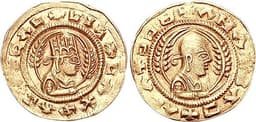
Dil Naod
Emperor · Medieval
40.0Total

Julius Caesar
General · Ancient
82.8Total
Basic Information
Born
900
-100
Died
960
-44
Era
Medieval
Ancient
Nationality
Ethiopia
Roman Republic
Occupation
Emperor
General
Civilization
Other
Western
Score Comparison
Military (10%)
20.0
88.0
Political (20%)
35.0
78.0
Influence (20%)
47.1
85.0
Legacy (20%)
35.8
82.0
Leadership (15%)
49.9
80.0
Strategy (15%)
45.0
85.0
TOTAL
40.0
82.8
Dil Naod — Complete Timeline
960 AD
Overthrown by GuditPolitical Action
Dil Naod, the last king of the Aksumite dynasty, was overthrown by the non-Christian queen Gudit (Yodit). Her forces destroyed Aksumite churches and monuments, ending the Aksumite kingdom's rule and plunging the region into a period of chaos.
Aksumite fallGudit invasionDynastic end
Impact: regionaldestructive
Julius Caesar — Complete Timeline
58 BC
Gallic WarsWar◆ Major
Caesar, as proconsul of Gaul, launched a series of campaigns that conquered all of Gaul (modern France, Belgium, and parts of Switzerland). He fought numerous battles, including against the Helvetii, the Belgae, and the Gallic chieftain Vercingetorix. The wars brought immense wealth and a loyal army to Caesar.
Gallic WarsConquestRoman Expansion
Impact: regional
49 BC
Crossing the RubiconPolitical Action◆ Major
Caesar led Legio XIII across the Rubicon River into Italy, defying the Roman Senate's order to disband his army. This act triggered a civil war against Pompey and the Optimates, ultimately leading to Caesar's dictatorship and the end of the Roman Republic.
Roman Civil WarEnd of RepublicPower Struggle
Impact: global
48 BC
Battle of PharsalusWar◆ Major
Caesar's outnumbered army defeated the larger forces of Pompey the Great at Pharsalus in Greece. Caesar's tactical use of a reserve line to counter Pompey's cavalry charge proved decisive. Pompey fled to Egypt, where he was assassinated, leaving Caesar as the undisputed master of the Roman world.
Roman Civil WarBattleDecisive Victory
Impact: regional
44 BC
Appointment as Dictator for LifePolitical Action◆ Major
The Roman Senate appointed Caesar dictator perpetuo (dictator for life), granting him unprecedented personal power. This move concentrated military, legislative, and judicial authority in one person, effectively ending the Roman Republic's traditional system of checks and balances and alarming many senators.
DictatorshipEnd of RepublicPower Consolidation
Impact: regionaldestructive
Assassination on the Ides of MarchPolitical Action◆ Major
A group of Roman senators, led by Marcus Junius Brutus and Gaius Cassius Longinus, stabbed Caesar to death at a meeting of the Senate in the Theatre of Pompey. The assassination was intended to restore the Republic, but instead triggered another civil war that led to the rise of the Roman Empire.
AssassinationRoman PoliticsEnd of Republic
Impact: globaldestructive
Expert Analysis
dil-naod-vs-julius-caesar
# The Crossing and the Collapse
On a January morning in 49 BCE, a man stood on the bank of a small river in northern Italy. The Rubicon was little more than a stream, but Roman law forbade any general from crossing it with his army. Julius Caesar hesitated. He knew that the moment he stepped into that water, he would ignite a civil war that would shatter the Republic he claimed to serve. He crossed anyway, reportedly saying, "The die is cast."
Four centuries later and thousands of miles to the south, another ruler faced his own Rubicon—not a river but a kingdom unraveling. Dil Naod, the last king of the Aksumite dynasty in Ethiopia, watched as a non-Christian queen named Gudit gathered her forces. Unlike Caesar, he did not cross into legend. He was overthrown, his dynasty extinguished, his kingdom reduced to ash and silence.
Why does one leader conquer the world while another vanishes without a trace? The answer lies not in luck or fate, but in the interplay of character, circumstance, and the choices made in moments of crisis.
Origins
Julius Caesar was born into the chaos of a dying republic. His family, the Julii, claimed descent from the goddess Venus, but in practical terms they were patricians struggling to maintain relevance in a Rome dominated by populist generals and corrupt senators. His father died when Caesar was sixteen, leaving him to navigate a world where survival depended on alliances, debts, and charm. He was kidnapped by pirates as a young man, laughed at their ransom demand, and later crucified them after his release—a glimpse of the ruthlessness that would define his career.
Dil Naod inherited a throne that had stood for nearly a millennium. The Aksumite Empire, once a rival of Rome and Persia, controlled trade routes stretching from the Red Sea to the Nile. By the tenth century, however, Aksum was a shadow of itself. Climate change had dried up its agricultural base, Muslim powers had seized its ports, and internal divisions had weakened its monarchy. Dil Naod did not choose his era; it chose him, and it was an era of decline.
Rise to Power
Caesar’s path to power was a masterclass in political maneuvering. He allied with the wealthy Crassus and the popular general Pompey to form the First Triumvirate, then used his governorship of Gaul to build a loyal army and a personal fortune. His Commentaries on the Gallic Wars were propaganda as much as history, designed to make him a hero in Rome while his enemies schemed at home. When the Senate ordered him to disband his army, he refused. The Rubicon was not a moment of madness; it was a calculated gamble by a man who had spent his life reading the odds.
Dil Naod’s rise is largely lost to history. What we know comes from fragments: a mention in Ethiopian chronicles, a reference in Arab geographies. He was the last of a line that had ruled since the time of the Queen of Sheba, but by 960 CE, that lineage was a liability. The empire was fracturing, and Gudit—a Jewish or pagan queen from the south—had united disaffected groups under her banner. Dil Naod did not rise; he was simply there, the last man standing in a dynasty that had outlived its strength.
Leadership & Governance
Caesar governed with a blend of genius and audacity. As dictator, he reformed the calendar, granted citizenship to provincials, and launched public works that employed the poor. His military campaigns were models of speed and logistics—he once marched his army 800 miles in three weeks, surprising his enemies. Yet his political wisdom was flawed. He pardoned his opponents, assuming they would be grateful, but they plotted his murder instead. He centralized power without building a system to sustain it, trusting his own brilliance to hold everything together.
Dil Naod’s governance is a blank page. We have no records of his reforms, his wars, or his administration. What we know is that his kingdom fell. The Aksumite state was not conquered by a foreign invader but collapsed from within, unable to adapt to changing trade routes, religious tensions, and environmental pressures. Dil Naod may have been a competent ruler, but competence was not enough. He faced a crisis that required transformation, and he could not provide it.
Triumph & Tragedy
Caesar’s greatest triumph was his conquest of Gaul, which added a vast territory to the Roman sphere and made him the richest man in the Republic. His greatest tragedy was his assassination on the Ides of March, 44 BCE, when senators he had pardoned stabbed him twenty-three times. He died at the foot of a statue of his rival Pompey, a bitter irony that he might have appreciated.
Dil Naod’s triumph, if he had one, is unknown. His tragedy is that his name survives only as a footnote—the last king of a dynasty that had once traded with India and built obelisks that still stand today. After Gudit’s victory, the Aksumite kingdom fragmented into smaller states. Dil Naod fled or was killed; the chronicles do not say. What remains is the silence of a civilization that lost its voice.
Character & Destiny
Caesar’s character was a paradox. He was generous to his enemies and ruthless to his rivals, charming in private and cold in strategy. He believed in his own destiny, and that belief propelled him to heights that seemed impossible. But it also blinded him. He ignored warnings of the conspiracy against him, dismissing them as the fears of lesser men. His confidence became his undoing.
Dil Naod’s character is unknowable. We have no letters, no speeches, no anecdotes. He exists in history as a name attached to a defeat. Yet his fate tells us something about the nature of power: that it is not enough to inherit a throne. A leader must also inherit the ability to adapt, to inspire, and to act when the moment demands it. Dil Naod did not cross his Rubicon. He waited, and the river swept him away.
Legacy
Caesar’s legacy is the Roman Empire. His adopted heir, Octavian, learned from his mistakes: he concentrated power but disguised it under republican forms, creating the principate that would rule for centuries. Caesar’s name became a title—Kaiser, Tsar—and his reforms shaped Western law, language, and governance. He is remembered as a genius, a tyrant, and a warning.
Dil Naod’s legacy is the end of an era. The Aksumite dynasty never returned. Ethiopia would later emerge as a Christian kingdom under the Zagwe and Solomonic dynasties, but the old empire was gone. Dil Naod is remembered, if at all, as the king who lost everything. His story is a reminder that history does not always reward the worthy; sometimes it simply moves on.
Conclusion
Standing on the banks of the Rubicon, Caesar saw a future he could seize. Dil Naod, facing Gudit’s army, saw a past he could not save. Both men were products of their times, but one reshaped his era while the other was consumed by it. The difference was not in their ambition—both wanted to survive—but in their ability to read the currents of history and act before the waters closed over them.
Caesar crossed. Dil Naod did not. And the world remembers the difference.
Rankings
🥇
Julius CaesarLeader
Mil: 88.0Pol: 78.0Inf: 85.0
82.8
🥈
Dil Naod
Mil: 20.0Pol: 35.0Inf: 47.1
40.0
+42.8 behind
How This Comparison Works
Algorithm
Each figure is scored on 6 dimensions (0—100 scale) based on structured historical data: Military (10%), Political (20%), Influence (20%), Legacy (20%), Leadership (15%), Strategy (15%). The weighted total produces the final ranking.
Data Sources
Scores are computed from structured sub-indicators in the database. Scale factors adjust for era (Ancient ×0.85, Modern ×1.0) and civilization size (Eastern ×1.05, Other ×0.80) to account for differences in population and military scale.
Maximum 3 Figures
Comparisons are limited to 2—3 figures to ensure readability and statistical meaningfulness.
Error Margins
±5 points per dimension — Sub-scores are derived from historical records with inherent uncertainty. Two figures within 5 points on a dimension should be considered roughly equivalent in that area.
Total Score Accuracy
±3 points overall — The weighted combination of 6 dimensions produces a total score with approximately ±3 points of uncertainty. Differences of less than 3 points are not statistically significant— the figures are effectively tied.
Known Limitations
- Historical records are incomplete and uneven across civilizations
- Figures from oral-tradition societies may be underrepresented
- Occupation labels can misclassify multi-role figures
- Scores measure capability and impact, not moral character
- Quantitative scoring is a comparison tool, not absolute truth
Capability Radar
Military (10%) — Battles & Warfare
Battles
5
95
Win Rate
5
92
Expansion
5
97
Political (20%) — Governance & Reform
Reform
5
90
Diplomacy
5
85
Economy
5
82
Influence (20%) — Cultural & Global Reach
Cultural
5
88
Global
5
94
Legacy (20%) — Historical Impact
Historical
10
95
Longevity
5
96
Leadership (15%) — Power & Stability
Tenure
10
75
Stability
5
60
Strategy (15%) — Tactics & Innovation
Strategy
5
94
Tactics
5
96
Reform
5
88
Similar Comparisons
Comments & Discussion
No comments yet. Be the first to share your thoughts!