Loading...
Ding Richang vs Qin Shi Huang
Qin Shi Huang leads by 34.4 pts · 2 figures compared
…

Ding Richang
Politician · Modern
50.8Total
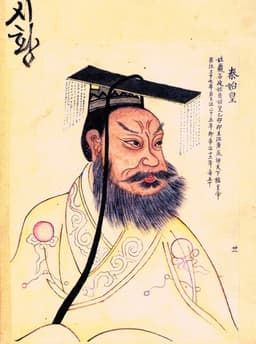
Qin Shi Huang
Emperor · Ancient
85.2Total
Basic Information
Born
1823
-259
Died
1882
-210
Era
Modern
Ancient
Nationality
China
China
Occupation
Politician
Emperor
Civilization
Eastern
Eastern
Score Comparison
Military (10%)
35.0
80.0
Political (20%)
45.0
90.0
Influence (20%)
50.2
85.0
Legacy (20%)
45.0
90.0
Leadership (15%)
72.0
78.0
Strategy (15%)
60.0
82.0
TOTAL
50.8
85.2
Ding Richang — Complete Timeline
1865 AD
Established the Jiangnan ArsenalInvention◆ Major
Ding Richang, as a Qing official, oversaw the establishment of the Jiangnan Arsenal in Shanghai. This facility produced modern weapons and machinery, becoming a key center of the Self-Strengthening Movement and China's early industrialization.
Self-Strengthening MovementIndustrializationMilitary Modernization
Impact: nationalconstructive
1867 AD
Promoted Western Learning and TranslationCultural
Ding Richang supported the translation of Western scientific and technical texts at the Jiangnan Arsenal. He facilitated the hiring of foreign experts and the training of Chinese engineers, advancing technological knowledge in China.
TranslationEducationWesternization
Impact: nationalconstructive
1875 AD
Served as Governor of Jiangsu ProvincePolitical Action
Ding Richang was appointed Governor of Jiangsu, where he implemented administrative reforms and continued to support industrial projects. His tenure focused on strengthening provincial governance and economic development.
GovernorshipAdministrative Reform
Impact: regionalconstructive
Qin Shi Huang — Complete Timeline
246 BC
Construction of the Mausoleum and Terracotta ArmyOther◆ Major
Qin Shi Huang commissioned a vast mausoleum complex near Xi'an, guarded by thousands of life-sized terracotta soldiers, horses, and chariots. The project employed hundreds of thousands of workers and reflected his obsession with immortality and imperial power.
Impact: global
230 BC
Conquest of the Six Warring StatesWar
From 230 to 221 BCE, Ying Zheng led the Qin state in a series of campaigns that conquered the Han, Zhao, Wei, Chu, Yan, and Qi states. This unified China under a single ruler for the first time, ending the Warring States period.
Impact: global
221 BC
Standardization of Writing, Currency, and MeasurementsReform◆ Major
Qin Shi Huang ordered the standardization of Chinese script, currency, and weights and measures across the unified empire. This facilitated administration, trade, and cultural integration, laying a foundation for future dynasties.
Impact: globalconstructive
Proclamation of the Qin DynastyPolitical Action
After conquering the last independent state, Ying Zheng declared himself Shi Huangdi (First Emperor), founding the Qin Dynasty. He adopted a new title to signify his supreme authority and initiated centralized imperial rule.
Impact: global
214 BC
Initiation of the Great Wall ConstructionOther◆ Major
Qin Shi Huang ordered the connection and extension of existing northern fortifications to create a unified defensive wall against nomadic Xiongnu raids. This project involved massive conscripted labor and became the precursor to the later Great Wall.
Impact: regional
213 BC
Burning of Books and Burying of ScholarsPolitical Action◆ Major
On the advice of Li Si, Qin Shi Huang ordered the burning of historical records and philosophical texts not aligned with Legalist doctrine. He also had 460 Confucian scholars buried alive to suppress dissent and consolidate ideological control.
Impact: nationaldestructive
Expert Analysis
ding-richang-vs-qin-shi-huang
# The Emperor and the Bureaucrat: Two Paths to Chinese Power
On a winter morning in 221 BC, Ying Zheng stood before the walls of Linzi, the last capital of a warring kingdom, and declared himself Shi Huangdi—the First Emperor. Two millennia later, in the humid summer of 1865, a Qing official named Ding Richang stood on the muddy banks of the Huangpu River in Shanghai, watching workers lay the foundation for the Jiangnan Arsenal. Both men sought to remake China. One would unify it with fire and iron, the other would try to save it with steel and steam. Their ambitions were vast, their methods radically different, and their fates—one immortal, the other nearly forgotten—tell us much about the nature of power in Chinese history.
Origins
Qin Shi Huang was born in 259 BC into a world of chaos. The Warring States period had torn China apart for centuries, with seven kingdoms locked in endless conflict. His father was a king, but his mother was a concubine, and young Ying Zheng grew up in a royal court rife with conspiracy and assassination plots. He learned early that trust was a liability and power the only currency that mattered.
Ding Richang entered the world in 1823, during the twilight of the Qing Dynasty. China had been unified for two thousand years, but the empire was crumbling. The Opium War of 1842 had humiliated the Celestial Kingdom, exposing its military weakness to Western gunboats. Ding was born into a scholar-official family, steeped in Confucian classics, and he followed the traditional path of civil service examinations. Where Qin Shi Huang inherited a kingdom, Ding inherited a crisis.
Rise to Power
Ying Zheng’s ascent was swift and brutal. At thirteen, he became king of Qin. By thirty-eight, he had conquered all six rival states, using a combination of military genius, ruthless strategy, and legalist philosophy. His general, Wang Jian, led campaigns that crushed the Han in 230 BC, the Zhao in 228, and the Wei in 225. The fall of Chu in 223 and Yan in 222 left only Qi, which surrendered in 221. Each victory was sealed with terror—captured nobles were executed, their armies disbanded, their walls torn down.
Ding Richang’s rise was slower, more bureaucratic. He distinguished himself as a capable administrator during the Taiping Rebellion (1850–1864), one of the deadliest civil wars in history, which killed over twenty million people. His loyalty and competence caught the attention of reformers like Li Hongzhang. In 1865, Ding was appointed to oversee the Jiangnan Arsenal, a position that placed him at the heart of China’s desperate attempt to modernize. He never conquered anything—he built.
Leadership & Governance
As emperor, Qin Shi Huang ruled with an iron fist. He standardized writing, currency, and measurements across his vast domain, creating the administrative skeleton that would hold China together for two millennia. He ordered the construction of a national road network and linked the northern fortifications into what would become the Great Wall. But his governance was also paranoid and cruel. In 213 BC, on the advice of his chancellor Li Si, he ordered the burning of all historical records and philosophical texts not aligned with Legalist doctrine, and had hundreds of scholars buried alive. He believed that unity required uniformity—and that dissent was treason.
Ding Richang governed Jiangsu province from 1875 with a very different philosophy. He was a reformer, not a destroyer. At the Jiangnan Arsenal, he oversaw the production of modern rifles, cannons, and warships, and he sponsored the translation of Western scientific texts into Chinese. He believed that China could learn from the West without abandoning its essence—a concept known as *tiyong* (Chinese learning as the base, Western learning for practical use). His reforms were incremental, pragmatic, and limited by the conservative court in Beijing. He did not burn books; he imported them.
Triumph & Tragedy
Qin Shi Huang’s greatest triumph was the unification of China itself. In a few short years, he transformed a warring collection of states into a single empire with a common script, currency, and law. His greatest tragedy was his obsession with immortality. He sent expeditions to find the elixir of life, consumed mercury pills prescribed by alchemists, and built a mausoleum guarded by the Terracotta Army—thousands of life-sized soldiers meant to protect him in the afterlife. He died in 210 BC at age forty-nine, probably from mercury poisoning, a victim of his own desperate search for eternal life.
Ding Richang’s triumph was the Jiangnan Arsenal, which became the most advanced industrial facility in China, producing weapons that would be used in the Sino-Japanese War of 1894–1895. His tragedy was that it wasn’t enough. The arsenal could not overcome the systemic corruption, weak central authority, and cultural inertia that plagued the Qing Dynasty. Ding died in 1882, a respected but frustrated official, having seen his reforms stall against the weight of tradition.
Character & Destiny
Qin Shi Huang was a megalomaniac with a vision. He believed he was the Son of Heaven, chosen to impose order on chaos. His paranoia drove him to build a vast underground tomb, to purge dissent, and to trust only his own judgment. His personality shaped China’s destiny: the centralized, autocratic state he created would endure for two thousand years.
Ding Richang was a pragmatist with a conscience. He knew that China could not survive without change, but he also knew that change would be resisted. His personality shaped his fate: he was too loyal to rebel, too honest to corrupt, and too realistic to dream of becoming emperor. He worked within the system, and the system defeated him.
Legacy
Qin Shi Huang is remembered as the First Emperor, the founder of China. His name is synonymous with unification, tyranny, and grandeur. The Terracotta Army, discovered in 1974, has made him a global icon. His legacy is the Chinese empire itself.
Ding Richang is remembered, if at all, as a minor figure in the Self-Strengthening Movement, a failed attempt to modernize China before its collapse. The Jiangnan Arsenal was destroyed during the Japanese invasion of 1937. His name appears in history textbooks, but rarely in popular memory.
Conclusion
Two men, two centuries, two Chinas. Qin Shi Huang built an empire from nothing, using violence and vision. Ding Richang tried to save an empire from collapse, using knowledge and patience. One succeeded because he had the power to destroy everything in his path. The other failed because he lacked the power to change anything meaningful. Their stories remind us that history rewards those who remake the world, not those who merely try to repair it. The First Emperor’s terracotta warriors still stand guard over his tomb, silent witnesses to a power that shaped a civilization. Ding Richang’s arsenal is dust and rust, a monument not to failure, but to the limits of reform in a world that refused to change.
Rankings
🥇
Qin Shi HuangLeader
Mil: 80.0Pol: 90.0Inf: 85.0
85.2
🥈
Ding Richang
Mil: 35.0Pol: 45.0Inf: 50.2
50.8
+34.4 behind
How This Comparison Works
Algorithm
Each figure is scored on 6 dimensions (0—100 scale) based on structured historical data: Military (10%), Political (20%), Influence (20%), Legacy (20%), Leadership (15%), Strategy (15%). The weighted total produces the final ranking.
Data Sources
Scores are computed from structured sub-indicators in the database. Scale factors adjust for era (Ancient ×0.85, Modern ×1.0) and civilization size (Eastern ×1.05, Other ×0.80) to account for differences in population and military scale.
Maximum 3 Figures
Comparisons are limited to 2—3 figures to ensure readability and statistical meaningfulness.
Error Margins
±5 points per dimension — Sub-scores are derived from historical records with inherent uncertainty. Two figures within 5 points on a dimension should be considered roughly equivalent in that area.
Total Score Accuracy
±3 points overall — The weighted combination of 6 dimensions produces a total score with approximately ±3 points of uncertainty. Differences of less than 3 points are not statistically significant— the figures are effectively tied.
Known Limitations
- Historical records are incomplete and uneven across civilizations
- Figures from oral-tradition societies may be underrepresented
- Occupation labels can misclassify multi-role figures
- Scores measure capability and impact, not moral character
- Quantitative scoring is a comparison tool, not absolute truth
Capability Radar
Military (10%) — Battles & Warfare
Battles
0
85
Win Rate
0
90
Expansion
10
90
Political (20%) — Governance & Reform
Reform
65
95
Diplomacy
30
75
Economy
55
90
Influence (20%) — Cultural & Global Reach
Cultural
20
95
Global
20
85
Legacy (20%) — Historical Impact
Historical
40
95
Longevity
30
95
Leadership (15%) — Power & Stability
Tenure
40
70
Stability
40
65
Strategy (15%) — Tactics & Innovation
Strategy
0
85
Tactics
0
80
Reform
70
95
Similar Comparisons
Comments & Discussion
铁血史官6/17/2026
秦始皇武力统一六国,丁日昌却连个太平军都打不赢。两千年前始皇废分封设郡县,直接奠定中国官僚体系地基;丁日昌搞洋务,不过是被洋人逼着买几门炮、修几座厂。一个创造历史,一个被历史碾压。吹捧丁日昌的人该醒醒,他的江南制造局在甲午战争中一文不值。
新旧之争6/17/2026
两人都在对抗分裂——秦始皇对抗战国诸侯,丁日昌对抗西方列强。但前者用二十载铁血统一华夏,后者耗尽三十年在破船上打补丁。我敬佩丁日昌,他在绝境中守住了一线生机;但真要选,我站嬴政——他给中国装了脊梁骨,丁日昌只能给帝国缠绷带。
Historian2536/17/2026
Let's get the numbers straight: Qin Shi Huang connected 5,000 km of existing walls into the Great Wall using 300,000 laborers, standardized writing across 7 distinct scripts, and minted uniform coinage. Ding Richang's Jiangnan Arsenal produced maybe 10,000 rifles a year by 1870. That's impressive for a local official, but the First Emperor's reforms affected every Chinese person permanently. Ding's legacy? Obscure textbooks and a factory that got bombed in 1937.
Historian2766/17/2026
Qin Shi Huang was a psychopath with a vision, Ding was a bureaucrat with a budget. The First Emperor melted down weapons to make statues, Ding imported Western cannons. One destroyed the old world to build a new one, the other tried to patch up a dying empire. Ding’s reforms were just band-aids on a corpse. Give me the guy who built the Great Wall and standardized writing over the one who printed textbooks and called it progress.
Chronicler45266/17/2026
Here's what nobody says: Ding Richang was a proto-environmentalist. He banned opium dens in Shanghai and personally destroyed 2,000 opium pipes, pushing for public health over profit. Meanwhile, Qin Shi Huang burned books and buried scholars alive. Ding cared about the living, the Emperor cared about his legacy. I'll take the man who tried to clean up the streets over the one who wrote his name in blood and stone.