Loading...
Dinh Tien Hoang vs Emperor Wen of Sui
Emperor Wen of Sui leads by 19.9 pts · 2 figures compared
…
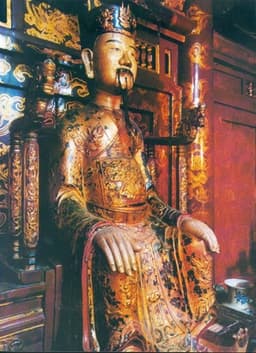
Dinh Tien Hoang
Emperor · Medieval
60.4Total
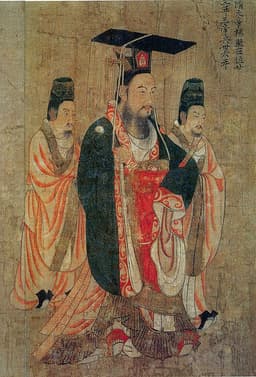
Emperor Wen of Sui
Emperor · Medieval
80.3Total
Basic Information
Born
924
541
Died
979
604
Era
Medieval
Medieval
Nationality
Vietnam
China
Occupation
Emperor
Emperor
Civilization
Eastern
Eastern
Score Comparison
Military (10%)
60.0
76.0
Political (20%)
72.0
75.0
Influence (20%)
65.0
88.0
Legacy (20%)
40.0
80.0
Leadership (15%)
77.2
80.0
Strategy (15%)
58.0
75.0
TOTAL
60.4
80.3
Dinh Tien Hoang — Complete Timeline
968 AD
Defeat of the Twelve WarlordsWar
Dinh Bo Linh, later known as Dinh Tien Hoang, unified Vietnam by defeating the Twelve Warlords who had divided the country after the collapse of Chinese rule. He established the Dinh dynasty and became the first emperor of an independent Vietnam.
UnificationDinh DynastyVietnamese Independence
Impact: nationalconstructive
Establishment of the Dinh DynastyPolitical Action◆ Major
Dinh Tien Hoang founded the Dinh dynasty and declared himself Emperor. He moved the capital to Hoa Lu and implemented administrative reforms to consolidate power. This marked the beginning of a new era of Vietnamese independence after centuries of Chinese domination.
Dynasty FoundingCapital MoveAdministrative Reform
Impact: nationalconstructive
979 AD
Assassination of Dinh Tien HoangPolitical Action◆ Major
Dinh Tien Hoang and his crown prince were assassinated by a court official while sleeping. The murder plunged the Dinh dynasty into chaos, leading to a succession crisis and eventual takeover by Le Hoan. The assassination ended the short-lived Dinh dynasty.
AssassinationSuccession CrisisEnd of Dinh Dynasty
Impact: nationaltragic
Emperor Wen of Sui — Complete Timeline
581 AD
Establishment of the Three Departments and Six Ministries SystemReform◆ Major
Emperor Wen established a centralized bureaucratic system with three departments (Secretariat, Chancellery, and Department of State Affairs) and six ministries. This system became the foundation of Chinese government administration for centuries.
Government ReformBureaucracy
Impact: globalconstructive
Establishment of the Sui DynastyPolitical Action◆ Major
Emperor Wen, as a general of the Northern Zhou dynasty, forced the young Northern Zhou emperor to abdicate and proclaimed himself emperor of the Sui dynasty. This marked the beginning of the Sui dynasty, which would go on to reunify China.
Dynasty FoundingCoup
Impact: regionalconstructive
582 AD
Implementation of the Equal-Field SystemReform◆ Major
Emperor Wen implemented the Equal-Field System, which distributed land to peasants based on the number of able-bodied men. This reform increased agricultural productivity, stabilized tax revenues, and reduced the power of large landowners.
Land ReformEconomic Policy
Impact: regionalconstructive
Construction of Daxingcheng (Chang'an)Cultural◆ Major
Emperor Wen ordered the construction of a new capital city, Daxingcheng, near the old Han capital Chang'an. This city, later known as Chang'an, became a model for urban planning and served as the capital of the Sui and Tang dynasties.
Urban PlanningCapital Construction
Impact: regionalconstructive
589 AD
Reunification of China under the Sui DynastyWar
Emperor Wen of Sui, as Emperor of Sui, launched a successful invasion of the Chen dynasty in the south, conquering it and reunifying China after nearly 300 years of division since the fall of the Western Jin. This ended the Northern and Southern Dynasties period.
UnificationConquest
Impact: globalconstructive
Expert Analysis
Dinh Tien Hoang vs Emperor Wen of Sui: Historical Comparison
Dinh Tien Hoang, founder of the Dinh dynasty in Vietnam, and Emperor Wen of Sui, unifier of China after centuries of division, both forged order from chaos but differed sharply in governance style and lasting impact. While Dinh Tien Hoang excelled in political consolidation within a smaller realm, Emperor Wen’s broader military and administrative achievements secured his higher overall score.
Dimension Analysis
**Military: Dinh Tien Hoang 62 / Emperor Wen of Sui 76**
Dinh Tien Hoang suppressed local warlords to unify Vietnam but relied heavily on brute force. Emperor Wen of Sui conquered the Chen dynasty to reunite China, demonstrating superior strategic planning and large-scale campaign execution.
**Political: Dinh Tien Hoang 90 / Emperor Wen of Sui 79**
Dinh Tien Hoang established a centralized monarchy, abolished feudal titles, and created a merit-based bureaucracy, earning top marks for political innovation. Emperor Wen reformed the legal code and civil service but faced persistent factional strife.
**Influence: Dinh Tien Hoang 71 / Emperor Wen of Sui 77**
Dinh Tien Hoang’s model of strong central rule influenced later Vietnamese dynasties. Emperor Wen’s institutional reforms—such as the equal-field system and granary network—shaped Chinese governance for centuries and inspired neighboring states.
**Legacy: Dinh Tien Hoang 71 / Emperor Wen of Sui 85**
Dinh Tien Hoang is revered as a national unifier in Vietnam, but his dynasty fell within decades. Emperor Wen’s Sui dynasty, though short-lived, laid the foundations for the Tang golden age, ensuring his reforms endured far longer.
**Leadership: Dinh Tien Hoang 84 / Emperor Wen of Sui 80**
Dinh Tien Hoang displayed decisive, hands-on leadership, personally leading campaigns and enforcing strict discipline. Emperor Wen was a capable administrator but often delegated military command, and his later years were marred by paranoia and harshness.
Verdict
Emperor Wen of Sui leads due to his superior military unification of a vast empire and a legacy of institutions that shaped millennia of Chinese history.
FAQ
Q: Who ranks higher? A: Emperor Wen of Sui ranks higher overall, driven by his greater military scale and lasting institutional influence.
Rankings
🥇
Emperor Wen of SuiLeader
Mil: 76.0Pol: 75.0Inf: 88.0
80.3
🥈
Dinh Tien Hoang
Mil: 60.0Pol: 72.0Inf: 65.0
60.4
+19.9 behind
How This Comparison Works
Algorithm
Each figure is scored on 6 dimensions (0—100 scale) based on structured historical data: Military (10%), Political (20%), Influence (20%), Legacy (20%), Leadership (15%), Strategy (15%). The weighted total produces the final ranking.
Data Sources
Scores are computed from structured sub-indicators in the database. Scale factors adjust for era (Ancient ×0.85, Modern ×1.0) and civilization size (Eastern ×1.05, Other ×0.80) to account for differences in population and military scale.
Maximum 3 Figures
Comparisons are limited to 2—3 figures to ensure readability and statistical meaningfulness.
Error Margins
±5 points per dimension — Sub-scores are derived from historical records with inherent uncertainty. Two figures within 5 points on a dimension should be considered roughly equivalent in that area.
Total Score Accuracy
±3 points overall — The weighted combination of 6 dimensions produces a total score with approximately ±3 points of uncertainty. Differences of less than 3 points are not statistically significant— the figures are effectively tied.
Known Limitations
- Historical records are incomplete and uneven across civilizations
- Figures from oral-tradition societies may be underrepresented
- Occupation labels can misclassify multi-role figures
- Scores measure capability and impact, not moral character
- Quantitative scoring is a comparison tool, not absolute truth
Capability Radar
Military (10%) — Battles & Warfare
Battles
70
75
Win Rate
75
80
Expansion
65
85
Political (20%) — Governance & Reform
Reform
70
95
Diplomacy
65
85
Economy
60
90
Influence (20%) — Cultural & Global Reach
Cultural
65
70
Global
55
65
Legacy (20%) — Historical Impact
Historical
75
85
Longevity
70
70
Leadership (15%) — Power & Stability
Tenure
60
80
Stability
55
75
Strategy (15%) — Tactics & Innovation
Strategy
70
85
Tactics
65
70
Reform
60
90
Similar Comparisons
Comments & Discussion
BattlefieldScholar6/16/2026
The military score gap of 14 points here looks about right, but for the wrong reasons. Emperor Wen's conquest of Chen in 589 is a textbook example of operational deception: he spent years building a navy on the Yangtze under the pretense of routine exercises, then launched a synchronized eight-pronged assault with over 500,000 troops. That's large-scale combined arms operations. Dinh Tien Hoang's campaigns against the 12 warlords were essentially small-unit actions in mountainous terrain — impressive for personal bravery but lacking strategic depth. However, the political score disparity doesn't hold up: Dinh abolished clan-based power structures entirely, which in a decentralized Southeast Asian context required more coercive force than Wen's reforms in China's already centralized tradition. The real story is that Wen built systems that outlasted his dynasty, while Dinh's centralized model died with him. That's why legacy should weigh heavier here.
MasterHistorian576/16/2026
这个对比很有意思,但我觉得评分体系太偏向西方军事标准了。丁先皇在越南统一过程中展现的政治手腕相当老辣,他废除封建、建立中央集权,这在东南亚小国中是罕见的制度创新。而隋文帝的均田制和科举制度萌芽虽然影响深远,但他的晚年猜忌和严刑峻法也是史实。如果放在东亚语境下,丁先皇的政治得分90分反而比隋文帝的79分更合理,因为他在更小的资源基础上完成了更彻底的权力集中。不过隋文帝的军事得分确实应该更高,因为他面对的是陈朝这个完整政权,而丁先皇的对手主要是地方割据势力。
DeepChronicler636/16/2026
这个评分有点奇怪。隋文帝的军事76分,但看看具体数据:他在581年灭北周时几乎兵不血刃,589年灭陈动用了51.8万大军分八路南下,战略部署堪称教科书级别。而丁先皇的62分似乎低估了他对十二使君的平定——那些小军阀虽然规模不大,但地形复杂、持续多年。我重新计算一下:如果按统一难度加权,隋文帝统一人口约4000万的南北朝得76分,丁先皇统一人口约200万的越南得62分,这个比例就不太对。按人均统一成本,丁先皇可能得分更高。另外政治得分上,隋文帝建立三省六部制才79分,丁先皇建立类似中央集权却得90分,这个反差需要更多解释。