Loading...
Diocletian vs Suppiluliuma I
Diocletian leads by 5.9 pts · 2 figures compared
…
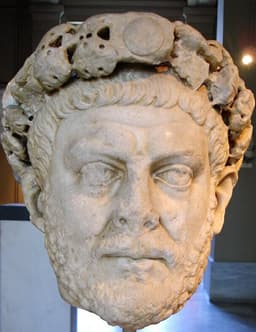
Diocletian
Emperor · Ancient
69.6Total

Suppiluliuma I
Emperor · Ancient
63.7Total
Basic Information
Born
244
-1380
Died
311
-1322
Era
Ancient
Ancient
Nationality
Roman Empire
Hittite Empire
Occupation
Emperor
Emperor
Civilization
Western
Middle Eastern
Score Comparison
Military (10%)
65.0
75.0
Political (20%)
82.0
63.6
Influence (20%)
72.0
55.0
Legacy (20%)
55.0
56.0
Leadership (15%)
82.0
78.0
Strategy (15%)
67.2
72.0
TOTAL
69.6
63.7
Diocletian — Complete Timeline
293 AD
Establishment of the TetrarchyReform
Diocletian created the Tetrarchy, dividing the Roman Empire into four administrative regions ruled by two senior emperors (Augusti) and two junior emperors (Caesares). This system aimed to improve governance and defense, and stabilize imperial succession.
TetrarchyReformAdministration
Impact: globalconstructive
Administrative Reorganization of the EmpireReform◆ Major
Diocletian reorganized the Roman provinces into smaller units (dioceses) grouped into four prefectures, separating civilian and military authority. This reform improved tax collection and administration, but also increased bureaucracy.
AdministrationReformProvinces
Impact: globalconstructive
301 AD
Economic Reforms (Edict on Maximum Prices)Reform◆ Major
Diocletian issued the Edict on Maximum Prices, setting price ceilings on over 1,000 goods and services to combat inflation. The edict was largely ineffective and led to black markets, but demonstrated the state's attempt to control the economy.
Economic ReformPrice ControlsInflation
Impact: global
303 AD
Diocletianic Persecution of ChristiansPolitical Action◆ Major
Diocletian issued a series of edicts ordering the persecution of Christians throughout the Roman Empire. Churches were destroyed, scriptures burned, and Christians were executed or forced to sacrifice to Roman gods. This was the last and most severe state-sponsored persecution.
PersecutionChristianityReligion
Impact: globaldestructive
305 AD
Abdication of DiocletianPolitical Action
Diocletian voluntarily abdicated the throne, retiring to his palace in Split (modern Croatia). He forced his co-emperor Maximian to do the same, setting a precedent for orderly succession, though the Tetrarchy soon collapsed after his departure.
AbdicationRetirementTetrarchy
Impact: global
Suppiluliuma I — Complete Timeline
1350 BC
Conquest of the Mitanni kingdomWar
Suppiluliuma I launched a military campaign that defeated the Mitanni Empire, a major rival in northern Mesopotamia. He installed a vassal king and annexed large territories, making the Hittite Empire the dominant power in the region.
ConquestMitanniHittite Expansion
Impact: regionalconstructive
1345 BC
Reorganization of the Hittite state and administrationReform◆ Major
Suppiluliuma I restructured the Hittite administration, appointing his sons as viceroys in conquered territories such as Aleppo and Carchemish. This system of vassal kings strengthened central control and facilitated imperial governance.
Administrative ReformVassal SystemImperial Governance
Impact: nationalconstructive
1340 BC
Siege of CarchemishWar◆ Major
Suppiluliuma I besieged and captured the strategically important city of Carchemish on the Euphrates. The victory secured Hittite control over trade routes and established a vassal dynasty there.
SiegeCarchemishTrade
Impact: regionalconstructive
1325 BC
Correspondence with the Egyptian queen (the 'Dahamunzu' affair)Political Action◆ Major
Suppiluliuma I received a letter from an Egyptian queen (likely Ankhesenamun, widow of Tutankhamun) requesting a Hittite prince as her husband. He sent a son, Zannanza, who was murdered en route, leading to hostilities with Egypt.
DiplomacyEgyptMarriage Alliance
Impact: regional
Expert Analysis
Origins
Diocletian, born Gaius Aurelius Valerius Diocletianus around 244 AD in Dalmatia (modern Croatia), came from humble origins. His father was a freedman or scribe, and Diocletian rose through the military ranks. He served under emperors Aurelian and Probus, gaining experience in the Illyrian legions. His early life was marked by the Crisis of the Third Century, a period of civil war and external threats. Suppiluliuma I, born around 1344 BC, was a Hittite prince, son of King Tudhaliya III. He inherited a kingdom under pressure from the Mitanni and other neighbors. His upbringing was royal and military, preparing him for kingship from an early age.
Rise to Power
Diocletian became emperor in 284 AD after the death of Numerian. He was proclaimed by the army, and he quickly defeated Carinus, the other claimant, at the Battle of the Margus. In 285, he appointed Maximian as co-emperor, and later established the Tetrarchy in 293, dividing the empire into four parts with two Augusti and two Caesars. This system aimed to end the succession crises. Suppiluliuma I ascended to the Hittite throne around 1344 BC after his father's death. He faced revolts and external threats, but he consolidated power by launching campaigns against the Kaska tribes and the kingdom of Arzawa. His major turning point was the conquest of the Mitanni Empire around 1340 BC, which he achieved by allying with a rival Mitanni prince and decisively defeating King Tushratta.
Leadership & Governance
Diocletian's leadership was administrative and reformist. He reorganized the empire into 12 dioceses and 101 provinces, separating civilian and military authority to prevent rebellions. He issued the Edict on Maximum Prices in 301 AD to curb inflation, but it failed due to black markets. His Tetrarchy was a novel system to ensure orderly succession, but it relied heavily on his personal authority. Suppiluliuma I's leadership was military and expansionist. He restructured the Hittite state by appointing his sons as viceroys in conquered territories like Aleppo and Carchemish. He centralized power but delegated effectively. His governance focused on tribute and vassal treaties, securing loyalty through marriage alliances and military garrisons.
Triumph & Tragedy
Diocletian's greatest success was stabilizing the Roman Empire after decades of crisis. He defeated usurpers, repelled barbarian invasions, and secured borders. His Tetrarchy ensured peaceful succession during his reign. However, his persecution of Christians (303-311 AD) was a major failure, causing internal strife and proving ineffective. His economic reforms failed, and after his abdication in 305 AD, the Tetrarchy collapsed into civil war. Suppiluliuma I's triumph was the expansion of the Hittite Empire to its greatest extent, conquering Mitanni and controlling Syria. He also engaged in diplomacy with Egypt, notably the Dahamunzu affair, where an Egyptian queen sought a Hittite prince as husband. His tragedy was the plague brought back by Hittite prisoners from Syria, which killed him and his son, weakening the empire. The Dahamunzu affair ended in the prince's murder, souring relations with Egypt.
Character & Destiny
Diocletian was pragmatic and methodical. He chose to retire rather than cling to power, a rare act in Roman history. His character shaped his fate: his reforms were thorough but fragile, relying on his personal authority. He scored 82.0 in political skill and 82.0 in leadership, reflecting his ability to manage a vast empire but lacking in military brilliance (65.0). Suppiluliuma I was ambitious and aggressive. His military score of 75.0 and strategy score of 72.0 show his prowess in conquest. However, his overextension and the plague that struck his court were partly due to his relentless expansion. His character was that of a warrior-king, which built an empire but also sowed seeds of instability.
Legacy
Diocletian's legacy is mixed. His administrative reforms outlasted him, influencing the later Roman and Byzantine empires. The Tetrarchy, though short-lived, set a precedent for co-emperorship. The Diocletianic Persecution failed to eradicate Christianity, and his economic policies were abandoned. His palace in Split remains a UNESCO site. Overall, his influence score is 72.0 and legacy 55.0. Suppiluliuma I's legacy is foundational for the Hittite Empire. His conquests created a superpower that lasted until the Bronze Age Collapse. His administrative model of viceroys was continued by successors. His correspondence with Egypt provides key historical insights. His influence score is 55.0 and legacy 56.0, reflecting a more limited but lasting impact in the Near East.
Conclusion
Diocletian had a greater impact on world history than Suppiluliuma I, as his administrative reforms shaped the later Roman Empire and influenced medieval European governance. His total score of 69.6 exceeds Suppiluliuma I's 63.7, driven by higher political (82.0 vs 63.6) and leadership (82.0 vs 78.0) scores. While Suppiluliuma I was a more successful military commander (75.0 vs 65.0), his empire collapsed within centuries, whereas Diocletian's reorganization of Roman provinces and dioceses persisted for centuries. Diocletian's decision to abdicate also set a rare example of peaceful transition of power. However, Suppiluliuma I's role in the Bronze Age Near East should not be underestimated; he built an empire that controlled vital trade routes and influenced regional politics. Ultimately, Diocletian's reforms had broader and longer-lasting consequences for Western civilization.
Rankings
🥇
DiocletianLeader
Mil: 65.0Pol: 82.0Inf: 72.0
69.6
🥈
Suppiluliuma I
Mil: 75.0Pol: 63.6Inf: 55.0
63.7
+5.9 behind
How This Comparison Works
Algorithm
Each figure is scored on 6 dimensions (0—100 scale) based on structured historical data: Military (10%), Political (20%), Influence (20%), Legacy (20%), Leadership (15%), Strategy (15%). The weighted total produces the final ranking.
Data Sources
Scores are computed from structured sub-indicators in the database. Scale factors adjust for era (Ancient ×0.85, Modern ×1.0) and civilization size (Eastern ×1.05, Other ×0.80) to account for differences in population and military scale.
Maximum 3 Figures
Comparisons are limited to 2—3 figures to ensure readability and statistical meaningfulness.
Error Margins
±5 points per dimension — Sub-scores are derived from historical records with inherent uncertainty. Two figures within 5 points on a dimension should be considered roughly equivalent in that area.
Total Score Accuracy
±3 points overall — The weighted combination of 6 dimensions produces a total score with approximately ±3 points of uncertainty. Differences of less than 3 points are not statistically significant— the figures are effectively tied.
Known Limitations
- Historical records are incomplete and uneven across civilizations
- Figures from oral-tradition societies may be underrepresented
- Occupation labels can misclassify multi-role figures
- Scores measure capability and impact, not moral character
- Quantitative scoring is a comparison tool, not absolute truth
Capability Radar
Military (10%) — Battles & Warfare
Battles
65
85
Win Rate
70
88
Expansion
50
92
Political (20%) — Governance & Reform
Reform
95
70
Diplomacy
80
85
Economy
75
72
Influence (20%) — Cultural & Global Reach
Cultural
60
65
Global
75
70
Legacy (20%) — Historical Impact
Historical
85
80
Longevity
70
60
Leadership (15%) — Power & Stability
Tenure
85
80
Stability
80
78
Strategy (15%) — Tactics & Innovation
Strategy
75
90
Tactics
60
82
Reform
85
75
Similar Comparisons
Comments & Discussion
No comments yet. Be the first to share your thoughts!