Loading...
Djoser vs Gundobad
Djoser leads by 6.5 pts · 2 figures compared
…
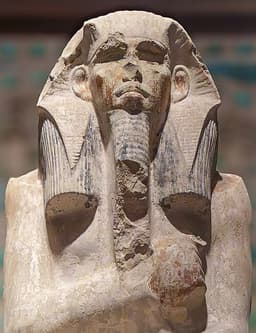
Djoser
Emperor · Ancient
54.0Total

Gundobad
Emperor · Ancient
47.5Total
Basic Information
Born
-2670
452
Died
-2640
516
Era
Ancient
Ancient
Nationality
Egypt
Burgundy
Occupation
Emperor
Emperor
Civilization
Middle Eastern
Western
Score Comparison
Military (10%)
10.2
25.0
Political (20%)
68.0
62.7
Influence (20%)
55.0
51.8
Legacy (20%)
55.0
45.8
Leadership (15%)
72.0
40.0
Strategy (15%)
45.0
51.7
TOTAL
54.0
47.5
Djoser — Complete Timeline
2670 BC
Construction of the Step Pyramid at SaqqaraCultural
Djoser commissioned his vizier Imhotep to build a step pyramid at Saqqara, the first monumental stone building in history. The pyramid, a six-tiered structure, served as Djoser's tomb and marked a revolutionary advance in architecture and engineering.
PyramidArchitectureImhotep
Impact: globalconstructive
Gundobad — Complete Timeline
486 AD
Murder of his brother Chilperic IIPolitical Action◆ Major
Gundobad killed his brother Chilperic II, a fellow Burgundian king, and exiled Chilperic's family. This act consolidated Gundobad's sole rule over the Burgundians and eliminated a rival claimant to the throne.
RegicidePower ConsolidationBurgundy
Impact: nationaldestructive
500 AD
Defeat by Clovis I at the Battle of DijonWar◆ Major
Gundobad was defeated by the Frankish king Clovis I at the Battle of Dijon. He was forced to pay tribute and acknowledge Frankish suzerainty, though he retained his throne and later recovered his independence.
BattleFrankish ExpansionBurgundy
Impact: regional
Issuance of the Lex GundobadaReform◆ Major
King Gundobad promulgated the Lex Gundobada, a legal code for the Burgundian kingdom. This law code combined Roman legal principles with Germanic customary law, governing both Burgundians and Romans in his realm.
Law CodeBurgundian KingdomLegal Reform
Impact: regionalconstructive
Expert Analysis
Origins
Djoser, also known as Netjerikhet, was a pharaoh of the Third Dynasty of Egypt, ruling around 2670 BCE. He was the son of Khasekhemwy, the last pharaoh of the Second Dynasty, and Queen Nimaethap. Little is known of his early life, but he inherited a unified Egypt and a stable kingdom. His reign is marked by the construction of the Step Pyramid at Saqqara, overseen by his vizier Imhotep. Djoser's political score of 68.0 reflects his ability to mobilize resources for massive projects.
Gundobad was a king of the Burgundians, ruling from approximately 480 to 516 CE. He was born into the Burgundian royal family, the son of Gondioc. After his father's death, the kingdom was divided among his brothers: Gundobad, Chilperic II, Godigisel, and Gundomar. Gundobad's early career included service as a magister militum in the Western Roman Empire under Emperor Anthemius, where he gained military and political experience. His political score of 62.7 indicates his skill in navigating the post-Roman world.
Rise to Power
Djoser ascended to the throne peacefully, inheriting a kingdom that had been reunified by his father. His rise was not marked by military conquest but by administrative and architectural ambition. The construction of the Step Pyramid, a six-tiered structure reaching 62 meters, was a turning point. It was the first monumental stone building in history, requiring centralized control of labor and resources. Djoser's leadership score of 72.0 highlights his ability to coordinate such a project.
Gundobad's rise was more violent. After his father's death, he ruled jointly with his brothers. In 500 CE, he murdered his brother Chilperic II, exiling Chilperic's wife and daughters. This act consolidated his power but created lasting enmity with Chilperic's daughter Clotilde, who later married the Frankish king Clovis I. Gundobad also faced challenges from his brother Godigisel, who allied with Clovis. His strategy score of 51.7 reflects his ability to maneuver politically, though his military score of 25.0 shows limitations.
Leadership & Governance
Djoser's governance was centered on monumental construction and religious authority. He was deified during his lifetime, and his rule was absolute. The Step Pyramid served as a massive tomb and a symbol of his divine status. His vizier Imhotep was a key administrator, later deified as a god of medicine. Djoser's leadership style was top-down, relying on a bureaucracy that managed the pyramid's construction. This project required advanced organization and resource allocation, demonstrating his political acumen.
Gundobad's governance was more legalistic. He issued the Lex Gundobada, a law code that combined Roman legal principles with Germanic customs. This code regulated marriage, inheritance, and criminal justice, and it applied to both Burgundians and Romans living in his kingdom. His leadership score of 40.0 is lower than Djoser's, partly because his authority was contested. He was defeated by Clovis at the Battle of Dijon in 500 CE, forced to pay tribute and acknowledge Frankish suzerainty. Despite this, he maintained his throne and later repudiated the tribute after Clovis's death.
Triumph & Tragedy
Djoser's greatest triumph was the Step Pyramid, which set the template for later pyramids at Giza. It remains a UNESCO World Heritage site and a testament to early Egyptian engineering. His greatest failure is less clear, as his reign was generally prosperous. However, the enormous cost of the pyramid may have strained resources, though records are sparse. His influence score of 55.0 reflects the enduring impact of his architectural innovation.
Gundobad's triumph was the Lex Gundobada, which influenced later legal codes and helped integrate Roman and Germanic traditions. It remained in use after the Burgundian kingdom fell. His tragedy was his defeat by Clovis and the loss of independence. The murder of his brother also tarnished his legacy, as Clotilde, his niece, urged Clovis to attack him. His legacy score of 45.8 is lower than Djoser's 55.0, partly because his kingdom was absorbed by the Franks.
Character & Destiny
Djoser was a visionary builder who leveraged his divine status to command loyalty. His character was that of a traditional autocrat, focused on immortality through stone. His destiny was to be remembered as the founder of pyramid construction, though his pyramid was later overshadowed by those at Giza.
Gundobad was a pragmatic ruler who used law to legitimize his rule. He was ruthless, as shown by his fratricide, but also adaptable, surviving military defeat. His destiny was to be a transitional figure, bridging Roman and Germanic worlds. His character shaped his fate: his aggression led to conflict with Clovis, but his legal reforms outlasted his kingdom.
Legacy
Djoser's legacy is monumental. The Step Pyramid influenced pyramid building for centuries and remains a symbol of ancient Egypt. His reign marked the beginning of the Old Kingdom's pyramid-building era. His vizier Imhotep became a legendary figure. Djoser's legacy score of 55.0 reflects this lasting impact.
Gundobad's legacy is the Lex Gundobada, which influenced later Burgundian and Frankish law. It is one of the earliest Germanic law codes. However, his political legacy was limited; the Burgundian kingdom was absorbed by the Franks. His legacy score of 45.8 is lower, as his legal code is of interest mainly to specialists.
Conclusion
Djoser had a greater impact than Gundobad. His Step Pyramid was a revolutionary architectural achievement that defined Egyptian civilization. Gundobad's legal code was important but less transformative. Djoser's total score of 54.0 surpasses Gundobad's 47.5, with advantages in leadership (72.0 vs. 40.0) and legacy (55.0 vs. 45.8). While Gundobad's political skill (62.7) was comparable to Djoser's (68.0), Djoser's ability to command resources for a lasting monument gives him the edge. Thus, Djoser is the more significant historical figure.
Rankings
🥇
DjoserLeader
Mil: 10.2Pol: 68.0Inf: 55.0
54.0
🥈
Gundobad
Mil: 25.0Pol: 62.7Inf: 51.8
47.5
+6.5 behind
How This Comparison Works
Algorithm
Each figure is scored on 6 dimensions (0—100 scale) based on structured historical data: Military (10%), Political (20%), Influence (20%), Legacy (20%), Leadership (15%), Strategy (15%). The weighted total produces the final ranking.
Data Sources
Scores are computed from structured sub-indicators in the database. Scale factors adjust for era (Ancient ×0.85, Modern ×1.0) and civilization size (Eastern ×1.05, Other ×0.80) to account for differences in population and military scale.
Maximum 3 Figures
Comparisons are limited to 2—3 figures to ensure readability and statistical meaningfulness.
Error Margins
±5 points per dimension — Sub-scores are derived from historical records with inherent uncertainty. Two figures within 5 points on a dimension should be considered roughly equivalent in that area.
Total Score Accuracy
±3 points overall — The weighted combination of 6 dimensions produces a total score with approximately ±3 points of uncertainty. Differences of less than 3 points are not statistically significant— the figures are effectively tied.
Known Limitations
- Historical records are incomplete and uneven across civilizations
- Figures from oral-tradition societies may be underrepresented
- Occupation labels can misclassify multi-role figures
- Scores measure capability and impact, not moral character
- Quantitative scoring is a comparison tool, not absolute truth
Capability Radar
Military (10%) — Battles & Warfare
Battles
5
30
Win Rate
5
35
Expansion
5
40
Political (20%) — Governance & Reform
Reform
70
70
Diplomacy
50
65
Economy
60
50
Influence (20%) — Cultural & Global Reach
Cultural
80
40
Global
70
30
Legacy (20%) — Historical Impact
Historical
80
50
Longevity
80
45
Leadership (15%) — Power & Stability
Tenure
60
60
Stability
70
55
Strategy (15%) — Tactics & Innovation
Strategy
5
45
Tactics
5
40
Reform
5
25
Similar Comparisons
Comments & Discussion
No comments yet. Be the first to share your thoughts!