Loading...
Ada of Caria vs Djoser
Djoser leads by 15.5 pts · 2 figures compared
…

Ada of Caria
Emperor · Ancient
38.5Total
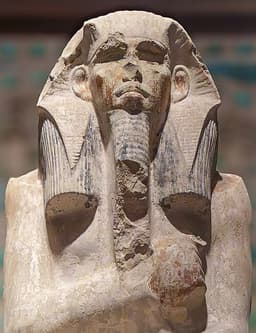
Djoser
Emperor · Ancient
54.0Total
Basic Information
Born
-380
-2670
Died
-326
-2640
Era
Ancient
Ancient
Nationality
Caria
Egypt
Occupation
Emperor
Emperor
Civilization
Middle Eastern
Middle Eastern
Score Comparison
Military (10%)
10.2
10.2
Political (20%)
32.2
68.0
Influence (20%)
46.3
55.0
Legacy (20%)
39.2
55.0
Leadership (15%)
45.0
72.0
Strategy (15%)
45.0
45.0
TOTAL
38.5
54.0
Ada of Caria — Complete Timeline
353 BC
Ruled Caria jointly with IdrieusPolitical Action◆ Major
Ada ruled Caria jointly with her brother and husband Idrieus after the death of Mausolus. She co-administered the satrapy, overseeing construction projects and maintaining Carian autonomy under Persian authority.
Joint RuleCarian Dynasty
Impact: regional
340 BC
Deposed by PixodarusPolitical Action◆ Major
After Idrieus' death, Ada was deposed by her younger brother Pixodarus, who seized power in Caria. She was forced into exile, likely at the fortress of Alinda, marking a period of political instability within the Hecatomnid family.
DepositionDynastic Struggle
Impact: regionaldestructive
334 BC
Adopted Alexander the GreatPolitical Action
When Alexander the Great arrived in Caria, Ada adopted him as her son. This act legitimized Alexander's rule in the region and secured his support, as Ada was the rightful Hecatomnid heir. Alexander restored her to power.
AdoptionAlexander the GreatCaria
Impact: regionalconstructive
Restored as Queen of CariaPolitical Action◆ Major
Following Alexander's conquest of Halicarnassus, Ada was restored as the queen of Caria. She ruled as a loyal ally of Alexander, providing him with troops and supplies for his campaign against the Persian Empire.
RestorationAlexander the GreatCaria
Impact: regionalconstructive
326 BC
Death and legacyPolitical Action
Ada died in 326 BC, having ruled Caria under Alexander's suzerainty. Her adoption of Alexander ensured the peaceful transition of Caria into the Hellenistic world, and she is remembered as the last Hecatomnid ruler of Caria.
DeathLegacy
Impact: regional
Djoser — Complete Timeline
2670 BC
Construction of the Step Pyramid at SaqqaraCultural
Djoser commissioned his vizier Imhotep to build a step pyramid at Saqqara, the first monumental stone building in history. The pyramid, a six-tiered structure, served as Djoser's tomb and marked a revolutionary advance in architecture and engineering.
PyramidArchitectureImhotep
Impact: globalconstructive
Expert Analysis
Origins
Ada of Caria (c. 377–326 BC) was born into the Hecatomnid dynasty, a Persian satrapal family ruling Caria (southwest Anatolia). She was the daughter of Hecatomnus and sister to Mausolus, Artemisia, Idrieus, and Pixodarus. Caria was a culturally Greek-influenced region under Persian suzerainty. Ada received a typical Hellenistic education in administration and court politics, but details of her early life are scarce. She married her brother Idrieus, a common practice among the Hecatomnids to keep power within the family.
Djoser (c. 2670–2640 BC) was a pharaoh of Egypt's Third Dynasty. He was likely the son of Khasekhemwy and Queen Nimaathap. His reign marked the Old Kingdom's early development. Little is known of his youth, but he ascended to rule a unified Egypt with a centralized state, a complex bureaucracy, and a religious system centered on the god Horus. He had access to vast resources and a skilled workforce, including the polymath Imhotep, who served as his vizier and architect.
Rise to Power
Ada rose to power alongside her husband-brother Idrieus, who became satrap of Caria after Mausolus's death (c. 353 BC). They co-ruled, and Ada likely managed internal affairs while Idrieus led military campaigns. After Idrieus died (c. 344 BC), Ada assumed sole rule, but her younger brother Pixodarus deposed her, forcing her into exile at the fortress of Alinda. There she maintained a loyal following until Alexander the Great arrived in Caria (334 BC). Ada shrewdly adopted Alexander as her son, legitimizing his conquest and securing his support. Alexander captured Halicarnassus, and Pixodarus died; Alexander restored Ada as queen of Caria, making her a loyal ally.
Djoser inherited the throne peacefully, likely in his thirties. His reign (c. 2668–2649 BC) is best known for commissioning the Step Pyramid at Saqqara, the first colossal stone building. Imhotep, his architect, designed a six-tiered mastaba that evolved into a pyramid. This project required unprecedented organization, mobilizing labor and resources across Egypt. The pyramid's construction solidified Djoser's authority as a divine ruler and marked a turning point in monumental architecture.
Leadership & Governance
Ada's leadership was diplomatic and adaptive. As queen, she co-ruled with Idrieus, likely focusing on administration, construction projects (such as the Temple of Athena at Alinda), and maintaining Carian autonomy within the Persian Empire. After restoration, she governed Caria as a client ruler under Alexander, providing troops and supplies for his campaigns. She scored 45.0 in leadership and 32.2 in political scores, reflecting her ability to navigate power transitions but limited scope.
Djoser's governance was centralized and theocratic. As pharaoh, he was considered a living god. His reign emphasized monumental building as a demonstration of divine authority and state power. The Step Pyramid complex included temples, courtyards, and a heb-sed (jubilee) court, reinforcing his role as a unifier. Djoser's political score of 68.0 reflects his effective control over Egypt's resources and his legacy as a builder-king. He likely implemented administrative reforms, though records are sparse.
Triumph & Tragedy
Ada's greatest triumph was her restoration as queen through Alexander's favor. Her adoption of Alexander secured Caria's peaceful integration into his empire, avoiding destruction. She died in 326 BC as a respected ruler. Her tragedy was her deposition by Pixodarus, losing power for years. She never expanded Caria's territory; her influence remained regional.
Djoser's triumph was the Step Pyramid, an architectural marvel that endured for millennia. It set a precedent for pyramid construction and demonstrated Egypt's technological and organizational prowess. His reign saw stability and prosperity. The tragedy is that his pyramid's true purpose—as a tomb—was eventually plundered. Also, his dynasty ended after his death, leading to possible instability, but his legacy overshadowed such setbacks.
Character & Destiny
Ada was pragmatic and politically astute. Her adoption of Alexander was a calculated move that saved her rule. She was resilient, surviving exile and reclaiming power. Her character shaped her destiny: her willingness to ally with a foreign conqueror ensured her legacy as a client queen but limited her independent impact. She scored 45.0 in strategy, reflecting her ability to secure her position.
Djoser was visionary and ambitious. He leveraged Imhotep's genius to create a monument that defined his reign. His character likely combined religious piety with administrative skill. His destiny was to be remembered as the pharaoh who built the first pyramid, a symbol of Egypt's golden age. His leadership score of 72.0 underscores his effectiveness in marshaling resources for a grand project.
Legacy
Ada's legacy is tied to Alexander the Great; she is remembered as a minor Hellenistic ruler who facilitated Caria's transition to Greek rule. Her influence score is 46.3, but her legacy score is 39.2, as her impact was short-lived. Caria was soon absorbed into the Seleucid Empire. She left inscriptions and coins, but no major institutions.
Djoser's legacy is monumental. The Step Pyramid remains a UNESCO World Heritage site, a testament to early engineering. He inspired later pharaohs to build pyramids, shaping Egyptian civilization. His legacy score of 55.0 reflects his enduring fame. He is often cited as a pioneer in stone architecture. Djoser's influence extended beyond Egypt, influencing Greek and Roman architecture indirectly.
Conclusion
Djoser clearly had greater impact than Ada of Caria. With a total score of 54.0 versus Ada's 38.5, Djoser's contributions were transformative: the Step Pyramid changed the course of architecture and state-building. Ada's role was consequential regionally but ultimately subordinate to Alexander's conquest. While Ada demonstrated political survival skills, Djoser's legacy in stone endured for millennia. In the contest of ancient rulers, Djoser's building project and symbolic power outweigh Ada's diplomatic maneuvering. Therefore, Djoser is the more significant historical figure.
Rankings
🥇
DjoserLeader
Mil: 10.2Pol: 68.0Inf: 55.0
54.0
🥈
Ada of Caria
Mil: 10.2Pol: 32.2Inf: 46.3
38.5
+15.5 behind
How This Comparison Works
Algorithm
Each figure is scored on 6 dimensions (0—100 scale) based on structured historical data: Military (10%), Political (20%), Influence (20%), Legacy (20%), Leadership (15%), Strategy (15%). The weighted total produces the final ranking.
Data Sources
Scores are computed from structured sub-indicators in the database. Scale factors adjust for era (Ancient ×0.85, Modern ×1.0) and civilization size (Eastern ×1.05, Other ×0.80) to account for differences in population and military scale.
Maximum 3 Figures
Comparisons are limited to 2—3 figures to ensure readability and statistical meaningfulness.
Error Margins
±5 points per dimension — Sub-scores are derived from historical records with inherent uncertainty. Two figures within 5 points on a dimension should be considered roughly equivalent in that area.
Total Score Accuracy
±3 points overall — The weighted combination of 6 dimensions produces a total score with approximately ±3 points of uncertainty. Differences of less than 3 points are not statistically significant— the figures are effectively tied.
Known Limitations
- Historical records are incomplete and uneven across civilizations
- Figures from oral-tradition societies may be underrepresented
- Occupation labels can misclassify multi-role figures
- Scores measure capability and impact, not moral character
- Quantitative scoring is a comparison tool, not absolute truth
Capability Radar
Military (10%) — Battles & Warfare
Battles
5
5
Win Rate
5
5
Expansion
5
5
Political (20%) — Governance & Reform
Reform
20
70
Diplomacy
40
50
Economy
20
60
Influence (20%) — Cultural & Global Reach
Cultural
20
80
Global
15
70
Legacy (20%) — Historical Impact
Historical
25
80
Longevity
20
80
Leadership (15%) — Power & Stability
Tenure
30
60
Stability
25
70
Strategy (15%) — Tactics & Innovation
Strategy
5
5
Tactics
5
5
Reform
5
5
Similar Comparisons
Comments & Discussion
No comments yet. Be the first to share your thoughts!