Loading...
Djoser vs Julius Caesar
Julius Caesar leads by 28.8 pts · 2 figures compared
…
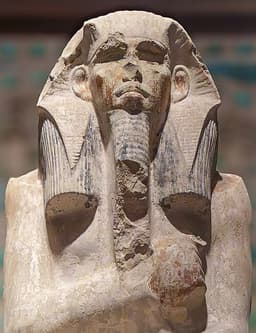
Djoser
Emperor · Ancient
54.0Total

Julius Caesar
General · Ancient
82.8Total
Basic Information
Born
-2670
-100
Died
-2640
-44
Era
Ancient
Ancient
Nationality
Egypt
Roman Republic
Occupation
Emperor
General
Civilization
Middle Eastern
Western
Score Comparison
Military (10%)
10.2
88.0
Political (20%)
68.0
78.0
Influence (20%)
55.0
85.0
Legacy (20%)
55.0
82.0
Leadership (15%)
72.0
80.0
Strategy (15%)
45.0
85.0
TOTAL
54.0
82.8
Djoser — Complete Timeline
2670 BC
Construction of the Step Pyramid at SaqqaraCultural
Djoser commissioned his vizier Imhotep to build a step pyramid at Saqqara, the first monumental stone building in history. The pyramid, a six-tiered structure, served as Djoser's tomb and marked a revolutionary advance in architecture and engineering.
PyramidArchitectureImhotep
Impact: globalconstructive
Julius Caesar — Complete Timeline
58 BC
Gallic WarsWar◆ Major
Caesar, as proconsul of Gaul, launched a series of campaigns that conquered all of Gaul (modern France, Belgium, and parts of Switzerland). He fought numerous battles, including against the Helvetii, the Belgae, and the Gallic chieftain Vercingetorix. The wars brought immense wealth and a loyal army to Caesar.
Gallic WarsConquestRoman Expansion
Impact: regional
49 BC
Crossing the RubiconPolitical Action◆ Major
Caesar led Legio XIII across the Rubicon River into Italy, defying the Roman Senate's order to disband his army. This act triggered a civil war against Pompey and the Optimates, ultimately leading to Caesar's dictatorship and the end of the Roman Republic.
Roman Civil WarEnd of RepublicPower Struggle
Impact: global
48 BC
Battle of PharsalusWar◆ Major
Caesar's outnumbered army defeated the larger forces of Pompey the Great at Pharsalus in Greece. Caesar's tactical use of a reserve line to counter Pompey's cavalry charge proved decisive. Pompey fled to Egypt, where he was assassinated, leaving Caesar as the undisputed master of the Roman world.
Roman Civil WarBattleDecisive Victory
Impact: regional
44 BC
Appointment as Dictator for LifePolitical Action◆ Major
The Roman Senate appointed Caesar dictator perpetuo (dictator for life), granting him unprecedented personal power. This move concentrated military, legislative, and judicial authority in one person, effectively ending the Roman Republic's traditional system of checks and balances and alarming many senators.
DictatorshipEnd of RepublicPower Consolidation
Impact: regionaldestructive
Assassination on the Ides of MarchPolitical Action◆ Major
A group of Roman senators, led by Marcus Junius Brutus and Gaius Cassius Longinus, stabbed Caesar to death at a meeting of the Senate in the Theatre of Pompey. The assassination was intended to restore the Republic, but instead triggered another civil war that led to the rise of the Roman Empire.
AssassinationRoman PoliticsEnd of Republic
Impact: globaldestructive
Expert Analysis
djoser-vs-julius-caesar
# The Pyramid and the Sword
On a spring morning in 44 BCE, a sixty-year-old Roman senator named Gaius Julius Caesar fell beneath twenty-three dagger blows at the foot of a statue of his rival Pompey. His blood pooled on the marble floor of the Theatre of Pompey, and with it, the Roman Republic died. Nearly twenty-six centuries earlier, on the sunbaked plateau of Saqqara, a pharaoh named Djoser watched his vizier Imhotep raise the first colossal stone structure in human history—a step pyramid that would outlast empires, religions, and the very language its builders spoke. One man conquered the known world and died at its peak; the other built a mountain of stone and vanished into eternity. What drives such different destinies? The answer lies not in their achievements, but in the chasm between the worlds they inhabited.
Origins
Djoser ruled a civilization already ancient when he took the throne around 2670 BCE. Egypt had been unified for five centuries, its kings claiming descent from the god Horus. The Nile’s predictable floods had created a stable agricultural society where the pharaoh was not merely a ruler but a living deity responsible for cosmic order. Djoser inherited a system where obedience was the natural order, and his task was to preserve, not to transform.
Julius Caesar, by contrast, was born into a world in chaos. The Roman Republic in 100 BCE was tearing itself apart—civil wars, slave revolts, and the collapse of traditional institutions. His family, the Julii, claimed descent from the goddess Venus, but in Rome such claims meant little without money or military command. Caesar grew up in a city where power was won through ambition, ruthlessness, and the willingness to break every rule. His uncle Marius had been a populist general; his father-in-law Cinna a revolutionary. From childhood, Caesar learned that in Rome, stability was an illusion and survival required constant motion.
Rise to Power
Djoser’s path to power was predetermined. As the son of Pharaoh Khasekhemwy, he inherited the throne with the machinery of state already in place. His greatest decision was choosing Imhotep as his vizier—a man of genius who would design the Step Pyramid not merely as a tomb but as a stairway for the pharaoh’s soul to ascend to the stars. The construction required mobilizing thousands of workers, quarrying stone from across Egypt, and solving engineering problems no one had ever faced. But Djoser did not need to persuade anyone; he simply gave orders, and the pyramids rose.
Caesar’s rise was a relentless gamble. He began as a priest of Jupiter, then fled Rome during a purge, then returned as a lawyer and politician. He borrowed enormous sums to sponsor gladiatorial games, bought votes, and formed the First Triumvirate with Pompey and Crassus—an alliance of convenience that masked mutual suspicion. His appointment as governor of Gaul in 58 BCE gave him the army he needed. Over eight years, he conquered a territory larger than Italy, wrote his own propaganda in the *Commentaries*, and built a personal fortune. When the Senate ordered him to disband his army, he crossed the Rubicon River in 49 BCE with a single legion, declaring, “The die is cast.” He had chosen civil war over submission.
Leadership and Governance
Djoser governed as a god-king, which meant his primary duty was ritual and cosmic maintenance. He did not need to reform Egypt because Egypt was already the most stable civilization on earth. His building projects were acts of religious devotion, not political calculation. The Step Pyramid complex covered forty acres, with temples, courtyards, and a massive enclosure wall. It was designed to last for eternity—and it has. Djoser’s reign saw no wars of conquest, no legal reforms, no expansion of bureaucracy. His goal was not to change the world but to ensure the world continued as it always had.
Caesar governed as a revolutionary. As dictator, he reformed the calendar, granted citizenship to Gauls, redistributed land to veterans, and limited the power of the Senate. He planned public libraries, drainage of the Pontine Marshes, and a canal through the Isthmus of Corinth. His military strategy was audacious—he besieged Alesia in 52 BCE, defeating a Gallic relief army larger than his own by building concentric fortifications. But his political wisdom was flawed. He pardoned his enemies, who then conspired to kill him. He centralized power but failed to build institutions to replace the Republic. He trusted that his genius could solve every problem, but genius cannot substitute for legitimacy.
Triumph and Tragedy
Djoser’s triumph was the Step Pyramid—the world’s first monumental stone structure, a breakthrough that would inspire the Great Pyramids of Giza generations later. His tragedy was that we know almost nothing else about him. No records of his personality survive, no speeches, no letters. He exists only as a name on a stone and a monument that dwarfs his humanity.
Caesar’s triumph was his conquest of Gaul and his defeat of Pompey, which made him master of the Roman world. His tragedy was the Ides of March. He ignored warnings from his wife Calpurnia and the soothsayer who told him to “beware the Ides.” When he saw Brutus among the assassins, he cried, “You too, my child?” His death plunged Rome into another civil war, and the Republic he had killed was replaced by the Empire he had unwillingly created.
Character and Destiny
Djoser’s character is a mystery, but his destiny was shaped by the unchanging nature of Egyptian civilization. He built for eternity because eternity was the only horizon he knew. His pyramid was not a monument to himself but to the cosmic order he embodied. He was the product of a society that had solved the problem of political instability by deifying its rulers.
Caesar’s character is vividly known: brilliant, charming, ruthless, and reckless. He slept with his enemies’ wives, pardoned his assassins, and believed he could control events that were spiraling beyond any man’s grasp. He once said, “It is easier to find men who will volunteer to die than to find those who are willing to endure pain with patience.” His destiny was shaped by the chaos of a republic that had outgrown its institutions. He was the product of a society that had solved the problem of conquest but not the problem of governance.
Legacy
Djoser’s legacy is the Step Pyramid, which still stands at Saqqara after 4,600 years. It is not a monument to his deeds but to his existence—a stone statement that a man once lived and ruled. Every tourist who visits Egypt walks in his shadow.
Caesar’s legacy is the Roman Empire, the Latin language, the Julian calendar, and the word “kaiser” and “tsar.” His name became synonymous with absolute power. But his legacy is also a warning: that the man who destroys a system must be prepared to build a new one, or his blood will feed the ground he tried to conquer.
Conclusion
Djoser and Caesar faced the same fundamental question: what does it mean to rule? Djoser answered by building a ladder to heaven, trusting that eternity would remember his name. Caesar answered by crossing a river and betting that history would forgive his ambition. One built in stone; the other built in blood. One was forgotten as a man and remembered as a monument; the other is remembered as a man whose monuments were empires and whose blood watered the seeds of a new world. Perhaps the deepest difference is this: Djoser ruled a world that believed in permanence, while Caesar ruled a world that had forgotten how to stand still. In the end, the pyramid outlasted the empire—but it is Caesar, not Djoser, whose story we still tell.
Rankings
🥇
Julius CaesarLeader
Mil: 88.0Pol: 78.0Inf: 85.0
82.8
🥈
Djoser
Mil: 10.2Pol: 68.0Inf: 55.0
54.0
+28.8 behind
How This Comparison Works
Algorithm
Each figure is scored on 6 dimensions (0—100 scale) based on structured historical data: Military (10%), Political (20%), Influence (20%), Legacy (20%), Leadership (15%), Strategy (15%). The weighted total produces the final ranking.
Data Sources
Scores are computed from structured sub-indicators in the database. Scale factors adjust for era (Ancient ×0.85, Modern ×1.0) and civilization size (Eastern ×1.05, Other ×0.80) to account for differences in population and military scale.
Maximum 3 Figures
Comparisons are limited to 2—3 figures to ensure readability and statistical meaningfulness.
Error Margins
±5 points per dimension — Sub-scores are derived from historical records with inherent uncertainty. Two figures within 5 points on a dimension should be considered roughly equivalent in that area.
Total Score Accuracy
±3 points overall — The weighted combination of 6 dimensions produces a total score with approximately ±3 points of uncertainty. Differences of less than 3 points are not statistically significant— the figures are effectively tied.
Known Limitations
- Historical records are incomplete and uneven across civilizations
- Figures from oral-tradition societies may be underrepresented
- Occupation labels can misclassify multi-role figures
- Scores measure capability and impact, not moral character
- Quantitative scoring is a comparison tool, not absolute truth
Capability Radar
Military (10%) — Battles & Warfare
Battles
5
95
Win Rate
5
92
Expansion
5
97
Political (20%) — Governance & Reform
Reform
70
90
Diplomacy
50
85
Economy
60
82
Influence (20%) — Cultural & Global Reach
Cultural
80
88
Global
70
94
Legacy (20%) — Historical Impact
Historical
80
95
Longevity
80
96
Leadership (15%) — Power & Stability
Tenure
60
75
Stability
70
60
Strategy (15%) — Tactics & Innovation
Strategy
5
94
Tactics
5
96
Reform
5
88
Similar Comparisons
Comments & Discussion
No comments yet. Be the first to share your thoughts!