Loading...
Dong Zhuo vs Hydarnes the Younger
Dong Zhuo leads by 4.5 pts · 2 figures compared
…
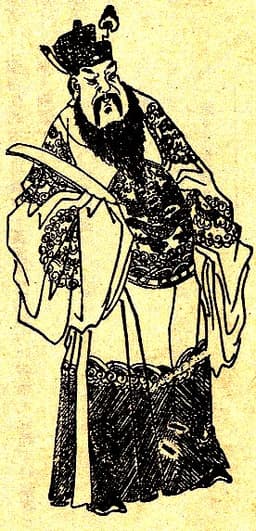
Dong Zhuo
General · Ancient
50.0Total

Hydarnes the Younger
General · Ancient
45.5Total
Basic Information
Born
138
-480
Died
192
-410
Era
Ancient
Ancient
Nationality
China
Achaemenid Empire
Occupation
General
General
Civilization
Eastern
Middle Eastern
Score Comparison
Military (10%)
67.5
47.5
Political (20%)
35.0
35.0
Influence (20%)
49.4
46.3
Legacy (20%)
44.2
37.5
Leadership (15%)
57.1
57.1
Strategy (15%)
60.0
60.0
TOTAL
50.0
45.5
Dong Zhuo — Complete Timeline
189 AD
Dong Zhuo's Entry into LuoyangPolitical Action
After the death of Emperor Ling, Dong Zhuo marched his army into the capital Luoyang, ostensibly to support the He family. He deposed the young Emperor Liu Bian and installed his brother Liu Xie (Emperor Xian), seizing control of the imperial government.
CoupPower SeizureImperial Control
Impact: nationaldestructive
190 AD
Burning of LuoyangOther◆ Major
Facing a coalition of eastern warlords, Dong Zhuo ordered the evacuation and systematic destruction of Luoyang. The city was burned, its palaces and libraries destroyed, and the population forcibly relocated to Chang'an. This act devastated the Han capital.
DestructionCapital BurnedWar Crime
Impact: nationaldestructive
192 AD
Dong Zhuo's AssassinationPolitical Action◆ Major
Dong Zhuo was assassinated in a plot orchestrated by his trusted subordinate L
AssassinationPower ShiftConspiracy
Impact: national
Hydarnes the Younger — Complete Timeline
440 BC
Commanded Persian forces in IoniaWar
Hydarnes the Younger was a Persian commander who led forces in Ionia during the Peloponnesian War. He was involved in operations against Greek city-states, supporting Persian interests in the region.
CommandIoniaPeloponnesian War
Impact: regional
412 BC
Negotiated with the SpartansPolitical Action◆ Major
Hydarnes the Younger engaged in diplomatic negotiations with Spartan envoys, seeking to align Persian and Spartan interests against Athens. These talks led to the Treaty of Miletus, which provided Persian financial support to Sparta in exchange for recognition of Persian claims in Asia Minor.
DiplomacySpartaPeloponnesian War
Impact: regional
410 BC
Death and legacyOther
Hydarnes the Younger died around 410 BC. His career exemplified the Persian strategy of using diplomacy and financial support to influence Greek affairs, a policy that continued under subsequent satraps.
DeathLegacy
Expert Analysis
Origins
Dong Zhuo was born around 138 AD in Longxi, a frontier region of the Han Empire. His family had military connections, and he grew up among the Qiang tribes, learning their ways. He rose through the ranks as a regional commander, gaining a reputation for ruthlessness and ambition. His early career involved suppressing rebellions and building a personal army loyal to him.
Hydarnes the Younger, born around 440 BC, was the son of Hydarnes, a prominent Persian noble. The Hydarnid family had a long history of service to the Achaemenid Empire. Hydarnes the Younger was raised in the court of Darius II and Artaxerxes I, learning the arts of diplomacy and military command. His career was shaped by the complex politics of the Peloponnesian War, where Persia played a key role as a financier and occasional combatant.
Rise to Power
Dong Zhuo's rise began in 189 AD when he entered Luoyang after the death of Emperor Ling. He deposed the young Emperor Liu Bian, installing his brother Liu Xie (Emperor Xian) as a puppet. This act made him the de facto ruler of the Han court. He consolidated power by appointing allies, eliminating rivals, and controlling the emperor. His brutality, such as the execution of the He clan, cemented his authority but also united his enemies.
Hydarnes the Younger rose to prominence as a commander in Ionia during the Peloponnesian War. He was appointed as the Persian satrap or general responsible for overseeing the Greek city-states. His diplomatic skills were crucial: he negotiated with Sparta, offering financial support in exchange for recognition of Persian claims over Ionia. These negotiations, recorded by Thucydides, allowed Persia to regain control of the Greek cities without major military expense.
Leadership & Governance
Dong Zhuo's leadership was authoritarian and terror-based. He ruled through fear, executing officials and civilians alike. He scorched the capital Luoyang in 190 AD, forcing the population to move to Chang'an, causing massive suffering. His governance focused on personal enrichment and securing his position. He did not attempt to restore Han authority but instead created a parallel regime. His political score of 35.0 reflects his failure to build lasting institutions or alliances.
Hydarnes the Younger's leadership was more diplomatic and strategic. He used bribery, negotiation, and military pressure to achieve Persian objectives. His governance in Ionia involved balancing local autonomy with imperial demands. Unlike Dong Zhuo, Hydarnes avoided unnecessary destruction. He understood the limits of Persian power and sought to exploit Greek rivalries. His leadership score of 57.1 matches Dong Zhuo's, but his approach was more sustainable.
Triumph & Tragedy
Dong Zhuo's greatest triumph was seizing control of the Han central government, a feat achieved through boldness and military might. He installed his own emperor and dominated the court. However, his greatest tragedy was the burning of Luoyang and the subsequent collapse of the Han order. His assassination in 192 AD by his own bodyguard Lü Bu ended his rule, but the chaos he unleashed lasted for decades. His military score of 67.5 reflects his tactical abilities, but his political score of 35.0 shows his strategic failure.
Hydarnes the Younger's triumph was the successful negotiation with Sparta, which resulted in the Persian treaty with Sparta in 412 BC. This alliance helped Persia regain control over Ionia and weakened Athens. His tragedy was that his diplomatic gains were temporary; after the Peloponnesian War, Persia's influence waned. He died around 410 BC, his legacy overshadowed by later Persian defeats. His military score of 47.5 indicates his limited direct command, but his political score of 35.0 matches Dong Zhuo's.
Character & Destiny
Dong Zhuo was impulsive, cruel, and arrogant. He trusted only his family and a few retainers, ultimately leading to his betrayal. His character made him a tyrant but also a short-lived one. His destiny was sealed when he alienated even his close associates. Historical assessments depict him as a villain who brought down the Han dynasty.
Hydarnes the Younger was pragmatic, patient, and diplomatic. He understood the value of persuasion over force. His character allowed him to navigate the treacherous politics of the Persian court and Greek city-states. His destiny was to be a competent but not transformative figure. He is remembered more for his diplomacy than his military achievements.
Legacy
Dong Zhuo's legacy is overwhelmingly negative. He is remembered as the catalyst for the Three Kingdoms period, a time of war and suffering. His actions led to the collapse of centralized authority in China. His influence score of 49.4 reflects his role in historical narratives, but his legacy score of 44.2 shows his destructive impact.
Hydarnes the Younger's legacy is more nuanced. He contributed to Persia's temporary resurgence in Greek affairs. His diplomatic methods influenced later Persian strategies. However, his achievements were not lasting, and he is a minor figure in Persian history. His legacy score of 37.5 is lower than Dong Zhuo's because his impact was less transformative.
Conclusion
Dong Zhuo had a greater impact than Hydarnes the Younger, despite his lower total score of 50.0 vs 45.5. Dong Zhuo's actions directly triggered the fall of the Han dynasty, one of the most significant events in Chinese history. Hydarnes the Younger's diplomacy, while effective, was part of a larger Persian strategy that did not alter the course of history as dramatically. In terms of historical influence, Dong Zhuo's destructive legacy outweighs Hydarnes's more limited achievements. Therefore, Dong Zhuo is the more significant figure.
Rankings
🥇
Dong ZhuoLeader
Mil: 67.5Pol: 35.0Inf: 49.4
50.0
🥈
Hydarnes the Younger
Mil: 47.5Pol: 35.0Inf: 46.3
45.5
+4.5 behind
How This Comparison Works
Algorithm
Each figure is scored on 6 dimensions (0—100 scale) based on structured historical data: Military (10%), Political (20%), Influence (20%), Legacy (20%), Leadership (15%), Strategy (15%). The weighted total produces the final ranking.
Data Sources
Scores are computed from structured sub-indicators in the database. Scale factors adjust for era (Ancient ×0.85, Modern ×1.0) and civilization size (Eastern ×1.05, Other ×0.80) to account for differences in population and military scale.
Maximum 3 Figures
Comparisons are limited to 2—3 figures to ensure readability and statistical meaningfulness.
Error Margins
±5 points per dimension — Sub-scores are derived from historical records with inherent uncertainty. Two figures within 5 points on a dimension should be considered roughly equivalent in that area.
Total Score Accuracy
±3 points overall — The weighted combination of 6 dimensions produces a total score with approximately ±3 points of uncertainty. Differences of less than 3 points are not statistically significant— the figures are effectively tied.
Known Limitations
- Historical records are incomplete and uneven across civilizations
- Figures from oral-tradition societies may be underrepresented
- Occupation labels can misclassify multi-role figures
- Scores measure capability and impact, not moral character
- Quantitative scoring is a comparison tool, not absolute truth
Capability Radar
Military (10%) — Battles & Warfare
Battles
55
40
Win Rate
50
45
Expansion
35
30
Political (20%) — Governance & Reform
Reform
5
10
Diplomacy
20
25
Economy
15
10
Influence (20%) — Cultural & Global Reach
Cultural
20
15
Global
25
10
Legacy (20%) — Historical Impact
Historical
45
20
Longevity
30
15
Leadership (15%) — Power & Stability
Tenure
30
20
Stability
5
15
Strategy (15%) — Tactics & Innovation
Strategy
40
45
Tactics
45
50
Reform
10
10
Similar Comparisons
Comments & Discussion
No comments yet. Be the first to share your thoughts!