Loading...
This comparison has not been analyzed yet.
One-time AI generation (~1 minute). Scores and timeline are already available below.
Dongcheon of Goguryeo vs Ishpuini
Ishpuini leads by 11.1 pts · 2 figures compared
…

Dongcheon of Goguryeo
Emperor · Ancient
39.0Total
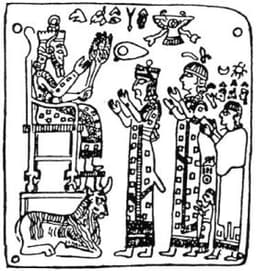
Ishpuini
Emperor · Ancient
50.1Total
Basic Information
Born
227
-825
Died
248
-810
Era
Ancient
Ancient
Nationality
Goguryeo
Urartu
Occupation
Emperor
Emperor
Civilization
Eastern
Middle Eastern
Score Comparison
Military (10%)
50.0
40.0
Political (20%)
25.0
54.7
Influence (20%)
44.0
48.6
Legacy (20%)
37.5
41.7
Leadership (15%)
41.5
62.0
Strategy (15%)
36.8
60.0
TOTAL
39.0
50.1
Dongcheon of Goguryeo — Complete Timeline
244 AD
Defeat by Wei China at the Battle of XuantuWar
The Chinese state of Wei launched a punitive expedition against Goguryeo. Dongcheon's forces were decisively defeated at Xuantu Commandery, forcing him to abandon his capital and flee into the mountains with his court.
Military DefeatInvasionCapital Fall
Impact: regionaltragic
245 AD
Flight from the capital and guerrilla resistanceWar◆ Major
After the fall of Gungnae, Dongcheon organized a guerrilla campaign against the Wei occupation forces. He used the mountainous terrain to launch hit-and-run attacks, eventually forcing the Wei army to withdraw due to supply difficulties.
Guerrilla WarfareResistanceSurvival
Impact: regional
247 AD
Restoration of the capital and recoveryPolitical Action◆ Major
Following the Wei withdrawal, Dongcheon returned to Gungnae and began rebuilding the devastated capital. He implemented policies to restore agriculture, rebuild infrastructure, and reorganize the military to prevent future invasions.
ReconstructionRecoveryPost-War Rebuilding
Impact: nationalconstructive
Ishpuini — Complete Timeline
825 BC
Establishment of Tushpa as CapitalPolitical Action◆ Major
Ishpuini moved the Urartian capital to Tushpa (modern Van, Turkey), a fortified city on Lake Van. This centralized Urartian administration and became the political and religious center of the kingdom, facilitating expansion and control over surrounding regions.
Capital CityAdministrationUrartu Foundation
Impact: nationalconstructive
820 BC
Consolidation of Urartian KingdomPolitical Action
Ishpuini unified various tribes and city-states in the Armenian highlands into a single Urartian kingdom. He established a centralized monarchy, built fortresses, and organized the military, laying the foundation for Urartu's rise as a major power in the region.
UnificationState BuildingUrartu
Impact: regionalconstructive
810 BC
Inscription of the Kelishin SteleCultural
Ishpuini commissioned the Kelishin Stele, a bilingual inscription in Urartian and Assyrian cuneiform, recording his military campaigns and religious dedications. This stele provides key historical evidence of Urartian language, religion, and early expansion.
InscriptionCuneiformHistorical Record
Impact: regional
This comparison has not been analyzed yet.
One-time AI generation (~1 minute). Scores and timeline are already available below.
Rankings
🥇
IshpuiniLeader
Mil: 40.0Pol: 54.7Inf: 48.6
50.1
🥈
Dongcheon of Goguryeo
Mil: 50.0Pol: 25.0Inf: 44.0
39.0
+11.1 behind
How This Comparison Works
Algorithm
Each figure is scored on 6 dimensions (0—100 scale) based on structured historical data: Military (10%), Political (20%), Influence (20%), Legacy (20%), Leadership (15%), Strategy (15%). The weighted total produces the final ranking.
Data Sources
Scores are computed from structured sub-indicators in the database. Scale factors adjust for era (Ancient ×0.85, Modern ×1.0) and civilization size (Eastern ×1.05, Other ×0.80) to account for differences in population and military scale.
Maximum 3 Figures
Comparisons are limited to 2—3 figures to ensure readability and statistical meaningfulness.
Error Margins
±5 points per dimension — Sub-scores are derived from historical records with inherent uncertainty. Two figures within 5 points on a dimension should be considered roughly equivalent in that area.
Total Score Accuracy
±3 points overall — The weighted combination of 6 dimensions produces a total score with approximately ±3 points of uncertainty. Differences of less than 3 points are not statistically significant— the figures are effectively tied.
Known Limitations
- Historical records are incomplete and uneven across civilizations
- Figures from oral-tradition societies may be underrepresented
- Occupation labels can misclassify multi-role figures
- Scores measure capability and impact, not moral character
- Quantitative scoring is a comparison tool, not absolute truth
Capability Radar
Military (10%) — Battles & Warfare
Battles
20
35
Win Rate
10
40
Expansion
5
50
Political (20%) — Governance & Reform
Reform
20
50
Diplomacy
15
35
Economy
20
40
Influence (20%) — Cultural & Global Reach
Cultural
15
30
Global
5
20
Legacy (20%) — Historical Impact
Historical
20
35
Longevity
15
25
Leadership (15%) — Power & Stability
Tenure
40
40
Stability
10
45
Strategy (15%) — Tactics & Innovation
Strategy
10
40
Tactics
15
30
Reform
5
45
Similar Comparisons
Comments & Discussion
No comments yet. Be the first to share your thoughts!