Loading...
Ishpuini vs Napoleon Bonaparte
Napoleon Bonaparte leads by 20.8 pts · 2 figures compared
…
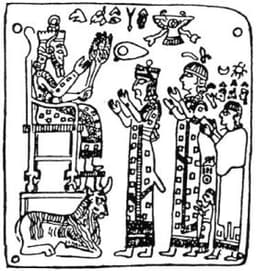
Ishpuini
Emperor · Ancient
50.1Total

Napoleon Bonaparte
General · Modern
70.9Total
Basic Information
Born
-825
1769
Died
-810
1821
Era
Ancient
Modern
Nationality
Urartu
France
Occupation
Emperor
General
Civilization
Middle Eastern
Western
Score Comparison
Military (10%)
40.0
94.0
Political (20%)
54.7
72.0
Influence (20%)
48.6
40.0
Legacy (20%)
41.7
80.0
Leadership (15%)
62.0
78.0
Strategy (15%)
60.0
90.0
TOTAL
50.1
70.9
Ishpuini — Complete Timeline
825 BC
Establishment of Tushpa as CapitalPolitical Action◆ Major
Ishpuini moved the Urartian capital to Tushpa (modern Van, Turkey), a fortified city on Lake Van. This centralized Urartian administration and became the political and religious center of the kingdom, facilitating expansion and control over surrounding regions.
Capital CityAdministrationUrartu Foundation
Impact: nationalconstructive
820 BC
Consolidation of Urartian KingdomPolitical Action
Ishpuini unified various tribes and city-states in the Armenian highlands into a single Urartian kingdom. He established a centralized monarchy, built fortresses, and organized the military, laying the foundation for Urartu's rise as a major power in the region.
UnificationState BuildingUrartu
Impact: regionalconstructive
810 BC
Inscription of the Kelishin SteleCultural
Ishpuini commissioned the Kelishin Stele, a bilingual inscription in Urartian and Assyrian cuneiform, recording his military campaigns and religious dedications. This stele provides key historical evidence of Urartian language, religion, and early expansion.
InscriptionCuneiformHistorical Record
Impact: regional
Napoleon Bonaparte — Complete Timeline
1799 AD
Coup of 18 BrumaireOther◆ Major
Napoleon Bonaparte, with support from his brother Lucien and key political figures, overthrew the Directory in a bloodless coup. He established the Consulate with himself as First Consul, effectively becoming the ruler of France. This event ended the French Revolution's most unstable period.
French RevolutionCoupRise to Power
Impact: regional
1804 AD
Promulgation of the Napoleonic CodeOther◆ Major
Napoleon enacted the Civil Code of the French, known as the Napoleonic Code, a comprehensive set of laws that replaced the fragmented feudal legal systems. The code established legal equality, protected property rights, and secularized law. It became the basis for legal systems in many European and world countries.
Legal ReformNapoleonic CodeCivil Law
Impact: globalconstructive
1805 AD
Battle of AusterlitzWar◆ Major
Napoleon's Grande Arm
Napoleonic WarsBattleDecisive Victory
Impact: global
1812 AD
Invasion of RussiaWar◆ Major
Napoleon led the Grande Arm
Napoleonic WarsInvasionDisaster
Impact: globaldestructive
1815 AD
Battle of WaterlooWar◆ Major
Napoleon's French army was defeated by the combined forces of the Duke of Wellington's Anglo-Allied army and Gebhard Leberecht von Bl
Napoleonic WarsBattleFinal Defeat
Impact: globaldestructive
Expert Analysis
ishpuini-vs-napoleon-bonaparte
# The Emperor and the Forgotten King
On a June morning in 1815, Napoleon Bonaparte watched his Imperial Guard march toward the smoking fields of Waterloo, their bearskin caps silhouetted against a gray sky. Less than two decades earlier, he had been a Corsican artillery lieutenant scrambling for promotion. Now, he commanded the fate of Europe. Meanwhile, nearly 2,600 years before, on the shores of Lake Van in what is now eastern Turkey, a king named Ishpuini was carving his name into stone—not with cannon fire, but with chisel and cuneiform. One man’s story is etched into every schoolbook; the other’s is buried beneath the dust of forgotten empires. Why does one conqueror become immortal while another fades into obscurity? The answer lies not merely in what they achieved, but in the worlds they inhabited and the forces that shaped them.
Origins
Napoleon Bonaparte was born in 1769 on the island of Corsica, a Mediterranean rock recently annexed by France. His family was minor nobility, perpetually short of money. The young Napoleon was awkward, spoke French with an Italian accent, and was mocked by his classmates at military school. Yet this outsider’s hunger drove him. He devoured history and military theory, dreaming of glory in an age when the French Revolution had shattered old hierarchies. In revolutionary France, a clever artilleryman could rise faster than a duke’s son.
Ishpuini’s origins are murkier. He ruled Urartu—a kingdom in the Armenian highlands—from approximately 825 to 810 BCE. Urartu was a patchwork of tribes and fortified cities, squeezed between the mighty Assyrian Empire to the south and the Caucasus mountains to the north. Unlike Napoleon, Ishpuini inherited a throne, but it was a fragile one. His predecessor had fought losing battles against Assyria. The kingdom was fractured, its people scattered. For Ishpuini, survival meant consolidation, not conquest.
Rise to Power
Napoleon’s ascent was meteoric. In 1793, at age twenty-four, he recaptured the port of Toulon from British forces with a daring artillery plan. Promoted to brigadier general, he then crushed a royalist uprising in Paris with a “whiff of grapeshot” in 1795. By 1796, he commanded the French army in Italy, where he outmaneuvered Austrian forces in a lightning campaign that made him a national hero. In 1799, he seized power in a coup, becoming First Consul. By 1804, he crowned himself Emperor. Each step was a gamble, each victory a springboard.
Ishpuini’s rise was slower, more patient. His key event came in 825 BCE, when he moved the Urartian capital to Tushpa, a fortified city on Lake Van. This was not a battlefield triumph but a political masterstroke. By centralizing administration, he could tax grain, levy troops, and project authority. Then, in 820 BCE, he unified the warring tribes and city-states of the Armenian highlands into a single kingdom. There was no single battle; rather, a decade of diplomacy, marriage alliances, and the quiet threat of force. Napoleon conquered; Ishpuini stitched.
Leadership & Governance
Napoleon ruled with a blend of charisma, terror, and genius. He reformed French law through the Napoleonic Code, standardizing justice across a fractured nation. He built roads, schools, and a centralized bureaucracy. But his governance was also a tyranny of ambition: he censored the press, exiled critics, and spent his treasury on endless war. His military strategy—speed, massed artillery, decisive flanking moves—was revolutionary. At Austerlitz in 1805, he destroyed a larger Russo-Austrian army by feigning weakness, then striking at the enemy’s center. Yet his political wisdom was brittle. He trusted no one, and his empire rested on his own shoulders.
Ishpuini governed through stone and inscription. He commissioned the Kelishin Stele around 810 BCE, a bilingual monument in Urartian and Assyrian cuneiform that recorded his military campaigns and religious offerings. This was not mere vanity; it was state-building. By adopting Assyrian script, he claimed legitimacy in the eyes of a literate elite. By building fortresses and irrigation systems, he secured his people’s survival. His military scores are modest—32.2 for military, 37.2 for strategy—but his political score of 47.9 reflects a ruler who understood that a kingdom is built on order, not just steel.
Triumph & Tragedy
Napoleon’s greatest moment was Austerlitz, where he crushed the Third Coalition and forced Austria to sue for peace. His empire stretched from Spain to Poland. But his tragedy was hubris. In 1812, he invaded Russia with 600,000 men; fewer than 100,000 returned. The disaster shattered his aura of invincibility. Exiled to Elba in 1814, he escaped, rallied France, and met his final defeat at Waterloo in 1815. He died in 1821 on Saint Helena, a prisoner of the British, abandoned by his marshals.
Ishpuini’s triumph was subtler. He left Urartu stronger than he found it—a unified kingdom that would survive for another century. His tragedy is that we know so little. The Kelishin Stele survives, but the man himself is a name in a footnote. No epic poem celebrates him. No statue stands in a capital. His empire fell to the Medes and Scythians, and its language died. He is remembered only by archaeologists and specialists.
Character & Destiny
Napoleon was a force of nature: restless, brilliant, arrogant. He once said, “Impossible is a word to be found only in the dictionary of fools.” His personality drove him to overreach. He could not stop; peace bored him. This same drive that made him a genius also made him a tyrant, and ultimately, a failure. His destiny was to burn bright and fast, leaving a scar on history.
Ishpuini was a builder, not a destroyer. He carved his kingdom from chaos, not from conquest. His character—patient, pragmatic, anonymous—shaped a different fate. He did not seek immortality; he sought stability. And in that, he succeeded. His destiny was to be forgotten, but his kingdom endured long enough to leave traces for those who dig.
Legacy
Napoleon’s legacy is immense. The Napoleonic Code influenced legal systems from Brazil to Japan. His military tactics are still studied at West Point. He reshaped European borders and nationalism. But his legacy is also a warning: the price of unchecked ambition.
Ishpuini’s legacy is fragile. The Kelishin Stele sits in a museum in Iraq, damaged by war and neglect. His capital, Tushpa, is now the Turkish city of Van. Yet for historians, he represents something vital: the quiet work of state-building in a violent age. His total score of 48.8 is modest, but it measures survival, not spectacle.
Conclusion
Napoleon and Ishpuini never met, could not have met. One lived in an age of gunpowder and newspapers; the other in an age of bronze and clay. Yet their stories ask the same question: What does it mean to leave a mark? Napoleon’s mark is a scar across the face of Europe. Ishpuini’s is a faint scratch on a stone. But both men shaped the world they knew. The difference is not in their deeds, but in the noise they made. Some empires are built with cannons; others with chisels. Both crumble, but the quiet ones often leave deeper foundations.
Rankings
🥇
Napoleon BonaparteLeader
Mil: 94.0Pol: 72.0Inf: 40.0
70.9
🥈
Ishpuini
Mil: 40.0Pol: 54.7Inf: 48.6
50.1
+20.8 behind
How This Comparison Works
Algorithm
Each figure is scored on 6 dimensions (0—100 scale) based on structured historical data: Military (10%), Political (20%), Influence (20%), Legacy (20%), Leadership (15%), Strategy (15%). The weighted total produces the final ranking.
Data Sources
Scores are computed from structured sub-indicators in the database. Scale factors adjust for era (Ancient ×0.85, Modern ×1.0) and civilization size (Eastern ×1.05, Other ×0.80) to account for differences in population and military scale.
Maximum 3 Figures
Comparisons are limited to 2—3 figures to ensure readability and statistical meaningfulness.
Error Margins
±5 points per dimension — Sub-scores are derived from historical records with inherent uncertainty. Two figures within 5 points on a dimension should be considered roughly equivalent in that area.
Total Score Accuracy
±3 points overall — The weighted combination of 6 dimensions produces a total score with approximately ±3 points of uncertainty. Differences of less than 3 points are not statistically significant— the figures are effectively tied.
Known Limitations
- Historical records are incomplete and uneven across civilizations
- Figures from oral-tradition societies may be underrepresented
- Occupation labels can misclassify multi-role figures
- Scores measure capability and impact, not moral character
- Quantitative scoring is a comparison tool, not absolute truth
Capability Radar
Military (10%) — Battles & Warfare
Battles
35
95
Win Rate
40
90
Expansion
50
95
Political (20%) — Governance & Reform
Reform
50
95
Diplomacy
35
80
Economy
40
85
Influence (20%) — Cultural & Global Reach
Cultural
30
85
Global
20
90
Legacy (20%) — Historical Impact
Historical
35
95
Longevity
25
90
Leadership (15%) — Power & Stability
Tenure
40
85
Stability
45
70
Strategy (15%) — Tactics & Innovation
Strategy
40
95
Tactics
30
98
Reform
45
92
Similar Comparisons
Comments & Discussion
No comments yet. Be the first to share your thoughts!