Loading...
Ishpuini vs Julius Caesar
Julius Caesar leads by 32.7 pts · 2 figures compared
…
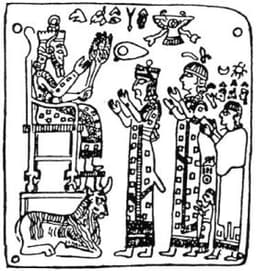
Ishpuini
Emperor · Ancient
50.1Total

Julius Caesar
General · Ancient
82.8Total
Basic Information
Born
-825
-100
Died
-810
-44
Era
Ancient
Ancient
Nationality
Urartu
Roman Republic
Occupation
Emperor
General
Civilization
Middle Eastern
Western
Score Comparison
Military (10%)
40.0
88.0
Political (20%)
54.7
78.0
Influence (20%)
48.6
85.0
Legacy (20%)
41.7
82.0
Leadership (15%)
62.0
80.0
Strategy (15%)
60.0
85.0
TOTAL
50.1
82.8
Ishpuini — Complete Timeline
825 BC
Establishment of Tushpa as CapitalPolitical Action◆ Major
Ishpuini moved the Urartian capital to Tushpa (modern Van, Turkey), a fortified city on Lake Van. This centralized Urartian administration and became the political and religious center of the kingdom, facilitating expansion and control over surrounding regions.
Capital CityAdministrationUrartu Foundation
Impact: nationalconstructive
820 BC
Consolidation of Urartian KingdomPolitical Action
Ishpuini unified various tribes and city-states in the Armenian highlands into a single Urartian kingdom. He established a centralized monarchy, built fortresses, and organized the military, laying the foundation for Urartu's rise as a major power in the region.
UnificationState BuildingUrartu
Impact: regionalconstructive
810 BC
Inscription of the Kelishin SteleCultural
Ishpuini commissioned the Kelishin Stele, a bilingual inscription in Urartian and Assyrian cuneiform, recording his military campaigns and religious dedications. This stele provides key historical evidence of Urartian language, religion, and early expansion.
InscriptionCuneiformHistorical Record
Impact: regional
Julius Caesar — Complete Timeline
58 BC
Gallic WarsWar◆ Major
Caesar, as proconsul of Gaul, launched a series of campaigns that conquered all of Gaul (modern France, Belgium, and parts of Switzerland). He fought numerous battles, including against the Helvetii, the Belgae, and the Gallic chieftain Vercingetorix. The wars brought immense wealth and a loyal army to Caesar.
Gallic WarsConquestRoman Expansion
Impact: regional
49 BC
Crossing the RubiconPolitical Action◆ Major
Caesar led Legio XIII across the Rubicon River into Italy, defying the Roman Senate's order to disband his army. This act triggered a civil war against Pompey and the Optimates, ultimately leading to Caesar's dictatorship and the end of the Roman Republic.
Roman Civil WarEnd of RepublicPower Struggle
Impact: global
48 BC
Battle of PharsalusWar◆ Major
Caesar's outnumbered army defeated the larger forces of Pompey the Great at Pharsalus in Greece. Caesar's tactical use of a reserve line to counter Pompey's cavalry charge proved decisive. Pompey fled to Egypt, where he was assassinated, leaving Caesar as the undisputed master of the Roman world.
Roman Civil WarBattleDecisive Victory
Impact: regional
44 BC
Appointment as Dictator for LifePolitical Action◆ Major
The Roman Senate appointed Caesar dictator perpetuo (dictator for life), granting him unprecedented personal power. This move concentrated military, legislative, and judicial authority in one person, effectively ending the Roman Republic's traditional system of checks and balances and alarming many senators.
DictatorshipEnd of RepublicPower Consolidation
Impact: regionaldestructive
Assassination on the Ides of MarchPolitical Action◆ Major
A group of Roman senators, led by Marcus Junius Brutus and Gaius Cassius Longinus, stabbed Caesar to death at a meeting of the Senate in the Theatre of Pompey. The assassination was intended to restore the Republic, but instead triggered another civil war that led to the rise of the Roman Empire.
AssassinationRoman PoliticsEnd of Republic
Impact: globaldestructive
Expert Analysis
ishpuini-vs-julius-caesar
# The Two Faces of Ancient Power: Caesar and Ishpuini
On a spring morning in 44 BCE, Julius Caesar walked into the Senate chamber in Rome, unaware that sixty conspirators awaited him with daggers hidden beneath their togas. A thousand miles east and seven centuries earlier, another ruler, Ishpuini of Urartu, had commissioned a stone stele on a mountain pass near modern-day Iraq, inscribing his victories in two languages for eternity. One man would die in a moment of political theater that still echoes; the other would vanish into the dust of history, his name known only to specialists. What separates the titan from the footnote? The answer lies not in the size of their kingdoms, but in the nature of their ambitions.
Origins
Julius Caesar was born into the twilight of the Roman Republic, a world of senatorial infighting, slave revolts, and the dying gasps of a political system that had outgrown itself. His family, the Julii, claimed descent from the goddess Venus, but they were patricians of modest means. Caesar grew up in a Rome where the old aristocracy was being eclipsed by military strongmen like Marius and Sulla. He learned early that in such a world, a name was a weapon, but only if you knew how to wield it.
Ishpuini, by contrast, emerged from the highlands of eastern Anatolia, where the kingdom of Urartu was little more than a collection of tribes and fortified hilltops. The Assyrian Empire loomed to the south, a colossus that had crushed Urartu’s predecessors. Ishpuini inherited not a republic in decay, but a fledgling state in the shadow of an empire. His world was one of survival, not glory—a place where a ruler’s first duty was to build walls, not write speeches.
Rise to Power
Caesar’s path to power was a masterpiece of calculated risk. He climbed the Roman political ladder—the *cursus honorum*—with audacity: as a young man, he was captured by pirates and famously told them he would crucify them; when they did not take him seriously, he did exactly that. He forged the First Triumvirate with Pompey and Crassus, bought influence with borrowed money, and then, in 58 BCE, secured the governorship of Gaul. That appointment gave him an army, and with that army he would change the world.
Ishpuini’s rise was quieter. He came to power around 825 BCE, a time when Urartu was still recovering from Assyrian raids. His first major act was to move the capital to Tushpa, modern Van in Turkey, a fortified city on the shores of Lake Van. This was not a dramatic crossing of a river, but a strategic retreat to defensible ground. Where Caesar gambled for glory, Ishpuini consolidated for survival. The turning point came in 820 BCE, when he unified the scattered tribes and city-states of the Armenian highlands into a single kingdom—not through conquest alone, but through a network of alliances and the steady imposition of a centralized administration.
Leadership & Governance
Caesar governed as a revolutionary. As dictator, he reformed the calendar, granted citizenship to provincials, and launched massive public works. His military genius was undeniable: at Alesia in 52 BCE, he besieged a Gallic army while simultaneously repelling a relief force, a double encirclement that remains a textbook maneuver. But his political wisdom was flawed. He pardoned his enemies, then underestimated their resentment. He centralized power, then failed to build a lasting system to replace what he destroyed. His reforms were brilliant, but they were the reforms of a man who trusted his own genius more than institutions.
Ishpuini governed as a builder. His legacy is not a single battle, but the Kelishin Stele, commissioned in 810 BCE, a bilingual inscription in Urartian and Assyrian cuneiform that recorded his military campaigns and religious dedications. This stele was not propaganda in the Roman sense; it was an assertion of legitimacy, a claim that Urartu was a civilized kingdom worthy of respect. Where Caesar wrote *Commentaries* to shape his own legend, Ishpuini carved stone to anchor his kingdom in history. His political achievement—unifying a fractured region and establishing a stable capital—was less dramatic but more enduring. Urartu would survive for another century after his death.
Triumph & Tragedy
Caesar’s triumph was the conquest of Gaul, a campaign that brought Rome vast wealth and a loyal army. His tragedy was the Ides of March, 44 BCE, when the men he had spared—Brutus, Cassius, and others—stabbed him to death in the Senate. His last words, if Shakespeare is to be believed, were “Et tu, Brute?”—a cry of personal betrayal that captured the collapse of his political vision.
Ishpuini’s triumph was the consolidation of Urartu. His tragedy is that we know almost nothing personal about him. No dramatic death, no famous last words. He died around 810 BCE, likely of old age or illness, and his kingdom continued under his son, Menua. The greatest tragedy for Ishpuini is that his name survives only in scholarly footnotes, while Caesar’s is a household word.
Character & Destiny
Caesar was driven by an insatiable ambition. He once said, “I would rather be first in a little Iberian village than second in Rome.” That hunger drove him to cross the Rubicon in 49 BCE, an act of war against his own republic. His personality—arrogant, brilliant, merciful to enemies but ruthless to rivals—shaped every decision. He believed in his own star, and that belief led him to greatness, and then to death.
Ishpuini’s character is harder to read. The Kelishin Stele suggests a ruler who valued order and piety, who sought to legitimize his rule through both military strength and cultural sophistication. He was a consolidator, not a conqueror. His destiny was not to change the world, but to preserve a corner of it from being swallowed by Assyria.
Legacy
Caesar’s legacy is the Roman Empire. His adopted heir, Octavian, would become Augustus, the first emperor. The title “Caesar” became synonymous with imperial power, surviving for centuries in the German *Kaiser* and Russian *Tsar*. His reforms—the Julian calendar, Roman citizenship, provincial administration—outlasted him. He is remembered as a military genius, a political visionary, and a cautionary tale about the dangers of unchecked power.
Ishpuini’s legacy is Urartu itself. The kingdom he built would eventually fall to the Medes and then the Persians, but its culture, its irrigation systems, and its fortresses left a mark on the Armenian highlands. The Kelishin Stele, rediscovered in the 19th century, is a vital source for linguists and historians. He is remembered by scholars, not by the public—but his achievement was real.
Conclusion
Caesar and Ishpuini faced the same fundamental challenge: how to seize power in a dangerous world and leave something lasting behind. Caesar answered with audacity, brilliance, and a willingness to break every rule. Ishpuini answered with patience, consolidation, and a respect for tradition. One became a legend; the other became a footnote. But a footnote is not nothing. In the long arc of history, both men built something that outlasted them. The difference is that Caesar’s building cast a shadow that still darkens our imagination, while Ishpuini’s stands quietly in the mountains, waiting for someone to remember.
Rankings
🥇
Julius CaesarLeader
Mil: 88.0Pol: 78.0Inf: 85.0
82.8
🥈
Ishpuini
Mil: 40.0Pol: 54.7Inf: 48.6
50.1
+32.7 behind
How This Comparison Works
Algorithm
Each figure is scored on 6 dimensions (0—100 scale) based on structured historical data: Military (10%), Political (20%), Influence (20%), Legacy (20%), Leadership (15%), Strategy (15%). The weighted total produces the final ranking.
Data Sources
Scores are computed from structured sub-indicators in the database. Scale factors adjust for era (Ancient ×0.85, Modern ×1.0) and civilization size (Eastern ×1.05, Other ×0.80) to account for differences in population and military scale.
Maximum 3 Figures
Comparisons are limited to 2—3 figures to ensure readability and statistical meaningfulness.
Error Margins
±5 points per dimension — Sub-scores are derived from historical records with inherent uncertainty. Two figures within 5 points on a dimension should be considered roughly equivalent in that area.
Total Score Accuracy
±3 points overall — The weighted combination of 6 dimensions produces a total score with approximately ±3 points of uncertainty. Differences of less than 3 points are not statistically significant— the figures are effectively tied.
Known Limitations
- Historical records are incomplete and uneven across civilizations
- Figures from oral-tradition societies may be underrepresented
- Occupation labels can misclassify multi-role figures
- Scores measure capability and impact, not moral character
- Quantitative scoring is a comparison tool, not absolute truth
Capability Radar
Military (10%) — Battles & Warfare
Battles
35
95
Win Rate
40
92
Expansion
50
97
Political (20%) — Governance & Reform
Reform
50
90
Diplomacy
35
85
Economy
40
82
Influence (20%) — Cultural & Global Reach
Cultural
30
88
Global
20
94
Legacy (20%) — Historical Impact
Historical
35
95
Longevity
25
96
Leadership (15%) — Power & Stability
Tenure
40
75
Stability
45
60
Strategy (15%) — Tactics & Innovation
Strategy
40
94
Tactics
30
96
Reform
45
88
Similar Comparisons
Comments & Discussion
No comments yet. Be the first to share your thoughts!