Loading...
Dou Jiande vs John Hunyadi
John Hunyadi leads by 11.4 pts · 2 figures compared
…

Dou Jiande
General · Medieval
49.3Total
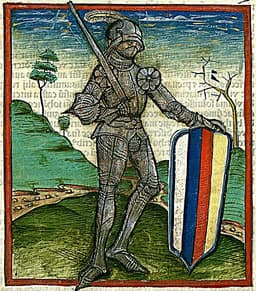
John Hunyadi
General · Medieval
60.7Total
Basic Information
Born
573
1406
Died
621
1456
Era
Medieval
Medieval
Nationality
China
Hungary
Occupation
General
General
Civilization
Eastern
Western
Score Comparison
Military (10%)
60.0
72.8
Political (20%)
43.7
59.2
Influence (20%)
46.3
57.2
Legacy (20%)
37.5
50.0
Leadership (15%)
61.1
69.4
Strategy (15%)
66.3
73.6
TOTAL
49.3
60.7
Dou Jiande — Complete Timeline
617 AD
Rebellion at GaochongWar◆ Major
Dou Jiande led a peasant rebellion in Gaochong, Hebei, capitalizing on widespread discontent with Sui rule. He established a base and attracted followers, becoming a major rebel leader in northern China.
RebellionSui CollapsePeasant Uprising
Impact: regionalconstructive
621 AD
Battle of HulaoWar
Dou Jiande's army was defeated by Li Shimin's Tang forces at Hulao Pass. Dou Jiande was captured, and his rebel state collapsed, removing a key obstacle to Tang unification.
BattleTang UnificationDefeat
Impact: regionaltragic
Execution by TangPolitical Action◆ Major
Dou Jiande was executed by the Tang dynasty after his capture at Hulao. His death ended his rebellion and was a significant step in the Tang consolidation of power.
ExecutionTang Unification
Impact: regionaltragic
John Hunyadi — Complete Timeline
1444 AD
Battle of VarnaWar◆ Major
Hunyadi commanded the Hungarian and allied forces against the Ottoman army of Sultan Murad II at Varna. The crusader army was defeated, and King W
CrusadeBattleOttoman Wars
Impact: regionaltragic
1446 AD
Appointed Regent of HungaryPolitical Action◆ Major
Following the death of King Albert II and the minority of Ladislaus V, John Hunyadi was elected regent of Hungary by the Diet. He assumed effective control of the kingdom, organizing defense against Ottoman threats and consolidating royal authority.
RegencyHungarian Politics
Impact: nationalconstructive
1448 AD
Second Battle of KosovoWar◆ Major
Hunyadi led a Hungarian army into Serbia to confront the Ottomans at Kosovo Polje. After three days of fighting, the Hungarian forces were defeated by Sultan Murad II. The loss ended major crusading efforts in the Balkans for decades.
BattleOttoman WarsDefeat
Impact: regionaltragic
1456 AD
Siege of BelgradeWar
Hunyadi, with the help of Franciscan friar John of Capistrano, led a relief force to break the Ottoman siege of Belgrade. The Hungarian victory forced Sultan Mehmed II to retreat, halting Ottoman expansion into Hungary for 70 years. Hunyadi died of plague shortly after.
SiegeVictoryOttoman Wars
Impact: regionalconstructive
Expert Analysis
Origins
Dou Jiande was born around 573 in Zhangnan, Hebei, during the late Northern Qi dynasty. His family was of modest means, and he worked as a village chief before the Sui unification. He was known for his generosity and physical strength, which earned him local respect. After the Sui dynasty's collapse into chaos, Dou Jiande gathered a peasant following, leveraging his reputation for fairness.
John Hunyadi was born around 1406 in Hunedoara, Transylvania, then part of the Kingdom of Hungary. His father was a minor noble of Wallachian origin. Hunyadi received a military education and served in the court of King Sigismund. He gained experience fighting Hussites and Ottomans, which shaped his martial skills. Unlike Dou Jiande's grassroots origins, Hunyadi's rise was tied to noble patronage and royal service.
Rise to Power
Dou Jiande's rise began in 611, when he joined the rebellion against Sui rule after the death of his friend. He quickly became a leader, capturing Gaochong in 617 and establishing his own state. His reputation for clemency attracted many followers. By 618, he controlled much of Hebei and Shandong, and he proclaimed himself the Prince of Xia. His peak came in 620 when he defeated the Tang general Li Shentong at Liyang, expanding his territory.
John Hunyadi's rise was more gradual. He became a trusted military commander of King Albert II, and after Albert's death in 1439, he was elected regent of Hungary in 1446, ruling for the infant Ladislaus V. His military reputation soared after his successful defense of Belgrade in 1456, where he broke the Ottoman siege. However, his authority was contested by Hungarian nobles, and he never held a royal title.
Leadership & Governance
Dou Jiande governed his realm with a focus on benevolence, reducing taxes and protecting civilians. He distributed land to peasants and avoided looting, contrasting with other rebel leaders. For example, after capturing Liyang, he released prisoners and provided food. However, his leniency extended to enemies, which some saw as weakness. He scored 61.1 in leadership, reflecting his ability to inspire loyalty but lack of strategic ruthlessness.
John Hunyadi's leadership was autocratic and militaristic. As regent, he centralized power to fund campaigns against the Ottomans, imposing heavy taxes on nobles and clergy. He built a professional army, using mercenaries and firearms. His governance was pragmatic, but his heavy-handedness created enemies among the Hungarian aristocracy. He scored 69.4 in leadership, higher than Dou Jiande, due to his effective command and state-building.
Triumph & Tragedy
Dou Jiande's greatest triumph was his rapid rise and establishment of a stable rebel state in Hebei. He successfully challenged the Tang for two years, winning battles like Liyang. His tragedy was the Battle of Hulao in 621, where he was defeated and captured by Li Shimin. His execution ended his rebellion, and his state collapsed, scoring 60.0 in military but only 37.5 in legacy due to his ephemeral impact.
John Hunyadi's triumph was the Siege of Belgrade in 1456, where his relief force defeated the Ottoman army, halting their advance into Hungary. This victory made him a Christian hero. His tragedy was the Battle of Varna in 1444, where his force was crushed and King Władysław III was killed. He also lost the Second Battle of Kosovo in 1448. His military score of 72.8 reflects his tactical brilliance but also his strategic failures.
Character & Destiny
Dou Jiande was known for his generosity and moral integrity, which won him followers but also made him vulnerable. He hesitated to strike decisively against the Tang, and his trust in Li Shimin's promise of safety led to his capture. His character—benevolent but not cunning—doomed him in the ruthless power struggles of the Sui-Tang transition. He scored 43.7 in political acumen, reflecting his inability to navigate high-stakes politics.
John Hunyadi was ambitious, cruel, and relentless. He was a skilled diplomat who built alliances with the Pope and other Christian kingdoms. However, his pride and desire for power led to conflicts with Hungarian nobles. His destiny was to die of plague shortly after Belgrade, possibly from overexertion. His political score of 59.2 shows his capability but also his limitations in a fractious kingdom.
Legacy
Dou Jiande is remembered in Chinese folklore as a folk hero, a symbol of peasant resistance. His story appears in novels like "The Romance of the Sui and Tang Dynasties." However, his historical impact was limited; his state vanished within two years of his death. He scored 46.3 in influence and 37.5 in legacy, reflecting his minor role in Chinese history.
John Hunyadi's legacy is far greater. He is celebrated as a national hero in Hungary and Romania for defending Europe from the Ottomans. His son Matthias Corvinus became a great king. His military reforms influenced later Hungarian and European armies. His scores of 57.2 in influence and 50.0 in legacy are higher, but not overwhelmingly so, as his victories were temporary and the Ottoman threat continued.
Conclusion
John Hunyadi had greater impact than Dou Jiande. His total score of 60.7 versus 49.3 reflects his superior military (72.8 vs 60.0) and political (59.2 vs 43.7) achievements. While Dou Jiande's benevolence is admirable, his rebellion was a footnote in the Tang consolidation. Hunyadi's defense of Belgrade altered the course of European history, delaying Ottoman expansion. He was a more effective leader and strategist, with a lasting legacy in the Balkans and Hungary.
Rankings
🥇
John HunyadiLeader
Mil: 72.8Pol: 59.2Inf: 57.2
60.7
🥈
Dou Jiande
Mil: 60.0Pol: 43.7Inf: 46.3
49.3
+11.4 behind
How This Comparison Works
Algorithm
Each figure is scored on 6 dimensions (0—100 scale) based on structured historical data: Military (10%), Political (20%), Influence (20%), Legacy (20%), Leadership (15%), Strategy (15%). The weighted total produces the final ranking.
Data Sources
Scores are computed from structured sub-indicators in the database. Scale factors adjust for era (Ancient ×0.85, Modern ×1.0) and civilization size (Eastern ×1.05, Other ×0.80) to account for differences in population and military scale.
Maximum 3 Figures
Comparisons are limited to 2—3 figures to ensure readability and statistical meaningfulness.
Error Margins
±5 points per dimension — Sub-scores are derived from historical records with inherent uncertainty. Two figures within 5 points on a dimension should be considered roughly equivalent in that area.
Total Score Accuracy
±3 points overall — The weighted combination of 6 dimensions produces a total score with approximately ±3 points of uncertainty. Differences of less than 3 points are not statistically significant— the figures are effectively tied.
Known Limitations
- Historical records are incomplete and uneven across civilizations
- Figures from oral-tradition societies may be underrepresented
- Occupation labels can misclassify multi-role figures
- Scores measure capability and impact, not moral character
- Quantitative scoring is a comparison tool, not absolute truth
Capability Radar
Military (10%) — Battles & Warfare
Battles
65
78
Win Rate
60
75
Expansion
55
65
Political (20%) — Governance & Reform
Reform
40
68
Diplomacy
50
74
Economy
45
60
Influence (20%) — Cultural & Global Reach
Cultural
30
60
Global
15
55
Legacy (20%) — Historical Impact
Historical
35
70
Longevity
20
65
Leadership (15%) — Power & Stability
Tenure
45
72
Stability
40
62
Strategy (15%) — Tactics & Innovation
Strategy
60
80
Tactics
55
82
Reform
30
70
Similar Comparisons
Comments & Discussion
No comments yet. Be the first to share your thoughts!