Loading...
Duke Wen of Jin vs Shapur I
Duke Wen of Jin leads by 0.9 pts · 2 figures compared
…
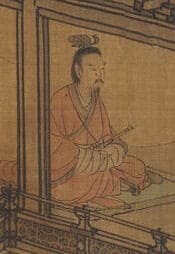
Duke Wen of Jin
Emperor · Ancient
62.7Total
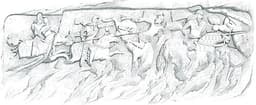
Shapur I
Emperor · Ancient
61.8Total
Basic Information
Born
-697
215
Died
-628
270
Era
Ancient
Ancient
Nationality
China
Sassanid Empire
Occupation
Emperor
Emperor
Civilization
Eastern
Middle Eastern
Score Comparison
Military (10%)
80.0
78.0
Political (20%)
65.0
55.0
Influence (20%)
59.0
56.7
Legacy (20%)
54.0
56.0
Leadership (15%)
66.0
72.0
Strategy (15%)
68.1
68.1
TOTAL
62.7
61.8
Duke Wen of Jin — Complete Timeline
656 BC
Exile and Return to JinPolitical Action◆ Major
Duke Wen of Jin (then Prince Chong'er) was forced into exile for 19 years after a political purge in Jin. He traveled through several states, gaining experience and allies, before returning to claim the throne of Jin in 636 BCE.
Spring and AutumnExileReturn
Impact: regionaltragic
636 BC
Reforms in Jin StateReform◆ Major
Upon returning to power, Duke Wen implemented administrative and military reforms in Jin. He reorganized the army into three divisions, promoted talented officials regardless of birth, and established a legal code, strengthening Jin's governance.
Spring and AutumnReformJin State
Impact: regionalprogressive
632 BC
Battle of ChengpuWar
Duke Wen of Jin defeated the state of Chu at the Battle of Chengpu, the largest battle of the Spring and Autumn period. The victory established Jin as the dominant power and Duke Wen as the hegemon of the Chinese states.
Spring and AutumnBattleHegemon
Impact: regional
Convening of the Alliance of JiantuPolitical Action◆ Major
After the Battle of Chengpu, Duke Wen convened a major alliance of states at Jiantu, where he was formally recognized as hegemon. He also received a mandate from the Zhou king to lead military campaigns, solidifying his authority.
Spring and AutumnAllianceHegemon
Impact: regionalconstructive
Shapur I — Complete Timeline
244 AD
Battle of MisicheWar◆ Major
Shapur I defeated the Roman emperor Gordian III at Misiche in Mesopotamia. Gordian died during or shortly after the battle, and his successor Philip the Arab signed a peace treaty favorable to the Sassanids, paying a large ransom.
Roman-Persian WarsBattleSassanid Empire
Impact: regional
260 AD
Capture of Emperor ValerianWar
Shapur I captured the Roman emperor Valerian in battle near Edessa. Valerian was taken prisoner and spent the rest of his life in Persian captivity, a humiliation unprecedented in Roman history. Shapur used this victory to extract tribute and territory.
Roman-Persian WarsCaptureSassanid Empire
Impact: global
Sack of AntiochWar◆ Major
Following the capture of Valerian, Shapur I invaded Syria and sacked the city of Antioch, a major Roman center. The Sassanid army plundered the city and deported many inhabitants to Persia, demonstrating the empire's military reach.
Roman-Persian WarsSackAntioch
Impact: regionaldestructive
262 AD
Construction of Naqsh-e Rostam InscriptionsCultural
Shapur I commissioned rock reliefs and inscriptions at Naqsh-e Rostam, depicting his victories over Roman emperors. The trilingual inscription (Middle Persian, Parthian, Greek) details his campaigns and the extent of his empire, serving as a key historical source.
InscriptionPropagandaSassanid Empire
Impact: nationalconstructive
266 AD
Foundation of BishapurCultural
Shapur I founded the city of Bishapur in Fars province, modeled partly on Roman urban planning. The city featured a palace with mosaics and reliefs celebrating his victories, becoming a major Sassanid administrative and cultural center.
City FoundationArchitectureSassanid Empire
Impact: regionalconstructive
Expert Analysis
Origins
Duke Wen of Jin (697–628 BCE), born Ji Chong'er, was a prince of the state of Jin during the Spring and Autumn period. His father, Duke Xian of Jin, favored his younger brother, leading to a political purge. Chong'er fled into exile in 656 BCE, traveling through various states for 19 years, gaining allies and experience. He returned to Jin in 636 BCE and ascended the throne.
Shapur I (215–270 CE) was the second king of the Sassanid Empire, succeeding his father Ardashir I. Born into the newly established dynasty, he was raised in a warrior tradition. His early life involved consolidating power and expanding the empire's borders against the Romans and Kushans.
Rise to Power
Duke Wen's rise was marked by his long exile. After his father's death, his brother Duke Hui ruled poorly, and Chong'er was invited back by Jin nobles. In 636 BCE, he became duke and immediately set about reforming the state. His turning point came at the Battle of Chengpu in 632 BCE, where he defeated the state of Chu, the dominant power in the south. This victory led to the Alliance of Jiantu, where he was recognized as hegemon by the Zhou king and other states.
Shapur I rose to power upon his father's death in 240 CE. He continued Ardashir's expansionist policies. His early reign saw campaigns against the Kushan Empire and Roman incursions. His major turning point was the Battle of Misiche in 244 CE, where he defeated Roman Emperor Gordian III, who died in battle. Shapur then forced Philip the Arab to pay tribute. In 260 CE, he captured Emperor Valerian near Edessa, a humiliation for Rome.
Leadership & Governance
Duke Wen's leadership was characterized by meritocracy and strategic alliances. He reorganized Jin's army into three divisions, promoting talented generals like Hu Yan and Xian Zhen. He implemented reforms that strengthened central authority and expanded Jin's territory. His governance style was consultative, seeking advice from his ministers. He scored 66.0 in leadership and 68.1 in strategy.
Shapur I ruled with absolute authority, typical of Sassanid kings. He founded the city of Bishapur, incorporating Roman urban planning and showcasing his victories in rock reliefs at Naqsh-e Rostam. His governance focused on military expansion and religious unification under Zoroastrianism. He scored 72.0 in leadership but 55.0 in political acumen, indicating less emphasis on administrative reform.
Triumph & Tragedy
Duke Wen's greatest triumph was the Battle of Chengpu, which ended Chu's northern expansion and established Jin as the leading state. He also convened the Alliance of Jiantu, uniting states under his hegemony. His tragedy was his short reign (9 years) and the eventual decline of Jin after his death. Despite his successes, his state faced internal strife later.
Shapur I's greatest triumph was the capture of Valerian, the only Roman emperor ever taken prisoner. He sacked Antioch and raided deep into Roman territory. His tragedies include overextension; his gains were temporary, and the Sassanid Empire faced Roman counterattacks after his death. His inscriptions boast of victories but also reflect the cost of constant warfare.
Character & Destiny
Duke Wen was patient and resilient, surviving 19 years of exile. He learned diplomacy and coalition-building, which served him well. His character fostered loyalty among his followers. He was decisive in battle but cautious in politics. His destiny was to achieve hegemony but not lasting stability for Jin.
Shapur I was ambitious and ruthless, driven by a desire to surpass his father. He was a capable commander but also proud, as seen in his inscriptions. His capture of Valerian was a personal triumph, but his aggression provoked Roman retaliation. His character shaped an empire that was strong militarily but vulnerable to dynastic struggles.
Legacy
Duke Wen's legacy is as one of the Five Hegemons, a model of leadership in Chinese history. His reforms strengthened Jin for generations. The Battle of Chengpu is a classic example of strategic warfare. His score of 59.0 in influence and 54.0 in legacy reflects his regional impact, mostly within China.
Shapur I's legacy is more global. His defeat of Roman emperors is remembered in Persian and Roman histories. The Naqsh-e Rostam inscriptions provide invaluable historical records. His foundation of Bishapur influenced urban planning. He scored 56.7 in influence and 56.0 in legacy, but his impact on world history is arguably broader.
Conclusion
While Duke Wen of Jin scored slightly higher overall (62.7 vs 61.8), Shapur I's actions had more far-reaching consequences. Duke Wen's hegemony was confined to the Chinese state system, whereas Shapur I directly confronted Rome, altering the balance of power in the ancient world. Shapur I's capture of a Roman emperor is a unique achievement with no parallel in Chinese history. Therefore, Shapur I had greater historical impact. Duke Wen's legacy is important regionally, but Shapur I's influence spanned civilizations.
Rankings
🥇
Duke Wen of JinLeader
Mil: 80.0Pol: 65.0Inf: 59.0
62.7
🥈
Shapur I
Mil: 78.0Pol: 55.0Inf: 56.7
61.8
+0.9 behind
How This Comparison Works
Algorithm
Each figure is scored on 6 dimensions (0—100 scale) based on structured historical data: Military (10%), Political (20%), Influence (20%), Legacy (20%), Leadership (15%), Strategy (15%). The weighted total produces the final ranking.
Data Sources
Scores are computed from structured sub-indicators in the database. Scale factors adjust for era (Ancient ×0.85, Modern ×1.0) and civilization size (Eastern ×1.05, Other ×0.80) to account for differences in population and military scale.
Maximum 3 Figures
Comparisons are limited to 2—3 figures to ensure readability and statistical meaningfulness.
Error Margins
±5 points per dimension — Sub-scores are derived from historical records with inherent uncertainty. Two figures within 5 points on a dimension should be considered roughly equivalent in that area.
Total Score Accuracy
±3 points overall — The weighted combination of 6 dimensions produces a total score with approximately ±3 points of uncertainty. Differences of less than 3 points are not statistically significant— the figures are effectively tied.
Known Limitations
- Historical records are incomplete and uneven across civilizations
- Figures from oral-tradition societies may be underrepresented
- Occupation labels can misclassify multi-role figures
- Scores measure capability and impact, not moral character
- Quantitative scoring is a comparison tool, not absolute truth
Capability Radar
Military (10%) — Battles & Warfare
Battles
75
85
Win Rate
70
80
Expansion
75
85
Political (20%) — Governance & Reform
Reform
65
70
Diplomacy
85
80
Economy
70
65
Influence (20%) — Cultural & Global Reach
Cultural
60
60
Global
55
65
Legacy (20%) — Historical Impact
Historical
70
70
Longevity
65
60
Leadership (15%) — Power & Stability
Tenure
70
75
Stability
65
70
Strategy (15%) — Tactics & Innovation
Strategy
85
80
Tactics
80
75
Reform
60
70
Similar Comparisons
Comments & Discussion
No comments yet. Be the first to share your thoughts!