Loading...
Edmund Ironside vs Theophilos
Theophilos leads by 6.3 pts · 2 figures compared
…
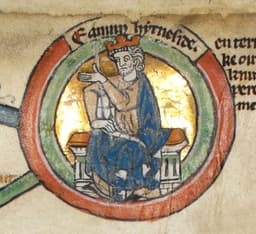
Edmund Ironside
Emperor · Medieval
41.6Total
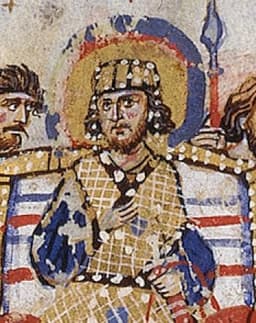
Theophilos
Emperor · Medieval
47.9Total
Basic Information
Born
990
813
Died
1016
842
Era
Medieval
Medieval
Nationality
England
Byzantine Empire
Occupation
Emperor
Emperor
Civilization
Western
Western
Score Comparison
Military (10%)
20.0
38.3
Political (20%)
27.9
42.3
Influence (20%)
52.5
51.8
Legacy (20%)
42.5
42.5
Leadership (15%)
38.1
65.7
Strategy (15%)
60.0
43.3
TOTAL
41.6
47.9
Edmund Ironside — Complete Timeline
1016 AD
Battle of PenselwoodWar◆ Major
Edmund Ironside defeated Cnut the Great at Penselwood in Somerset. This victory was part of a series of battles as Edmund fought to defend his claim to the English throne after his father Ethelred's death.
BattleVictoryCivil War
Impact: national
Battle of SherstonWar
Edmund fought Cnut to a draw at Sherston in Wiltshire. The battle was indecisive, with both sides suffering heavy casualties, and neither gaining a strategic advantage.
BattleStalemateCivil War
Impact: national
Battle of AssandunWar◆ Major
Cnut decisively defeated Edmund at Assandun (possibly Ashingdon in Essex). The defeat forced Edmund to negotiate a partition of England with Cnut.
BattleDefeatCivil War
Impact: nationaldestructive
Treaty of OlneyPolitical Action◆ Major
Edmund and Cnut agreed to divide England: Edmund ruled Wessex, Cnut ruled the rest. The treaty also stipulated that if one died, the other would inherit the entire kingdom.
TreatyPartitionPeace
Impact: national
Death of Edmund IronsidePolitical Action◆ Major
Edmund died on November 30, 1016, shortly after the Treaty of Olney. His death allowed Cnut to become sole king of England, ending Anglo-Saxon resistance.
DeathSuccessionEnd of Resistance
Impact: nationaltragic
Theophilos — Complete Timeline
829 AD
Accession as Emperor (829)Political Action◆ Major
Theophilos succeeded his father Michael II as Byzantine emperor. He was the last emperor to actively support iconoclasm. His reign was marked by military campaigns against the Arabs and cultural patronage.
Accession
Impact: regional
Iconoclast Persecutions (829-842)Political Action◆ Major
Theophilos continued the iconoclast policies of his predecessors, persecuting icon venerators. He ordered the execution of the painter Lazarus and the exile of the monk Theodore the Studite. His death in 842 ended the iconoclast period.
IconoclasmPersecution
Impact: regionaldestructive
830 AD
Campaigns against the Arabs (830s-840s)War◆ Major
Theophilos led several campaigns against the Abbasid Caliphate, including a major expedition in 838 that resulted in the sack of the Byzantine city of Amorium. The loss of Amorium was a significant blow to Byzantine prestige.
Byzantine-Arab WarsMilitary Campaign
Impact: regionaltragic
Construction of the Bryas Palace (c. 830s)Cultural
Theophilos built the Bryas Palace near Constantinople, modeled after Arab palaces he admired. The palace featured elaborate gardens, fountains, and mosaics. It reflected his interest in Islamic culture and architecture.
ArchitectureCultural Exchange
constructive
Expert Analysis
Origins
Edmund Ironside was born around 990 CE as the son of King Æthelred the Unready of England. His early years were marked by the ongoing Danish invasions, and he gained military experience defending the kingdom alongside his father. Edmund's nickname 'Ironside' likely reflects his prowess in battle, but his path to kingship was contested by his half-brother and Cnut the Great.
Theophilos was born in 813 CE as the son of Emperor Michael II of the Byzantine Empire. He received a thorough education in classical and theological subjects, but his father's iconoclast policies shaped his worldview. Theophilos ascended the throne in 829 at age 16, inheriting a realm facing Arab threats and religious division.
Rise to Power
Edmund became king of England in April 1016 after his father's death, but Cnut had already claimed the throne. Over the next seven months, Edmund fought five battles against Cnut, including the Battle of Penselwood where he defeated Cnut, and the Battle of Sherston which ended in a draw. However, the decisive Battle of Assandun in October 1016 resulted in a clear defeat for Edmund, forcing him to negotiate the Treaty of Olney. The treaty partitioned England, with Edmund ruling Wessex and Cnut the rest, and stipulated that if one died, the other would inherit the entire kingdom.
Theophilos rose to power through dynastic succession, but he actively consolidated his authority by suppressing a rebellion in Sicily early in his reign. He also continued his father's iconoclast policies, persecuting icon venerators to assert imperial control over religious matters. His campaigns against the Abbasid Caliphate, while often unsuccessful, demonstrated his ambition to restore Byzantine prestige.
Leadership & Governance
Edmund's leadership was focused on military resistance. He scored 38.1 in leadership and 60.0 in strategy, reflecting his tactical competence but limited political maneuvering. His governance of Wessex was brief and overshadowed by war; he had no time for reforms. In contrast, Theophilos scored 65.7 in leadership and 42.3 in political, showing stronger administrative skills. He built the Bryas Palace modeled after Arab palaces, reformed the legal system, and promoted education. However, his iconoclast persecutions alienated many subjects.
Triumph & Tragedy
Edmund's greatest triumph was forcing Cnut to a treaty, preserving Anglo-Saxon rule in Wessex. His tragedy was his early death at age 26 (or 27) in November 1016, which allowed Cnut to become sole king. Edmund's military score of 20.0 is low due to his ultimate defeat, but his strategy score of 60.0 acknowledges his tactics.
Theophilos's triumph was constructing the Bryas Palace and strengthening Byzantine defenses. His tragedy was the sack of Amorium in 838 by the Abbasids, a major Byzantine city. His iconoclast persecutions also damaged his legacy. His military score of 38.3 reflects mixed results, while his leadership score of 65.7 shows effective governance.
Character & Destiny
Edmund was determined and brave, but his early death cut short his potential. His character as a warrior king was shaped by the crisis of Danish invasion. Theophilos was learned and ambitious, but his rigid iconoclasm blinded him to the need for religious unity. His fascination with Arab culture led to architectural marvels but also criticism.
Legacy
Edmund's legacy is as a symbol of Anglo-Saxon resistance; his son Edward the Exile later influenced the royal line. Theophilos's legacy is more complex: he was the last iconoclast emperor, and his wife Theodora restored icon veneration after his death. The Bryas Palace influenced Byzantine architecture. In terms of overall impact, Theophilos's total score of 47.9 is higher than Edmund's 41.6, reflecting his longer reign and broader influence.
Conclusion
While Edmund Ironside showed remarkable resilience, his reign was too short to effect lasting change. Theophilos, despite his military setbacks, left a more substantial mark on Byzantine governance and culture. His leadership score (65.7 vs 38.1) and political score (42.3 vs 27.9) are significantly higher, and his influence on religious policy and architecture endured beyond his death. Therefore, Theophilos had a greater historical impact.
Rankings
🥇
TheophilosLeader
Mil: 38.3Pol: 42.3Inf: 51.8
47.9
🥈
Edmund Ironside
Mil: 20.0Pol: 27.9Inf: 52.5
41.6
+6.3 behind
How This Comparison Works
Algorithm
Each figure is scored on 6 dimensions (0—100 scale) based on structured historical data: Military (10%), Political (20%), Influence (20%), Legacy (20%), Leadership (15%), Strategy (15%). The weighted total produces the final ranking.
Data Sources
Scores are computed from structured sub-indicators in the database. Scale factors adjust for era (Ancient ×0.85, Modern ×1.0) and civilization size (Eastern ×1.05, Other ×0.80) to account for differences in population and military scale.
Maximum 3 Figures
Comparisons are limited to 2—3 figures to ensure readability and statistical meaningfulness.
Error Margins
±5 points per dimension — Sub-scores are derived from historical records with inherent uncertainty. Two figures within 5 points on a dimension should be considered roughly equivalent in that area.
Total Score Accuracy
±3 points overall — The weighted combination of 6 dimensions produces a total score with approximately ±3 points of uncertainty. Differences of less than 3 points are not statistically significant— the figures are effectively tied.
Known Limitations
- Historical records are incomplete and uneven across civilizations
- Figures from oral-tradition societies may be underrepresented
- Occupation labels can misclassify multi-role figures
- Scores measure capability and impact, not moral character
- Quantitative scoring is a comparison tool, not absolute truth
Capability Radar
Military (10%) — Battles & Warfare
Battles
45
40
Win Rate
50
35
Expansion
30
25
Political (20%) — Governance & Reform
Reform
15
40
Diplomacy
30
35
Economy
20
40
Influence (20%) — Cultural & Global Reach
Cultural
15
30
Global
10
20
Legacy (20%) — Historical Impact
Historical
25
35
Longevity
20
20
Leadership (15%) — Power & Stability
Tenure
20
55
Stability
25
30
Strategy (15%) — Tactics & Innovation
Strategy
50
30
Tactics
55
30
Reform
20
20
Similar Comparisons
Comments & Discussion
No comments yet. Be the first to share your thoughts!