Loading...
Igor of Kiev vs Theophilos
Theophilos leads by 8.9 pts · 2 figures compared
…
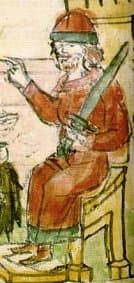
Igor of Kiev
Emperor · Medieval
39.0Total
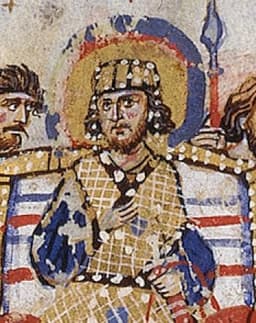
Theophilos
Emperor · Medieval
47.9Total
Basic Information
Born
877
813
Died
945
842
Era
Medieval
Medieval
Nationality
Kievan Rus
Byzantine Empire
Occupation
Emperor
Emperor
Civilization
Western
Western
Score Comparison
Military (10%)
50.0
38.3
Political (20%)
26.4
42.3
Influence (20%)
47.9
51.8
Legacy (20%)
39.2
42.5
Leadership (15%)
34.6
65.7
Strategy (15%)
30.3
43.3
TOTAL
39.0
47.9
Igor of Kiev — Complete Timeline
941 AD
Igor's Campaign Against ConstantinopleWar◆ Major
Igor launched a naval attack on Constantinople. The Byzantine fleet, using Greek fire, destroyed most of Igor's ships. The campaign failed, forcing Igor to retreat and later negotiate a less favorable treaty in 944.
Byzantine-Rus WarNaval DefeatGreek Fire
Impact: regionaldestructive
944 AD
Rus'-Byzantine Treaty of 944Political Action
Following his failed campaign, Igor signed a treaty with the Byzantine Empire. The treaty renewed trade relations but imposed restrictions on Rus merchants and required Igor to provide military assistance to Byzantium.
DiplomacyTradeByzantine Empire
Impact: regional
945 AD
Murder by the DrevliansPolitical Action
Igor attempted to collect excessive tribute from the Drevlians, an East Slavic tribe. The Drevlians rebelled, captured Igor, and killed him by tying him to bent trees that tore his body apart. His death triggered Olga's revenge.
AssassinationRevoltTribute
Impact: nationaltragic
Theophilos — Complete Timeline
829 AD
Accession as Emperor (829)Political Action◆ Major
Theophilos succeeded his father Michael II as Byzantine emperor. He was the last emperor to actively support iconoclasm. His reign was marked by military campaigns against the Arabs and cultural patronage.
Accession
Impact: regional
Iconoclast Persecutions (829-842)Political Action◆ Major
Theophilos continued the iconoclast policies of his predecessors, persecuting icon venerators. He ordered the execution of the painter Lazarus and the exile of the monk Theodore the Studite. His death in 842 ended the iconoclast period.
IconoclasmPersecution
Impact: regionaldestructive
830 AD
Campaigns against the Arabs (830s-840s)War◆ Major
Theophilos led several campaigns against the Abbasid Caliphate, including a major expedition in 838 that resulted in the sack of the Byzantine city of Amorium. The loss of Amorium was a significant blow to Byzantine prestige.
Byzantine-Arab WarsMilitary Campaign
Impact: regionaltragic
Construction of the Bryas Palace (c. 830s)Cultural
Theophilos built the Bryas Palace near Constantinople, modeled after Arab palaces he admired. The palace featured elaborate gardens, fountains, and mosaics. It reflected his interest in Islamic culture and architecture.
ArchitectureCultural Exchange
constructive
Expert Analysis
Origins
Igor of Kiev (c. 877–945) was a Varangian prince of the Rurik dynasty, likely born in Novgorod. He succeeded his father Rurik as ruler of the Kievan Rus' around 912. Little is known of his early life, but he inherited a realm that controlled trade routes from Scandinavia to Byzantium. His wife, Olga, later became a regent and saint. Theophilos (c. 812–842) was born into the Byzantine imperial family, the son of Emperor Michael II. He was educated in court and military affairs, deeply influenced by the iconoclast policies of his father and the Amorian dynasty. His early exposure to Arab culture, including admiration for Abbasid palaces, shaped his later architectural projects.
Rise to Power
Igor's rise was straightforward: he inherited the throne from his father Rurik. However, his authority was contested by the Drevlians, a Slavic tribe that resisted paying tribute. In 941, Igor launched a major naval campaign against Constantinople, seeking to emulate the success of his predecessor Oleg. The Byzantine fleet, using Greek fire, destroyed most of his ships, forcing a retreat. This failure led to the Rus'-Byzantine Treaty of 944, which renewed trade but imposed restrictions on Rus' merchants. Theophilos ascended the throne in 829 after his father's death. He quickly consolidated power by continuing iconoclast policies, persecuting icon venerators, and strengthening the military. His campaigns against the Abbasid Caliphate, though mixed in success, demonstrated his ambition to defend and expand Byzantine borders.
Leadership & Governance
Igor's leadership was characterized by aggressive tribute collection and military expeditions. He attempted to centralize power by extracting wealth from subject tribes, but his approach was crude: he demanded excessive tribute from the Drevlians, leading to his death. His governance relied on the Varangian elite and trade with Byzantium. In contrast, Theophilos was a more systematic ruler. He reformed the Byzantine administration, supported the legal system, and patronized the arts and architecture. He built the Bryas Palace, modeled after Arab palaces, showcasing his appreciation for Islamic culture. However, his iconoclast persecutions alienated a significant portion of the population, creating religious tensions that outlasted his reign.
Triumph & Tragedy
Igor's greatest triumph was the Treaty of 944, which secured trade rights for the Rus' in Constantinople, albeit with limitations. His tragedy was his death: in 945, while attempting to collect tribute from the Drevlians, he was captured and executed by being tied to bent trees and torn apart. This event highlighted his failure to manage tribal relations. Theophilos's triumphs include his military campaigns, particularly the defense of Anatolia, and the construction of the Bryas Palace. However, his major tragedy was the sack of Amorium in 838 by the Abbasids, a humiliating defeat that resulted in the loss of a key city. His iconoclast policies also proved divisive, and his death in 842 marked the end of iconoclasm as state policy.
Character & Destiny
Igor was a bold but reckless leader. His decision to demand excessive tribute from the Drevlians, despite previous resistance, reveals poor political judgment. His total score of 39.0 reflects weak leadership (34.6) and strategy (30.3). Theophilos, with a total score of 47.9, was more capable in leadership (65.7) and political acumen (42.3). He was determined and culturally curious, but his rigid iconoclast stance created conflict. His character combined military ambition with a taste for luxury, as seen in his palace. Both rulers' fates were shaped by their inability to balance power with diplomacy.
Legacy
Igor's legacy is mixed: he expanded Rus' trade but failed to secure stable rule. His death led to the regency of Olga, who reformed tribute collection and Christianized the Rus'. Theophilos's legacy is more tangible: his architectural projects, like the Bryas Palace, influenced Byzantine art. However, his iconoclast policies were quickly reversed after his death. The Second Council of Nicaea (787) had already condemned iconoclasm, and Theophilos's wife Theodora restored icon veneration. Theophilos's military failures, such as the fall of Amorium, weakened Byzantine defenses. In terms of influence, Theophilos scored 51.8, while Igor scored 47.9; Theophilos's impact on Byzantine culture and religion was more lasting.
Conclusion
Between Igor of Kiev and Theophilos, Theophilos had greater impact. His total score of 47.9, compared to Igor's 39.0, reflects superior leadership and political influence. While Igor's failures led to reforms under Olga, his own reign was short and destructive. Theophilos's architectural and military endeavors, despite setbacks, shaped Byzantine identity. His iconoclast policies, though controversial, underscored the empire's religious struggles. Igor's legacy is overshadowed by his gruesome death and the subsequent rise of Christianity in Rus'. Theophilos, despite his errors, left a more significant mark on Byzantine history.
Rankings
🥇
TheophilosLeader
Mil: 38.3Pol: 42.3Inf: 51.8
47.9
🥈
Igor of Kiev
Mil: 50.0Pol: 26.4Inf: 47.9
39.0
+8.9 behind
How This Comparison Works
Algorithm
Each figure is scored on 6 dimensions (0—100 scale) based on structured historical data: Military (10%), Political (20%), Influence (20%), Legacy (20%), Leadership (15%), Strategy (15%). The weighted total produces the final ranking.
Data Sources
Scores are computed from structured sub-indicators in the database. Scale factors adjust for era (Ancient ×0.85, Modern ×1.0) and civilization size (Eastern ×1.05, Other ×0.80) to account for differences in population and military scale.
Maximum 3 Figures
Comparisons are limited to 2—3 figures to ensure readability and statistical meaningfulness.
Error Margins
±5 points per dimension — Sub-scores are derived from historical records with inherent uncertainty. Two figures within 5 points on a dimension should be considered roughly equivalent in that area.
Total Score Accuracy
±3 points overall — The weighted combination of 6 dimensions produces a total score with approximately ±3 points of uncertainty. Differences of less than 3 points are not statistically significant— the figures are effectively tied.
Known Limitations
- Historical records are incomplete and uneven across civilizations
- Figures from oral-tradition societies may be underrepresented
- Occupation labels can misclassify multi-role figures
- Scores measure capability and impact, not moral character
- Quantitative scoring is a comparison tool, not absolute truth
Capability Radar
Military (10%) — Battles & Warfare
Battles
20
40
Win Rate
15
35
Expansion
25
25
Political (20%) — Governance & Reform
Reform
10
40
Diplomacy
25
35
Economy
15
40
Influence (20%) — Cultural & Global Reach
Cultural
15
30
Global
10
20
Legacy (20%) — Historical Impact
Historical
20
35
Longevity
15
20
Leadership (15%) — Power & Stability
Tenure
30
55
Stability
10
30
Strategy (15%) — Tactics & Innovation
Strategy
15
30
Tactics
20
30
Reform
5
20
Similar Comparisons
Comments & Discussion
No comments yet. Be the first to share your thoughts!