Loading...
Edward Heath vs Matsudaira Sadanobu
Edward Heath leads by 4.4 pts · 2 figures compared
…

Edward Heath
Politician · Modern
54.9Total
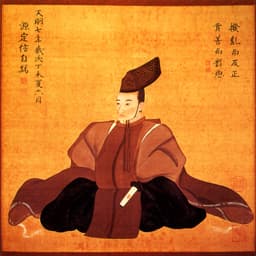
Matsudaira Sadanobu
Politician · Modern
50.5Total
Basic Information
Born
1916
1759
Died
2005
1829
Era
Modern
Modern
Nationality
United Kingdom
Japan
Occupation
Politician
Politician
Civilization
Western
Eastern
Score Comparison
Military (10%)
49.5
13.9
Political (20%)
72.0
59.3
Influence (20%)
59.0
54.9
Legacy (20%)
56.0
48.3
Leadership (15%)
40.0
78.0
Strategy (15%)
43.6
26.7
TOTAL
54.9
50.5
Edward Heath — Complete Timeline
1970 AD
Elected Prime MinisterPolitical Action
Heath led the Conservative Party to victory in the 1970 general election, defeating Harold Wilson. He became Prime Minister with a mandate to reform industrial relations and join the European Economic Community.
Prime MinisterElection
Impact: national
1973 AD
Took the UK into the EECPolitical Action
Heath signed the Treaty of Accession, bringing the United Kingdom into the European Economic Community on January 1, 1973. This ended years of negotiations and was a major step in European integration.
EECEuropean Integration
Impact: global
1974 AD
Miners' Strike and Three-Day WeekPolitical Action◆ Major
Heath's government faced a miners' strike over pay, leading to the Three-Day Week to conserve electricity. The crisis forced a general election in February 1974, which Heath lost.
Industrial RelationsEnergy Crisis
Impact: nationaldestructive
Lost February 1974 General ElectionPolitical Action◆ Major
Heath called a snap election on the issue of 'Who governs Britain?' but failed to win a majority. Labour formed a minority government under Harold Wilson, ending Heath's premiership.
ElectionDefeat
Impact: nationaldestructive
1975 AD
Resigned as Party LeaderPolitical Action◆ Major
After losing a second election in October 1974, Heath was defeated in the Conservative leadership contest by Margaret Thatcher. He resigned as party leader, marking a shift to the right.
LeadershipConservative Party
Impact: national
Matsudaira Sadanobu — Complete Timeline
1787 AD
Implementation of the Kansei ReformsReform◆ Major
Sadanobu enacted the Kansei Reforms, a series of austerity measures including sumptuary laws, reduction of government spending, and promotion of Confucian education. He also banned unorthodox teachings and cracked down on corruption, restoring shogunate finances but stifling cultural innovation.
Kansei ReformsAusterityConfucianism
Impact: nationalconstructive
Appointment as Senior Councilor (Roju)Political Action◆ Major
Matsudaira Sadanobu was appointed roju under Shogun Tokugawa Ienari. He immediately set out to reverse the policies of his predecessor Tanuma Okitsugu, launching a conservative reform program to restore fiscal stability and moral order.
AppointmentRojuTokugawa Ienari
Impact: nationalconstructive
1790 AD
Promulgation of the 'Kansei Edict' on EducationReform◆ Major
Sadanobu issued an edict promoting Neo-Confucianism as the official ideology and suppressing other schools of thought, including Western learning (Rangaku). This strengthened ideological control but limited intellectual diversity in Japan.
Education reformIdeological controlRangaku suppression
Impact: nationaldestructive
1793 AD
Resignation from Roju PositionPolitical Action◆ Major
Sadanobu resigned from his position as roju after facing opposition from within the shogunate and the shogun himself. He retired to his domain but continued to influence policy indirectly until his death.
ResignationRetirementTokugawa Ienari
Impact: national
Expert Analysis
Origins
Edward Heath was born on July 9, 1916, in Broadstairs, Kent, England, to a carpenter and a maid. He attended Chatham House Grammar School and won a scholarship to Balliol College, Oxford, where he studied Philosophy, Politics, and Economics. His middle-class background shaped his pragmatic approach to politics.
Matsudaira Sadanobu was born on January 15, 1759, in Edo, Japan, as the son of the daimyo of the Aizu domain. He was adopted into the Matsudaira clan and received a Confucian education. His noble lineage and training in bushido influenced his conservative reform agenda.
Rise to Power
Heath's political ascent began after World War II, where he served as an artillery officer. He was elected as a Conservative MP in 1950 and quickly rose through the ranks, serving as Chief Whip from 1955 to 1959. His key turning point came in 1965 when he became Leader of the Conservative Party, leading it to victory in the 1970 general election over Harold Wilson. He scored 72.0 in political skill, reflecting his ability to navigate party politics.
Sadanobu was appointed Senior Councilor (Roju) in 1787 under Shogun Tokugawa Ienari. He gained favor by criticizing the corruption of his predecessor, Tanuma Okitsugu. His rise was due to his reputation for moral integrity and his advocacy for fiscal conservatism. He scored 59.3 in political skill, lower than Heath, as his power depended on shogunal patronage.
Leadership & Governance
Heath's leadership style was technocratic and detail-oriented. He focused on modernizing Britain's economy and bureaucracy. His major achievement was negotiating UK entry into the European Economic Community (EEC) in 1973, a complex diplomatic feat. However, his governance faced severe challenges: the miners' strike of 1973-1974 led to the Three-Day Week, a measure to conserve electricity. He scored 40.0 in leadership, indicating his difficulty in managing crises and maintaining public confidence.
Sadanobu's leadership was authoritarian and reformist. He implemented the Kansei Reforms (1787-1793), which included sumptuary laws, reduction of government spending, and promotion of Neo-Confucianism. He issued the Kansei Edict on Education, suppressing Western learning (Rangaku). His leadership score of 78.0 is higher than Heath's, reflecting his ability to enforce strict policies and stabilize the shogunate's finances.
Triumph & Tragedy
Heath's greatest triumph was securing UK membership in the EEC, a lasting achievement that redefined Britain's place in Europe. His tragedy was the 1974 miners' strike and the subsequent loss of two general elections. He failed to win a majority in February 1974 and lost again in October, leading to his replacement by Margaret Thatcher. His strategy score of 43.6 reflects his miscalculation in calling the snap election.
Sadanobu's triumph was the successful implementation of the Kansei Reforms, which restored fiscal health to the shogunate and reinforced Confucian social order. His tragedy was his rigid suppression of intellectual diversity, which stifled innovation and contributed to Japan's isolation. He resigned in 1793 after facing opposition from the shogun and other officials, scoring 26.7 in strategy, indicating limited long-term vision.
Character & Destiny
Heath was known for his aloof personality and stubbornness. He had a strained relationship with his cabinet and the public. His determination to join the EEC was a personal mission, but his inability to compromise during the miners' strike doomed his government. Historically, he is seen as a competent administrator but a poor crisis manager.
Sadanobu was principled and austere, embodying Confucian virtues. He was determined to root out corruption and restore traditional values. However, his inflexibility and suppression of dissent alienated potential allies. His character shaped his fate: he achieved short-term stability but failed to adapt to changing times.
Legacy
Heath's legacy is primarily his role in taking the UK into the EEC, which later evolved into the European Union. This decision remains controversial, culminating in the 2016 Brexit referendum. His influence score of 59.0 reflects the enduring impact of this policy. His political reforms, such as the abolition of retail price maintenance, had mixed results.
Sadanobu's legacy is the Kansei Reforms, which reinforced Confucian orthodoxy and fiscal conservatism. His policies delayed Japan's opening to the West by decades. His legacy score of 48.3 is lower than Heath's, as his reforms were eventually overturned. However, he is remembered as a capable administrator who stabilized the shogunate during a crisis.
Conclusion
Edward Heath had a greater overall impact than Matsudaira Sadanobu. Heath's total score of 54.9 exceeds Sadanobu's 50.5 by 4.4 points. Heath's decision to join the EEC fundamentally changed the United Kingdom's trajectory, influencing politics, economics, and identity for decades. In contrast, Sadanobu's reforms were temporary and reactive, failing to address the long-term challenges facing Japan. While Sadanobu showed stronger leadership (78.0 vs 40.0), Heath's political skill (72.0) and influence (59.0) were more significant. Therefore, Heath's legacy is more enduring and consequential.
Rankings
🥇
Edward HeathLeader
Mil: 49.5Pol: 72.0Inf: 59.0
54.9
🥈
Matsudaira Sadanobu
Mil: 13.9Pol: 59.3Inf: 54.9
50.5
+4.4 behind
How This Comparison Works
Algorithm
Each figure is scored on 6 dimensions (0—100 scale) based on structured historical data: Military (10%), Political (20%), Influence (20%), Legacy (20%), Leadership (15%), Strategy (15%). The weighted total produces the final ranking.
Data Sources
Scores are computed from structured sub-indicators in the database. Scale factors adjust for era (Ancient ×0.85, Modern ×1.0) and civilization size (Eastern ×1.05, Other ×0.80) to account for differences in population and military scale.
Maximum 3 Figures
Comparisons are limited to 2—3 figures to ensure readability and statistical meaningfulness.
Error Margins
±5 points per dimension — Sub-scores are derived from historical records with inherent uncertainty. Two figures within 5 points on a dimension should be considered roughly equivalent in that area.
Total Score Accuracy
±3 points overall — The weighted combination of 6 dimensions produces a total score with approximately ±3 points of uncertainty. Differences of less than 3 points are not statistically significant— the figures are effectively tied.
Known Limitations
- Historical records are incomplete and uneven across civilizations
- Figures from oral-tradition societies may be underrepresented
- Occupation labels can misclassify multi-role figures
- Scores measure capability and impact, not moral character
- Quantitative scoring is a comparison tool, not absolute truth
Capability Radar
Military (10%) — Battles & Warfare
Battles
28
14
Win Rate
34
15
Expansion
34
22
Political (20%) — Governance & Reform
Reform
60
75
Diplomacy
70
65
Economy
45
70
Influence (20%) — Cultural & Global Reach
Cultural
30
40
Global
55
30
Legacy (20%) — Historical Impact
Historical
60
50
Longevity
50
40
Leadership (15%) — Power & Stability
Tenure
55
70
Stability
40
75
Strategy (15%) — Tactics & Innovation
Strategy
38
26
Tactics
44
24
Reform
45
32
Similar Comparisons
Comments & Discussion
No comments yet. Be the first to share your thoughts!