Loading...
Kim Jong-il vs Matsudaira Sadanobu
Matsudaira Sadanobu leads by 1.4 pts · 2 figures compared
…
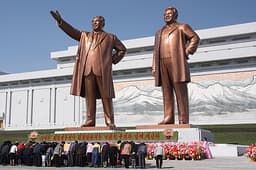
Kim Jong-il
Politician · Modern
49.1Total
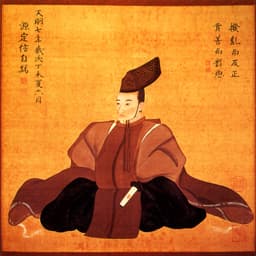
Matsudaira Sadanobu
Politician · Modern
50.5Total
Basic Information
Born
1941
1759
Died
—
1829
Era
Modern
Modern
Nationality
North Korea
Japan
Occupation
Politician
Politician
Civilization
Eastern
Eastern
Score Comparison
Military (10%)
36.6
13.9
Political (20%)
26.4
59.3
Influence (20%)
56.4
54.9
Legacy (20%)
45.0
48.3
Leadership (15%)
72.0
78.0
Strategy (15%)
53.8
26.7
TOTAL
49.1
50.5
Kim Jong-il — Complete Timeline
1994 AD
Assumption of Leadership after Kim Il-sung's DeathPolitical Action◆ Major
Kim Jong-il officially assumed supreme leadership of North Korea following the death of his father Kim Il-sung. He inherited a totalitarian state with a struggling economy and a nuclear weapons program.
SuccessionNorth KoreaLeadership
Impact: global
1995 AD
Arduous March FamineOther◆ Major
North Korea suffered a severe famine, known as the Arduous March, caused by floods, economic mismanagement, and the collapse of Soviet aid. Hundreds of thousands died, while the regime prioritized military spending over relief.
FamineHumanitarian CrisisNorth Korea
Impact: nationaltragic
2000 AD
Sunshine Policy Engagement with South KoreaPolitical Action◆ Major
Kim Jong-il participated in the first inter-Korean summit with South Korean President Kim Dae-jung in Pyongyang. The summit led to the June 15th Joint Declaration, promoting reconciliation and economic cooperation.
SummitReconciliationSouth Korea
Impact: regionalconstructive
2006 AD
First North Korean Nuclear TestWar
Under Kim Jong-il's leadership, North Korea conducted its first underground nuclear test, claiming success. This event escalated international tensions and led to UN sanctions, marking North Korea's entry as a nuclear-armed state.
Nuclear TestProliferationSanctions
Impact: globaldestructive
2011 AD
Death and Succession by Kim Jong-unPolitical Action◆ Major
Kim Jong-il died of a heart attack, and his youngest son Kim Jong-un was quickly declared the successor. This continued the Kim dynasty's hereditary rule, with Kim Jong-un assuming leadership of the Workers' Party and military.
DeathSuccessionKim Dynasty
Impact: global
Matsudaira Sadanobu — Complete Timeline
1787 AD
Implementation of the Kansei ReformsReform◆ Major
Sadanobu enacted the Kansei Reforms, a series of austerity measures including sumptuary laws, reduction of government spending, and promotion of Confucian education. He also banned unorthodox teachings and cracked down on corruption, restoring shogunate finances but stifling cultural innovation.
Kansei ReformsAusterityConfucianism
Impact: nationalconstructive
Appointment as Senior Councilor (Roju)Political Action◆ Major
Matsudaira Sadanobu was appointed roju under Shogun Tokugawa Ienari. He immediately set out to reverse the policies of his predecessor Tanuma Okitsugu, launching a conservative reform program to restore fiscal stability and moral order.
AppointmentRojuTokugawa Ienari
Impact: nationalconstructive
1790 AD
Promulgation of the 'Kansei Edict' on EducationReform◆ Major
Sadanobu issued an edict promoting Neo-Confucianism as the official ideology and suppressing other schools of thought, including Western learning (Rangaku). This strengthened ideological control but limited intellectual diversity in Japan.
Education reformIdeological controlRangaku suppression
Impact: nationaldestructive
1793 AD
Resignation from Roju PositionPolitical Action◆ Major
Sadanobu resigned from his position as roju after facing opposition from within the shogunate and the shogun himself. He retired to his domain but continued to influence policy indirectly until his death.
ResignationRetirementTokugawa Ienari
Impact: national
Expert Analysis
Origins
Kim Jong-il was born on February 16, 1941 (though official records claim 1942) in the Soviet Union, near Khabarovsk, to Kim Il-sung and Kim Jong-suk. His father was a guerrilla leader who later became the founding leader of North Korea. Kim Jong-il spent his early years in a camp for Korean exiles and returned to Korea in 1945. He studied at Kim Il-sung University, graduating in 1964 with a degree in political economy. His formative experiences included witnessing the devastation of the Korean War and learning the mechanics of propaganda and leadership from his father.
Matsudaira Sadanobu was born on January 15, 1759, in Edo (modern Tokyo), as the 8th son of Matsudaira Takechika, daimyo of the Takasu Domain. He was adopted into the Matsudaira family of the Shirakawa Domain in 1773. Sadanobu was educated in Confucian classics, particularly the works of Zhu Xi, which shaped his conservative worldview. He became daimyo of Shirakawa in 1783 at age 24, and his early rule focused on famine relief and administrative reforms.
Rise to Power
Kim Jong-il's rise was engineered by his father. He was appointed to key party positions in the 1960s and 1970s, including head of the Propaganda and Agitation Department. In 1980, he was officially introduced as his father's successor at the 6th Workers' Party Congress. His power consolidation involved purging rivals and building a personality cult. After Kim Il-sung's death in 1994, Kim Jong-il assumed leadership, but he did not take the titles of President or Premier, instead ruling as Chairman of the National Defense Commission.
Matsudaira Sadanobu's rise came through his reputation as an effective administrator. In 1787, he was appointed Senior Councilor (Roju) by Shogun Tokugawa Ienari, tasked with reversing the perceived corruption and fiscal mismanagement of Tanuma Okitsugu's administration. Sadanobu's appointment was backed by conservative factions in the shogunate who sought a return to strict Confucian orthodoxy and fiscal prudence.
Leadership & Governance
Kim Jong-il ruled North Korea with absolute control through the military-first Songun policy. He prioritized the military, allocating scarce resources to nuclear and missile programs while the population suffered. His governance was characterized by a cult of personality, with elaborate propaganda portraying him as a genius leader. He used a system of rewards and punishments to maintain elite loyalty. For example, he hosted lavish parties for officials while millions starved during the 1990s famine. His leadership style was reclusive and paranoid, rarely traveling abroad and relying on a small inner circle.
Matsudaira Sadanobu implemented the Kansei Reforms (1787-1793), which emphasized austerity, moral rectitude, and Confucian education. He reduced government spending, banned luxury goods, and cracked down on bribery. He also promoted Neo-Confucianism as the official ideology, suppressing heterodox schools like Western learning (Rangaku). His governance was top-down but based on a sense of duty and fiscal responsibility. However, his reforms were often harsh, such as sumptuary laws that regulated even the fabric of commoners' clothing.
Triumph & Tragedy
Kim Jong-il's greatest triumph was the development of North Korea's nuclear weapons program. The 2006 nuclear test signaled his regime's ability to defy international pressure. He also engaged in the 2000 inter-Korean summit with South Korea's Kim Dae-jung, winning a Nobel Peace Prize for the South but gaining economic concessions. However, his greatest tragedy was the Arduous March famine of 1994-1998, which killed an estimated 300,000 to 600,000 people. His prioritization of military spending over food security led to a humanitarian catastrophe. His political score of 26.4 reflects his failure to provide for his people.
Matsudaira Sadanobu's triumph was stabilizing the Tokugawa shogunate's finances and reducing corruption. His reforms restored fiscal balance and reinforced Confucian social order. However, his tragedy was the suppression of intellectual diversity, particularly the ban on Western studies except for medicine and astronomy. This stifled scientific progress and left Japan less prepared for the eventual arrival of Western powers. His strategy score of 26.7 indicates a narrow focus on austerity without long-term vision.
Character & Destiny
Kim Jong-il was known for his obsession with control, secrecy, and extravagance. He was a film enthusiast who produced movies and kidnapped a South Korean director. His character combined ruthlessness with a desire for recognition. His destiny was to lead a nation into isolation and poverty, while building a nuclear arsenal that ensured his regime's survival. He died of a heart attack in 2011, passing power to his son Kim Jong-un.
Matsudaira Sadanobu was a principled Confucian who believed in moral governance. He was decisive and diligent, but also rigid and intolerant of dissent. His destiny was to be remembered as a reformer who temporarily shored up the shogunate but whose policies contributed to Japan's stagnation. He resigned in 1793 after losing favor with the shogun, retiring to his domain where he continued to manage local affairs.
Legacy
Kim Jong-il's legacy is the consolidation of the Kim dynasty's hereditary rule and the establishment of North Korea as a nuclear power. His leadership score of 72.0 reflects his ability to maintain power, but his influence score of 56.4 and legacy score of 45.0 show a mixed impact: he left his country impoverished and isolated. The nuclear program remains his most enduring achievement, shaping global security dynamics.
Matsudaira Sadanobu's legacy is the Kansei Reforms, which became a model for later conservative responses to crisis. His political score of 59.3 and leadership score of 78.0 indicate his effectiveness as an administrator. However, his legacy score of 48.3 reflects the limited duration of his reforms; they were largely reversed after his resignation. He is remembered as a capable but overly rigid leader who could not adapt to changing times.
Conclusion
While Matsudaira Sadanobu scored slightly higher overall (50.5 vs 49.1), Kim Jong-il's impact on global history is far greater. Sadanobu's reforms were confined to a short period and ultimately failed to prevent the Tokugawa shogunate's decline. In contrast, Kim Jong-il's nuclear program has reshaped international relations and continues to pose a threat decades after his death. Kim's leadership score (72.0) and military score (36.6, though low, reflects his focus on nuclear weapons) demonstrate his ability to achieve his primary goal: regime survival. Sadanobu's higher political score (59.3) and legacy score (48.3) do not compensate for his narrower influence. Therefore, Kim Jong-il had a greater historical impact, for better or worse.
Rankings
🥇
Matsudaira SadanobuLeader
Mil: 13.9Pol: 59.3Inf: 54.9
50.5
🥈
Kim Jong-il
Mil: 36.6Pol: 26.4Inf: 56.4
49.1
+1.4 behind
How This Comparison Works
Algorithm
Each figure is scored on 6 dimensions (0—100 scale) based on structured historical data: Military (10%), Political (20%), Influence (20%), Legacy (20%), Leadership (15%), Strategy (15%). The weighted total produces the final ranking.
Data Sources
Scores are computed from structured sub-indicators in the database. Scale factors adjust for era (Ancient ×0.85, Modern ×1.0) and civilization size (Eastern ×1.05, Other ×0.80) to account for differences in population and military scale.
Maximum 3 Figures
Comparisons are limited to 2—3 figures to ensure readability and statistical meaningfulness.
Error Margins
±5 points per dimension — Sub-scores are derived from historical records with inherent uncertainty. Two figures within 5 points on a dimension should be considered roughly equivalent in that area.
Total Score Accuracy
±3 points overall — The weighted combination of 6 dimensions produces a total score with approximately ±3 points of uncertainty. Differences of less than 3 points are not statistically significant— the figures are effectively tied.
Known Limitations
- Historical records are incomplete and uneven across civilizations
- Figures from oral-tradition societies may be underrepresented
- Occupation labels can misclassify multi-role figures
- Scores measure capability and impact, not moral character
- Quantitative scoring is a comparison tool, not absolute truth
Capability Radar
Military (10%) — Battles & Warfare
Battles
5
14
Win Rate
5
15
Expansion
5
22
Political (20%) — Governance & Reform
Reform
10
75
Diplomacy
20
65
Economy
5
70
Influence (20%) — Cultural & Global Reach
Cultural
30
40
Global
40
30
Legacy (20%) — Historical Impact
Historical
40
50
Longevity
30
40
Leadership (15%) — Power & Stability
Tenure
85
70
Stability
40
75
Strategy (15%) — Tactics & Innovation
Strategy
10
26
Tactics
10
24
Reform
15
32
Similar Comparisons
Comments & Discussion
No comments yet. Be the first to share your thoughts!