Loading...
Liang Qichao vs Matsudaira Sadanobu
Liang Qichao leads by 12.0 pts · 2 figures compared
…
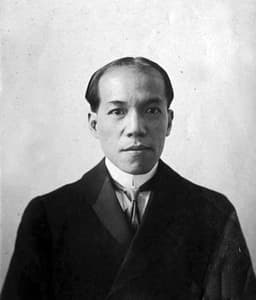
Liang Qichao
Politician · Modern
62.5Total
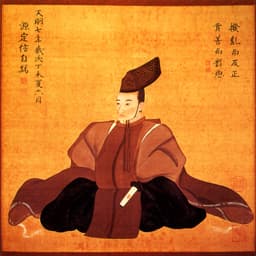
Matsudaira Sadanobu
Politician · Modern
50.5Total
Basic Information
Born
1873
1759
Died
1929
1829
Era
Modern
Modern
Nationality
China
Japan
Occupation
Politician
Politician
Civilization
Eastern
Eastern
Score Comparison
Military (10%)
15.7
13.9
Political (20%)
72.0
59.3
Influence (20%)
88.0
54.9
Legacy (20%)
65.0
48.3
Leadership (15%)
55.3
78.0
Strategy (15%)
36.3
26.7
TOTAL
62.5
50.5
Liang Qichao — Complete Timeline
1898 AD
Fled to Japan after the Hundred Days' ReformPolitical Action◆ Major
After the failure of the Hundred Days' Reform, Liang Qichao fled to Japan to escape persecution. In exile, he continued writing and publishing reformist ideas, becoming a leading voice for change.
ExileReformIntellectual
Impact: nationaltragic
Founded the journal 'Qingyi Bao' (The China Discussion)Cultural◆ Major
Liang Qichao founded 'Qingyi Bao' in Yokohama, Japan, to promote constitutional reform and modern political ideas. The journal circulated widely in China and influenced the reformist movement.
JournalismReformPolitical Thought
Impact: nationalprogressive
1902 AD
Published 'The New Citizen' (Xinmin Shuo)Cultural
Liang Qichao published 'The New Citizen', a series of essays advocating for civic virtue, nationalism, and political reform. The work profoundly influenced Chinese intellectuals and the reform movement.
ReformNationalismPolitical Thought
Impact: nationalprogressive
Matsudaira Sadanobu — Complete Timeline
1787 AD
Implementation of the Kansei ReformsReform◆ Major
Sadanobu enacted the Kansei Reforms, a series of austerity measures including sumptuary laws, reduction of government spending, and promotion of Confucian education. He also banned unorthodox teachings and cracked down on corruption, restoring shogunate finances but stifling cultural innovation.
Kansei ReformsAusterityConfucianism
Impact: nationalconstructive
Appointment as Senior Councilor (Roju)Political Action◆ Major
Matsudaira Sadanobu was appointed roju under Shogun Tokugawa Ienari. He immediately set out to reverse the policies of his predecessor Tanuma Okitsugu, launching a conservative reform program to restore fiscal stability and moral order.
AppointmentRojuTokugawa Ienari
Impact: nationalconstructive
1790 AD
Promulgation of the 'Kansei Edict' on EducationReform◆ Major
Sadanobu issued an edict promoting Neo-Confucianism as the official ideology and suppressing other schools of thought, including Western learning (Rangaku). This strengthened ideological control but limited intellectual diversity in Japan.
Education reformIdeological controlRangaku suppression
Impact: nationaldestructive
1793 AD
Resignation from Roju PositionPolitical Action◆ Major
Sadanobu resigned from his position as roju after facing opposition from within the shogunate and the shogun himself. He retired to his domain but continued to influence policy indirectly until his death.
ResignationRetirementTokugawa Ienari
Impact: national
Expert Analysis
Origins
Liang Qichao (1873-1929) was born in Xinhui, Guangdong, China, into a scholarly family. He passed the provincial exams at age 16 and studied under Kang Youwei, absorbing Confucian classics and reformist ideas. Matsudaira Sadanobu (1759-1829) was born into the Tokugawa clan, the son of a daimyo. He was adopted into the Matsudaira family and became lord of the Shirakawa domain, receiving a strict Confucian education.
Rise to Power
Liang rose to prominence as a journalist and reformer after China's defeat in the First Sino-Japanese War (1895). He became a key figure in the Hundred Days' Reform (1898), advising Emperor Guangxu. After the coup, he fled to Japan, where he founded the journal 'Qingyi Bao' (The China Discussion) in 1898, disseminating ideas of constitutional monarchy and nationalism. Matsudaira Sadanobu was appointed Senior Councilor (Roju) in 1787 under Shogun Tokugawa Ienari. He quickly consolidated power by dismantling the policies of his predecessor Tanuma Okitsugu, who had been accused of corruption and financial mismanagement.
Leadership & Governance
Liang Qichao's leadership was intellectual and inspirational rather than administrative. Through his writings, he promoted 'The New Citizen' (Xinmin Shuo, 1902), advocating for civic virtue, nationalism, and political reform. His governance score of 55.3 reflects his indirect influence. Matsudaira Sadanobu, with a leadership score of 78.0, implemented the Kansei Reforms (1787-1793), a series of austerity measures including sumptuary laws, reduction of government spending, and promotion of Confucian orthodoxy. He issued the Kansei Edict on Education, suppressing Western learning (Rangaku) and banning heterodox teachings.
Triumph & Tragedy
Liang's greatest success was his profound influence on Chinese intellectuals, shaping the discourse on reform and nationalism. His writings reached a wide audience and inspired later revolutionaries. However, his political score of 72.0 did not translate into direct political power; his constitutional monarchy ideas failed to take root in China. Matsudaira Sadanobu's Kansei Reforms stabilized the shogunate's finances and curbed corruption, but his suppression of Western learning and rigid Confucianism stifled innovation and contributed to Japan's lagging behind Western powers by the mid-19th century. His resignation in 1793 marked the end of his active reform efforts.
Character & Destiny
Liang Qichao was an adaptable and prolific thinker, constantly evolving his ideas from reform to revolution. His character, with a strategy score of 36.3, was more idealistic than pragmatic, leading to limited direct political impact. Matsudaira Sadanobu was a conservative moralist, determined to restore traditional values. His strategic score of 26.7 reflects his inflexibility; he prioritized ideological purity over practical adaptation, which ultimately limited the longevity of his reforms.
Legacy
Liang Qichao's legacy is immense in modern Chinese intellectual history. His concept of 'The New Citizen' influenced generations, and his journalistic work set standards for Chinese media. With an influence score of 88.0, he is remembered as a bridge between traditional Confucianism and modern Western thought. Matsudaira Sadanobu's legacy is mixed: the Kansei Reforms provided short-term stability but reinforced isolationist and conservative policies. His legacy score of 48.3 reflects the limited enduring impact of his reforms, which were partially reversed after his resignation.
Conclusion
Liang Qichao had a greater and more lasting impact on East Asia. His total score of 62.5 surpasses Sadanobu's 50.5, particularly in influence (88.0 vs 54.9) and political impact (72.0 vs 59.3). While Sadanobu implemented concrete policies, their effects were temporary and conservative. Liang's ideas shaped the intellectual foundation for China's modernization and continue to resonate. Thus, Liang Qichao is the more significant historical figure.
Rankings
🥇
Liang QichaoLeader
Mil: 15.7Pol: 72.0Inf: 88.0
62.5
🥈
Matsudaira Sadanobu
Mil: 13.9Pol: 59.3Inf: 54.9
50.5
+12.0 behind
How This Comparison Works
Algorithm
Each figure is scored on 6 dimensions (0—100 scale) based on structured historical data: Military (10%), Political (20%), Influence (20%), Legacy (20%), Leadership (15%), Strategy (15%). The weighted total produces the final ranking.
Data Sources
Scores are computed from structured sub-indicators in the database. Scale factors adjust for era (Ancient ×0.85, Modern ×1.0) and civilization size (Eastern ×1.05, Other ×0.80) to account for differences in population and military scale.
Maximum 3 Figures
Comparisons are limited to 2—3 figures to ensure readability and statistical meaningfulness.
Error Margins
±5 points per dimension — Sub-scores are derived from historical records with inherent uncertainty. Two figures within 5 points on a dimension should be considered roughly equivalent in that area.
Total Score Accuracy
±3 points overall — The weighted combination of 6 dimensions produces a total score with approximately ±3 points of uncertainty. Differences of less than 3 points are not statistically significant— the figures are effectively tied.
Known Limitations
- Historical records are incomplete and uneven across civilizations
- Figures from oral-tradition societies may be underrepresented
- Occupation labels can misclassify multi-role figures
- Scores measure capability and impact, not moral character
- Quantitative scoring is a comparison tool, not absolute truth
Capability Radar
Military (10%) — Battles & Warfare
Battles
13
14
Win Rate
16
15
Expansion
20
22
Political (20%) — Governance & Reform
Reform
75
75
Diplomacy
60
65
Economy
55
70
Influence (20%) — Cultural & Global Reach
Cultural
85
40
Global
70
30
Legacy (20%) — Historical Impact
Historical
80
50
Longevity
75
40
Leadership (15%) — Power & Stability
Tenure
20
70
Stability
30
75
Strategy (15%) — Tactics & Innovation
Strategy
21
26
Tactics
25
24
Reform
30
32
Similar Comparisons
Comments & Discussion
No comments yet. Be the first to share your thoughts!