Loading...
Edward II of England vs Isaac II Angelos
Edward II of England leads by 5.5 pts · 2 figures compared
…
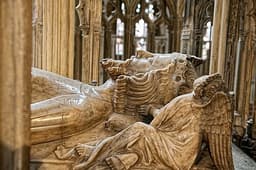
Edward II of England
Emperor · Medieval
40.9Total
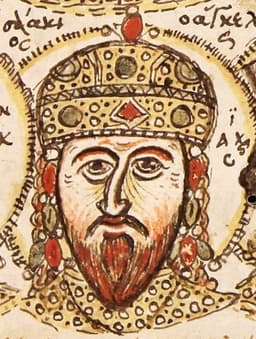
Isaac II Angelos
Emperor · Medieval
35.4Total
Basic Information
Born
1284
1156
Died
1327
1204
Era
Medieval
Medieval
Nationality
England
Byzantine Empire
Occupation
Emperor
Emperor
Civilization
Western
Western
Score Comparison
Military (10%)
50.0
10.2
Political (20%)
35.0
32.1
Influence (20%)
46.3
45.5
Legacy (20%)
37.5
38.3
Leadership (15%)
39.0
31.2
Strategy (15%)
38.6
39.6
TOTAL
40.9
35.4
Edward II of England — Complete Timeline
1311 AD
Ordinances of 1311Political Action◆ Major
Under baronial pressure, Edward II agreed to the Ordinances of 1311, which limited royal power and exiled his favorite Piers Gaveston. This reform was later annulled, but it highlighted baronial discontent.
ReformBaronial OppositionGaveston
Impact: nationalconstructive
1312 AD
Execution of Piers GavestonPolitical Action◆ Major
Edward II's favorite Piers Gaveston was captured and executed by barons led by Thomas of Lancaster. This act deepened the rift between the king and the nobility, leading to further instability.
ExecutionFactionalismBaronial Revolt
Impact: nationaltragic
1314 AD
Battle of BannockburnWar◆ Major
Edward II led an English army against Robert the Bruce at the Battle of Bannockburn. The Scots decisively defeated the English, securing Scottish independence and humiliating Edward's reign.
BattleScotlandRobert the Bruce
Impact: regionaldestructive
1327 AD
Deposition and MurderPolitical Action◆ Major
Edward II was deposed by his wife Isabella of France and her lover Roger Mortimer. He was forced to abdicate in favor of his son Edward III, and later murdered at Berkeley Castle, likely on orders.
DepositionMurderIsabella
Impact: nationaltragic
Isaac II Angelos — Complete Timeline
1185 AD
Accession as emperor after overthrowing Andronikos IPolitical Action◆ Major
Isaac II Angelos led a popular revolt that overthrew Andronikos I Komnenos, and was proclaimed emperor. His accession ended the Komnenian dynasty's rule and began the Angelid dynasty, but the empire was weakened by internal strife and external threats.
RevoltDynastic ChangePopular Uprising
Impact: national
1190 AD
Defeat at the Battle of TryavnaWar◆ Major
Isaac II led a campaign against the Bulgarian rebels under Ivan Asen I and Peter IV. The Byzantine army was ambushed and defeated at Tryavna, with Isaac barely escaping. The defeat solidified the Second Bulgarian Empire's independence from Byzantine rule.
Byzantine-Bulgarian WarsMilitary DefeatRebellion
Impact: regionaldestructive
1195 AD
Blinding and deposition by Alexios III AngelosPolitical Action◆ Major
Isaac II was overthrown and blinded by his brother Alexios III Angelos in a palace coup. Isaac was imprisoned, and Alexios III seized the throne. The blinding was a traditional Byzantine punishment for usurpers, but it left Isaac incapacitated and the empire divided.
CoupDynastic ConflictBlinding
Impact: nationaltragic
1203 AD
Restoration and flight during the Fourth CrusadePolitical Action◆ Major
Isaac II was restored to the throne by the Fourth Crusade, alongside his son Alexios IV Angelos, after the crusaders besieged Constantinople. However, the restored regime failed to pay the promised rewards to the crusaders, leading to renewed conflict and Isaac's death in prison in 1204.
Fourth CrusadeRestorationSiege of Constantinople
Impact: regionaltragic
Expert Analysis
Origins
Edward II of England was born in 1284 to Edward I, a formidable warrior king, and Eleanor of Castile. He was the fourth son but became heir after his brothers died. His education focused on chivalry and military skills, but he showed more interest in rustic pursuits like rowing and thatching. His father's strict expectations created resentment, and Edward developed a close relationship with Piers Gaveston, a Gascon knight, which would define his reign.
Isaac II Angelos was born around 1156 into the Angelos family, a minor Byzantine noble clan. His father was Andronikos Doukas Angelos, and his mother Euphrosyne Kastamonitissa. The family was distant from the Komnenian dynasty that ruled the empire. Isaac grew up during the reign of Andronikos I Komnenos, a tyrant who persecuted the aristocracy. Isaac's early life was marked by fear and instability, as his family was under suspicion. He was not trained for rule but was forced into prominence by circumstance.
Rise to Power
Edward II ascended the throne in 1307 upon his father's death. He immediately recalled Piers Gaveston, whom Edward I had exiled. Edward's favoritism alienated the barons, leading to the Ordinances of 1311, which curtailed royal power and exiled Gaveston again. Edward's inability to manage the nobility culminated in Gaveston's capture and execution in 1312 by Thomas of Lancaster. This event deepened the rift between the king and his barons, setting the stage for conflict.
Isaac II Angelos rose to power in 1185 through a popular revolt against Andronikos I. After Andronikos's brutal rule, Isaac was proclaimed emperor. He had no prior administrative experience and relied on family members. His accession ended the Komnenian dynasty's rule but did not stabilize the empire. Isaac's position was initially secure, but he faced immediate threats from the Normans and Bulgarians, testing his leadership.
Leadership & Governance
Edward II's governance was marked by ineptitude and favoritism. He relied on a series of favorites, first Gaveston, then the Despensers, which alienated the barons. He failed to enforce royal authority, leading to civil war. The Ordinances of 1311 were a direct challenge to his rule, and he later overturned them but at great cost. His military leadership was disastrous, notably at Bannockburn in 1314, where he lost to Robert the Bruce, securing Scottish independence. His political score of 35.0 reflects his inability to manage the nobility or maintain order.
Isaac II's governance was similarly flawed. He faced revolts, fiscal crises, and external threats. He alienated the Byzantine aristocracy by promoting his own family and failing to reward supporters. His military campaigns were poorly planned, leading to defeats like Tryavna in 1190 against the Bulgarians. He also mishandled the Third Crusade, allowing Frederick Barbarossa's army to pass through Byzantine territory, which strained relations. His political score of 32.1 is slightly lower than Edward's, indicating comparable incompetence.
Triumph & Tragedy
Edward II's greatest success was surviving the early baronial challenges and temporarily restoring royal authority after the Despenser War in 1322. He defeated Thomas of Lancaster and executed him, but this victory was short-lived. His greatest failure was the loss at Bannockburn, which cemented Scottish independence and humiliated England. His deposition in 1327 and subsequent murder at Berkeley Castle (likely by a red-hot poker) marked a tragic end. His military score of 50.0 is higher than Isaac's but still mediocre.
Isaac II's triumph was his 1185 revolt that overthrew the tyrant Andronikos I, which earned him initial popularity. He also negotiated a truce with the Normans in 1185, preserving some territory. However, his failures were catastrophic: the defeat at Tryavna in 1190 lost Bulgaria, and his blinding by his brother Alexios III in 1195 ended his reign in humiliation. His restoration during the Fourth Crusade in 1203 was short-lived, as he and his son Alexios IV were unable to pay the crusaders, leading to the sack of Constantinople in 1204. His military score of 10.2 reflects his incompetence in battle.
Character & Destiny
Edward II was weak-willed and indecisive, preferring the company of low-born favorites to the responsibilities of kingship. His character led to constant conflict with the barons. He was stubborn in his attachments but lacked the strategic mind to defend them. His fate—deposition and murder—was a direct result of his inability to govern effectively. Historians describe him as a tragic figure whose personal flaws doomed his reign.
Isaac II was opportunistic but short-sighted. He seized power through a coup but failed to consolidate it. His character was marked by nepotism and indecision. He alienated key allies and underestimated his enemies. His blinding and imprisonment by his brother were a direct consequence of his political naivety. His restoration during the Fourth Crusade was a desperate gamble that ended in disaster. Both rulers suffered violent ends due to their own failures.
Legacy
Edward II's legacy is largely negative. He is remembered as a weak king who lost Scotland and was overthrown. However, his deposition set a precedent for parliamentary involvement in deposing monarchs, and his son Edward III reversed many of his failures. His influence score of 46.3 is moderate, as his reign demonstrated the limits of royal power.
Isaac II's legacy is even more negative. His incompetence contributed to the disintegration of the Byzantine Empire. The Fourth Crusade's sack of Constantinople in 1204 was a direct result of his failed restoration. The empire never fully recovered. His influence score of 45.5 is slightly lower than Edward's, but his legacy is more destructive in terms of historical impact.
Conclusion
Edward II of England, with a total score of 40.9, had a slightly greater impact than Isaac II Angelos (35.4) due to his role in the loss of Scotland and the precedent of deposition. However, Isaac's failures were more catastrophic for the Byzantine Empire, leading to its temporary collapse. Edward's legacy is more about English constitutional history, while Isaac's is about imperial destruction. Taking a stance, Edward II had a more lasting influence on political structures, but Isaac II's reign was more disastrous in scale. Ultimately, Edward's higher scores reflect his slightly better military and political performance, but neither ruler was effective. The key difference is that Edward's failures shaped England's future, while Isaac's failures ended an empire. Thus, Edward II is the more significant historical figure, but not by much.
Rankings
🥇
Edward II of EnglandLeader
Mil: 50.0Pol: 35.0Inf: 46.3
40.9
🥈
Isaac II Angelos
Mil: 10.2Pol: 32.1Inf: 45.5
35.4
+5.5 behind
How This Comparison Works
Algorithm
Each figure is scored on 6 dimensions (0—100 scale) based on structured historical data: Military (10%), Political (20%), Influence (20%), Legacy (20%), Leadership (15%), Strategy (15%). The weighted total produces the final ranking.
Data Sources
Scores are computed from structured sub-indicators in the database. Scale factors adjust for era (Ancient ×0.85, Modern ×1.0) and civilization size (Eastern ×1.05, Other ×0.80) to account for differences in population and military scale.
Maximum 3 Figures
Comparisons are limited to 2—3 figures to ensure readability and statistical meaningfulness.
Error Margins
±5 points per dimension — Sub-scores are derived from historical records with inherent uncertainty. Two figures within 5 points on a dimension should be considered roughly equivalent in that area.
Total Score Accuracy
±3 points overall — The weighted combination of 6 dimensions produces a total score with approximately ±3 points of uncertainty. Differences of less than 3 points are not statistically significant— the figures are effectively tied.
Known Limitations
- Historical records are incomplete and uneven across civilizations
- Figures from oral-tradition societies may be underrepresented
- Occupation labels can misclassify multi-role figures
- Scores measure capability and impact, not moral character
- Quantitative scoring is a comparison tool, not absolute truth
Capability Radar
Military (10%) — Battles & Warfare
Battles
10
10
Win Rate
5
10
Expansion
0
5
Political (20%) — Governance & Reform
Reform
5
10
Diplomacy
5
10
Economy
5
10
Influence (20%) — Cultural & Global Reach
Cultural
10
5
Global
5
5
Legacy (20%) — Historical Impact
Historical
15
20
Longevity
10
10
Leadership (15%) — Power & Stability
Tenure
20
30
Stability
5
5
Strategy (15%) — Tactics & Innovation
Strategy
5
10
Tactics
5
10
Reform
0
5
Similar Comparisons
Comments & Discussion
No comments yet. Be the first to share your thoughts!