Loading...
Edward III vs Olaf II of Norway
Edward III leads by 15.8 pts · 2 figures compared
…
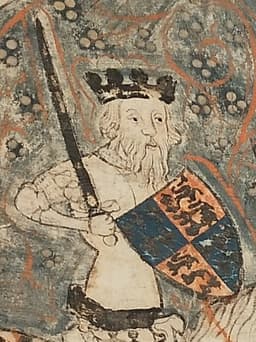
Edward III
Emperor · Medieval
62.3Total
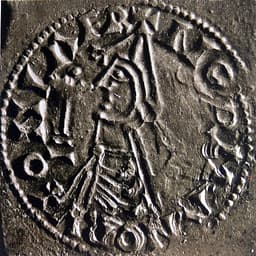
Olaf II of Norway
Emperor · Medieval
46.5Total
Basic Information
Born
1312
995
Died
1377
1030
Era
Medieval
Medieval
Nationality
England
Norway
Occupation
Emperor
Emperor
Civilization
Western
Western
Score Comparison
Military (10%)
72.0
40.0
Political (20%)
59.3
45.1
Influence (20%)
68.0
56.7
Legacy (20%)
40.0
40.0
Leadership (15%)
80.0
48.4
Strategy (15%)
72.0
43.3
TOTAL
62.3
46.5
Edward III — Complete Timeline
1337 AD
Claimed the French ThronePolitical Action
Edward III formally claimed the French crown through his mother Isabella, daughter of Philip IV of France, rejecting the Salic law that barred female succession. This claim initiated the Hundred Years' War between England and France.
Hundred Years' WarSuccession CrisisDynastic Claim
Impact: regional
1346 AD
Battle of CrécyWar◆ Major
Edward III's English army defeated a larger French force at Cr
Hundred Years' WarBattleLongbow
Impact: regional
1347 AD
Siege of CalaisWar◆ Major
Edward III besieged the French port of Calais for nearly a year, forcing its surrender. The city became an English enclave for over two centuries, serving as a strategic base for English operations in France.
Hundred Years' WarSiegeCalais
Impact: regional
1356 AD
Battle of PoitiersWar◆ Major
Edward III's son, Edward the Black Prince, led English forces to victory at Poitiers, capturing King John II of France. This triumph followed Cr
Hundred Years' WarBattleCapture of King John
Impact: regional
1360 AD
Treaty of BrétignyPolitical Action◆ Major
Edward III signed the Treaty of Br
TreatyHundred Years' WarTerritorial Gains
Impact: regional
Olaf II of Norway — Complete Timeline
1015 AD
Became King of NorwayPolitical Action◆ Major
Olaf II became King of Norway after returning from Viking expeditions abroad. He claimed the throne with support from local chieftains and began consolidating power, aiming to unify Norway under a single monarchy and reduce the influence of regional lords.
CoronationNorwayUnification
Impact: regionalconstructive
Introduced Christianity to NorwayCultural◆ Major
Olaf II enforced the Christianization of Norway, using missionaries and laws to replace pagan practices. He built churches, appointed bishops, and suppressed resistance, making Christianity the official religion. This transformation aligned Norway with Christian Europe.
ChristianizationReligionNorway
Impact: regionalconstructive
1030 AD
Defeated at the Battle of StiklestadWar
Olaf II was killed at the Battle of Stiklestad while fighting against a coalition of Norwegian nobles and Danish forces led by Cnut the Great. His defeat was due to betrayal and superior enemy numbers, but his death soon led to his canonization as a saint.
BattleMartyrdomNorway
Impact: regionaltragic
1031 AD
Canonized as Saint OlafCultural◆ Major
Within a year of his death, Olaf II was declared a saint by Bishop Grimkell, with popular veneration spreading rapidly. His canonization was confirmed by the Pope in 1164. Saint Olaf became the patron saint of Norway and a symbol of Norwegian independence.
CanonizationSaintNorway
Impact: regionalconstructive
Expert Analysis
Origins
Edward III was born in 1312 at Windsor Castle, son of Edward II and Isabella of France. His father's weak rule and eventual deposition in 1327 shaped Edward's early years. He was raised amidst political turmoil, with his mother and her lover Roger Mortimer effectively ruling England until Edward seized power in 1330. Olaf II, born around 995, was the son of King Harald Grenske of Norway. He spent his youth as a Viking raider in the Baltic and England, gaining military experience. His father's early death left him without a kingdom, and he was raised partly in exile.
Rise to Power
Edward III's rise began with a coup in 1330 at age 18, when he arrested Mortimer and assumed personal rule. He quickly stabilized England and built a reputation through successful campaigns in Scotland. In 1337, he claimed the French throne through his mother, rejecting Salic law, which sparked the Hundred Years' War. This claim united English nobles behind him. Olaf II returned to Norway in 1015 after years abroad, claiming the throne with support from chieftains. He defeated Earl Sweyn Hakonsson at the Battle of Nesjar in 1016, securing his kingship. He then consolidated power by suppressing rivals and promoting Christianity.
Leadership & Governance
Edward III's leadership was characterized by chivalric ideals and military innovation. He founded the Order of the Garter in 1348, binding nobles to his cause. His governance relied on parliament for war financing, which strengthened that institution. He maintained a strong central administration. Olaf II ruled as a Christianizing monarch, using law and force to convert Norway. He introduced church organization, built churches, and appointed bishops. His governance was autocratic, clashing with traditional chieftains. While Edward's military score of 72.0 reflects his battlefield success, Olaf's political score of 45.1 shows his struggles in uniting Norway.
Triumph & Tragedy
Edward III's greatest triumph was the victory at Crécy (1346), where his longbowmen decimated French knights, and the subsequent capture of Calais (1347). The Treaty of Brétigny (1360) gave England vast territories. His tragedy was the eventual loss of these gains after his death, as his successor Richard II proved weak. Olaf II's triumph was the introduction of Christianity, which shaped Norway's identity. His tragedy was his death at Stiklestad in 1030, defeated by a coalition of nobles and Danes. He scored 40.0 in both military and legacy, reflecting his limited territorial impact but enduring religious influence.
Character & Destiny
Edward III was pragmatic, ambitious, and skilled at managing nobles. His decision to claim France was audacious but overextended English resources. His character led to sustained war that drained both kingdoms. Olaf II was stubborn and religiously fervent, driving him to impose Christianity forcefully. His death in battle made him a martyr, leading to his canonization. Edward's leadership score of 80.0 contrasts with Olaf's 48.4, indicating Edward's superior ability to command loyalty and achieve strategic goals.
Legacy
Edward III's legacy includes the Hundred Years' War, which fostered English national identity and military tactics. His reign saw the rise of the longbow and the decline of knightly cavalry. The Order of the Garter remains a prestigious British institution. Olaf II became Norway's patron saint; his feast day, Olsok, is celebrated. His Christianization efforts laid the foundation for the Norwegian church. However, his political legacy was weaker, as Norway soon fell under Danish control. Edward's influence score of 68.0 far exceeds Olaf's 56.7, reflecting his broader impact on European history.
Conclusion
Edward III had greater impact than Olaf II, as evidenced by his total score of 62.3 versus 46.5. While Olaf's religious legacy is significant, Edward's military campaigns reshaped European politics, initiated the Hundred Years' War, and influenced governance structures. Edward's leadership and strategy scores (80.0 and 72.0) dwarf Olaf's (48.4 and 43.3). Olaf's influence was largely confined to Norway, whereas Edward's actions affected England, France, and the balance of power in Western Europe for centuries. Thus, Edward III stands as the more consequential figure.
Rankings
🥇
Edward IIILeader
Mil: 72.0Pol: 59.3Inf: 68.0
62.3
🥈
Olaf II of Norway
Mil: 40.0Pol: 45.1Inf: 56.7
46.5
+15.8 behind
How This Comparison Works
Algorithm
Each figure is scored on 6 dimensions (0—100 scale) based on structured historical data: Military (10%), Political (20%), Influence (20%), Legacy (20%), Leadership (15%), Strategy (15%). The weighted total produces the final ranking.
Data Sources
Scores are computed from structured sub-indicators in the database. Scale factors adjust for era (Ancient ×0.85, Modern ×1.0) and civilization size (Eastern ×1.05, Other ×0.80) to account for differences in population and military scale.
Maximum 3 Figures
Comparisons are limited to 2—3 figures to ensure readability and statistical meaningfulness.
Error Margins
±5 points per dimension — Sub-scores are derived from historical records with inherent uncertainty. Two figures within 5 points on a dimension should be considered roughly equivalent in that area.
Total Score Accuracy
±3 points overall — The weighted combination of 6 dimensions produces a total score with approximately ±3 points of uncertainty. Differences of less than 3 points are not statistically significant— the figures are effectively tied.
Known Limitations
- Historical records are incomplete and uneven across civilizations
- Figures from oral-tradition societies may be underrepresented
- Occupation labels can misclassify multi-role figures
- Scores measure capability and impact, not moral character
- Quantitative scoring is a comparison tool, not absolute truth
Capability Radar
Military (10%) — Battles & Warfare
Battles
85
45
Win Rate
80
50
Expansion
85
40
Political (20%) — Governance & Reform
Reform
70
55
Diplomacy
75
40
Economy
80
30
Influence (20%) — Cultural & Global Reach
Cultural
65
70
Global
70
55
Legacy (20%) — Historical Impact
Historical
80
75
Longevity
75
80
Leadership (15%) — Power & Stability
Tenure
85
35
Stability
70
25
Strategy (15%) — Tactics & Innovation
Strategy
90
35
Tactics
85
40
Reform
75
30
Similar Comparisons
Comments & Discussion
No comments yet. Be the first to share your thoughts!