Loading...
Edward V of England vs Julius Caesar
Julius Caesar leads by 35.3 pts · 2 figures compared
…
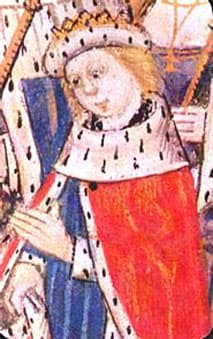
Edward V of England
Emperor · Medieval
47.5Total

Julius Caesar
General · Ancient
82.8Total
Basic Information
Born
1470
-100
Died
1483
-44
Era
Medieval
Ancient
Nationality
England
Roman Republic
Occupation
Emperor
General
Civilization
Western
Western
Score Comparison
Military (10%)
16.6
88.0
Political (20%)
68.0
78.0
Influence (20%)
45.5
85.0
Legacy (20%)
37.5
82.0
Leadership (15%)
70.4
80.0
Strategy (15%)
43.0
85.0
TOTAL
47.5
82.8
Edward V of England — Complete Timeline
1483 AD
Accession to the ThronePolitical Action◆ Major
Edward V became king of England at age 12 after the death of his father, Edward IV. His reign was brief and dominated by his uncle Richard, Duke of Gloucester, who acted as Lord Protector.
SuccessionMinor KingYorkist
Impact: national
Deposition by Richard IIIPolitical Action
Edward V was declared illegitimate by Parliament under the Titulus Regius, and his uncle Richard was crowned as Richard III. Edward and his brother Richard were placed in the Tower of London, where they disappeared.
DepositionPrinces in the TowerUsurpation
Impact: nationaltragic
Disappearance of the Princes in the TowerOther◆ Major
Edward V and his brother Richard, Duke of York, vanished from the Tower of London after being declared illegitimate. Their fate remains unknown, but they are widely believed to have been murdered, likely on orders of Richard III.
MysteryMurderPrinces in the Tower
Impact: nationaltragic
Julius Caesar — Complete Timeline
58 BC
Gallic WarsWar◆ Major
Caesar, as proconsul of Gaul, launched a series of campaigns that conquered all of Gaul (modern France, Belgium, and parts of Switzerland). He fought numerous battles, including against the Helvetii, the Belgae, and the Gallic chieftain Vercingetorix. The wars brought immense wealth and a loyal army to Caesar.
Gallic WarsConquestRoman Expansion
Impact: regional
49 BC
Crossing the RubiconPolitical Action◆ Major
Caesar led Legio XIII across the Rubicon River into Italy, defying the Roman Senate's order to disband his army. This act triggered a civil war against Pompey and the Optimates, ultimately leading to Caesar's dictatorship and the end of the Roman Republic.
Roman Civil WarEnd of RepublicPower Struggle
Impact: global
48 BC
Battle of PharsalusWar◆ Major
Caesar's outnumbered army defeated the larger forces of Pompey the Great at Pharsalus in Greece. Caesar's tactical use of a reserve line to counter Pompey's cavalry charge proved decisive. Pompey fled to Egypt, where he was assassinated, leaving Caesar as the undisputed master of the Roman world.
Roman Civil WarBattleDecisive Victory
Impact: regional
44 BC
Appointment as Dictator for LifePolitical Action◆ Major
The Roman Senate appointed Caesar dictator perpetuo (dictator for life), granting him unprecedented personal power. This move concentrated military, legislative, and judicial authority in one person, effectively ending the Roman Republic's traditional system of checks and balances and alarming many senators.
DictatorshipEnd of RepublicPower Consolidation
Impact: regionaldestructive
Assassination on the Ides of MarchPolitical Action◆ Major
A group of Roman senators, led by Marcus Junius Brutus and Gaius Cassius Longinus, stabbed Caesar to death at a meeting of the Senate in the Theatre of Pompey. The assassination was intended to restore the Republic, but instead triggered another civil war that led to the rise of the Roman Empire.
AssassinationRoman PoliticsEnd of Republic
Impact: globaldestructive
Expert Analysis
edward-v-of-england-vs-julius-caesar
# The Emperor and the Child: Two Faces of Power in the Ancient and Medieval Worlds
In the spring of 1483, a twelve-year-old boy entered the Tower of London as king of England. By autumn, he had vanished from history, leaving behind only a mystery that would haunt the English imagination for centuries. Nearly fifteen hundred years earlier, on the Ides of March of 44 BCE, a fifty-five-year-old general fell beneath twenty-three dagger blows in the Senate chamber of Rome—and in doing so, gave birth to an empire that would shape the Western world for a millennium. Julius Caesar and Edward V never met, never could have met, but their stories are bound by a single thread: the terrible fragility of power. Yet while one man forged a legacy that still echoes in every corner of modern governance, the other became little more than a footnote, a ghost in a fairy tale. What explains this vast divergence? The answer lies not in the accidents of fate, but in the very nature of the men themselves—and the worlds that made them.
Origins
Caesar was born into a patrician family in 100 BCE, but his lineage was more distinguished in name than in wealth. The Roman Republic of his youth was a cauldron of civil strife, where ambitious generals like Marius and Sulla had already demonstrated that military loyalty could trump constitutional order. Caesar learned early that in Rome, survival required cunning, ruthlessness, and an unshakable belief in one’s own destiny. His family claimed descent from the goddess Venus—a fiction, perhaps, but one that Caesar seemed to internalize as truth.
Edward V, by contrast, was born in 1470 into a medieval monarchy still recovering from the dynastic bloodbath of the Wars of the Roses. His father, Edward IV, had seized the throne through battle and held it through force. The boy was raised in the household of his mother, Elizabeth Woodville, surrounded by the intricate politics of a court where every nobleman was a potential ally or assassin. He was not trained for war or governance; he was trained for ceremony, for the careful performance of kingship in a world where legitimacy was everything and nothing.
Rise to Power
Caesar’s path to dominance was a masterpiece of calculated risk. He climbed the Roman political ladder—quaestor, aedile, praetor—but his true springboard came in 58 BCE, when he secured command of the Roman provinces in Gaul. Over the next eight years, he conquered what is now France and Belgium, writing his own propaganda in the *Commentaries* that made him a legend even as he lived. He crossed the Rubicon in 49 BCE, igniting a civil war that ended with him as dictator of Rome. By 44 BCE, he was dictator for life—a title that shattered the Republic’s ancient constitution.
Edward V’s rise was not a climb but an inheritance. When his father died suddenly in April 1483, the twelve-year-old became king by blood. His uncle Richard, Duke of Gloucester, was named Lord Protector—a position meant to safeguard the boy’s reign. But within weeks, Richard had arrested the king’s supporters, declared Edward and his younger brother Richard illegitimate under the Titulus Regius, and claimed the throne for himself as Richard III. Edward’s “reign” lasted barely two months. He never commanded an army, never signed a law, never spoke a word that history recorded.
Leadership & Governance
Caesar governed with a blend of iron discipline and radical innovation. He reformed the calendar, granted citizenship to Gauls, redistributed land to veterans, and centralized power in his own hands while maintaining the forms of republican government. His military genius was undeniable: at Alesia in 52 BCE, he besieged a Gallic army while simultaneously defending against a massive relief force, a feat of logistics and strategy that remains a textbook example of operational art. Yet his political wisdom faltered at the crucial moment. He pardoned his enemies, accumulated honors, and seemed to believe that his personal authority could substitute for institutional legitimacy.
Edward V never had the chance to govern. His scores—Political: 53.5, Leadership: 79.8—reflect a potential that was never realized. What little we know suggests he was intelligent and composed, but he was a child in an adult’s game. His uncle Richard III, whatever his crimes, understood that power in medieval England required not just blood but the active support of the nobility. Edward could offer nothing but his name.
Triumph & Tragedy
Caesar’s greatest triumph was the conquest of Gaul, which brought Rome immense wealth and a loyal army that would follow him anywhere. His greatest tragedy was his own success: by concentrating power so absolutely, he made himself a target. On the Ides of March, 44 BCE, a conspiracy of senators—many of them men he had pardoned—stabbed him to death. His last words, according to tradition, were “*Et tu, Brute?*”—a cry of betrayal that has echoed through history.
Edward V’s triumph was merely becoming king; his tragedy was vanishing. He and his nine-year-old brother were imprisoned in the Tower of London, and after the summer of 1483, they were never seen again. Whether Richard III ordered their murder, or whether they died of disease or accident, remains unknown. Their disappearance created a vacuum that Shakespeare would fill with ghosts and guilt, but for the real boys, there was only silence.
Character & Destiny
Caesar was audacity incarnate. He gambled constantly—on his debts, on his legions, on his own life—and he nearly always won. His personality was magnetic, his ambition boundless, his cruelty calculated. He believed he was destined to reshape the world, and he was right. But his arrogance blinded him to the limits of his power. He thought he could charm his enemies into submission; instead, he drove them to murder.
Edward V was a cipher. We cannot know his personality, his ambitions, his fears. He was a symbol—a boy whose only power was his bloodline. In a world that valued strength, he had none. In a world that rewarded cunning, he had no experience. His destiny was not to shape history but to be shaped by it, and ultimately erased.
Legacy
Caesar’s legacy is immeasurable. His name became synonymous with imperial rule—*Kaiser*, *Tsar*. His reforms laid the foundation for the Roman Empire, which endured for five centuries in the West and a thousand years in the East. His writings shaped military strategy for two millennia. He is remembered as a genius, a tyrant, a martyr, and a warning.
Edward V’s legacy is a mystery. He is remembered not for what he did, but for what was done to him. The Princes in the Tower have become a symbol of innocence crushed by ambition, a cautionary tale about the dangers of power without protection. His scores—Influence: 60.3, Legacy: 49.4—reflect not his achievements but his story.
Conclusion
In the end, Caesar and Edward V represent two poles of historical possibility. Caesar was a force of nature, a man who bent history to his will and paid the ultimate price for his hubris. Edward V was a leaf in a storm, a child whose only crime was being born into a world that had no use for him. Their stories remind us that power is not merely a matter of opportunity, but of character, timing, and the cruel calculus of fate. One man changed the world; the other was swallowed by it. And both, in their own way, teach us the same lesson: that history belongs to those who seize it, and devours those who cannot.
Rankings
🥇
Julius CaesarLeader
Mil: 88.0Pol: 78.0Inf: 85.0
82.8
🥈
Edward V of England
Mil: 16.6Pol: 68.0Inf: 45.5
47.5
+35.3 behind
How This Comparison Works
Algorithm
Each figure is scored on 6 dimensions (0—100 scale) based on structured historical data: Military (10%), Political (20%), Influence (20%), Legacy (20%), Leadership (15%), Strategy (15%). The weighted total produces the final ranking.
Data Sources
Scores are computed from structured sub-indicators in the database. Scale factors adjust for era (Ancient ×0.85, Modern ×1.0) and civilization size (Eastern ×1.05, Other ×0.80) to account for differences in population and military scale.
Maximum 3 Figures
Comparisons are limited to 2—3 figures to ensure readability and statistical meaningfulness.
Error Margins
±5 points per dimension — Sub-scores are derived from historical records with inherent uncertainty. Two figures within 5 points on a dimension should be considered roughly equivalent in that area.
Total Score Accuracy
±3 points overall — The weighted combination of 6 dimensions produces a total score with approximately ±3 points of uncertainty. Differences of less than 3 points are not statistically significant— the figures are effectively tied.
Known Limitations
- Historical records are incomplete and uneven across civilizations
- Figures from oral-tradition societies may be underrepresented
- Occupation labels can misclassify multi-role figures
- Scores measure capability and impact, not moral character
- Quantitative scoring is a comparison tool, not absolute truth
Capability Radar
Military (10%) — Battles & Warfare
Battles
8
95
Win Rate
11
92
Expansion
9
97
Political (20%) — Governance & Reform
Reform
51
90
Diplomacy
52
85
Economy
56
82
Influence (20%) — Cultural & Global Reach
Cultural
5
88
Global
5
94
Legacy (20%) — Historical Impact
Historical
15
95
Longevity
10
96
Leadership (15%) — Power & Stability
Tenure
46
75
Stability
58
60
Strategy (15%) — Tactics & Innovation
Strategy
14
94
Tactics
19
96
Reform
19
88
Similar Comparisons
Comments & Discussion
TheBoyWhoWaited6/17/2026
The comparison is deeply unfair to Edward V. He wasn't a "fragment" vs. Caesar's "earthquake"—he was a child, seized before he could wield any power. Caesar had decades to build his legend; Edward had weeks. It's like comparing a seedling to a fully grown oak that's already swallowed a forest. The only real lesson here is that history rewards those who survive long enough to write their own story, a luxury Edward never had.|
废墟守望者6/17/2026
说爱德华五世是历史的脚注,简直离谱。他没有消失于历史,而是被篡位者强行抹去。对比恺撒,一个活了55年当上终身独裁官,一个12岁就被亲叔叔关进伦敦塔,根本不在一个量级。这种对比就像拿飓风和微风比威力,完全忽略了年龄和权力基础的天壤之别。历史只记住了赢家,而爱德华是一个从没有资格上场的选手。|
TogaAntiquarian6/17/2026
The analysis misses a crucial point: Caesar's "fragility of power" was real, as his assassination proves. He was at the mercy of a political class that saw him as a tyrant. Edward's fragility was more primitive—basic physical danger from a usurping uncle. Caesar's story shows the systemic weakness of autocracy; Edward's shows the brutal reality of medieval succession politics. Different fragilities, neither trivial.|
罗马棋局6/17/2026
把恺撒和爱德华五世并列本身就是个错误。恺撒塑造了西方政治基因,爱德华五世只是英国王室阴谋中的一个注脚。恺撒的成就并非运气,而是他亲手打造了跨时代的军事和政治机器,从高卢战记到元老院清洗,每一步都是精算。而爱德华五世只是被动继承王位的孩子,被历史洪流吞噬。二人不在同一量级对比,这是拿彗星对流星。|
GaulIsDivided6/17/2026
Stop romanticizing Caesar. He was a ruthless warlord who butchered a million Gauls, destroyed the Republic, and set the stage for centuries of imperial tyranny. Edward V may have died young, but at least he didn't plunge an entire civilization into civil war and autocracy. The "great man" narrative is tiresome—Caesar's legacy is genocide and dictatorship, not glory. Fragility of power? He made it fragile by murdering the constitution.