Loading...
Edward VII vs Griffith Lerotholi
Edward VII leads by 14.5 pts · 2 figures compared
…
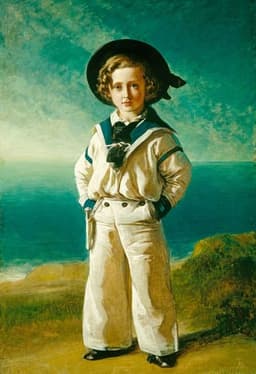
Edward VII
Emperor · Modern
56.1Total

Griffith Lerotholi
Emperor · Modern
41.6Total
Basic Information
Born
1841
1873
Died
1910
1939
Era
Modern
Modern
Nationality
United Kingdom
Lesotho
Occupation
Emperor
Emperor
Civilization
Western
Other
Score Comparison
Military (10%)
45.0
20.0
Political (20%)
60.0
35.1
Influence (20%)
62.0
48.6
Legacy (20%)
46.7
37.5
Leadership (15%)
79.8
55.3
Strategy (15%)
35.0
45.0
TOTAL
56.1
41.6
Edward VII — Complete Timeline
1901 AD
Accession to the ThronePolitical Action◆ Major
Edward VII became king upon the death of his mother Queen Victoria. He was the first monarch of the House of Saxe-Coburg and Gotha. His accession marked the beginning of the Edwardian era, a period of social and cultural change.
AccessionEdwardian EraSuccession
Impact: national
1903 AD
State Visit to FrancePolitical Action
Edward VII made a state visit to France, which improved Anglo-French relations. He was warmly received by the French public and government. This visit helped pave the way for the Entente Cordiale and strengthened diplomatic ties.
State VisitDiplomacyFrance
Impact: regionalconstructive
1904 AD
Entente CordialePolitical Action◆ Major
Edward VII played a key role in the Entente Cordiale, a series of agreements between Britain and France. This resolved colonial disputes and established a diplomatic alliance. It laid the groundwork for the Triple Entente and shaped pre-WWI alliances.
Entente CordialeDiplomacyAlliance
Impact: globalconstructive
1910 AD
Death from BronchitisOther◆ Major
Edward VII died of bronchitis at Buckingham Palace at age 68. He was buried in St George's Chapel. His death ended the Edwardian era and passed the throne to his son George V. His reign saw the rise of the Labour Party and social reforms.
DeathEdwardian EraSuccession
Impact: nationaltragic
Griffith Lerotholi — Complete Timeline
1905 AD
Succession as Paramount ChiefPolitical Action◆ Major
Griffith Lerotholi succeeded his father Lerotholi as paramount chief of the Basotho. His rule was marked by growing pressure from the Union of South Africa to incorporate Basutoland.
SuccessionBasothoParamount Chief
Impact: regional
1910 AD
Opposition to South African IncorporationPolitical Action◆ Major
Griffith Lerotholi led Basotho opposition to proposals to incorporate Basutoland into the Union of South Africa. He petitioned the British government to maintain Basutoland's status as a protectorate.
South AfricaIncorporationBasutoland
Impact: regionalconstructive
1920 AD
Conflict with Lekhotla la BafoPolitical Action
Griffith Lerotholi faced opposition from the Lekhotla la Bafo (Council of Commoners), a political organization demanding more democratic governance. The conflict highlighted tensions between traditional authority and modern political movements.
Political OppositionBasothoDemocracy
Impact: regional
Expert Analysis
Origins
Edward VII was born on November 9, 1841, at Buckingham Palace, the eldest son of Queen Victoria and Prince Albert. His upbringing was strict, with an emphasis on royal duty, but he was excluded from state affairs by his mother, who blamed him for Albert's death in 1861. He spent decades as Prince of Wales, traveling extensively and engaging in social and diplomatic circles.
Griffith Lerotholi was born around 1876 in Basutoland (now Lesotho), the son of Paramount Chief Lerotholi. He succeeded his father in 1905 after a period of internal Basotho consolidation. His early life was shaped by the challenges of maintaining Basotho autonomy under British colonial rule and rising pressure from the Union of South Africa.
Rise to Power
Edward VII became king on January 22, 1901, upon Queen Victoria's death, at age 59. His long wait for the throne allowed him to cultivate a network of European royal and political contacts. His accession marked the start of the Edwardian era, and he immediately used his diplomatic skills to improve relations with France and Russia.
Griffith Lerotholi ascended to the paramount chieftaincy in 1905 after his father's death. His power was limited by British colonial administration, but he wielded influence over the Basotho people. He faced early challenges from within Basotho society, including the Lekhotla la Bafo movement, which demanded democratic reforms and challenged his authority.
Leadership & Governance
Edward VII's leadership style was informal and diplomatic. He relied on personal charm and royal visits to strengthen ties, notably his 1903 state visit to France, which helped pave the way for the Entente Cordiale signed in April 1904. This agreement resolved colonial disputes and laid the groundwork for the Triple Entente. His political score of 60.0 reflects this influence, though he had limited direct power over British governance.
Griffith Lerotholi governed as a traditional paramount chief under British indirect rule. He opposed the Union of South Africa's efforts to incorporate Basutoland, petitioning the British government in 1909 and 1910. His leadership score of 55.3 shows his effectiveness in rallying opposition, but his strategy score of 45.0 indicates limited success in preventing eventual incorporation pressures. He struggled with internal divisions, such as the Lekhotla la Bafo, which undermined his authority.
Triumph & Tragedy
Edward VII's greatest triumph was the Entente Cordiale, which ended centuries of Anglo-French rivalry and positioned Britain against Germany. He also presided over a period of social and cultural change. His greatest failure was his inability to prevent the naval arms race with Germany, which contributed to World War I. His death in 1910 from bronchitis at age 68 ended an era of relative peace.
Griffith Lerotholi's triumph was his successful opposition to immediate incorporation of Basutoland into South Africa, maintaining British protection. However, his failure was his inability to secure lasting autonomy; after his death in 1939, Basutoland remained a British colony until independence in 1966. He also failed to address internal demands for democracy, leading to ongoing tensions.
Character & Destiny
Edward VII was known for his charm, love of leisure, and diplomatic acumen. His character shaped his destiny: his personal relationships with European monarchs and leaders enabled the Entente Cordiale. Historians assess him as a skilled diplomat but a weak strategist (score 35.0), as his foreign policy successes did not prevent war.
Griffith Lerotholi was a conservative traditionalist who prioritized Basotho sovereignty. His character led him to resist change, both from South Africa and from internal reformers. His destiny was to be a transitional figure, preserving Basotho identity but unable to modernize governance. He scores 48.6 in influence, reflecting his role as a symbol of resistance.
Legacy
Edward VII's legacy is the Edwardian era, a period of cultural and diplomatic transformation. The Entente Cordiale remained a cornerstone of British foreign policy until World War II. He is remembered as a peacemaker who strengthened alliances. His legacy score of 46.7 reflects mixed assessments of his long-term impact.
Griffith Lerotholi's legacy is his defense of Basotho independence against South African expansion. He is remembered as a national hero in Lesotho for his petitions and resistance. His legacy score of 37.5 indicates a more localized impact, but his efforts contributed to Lesotho's eventual independence.
Conclusion
Edward VII had greater overall impact due to his role in shaping European alliances that affected global history. His total score of 56.1 versus 41.6 reflects his higher political and leadership scores. While Griffith Lerotholi was important for Lesotho, Edward VII's actions influenced the balance of power leading to World War I. The score gap of 14.5 points underscores this disparity. Thus, Edward VII is the more significant historical figure.
Rankings
🥇
Edward VIILeader
Mil: 45.0Pol: 60.0Inf: 62.0
56.1
🥈
Griffith Lerotholi
Mil: 20.0Pol: 35.1Inf: 48.6
41.6
+14.5 behind
How This Comparison Works
Algorithm
Each figure is scored on 6 dimensions (0—100 scale) based on structured historical data: Military (10%), Political (20%), Influence (20%), Legacy (20%), Leadership (15%), Strategy (15%). The weighted total produces the final ranking.
Data Sources
Scores are computed from structured sub-indicators in the database. Scale factors adjust for era (Ancient ×0.85, Modern ×1.0) and civilization size (Eastern ×1.05, Other ×0.80) to account for differences in population and military scale.
Maximum 3 Figures
Comparisons are limited to 2—3 figures to ensure readability and statistical meaningfulness.
Error Margins
±5 points per dimension — Sub-scores are derived from historical records with inherent uncertainty. Two figures within 5 points on a dimension should be considered roughly equivalent in that area.
Total Score Accuracy
±3 points overall — The weighted combination of 6 dimensions produces a total score with approximately ±3 points of uncertainty. Differences of less than 3 points are not statistically significant— the figures are effectively tied.
Known Limitations
- Historical records are incomplete and uneven across civilizations
- Figures from oral-tradition societies may be underrepresented
- Occupation labels can misclassify multi-role figures
- Scores measure capability and impact, not moral character
- Quantitative scoring is a comparison tool, not absolute truth
Capability Radar
Military (10%) — Battles & Warfare
Battles
0
5
Win Rate
0
5
Expansion
0
5
Political (20%) — Governance & Reform
Reform
55
20
Diplomacy
75
25
Economy
65
15
Influence (20%) — Cultural & Global Reach
Cultural
55
15
Global
55
5
Legacy (20%) — Historical Impact
Historical
50
15
Longevity
40
10
Leadership (15%) — Power & Stability
Tenure
60
30
Stability
70
20
Strategy (15%) — Tactics & Innovation
Strategy
0
5
Tactics
0
5
Reform
15
5
Similar Comparisons
Comments & Discussion
No comments yet. Be the first to share your thoughts!