Loading...
Emilio Aguinaldo vs Qin Shi Huang
Qin Shi Huang leads by 41.1 pts · 2 figures compared
…

Emilio Aguinaldo
Revolutionary · Modern
44.1Total
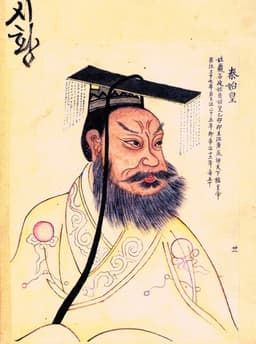
Qin Shi Huang
Emperor · Ancient
85.2Total
Basic Information
Born
1869
-259
Died
1964
-210
Era
Modern
Ancient
Nationality
Philippines
China
Occupation
Revolutionary
Emperor
Civilization
Eastern
Eastern
Score Comparison
Military (10%)
46.7
80.0
Political (20%)
29.3
90.0
Influence (20%)
54.1
85.0
Legacy (20%)
45.8
90.0
Leadership (15%)
43.8
78.0
Strategy (15%)
35.0
82.0
TOTAL
44.1
85.2
Emilio Aguinaldo — Complete Timeline
1896 AD
Execution of José Rizal (involvement)Political Action◆ Major
Aguinaldo, as a leader of the Katipunan, was involved in the Philippine Revolution against Spain, which was catalyzed by Rizal's execution. He led revolutionary forces in Cavite, winning early victories against Spanish troops.
Philippine RevolutionKatipunanCavite
Impact: national
1898 AD
Proclamation of Philippine IndependencePolitical Action
Aguinaldo proclaimed the independence of the Philippines from Spain in Kawit, Cavite, establishing the First Philippine Republic. This declaration followed the Spanish-American War and Aguinaldo's return from exile, asserting Filipino sovereignty.
IndependencePhilippine RevolutionFirst Republic
Impact: nationalprogressive
1899 AD
Battle of Manila (1899)War◆ Major
Aguinaldo's forces engaged American troops in Manila, marking the start of the Philippine-American War. The conflict arose from tensions over U.S. annexation of the Philippines, leading to a brutal war that lasted until 1902.
Philippine-American WarBattleColonial Conflict
Impact: nationaldestructive
1901 AD
Capture of Emilio AguinaldoPolitical Action
Aguinaldo was captured by U.S. forces in Palanan, Isabela, after a months-long pursuit led by General Frederick Funston. His capture effectively ended the organized phase of the Philippine-American War, leading to his oath of allegiance to the United States.
CapturePhilippine-American WarU.S. Occupation
Impact: nationaltragic
Qin Shi Huang — Complete Timeline
246 BC
Construction of the Mausoleum and Terracotta ArmyOther◆ Major
Qin Shi Huang commissioned a vast mausoleum complex near Xi'an, guarded by thousands of life-sized terracotta soldiers, horses, and chariots. The project employed hundreds of thousands of workers and reflected his obsession with immortality and imperial power.
Impact: global
230 BC
Conquest of the Six Warring StatesWar
From 230 to 221 BCE, Ying Zheng led the Qin state in a series of campaigns that conquered the Han, Zhao, Wei, Chu, Yan, and Qi states. This unified China under a single ruler for the first time, ending the Warring States period.
Impact: global
221 BC
Standardization of Writing, Currency, and MeasurementsReform◆ Major
Qin Shi Huang ordered the standardization of Chinese script, currency, and weights and measures across the unified empire. This facilitated administration, trade, and cultural integration, laying a foundation for future dynasties.
Impact: globalconstructive
Proclamation of the Qin DynastyPolitical Action
After conquering the last independent state, Ying Zheng declared himself Shi Huangdi (First Emperor), founding the Qin Dynasty. He adopted a new title to signify his supreme authority and initiated centralized imperial rule.
Impact: global
214 BC
Initiation of the Great Wall ConstructionOther◆ Major
Qin Shi Huang ordered the connection and extension of existing northern fortifications to create a unified defensive wall against nomadic Xiongnu raids. This project involved massive conscripted labor and became the precursor to the later Great Wall.
Impact: regional
213 BC
Burning of Books and Burying of ScholarsPolitical Action◆ Major
On the advice of Li Si, Qin Shi Huang ordered the burning of historical records and philosophical texts not aligned with Legalist doctrine. He also had 460 Confucian scholars buried alive to suppress dissent and consolidate ideological control.
Impact: nationaldestructive
Expert Analysis
emilio-aguinaldo-vs-qin-shi-huang
# The First Emperor and the First President: Two Paths to Power, One Tragic Divide
In 221 BC, a Chinese king stood before his assembled generals in the conquered city of Xianyang and declared himself *Shi Huangdi*—the First Emperor. Two millennia later, in 1898, a young Filipino revolutionary stood on a balcony in Kawit, Cavite, and proclaimed the independence of the Philippine Islands. Both men sought to forge nations from chaos. Both wielded enormous ambition. Yet one built an empire that would echo through four thousand years of civilization, while the other saw his republic crumble within three years. The difference between Qin Shi Huang and Emilio Aguinaldo is not merely a matter of time or geography—it is a story of how power, when seized by men of vastly different eras and temperaments, can either create a world or lose one.
Origins
Ying Zheng was born in 259 BC, the son of a king and a concubine, into a China fractured into seven warring states. His childhood was a crucible of violence and intrigue: his father was a hostage, his mother’s lover plotted rebellion, and he ascended the throne of Qin at the age of thirteen. The Warring States period had taught every ruler one brutal lesson—unite or be devoured. Zheng absorbed this truth with his mother’s milk. His world was one of iron and blood, where the strong conquered and the weak perished, and where the only law that mattered was the will of the man who held the sword.
Emilio Aguinaldo was born in 1869, in the twilight of the Spanish Empire, to a wealthy mestizo family in Kawit, Cavite. His world was one of colonial bureaucracy, Catholic ritual, and simmering resentment. Unlike Zheng, who inherited a throne, Aguinaldo inherited a land that had been ruled by foreigners for three centuries. The Philippines in the 1890s was a powder keg of nationalist sentiment, and Aguinaldo—young, ambitious, and deeply practical—joined the secret revolutionary society Katipunan. His origins were not those of a prince, but of a provincial elite who saw the cracks in the colonial edifice and decided to push them open.
Rise to Power
Qin Shi Huang’s rise was methodical, relentless, and absolute. From 230 to 221 BC, he unleashed a series of campaigns that devoured the six rival states one by one—Han, Zhao, Wei, Chu, Yan, and finally Qi. He did not rely on personal heroism; he relied on the machinery of war: disciplined infantry, skilled generals like Wang Jian, and the Legalist philosophy that treated the state as a single, brutal organism. By the age of thirty-eight, he had unified China under one rule—a feat no ruler had achieved in five centuries.
Aguinaldo’s rise was more improvisational, more dependent on shifting alliances and foreign intervention. He became a leader of the Katipunan after the execution of José Rizal in 1896, but his military record was mixed. He fought the Spanish to a stalemate, then struck a deal with the United States in 1898, returning from exile to lead Filipino forces against Spain. When the Spanish surrendered, Aguinaldo proclaimed independence on June 12, 1898, and became the first president of the First Philippine Republic. His path to power was not a conquest but a negotiation—with allies who would soon become enemies.
Leadership & Governance
Here the two men diverge most sharply. Qin Shi Huang governed with the cold precision of a carpenter building a frame. He standardized writing, currency, and weights and measures across his empire, creating a unified administrative system that would outlast his dynasty. He ordered the connection of northern fortifications into what would become the Great Wall. He commissioned a mausoleum guarded by thousands of life-sized terracotta soldiers—a monument not to his ego but to his vision of an ordered, eternal empire. His political score of 88 reflects a ruler who understood that power was not just about winning wars, but about creating systems that made war unnecessary.
Yet his rule had a dark, obsessive side. In 213 BC, on the advice of his chancellor Li Si, he ordered the burning of historical records and philosophical texts that did not align with Legalist doctrine, and the burying alive of scholars who resisted. This was not mere cruelty—it was a calculated attempt to erase the past and control the future. Qin Shi Huang believed that unity required uniformity, and that dissent was a disease to be cauterized.
Aguinaldo’s governance was the opposite: idealistic, fragile, and overwhelmed. He led a republic that had no money, no professional army, and no time to build either. The Philippine-American War began in February 1899, and Aguinaldo’s forces—brave but poorly equipped—were no match for the industrialized might of the United States. His military score of 30.5 reflects the reality: he was a revolutionary leader, not a general. He tried to govern through a constitution, a congress, and a decentralized command, but the war shattered his administration. Where Qin Shi Huang built a machine, Aguinaldo tried to build a democracy—and found that democracies are not built under fire.
Triumph & Tragedy
Qin Shi Huang’s greatest triumph was the unification itself—a feat that reshaped the world. His tragedy came in his final years: obsessed with immortality, he consumed mercury pills that likely hastened his death in 210 BC at the age of forty-nine. Within three years of his death, the Qin Dynasty collapsed in rebellion. His empire, built on fear and force, could not survive his absence.
Aguinaldo’s triumph was the proclamation of Philippine independence—a moment of hope that still resonates. His tragedy was the fall that followed. He was captured by U.S. forces in Palanan, Isabela, in March 1901, after a months-long pursuit. He swore allegiance to the United States and called for his followers to lay down arms. That act—whether seen as pragmatism or betrayal—ended the dream of an independent Philippines for nearly half a century.
Character & Destiny
Qin Shi Huang was a megalomaniac with a vision. He believed he was the Son of Heaven, chosen to impose order on chaos. His personality was rigid, paranoid, and absolute—and it matched the age. The Warring States had no room for mercy. His decisions, however brutal, were logical responses to a world that had known nothing but war.
Aguinaldo was a nationalist with a dream, but he was also a product of his time—a time when small nations were pawns of great powers. He was not a tyrant, but he was not a master strategist either. He trusted American promises, misjudged the balance of power, and ultimately could not hold his nation together. His personality—pragmatic, cautious, yet capable of bold action—was ill-suited to the ruthless game of empire that surrounded him.
Legacy
Qin Shi Huang’s legacy is immeasurable. He gave China its name, its written script, its administrative structure. The Great Wall, the Terracotta Army, the very idea of a unified Chinese empire—all flow from his reign. He is remembered as both a founder and a despot, a figure of awe and horror. His influence score of 82 and legacy score of 85 reflect the truth: he changed the world.
Aguinaldo’s legacy is more ambiguous. He is remembered as the first president of the Philippines, a hero of the revolution, but also as a man who surrendered and collaborated. His legacy score of 64.4 reflects a divided memory: some see a patriot, others a tragic figure who could not overcome the forces arrayed against him. The Philippine flag he unfurled in 1898 still flies, but the republic he proclaimed died young.
Conclusion
Standing at the edge of history, one sees two men who both tried to build nations from the ruins of the old order. Qin Shi Huang succeeded by crushing every alternative, creating a unity so profound that it became invisible—the air that China still breathes. Aguinaldo failed because he tried to build a republic in a world that had no room for small republics, and because he lacked the ruthlessness to crush his enemies before they crushed him.
One built a wall that still stands. The other raised a flag that still waves. Both remind us that the difference between triumph and tragedy is not just will or vision—it is the age into which you are born, and the weight of the forces you must overcome.
Rankings
🥇
Qin Shi HuangLeader
Mil: 80.0Pol: 90.0Inf: 85.0
85.2
🥈
Emilio Aguinaldo
Mil: 46.7Pol: 29.3Inf: 54.1
44.1
+41.1 behind
How This Comparison Works
Algorithm
Each figure is scored on 6 dimensions (0—100 scale) based on structured historical data: Military (10%), Political (20%), Influence (20%), Legacy (20%), Leadership (15%), Strategy (15%). The weighted total produces the final ranking.
Data Sources
Scores are computed from structured sub-indicators in the database. Scale factors adjust for era (Ancient ×0.85, Modern ×1.0) and civilization size (Eastern ×1.05, Other ×0.80) to account for differences in population and military scale.
Maximum 3 Figures
Comparisons are limited to 2—3 figures to ensure readability and statistical meaningfulness.
Error Margins
±5 points per dimension — Sub-scores are derived from historical records with inherent uncertainty. Two figures within 5 points on a dimension should be considered roughly equivalent in that area.
Total Score Accuracy
±3 points overall — The weighted combination of 6 dimensions produces a total score with approximately ±3 points of uncertainty. Differences of less than 3 points are not statistically significant— the figures are effectively tied.
Known Limitations
- Historical records are incomplete and uneven across civilizations
- Figures from oral-tradition societies may be underrepresented
- Occupation labels can misclassify multi-role figures
- Scores measure capability and impact, not moral character
- Quantitative scoring is a comparison tool, not absolute truth
Capability Radar
Military (10%) — Battles & Warfare
Battles
45
85
Win Rate
40
90
Expansion
30
90
Political (20%) — Governance & Reform
Reform
35
95
Diplomacy
30
75
Economy
20
90
Influence (20%) — Cultural & Global Reach
Cultural
55
95
Global
40
85
Legacy (20%) — Historical Impact
Historical
55
95
Longevity
50
95
Leadership (15%) — Power & Stability
Tenure
40
70
Stability
20
65
Strategy (15%) — Tactics & Innovation
Strategy
45
85
Tactics
50
80
Reform
35
95
Similar Comparisons
Comments & Discussion
数据拆弹专家6/17/2026
光看数据,秦朝统一六国用了十年,菲律宾第一共和国只撑了三年。但你不能就这么比。秦国有职业军队、官僚体系和铁器优势;阿奎纳多面对的是工业化的美国海军,还带着一帮连步枪都凑不齐的民兵。拿公元前三世纪的农业帝国跟十九世纪末的殖民独立运动比存续年限,根本是拿骑兵比坦克。
ClassicsCompass6/17/2026
What Qin Shi Huang understood—and Aguinaldo tragically did not—was that power requires a foundation in language and law. The First Emperor imposed a single script and a legal codex across all of China. Aguinaldo's Malolos Constitution was progressive on paper, but it never controlled the countryside. Unity is not a proclamation; it's a system. One man built a lattice; the other built a flagpole.
江湖说书人6/17/2026
你看啊,秦始皇说“朕为始皇帝”,把自己当作历史的第一块砖;阿奎纳多站在阳台上喊“独立”,却忘了身后还有美国人等着签字。一个把天下刻进石碑,一个把命运写在战报上。说到底,一个是打造国家的铁匠,一个是渴望认可的网红。谁更配得上“第一”的称号?历史早就给出了答案,可惜当时的枪炮比道理响。
Historian6026/17/2026
A military historian would tell you Qin Shi Huang won because he unified doctrine—standardized writing, weights, even axle lengths—before he tried to hold territory. Aguinaldo had no such unifying infrastructure; he was fighting a guerrilla war with factions that distrusted each other more than they hated Spain or America. Strategy isn't just about battles; it's about build. One man built a machine, the other tried to lead a rebellion.