Loading...
This comparison has not been analyzed yet.
One-time AI generation (~1 minute). Scores and timeline are already available below.
Emmanuel Joseph Sieyes vs Warren Hastings
Warren Hastings leads by 4.2 pts · 2 figures compared
…
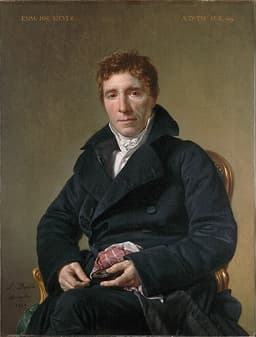
Emmanuel Joseph Sieyes
Politician · Modern
54.0Total

Warren Hastings
Politician · Modern
58.2Total
Basic Information
Born
1748
1732
Died
1836
1818
Era
Modern
Modern
Nationality
France
United Kingdom
Occupation
Politician
Politician
Civilization
Western
Western
Score Comparison
Military (10%)
48.5
45.0
Political (20%)
53.8
65.0
Influence (20%)
55.0
61.0
Legacy (20%)
55.0
54.0
Leadership (15%)
62.2
72.0
Strategy (15%)
42.0
43.7
TOTAL
54.0
58.2
Emmanuel Joseph Sieyes — Complete Timeline
1789 AD
Published 'What is the Third Estate?'Cultural◆ Major
Sieyès published the pamphlet 'What is the Third Estate?', which argued that the Third Estate constituted the nation and should have political power. The pamphlet became a foundational text of the French Revolution.
French RevolutionPamphletThird Estate
Impact: globalprogressive
Proposed the Tennis Court OathPolitical Action◆ Major
Sieyès was instrumental in the formation of the National Assembly. He proposed the Tennis Court Oath, in which deputies swore not to disband until a constitution was established.
French RevolutionNational AssemblyConstitution
Impact: nationalprogressive
1792 AD
Elected to the National ConventionPolitical Action◆ Major
Sieyès was elected to the National Convention, where he initially voted for the execution of Louis XVI. However, he later distanced himself from the radical Jacobins.
French RevolutionNational ConventionRegicide
Impact: national
1799 AD
Helped Engineer the Coup of 18 BrumairePolitical Action◆ Major
Sieyès conspired with Napoleon Bonaparte to overthrow the Directory. He helped draft the new constitution that established the Consulate, but was soon sidelined by Napoleon.
French RevolutionCoupNapoleon
Impact: national
Warren Hastings — Complete Timeline
1773 AD
Regulating Act of 1773Reform◆ Major
Hastings implemented the Regulating Act of 1773, which established the office of Governor-General and a Supreme Court in Calcutta. This act aimed to curb corruption and bring British rule in India under greater parliamentary oversight, though it led to conflicts between the Governor-General and the Council.
LegislationGovernanceReform
Impact: regional
Appointed First Governor-General of BengalPolitical Action◆ Major
Warren Hastings was appointed the first Governor-General of Bengal in 1773 under the Regulating Act. He centralized British administration in India and oversaw the East India Company's territories, implementing judicial and revenue reforms that shaped British colonial governance.
Governor-GeneralAdministrationReform
Impact: regional
1774 AD
Rohilla WarWar
Hastings authorized the East India Company's military intervention in the Rohilla War, supporting the Nawab of Awadh against the Rohilla Afghans. The war resulted in the annexation of Rohilkhand and was later criticized as an unjust aggression, contributing to Hastings' impeachment charges.
WarAnnexationControversy
Impact: regionaldestructive
1788 AD
Impeachment TrialPolitical Action◆ Major
Hastings was impeached by the British Parliament in 1788 on charges of corruption, extortion, and mismanagement during his tenure in India. The trial, led by Edmund Burke, lasted seven years and became a landmark in British legal history. Hastings was ultimately acquitted in 1795.
ImpeachmentTrialBurke
Impact: national
This comparison has not been analyzed yet.
One-time AI generation (~1 minute). Scores and timeline are already available below.
Rankings
🥇
Warren HastingsLeader
Mil: 45.0Pol: 65.0Inf: 61.0
58.2
🥈
Emmanuel Joseph Sieyes
Mil: 48.5Pol: 53.8Inf: 55.0
54.0
+4.2 behind
How This Comparison Works
Algorithm
Each figure is scored on 6 dimensions (0—100 scale) based on structured historical data: Military (10%), Political (20%), Influence (20%), Legacy (20%), Leadership (15%), Strategy (15%). The weighted total produces the final ranking.
Data Sources
Scores are computed from structured sub-indicators in the database. Scale factors adjust for era (Ancient ×0.85, Modern ×1.0) and civilization size (Eastern ×1.05, Other ×0.80) to account for differences in population and military scale.
Maximum 3 Figures
Comparisons are limited to 2—3 figures to ensure readability and statistical meaningfulness.
Error Margins
±5 points per dimension — Sub-scores are derived from historical records with inherent uncertainty. Two figures within 5 points on a dimension should be considered roughly equivalent in that area.
Total Score Accuracy
±3 points overall — The weighted combination of 6 dimensions produces a total score with approximately ±3 points of uncertainty. Differences of less than 3 points are not statistically significant— the figures are effectively tied.
Known Limitations
- Historical records are incomplete and uneven across civilizations
- Figures from oral-tradition societies may be underrepresented
- Occupation labels can misclassify multi-role figures
- Scores measure capability and impact, not moral character
- Quantitative scoring is a comparison tool, not absolute truth
Capability Radar
Military (10%) — Battles & Warfare
Battles
29
20
Win Rate
35
25
Expansion
35
50
Political (20%) — Governance & Reform
Reform
85
70
Diplomacy
60
60
Economy
30
75
Influence (20%) — Cultural & Global Reach
Cultural
70
40
Global
60
55
Legacy (20%) — Historical Impact
Historical
75
60
Longevity
65
55
Leadership (15%) — Power & Stability
Tenure
40
65
Stability
20
45
Strategy (15%) — Tactics & Innovation
Strategy
39
30
Tactics
40
15
Reform
43
40
Similar Comparisons
Comments & Discussion
No comments yet. Be the first to share your thoughts!