Loading...
Patrice Lumumba vs Warren Hastings
Patrice Lumumba leads by 2.8 pts · 2 figures compared
…
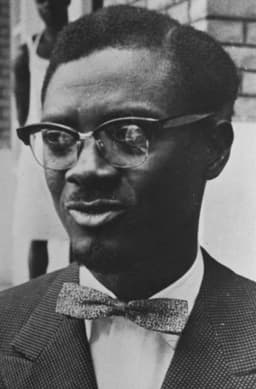
Patrice Lumumba
Politician · Modern
61.0Total

Warren Hastings
Politician · Modern
58.2Total
Basic Information
Born
1925
1732
Died
—
1818
Era
Modern
Modern
Nationality
Congo
United Kingdom
Occupation
Politician
Politician
Civilization
Other
Western
Score Comparison
Military (10%)
50.0
45.0
Political (20%)
53.8
65.0
Influence (20%)
82.0
61.0
Legacy (20%)
52.0
54.0
Leadership (15%)
67.0
72.0
Strategy (15%)
44.1
43.7
TOTAL
61.0
58.2
Patrice Lumumba — Complete Timeline
1960 AD
Congo Independence SpeechPolitical Action◆ Major
Patrice Lumumba delivered a powerful independence day speech in the presence of King Baudouin of Belgium, criticizing colonial abuses and calling for true freedom. The speech angered Belgian officials and set the tone for his confrontational approach to decolonization.
IndependenceSpeechDecolonization
Impact: national
Appointment as Prime MinisterPolitical Action◆ Major
Lumumba became the first Prime Minister of the independent Democratic Republic of the Congo after his party won the elections. He advocated for a unitary state and rapid Africanization of the administration, opposing federalist and Belgian interests.
Prime MinisterElectionsUnitary State
Impact: national
Congo Crisis and Katanga SecessionPolitical Action◆ Major
Lumumba faced the secession of the mineral-rich Katanga province, backed by Belgian mining interests. He appealed to the United Nations for military assistance but was frustrated by the UN's refusal to help suppress the secession, leading to a political crisis.
SecessionKatangaUN Intervention
Impact: regionaltragic
1961 AD
Overthrow and AssassinationPolitical Action
Lumumba was overthrown by Colonel Joseph Mobutu, arrested, and transferred to Katanga where he was executed by firing squad with Belgian complicity. His assassination shocked the world and made him a martyr for African independence and anti-colonialism.
AssassinationMobutuCold War
Impact: globaltragic
Warren Hastings — Complete Timeline
1773 AD
Regulating Act of 1773Reform◆ Major
Hastings implemented the Regulating Act of 1773, which established the office of Governor-General and a Supreme Court in Calcutta. This act aimed to curb corruption and bring British rule in India under greater parliamentary oversight, though it led to conflicts between the Governor-General and the Council.
LegislationGovernanceReform
Impact: regional
Appointed First Governor-General of BengalPolitical Action◆ Major
Warren Hastings was appointed the first Governor-General of Bengal in 1773 under the Regulating Act. He centralized British administration in India and oversaw the East India Company's territories, implementing judicial and revenue reforms that shaped British colonial governance.
Governor-GeneralAdministrationReform
Impact: regional
1774 AD
Rohilla WarWar
Hastings authorized the East India Company's military intervention in the Rohilla War, supporting the Nawab of Awadh against the Rohilla Afghans. The war resulted in the annexation of Rohilkhand and was later criticized as an unjust aggression, contributing to Hastings' impeachment charges.
WarAnnexationControversy
Impact: regionaldestructive
1788 AD
Impeachment TrialPolitical Action◆ Major
Hastings was impeached by the British Parliament in 1788 on charges of corruption, extortion, and mismanagement during his tenure in India. The trial, led by Edmund Burke, lasted seven years and became a landmark in British legal history. Hastings was ultimately acquitted in 1795.
ImpeachmentTrialBurke
Impact: national
Expert Analysis
Origins
Patrice Lumumba was born on July 2, 1925, in Onalua, Belgian Congo, into the Tetela ethnic group. He received a missionary education, becoming a postal clerk and later a beer salesman. His early exposure to colonial injustices and his role in the Belgian Congolese civil service shaped his political consciousness. Warren Hastings was born on December 6, 1732, in Churchill, England, to a poor family. Orphaned young, he attended Westminster School but left to join the East India Company as a clerk in 1750. His early career in India involved learning local languages and customs, rising through the ranks through administrative skill.
Rise to Power
Lumumba's rise began with his involvement in the Belgian Congolese trade union movement and his founding of the Mouvement National Congolais (MNC) in 1958. He gained prominence at the Round Table Conference in Brussels in 1960, where he advocated for immediate independence. His party won the May 1960 elections, making him Prime Minister on June 23, 1960. Hastings rose through the East India Company, becoming a member of the Calcutta Council in 1761. He was appointed Governor of Bengal in 1772, and in 1773 became the first Governor-General of Bengal under the Regulating Act, centralizing British authority in India.
Leadership & Governance
Lumumba's leadership was characterized by his vision of a unified, independent Congo. He faced the Katanga secession led by Moïse Tshombe, backed by Belgian mining interests. He appealed to the UN for military aid but was betrayed by the UN's refusal to help suppress the secession. He adopted a non-aligned stance, seeking Soviet support, which alarmed the US and Belgium. Hastings implemented administrative reforms, including the Regulating Act of 1773, which established a Supreme Court in Calcutta and defined the Governor-General's powers. He also reformed revenue collection and judicial systems, but his methods were often harsh, including the use of forced labor and suppression of local rulers.
Triumph & Tragedy
Lumumba's greatest triumph was his role in securing Congo's independence from Belgium on June 30, 1960, and his defiant speech against colonialism. His tragedy was his overthrow by Colonel Mobutu on September 14, 1960, his imprisonment, and his execution on January 17, 1961, with Belgian complicity. He scored 82.0 in influence, reflecting his symbolic power. Hastings' triumph was his consolidation of British rule in India, laying the foundation for the British Raj. He scored 72.0 in leadership. His tragedy was his impeachment trial from 1788 to 1795, which, though ending in acquittal, tarnished his reputation and highlighted the excesses of Company rule.
Character & Destiny
Lumumba was idealistic and charismatic, but also impulsive and uncompromising. His refusal to accept colonial interference led to his downfall. He scored 67.0 in leadership but only 44.1 in strategy. Hastings was pragmatic and authoritarian, skilled in administration but ruthless in pursuit of Company interests. His strategic score was 43.7, similar to Lumumba's. His impeachment reflected the British public's growing unease with imperial abuses. Both men were products of their time: Lumumba a symbol of African liberation, Hastings a symbol of British imperial efficiency.
Legacy
Lumumba's legacy is that of a martyr for African independence. His execution galvanized anti-colonial movements across Africa. He is remembered as a national hero in the DRC, though his actual policies were not implemented. His influence score of 82.0 reflects his enduring symbolic power. Hastings' legacy is mixed: he is credited with creating the administrative framework for British India, but also condemned for his exploitative policies. His trial set a precedent for accountability of colonial officials. He scored 54.0 in legacy. Their total scores are close: Lumumba 61.0, Hastings 58.2.
Conclusion
While Lumumba's direct impact was short-lived, his symbolic influence on decolonization was immense. Hastings' administrative reforms had a longer-lasting effect on India's governance. However, Lumumba's higher influence score (82.0 vs 61.0) and his role as a catalyst for African independence give him a greater historical impact. Hastings, despite his leadership score of 72.0, was ultimately a servant of empire, whereas Lumumba challenged it. Therefore, Patrice Lumumba had a greater impact on world history.
Rankings
🥇
Patrice LumumbaLeader
Mil: 50.0Pol: 53.8Inf: 82.0
61.0
🥈
Warren Hastings
Mil: 45.0Pol: 65.0Inf: 61.0
58.2
+2.8 behind
How This Comparison Works
Algorithm
Each figure is scored on 6 dimensions (0—100 scale) based on structured historical data: Military (10%), Political (20%), Influence (20%), Legacy (20%), Leadership (15%), Strategy (15%). The weighted total produces the final ranking.
Data Sources
Scores are computed from structured sub-indicators in the database. Scale factors adjust for era (Ancient ×0.85, Modern ×1.0) and civilization size (Eastern ×1.05, Other ×0.80) to account for differences in population and military scale.
Maximum 3 Figures
Comparisons are limited to 2—3 figures to ensure readability and statistical meaningfulness.
Error Margins
±5 points per dimension — Sub-scores are derived from historical records with inherent uncertainty. Two figures within 5 points on a dimension should be considered roughly equivalent in that area.
Total Score Accuracy
±3 points overall — The weighted combination of 6 dimensions produces a total score with approximately ±3 points of uncertainty. Differences of less than 3 points are not statistically significant— the figures are effectively tied.
Known Limitations
- Historical records are incomplete and uneven across civilizations
- Figures from oral-tradition societies may be underrepresented
- Occupation labels can misclassify multi-role figures
- Scores measure capability and impact, not moral character
- Quantitative scoring is a comparison tool, not absolute truth
Capability Radar
Military (10%) — Battles & Warfare
Battles
23
20
Win Rate
26
25
Expansion
27
50
Political (20%) — Governance & Reform
Reform
55
70
Diplomacy
60
60
Economy
30
75
Influence (20%) — Cultural & Global Reach
Cultural
65
40
Global
65
55
Legacy (20%) — Historical Impact
Historical
70
60
Longevity
60
55
Leadership (15%) — Power & Stability
Tenure
40
65
Stability
10
45
Strategy (15%) — Tactics & Innovation
Strategy
28
30
Tactics
35
15
Reform
36
40
Similar Comparisons
Comments & Discussion
No comments yet. Be the first to share your thoughts!